
Sailors Jumping Overboard as Record Deployment Breaks USS Abraham Lincoln Crew
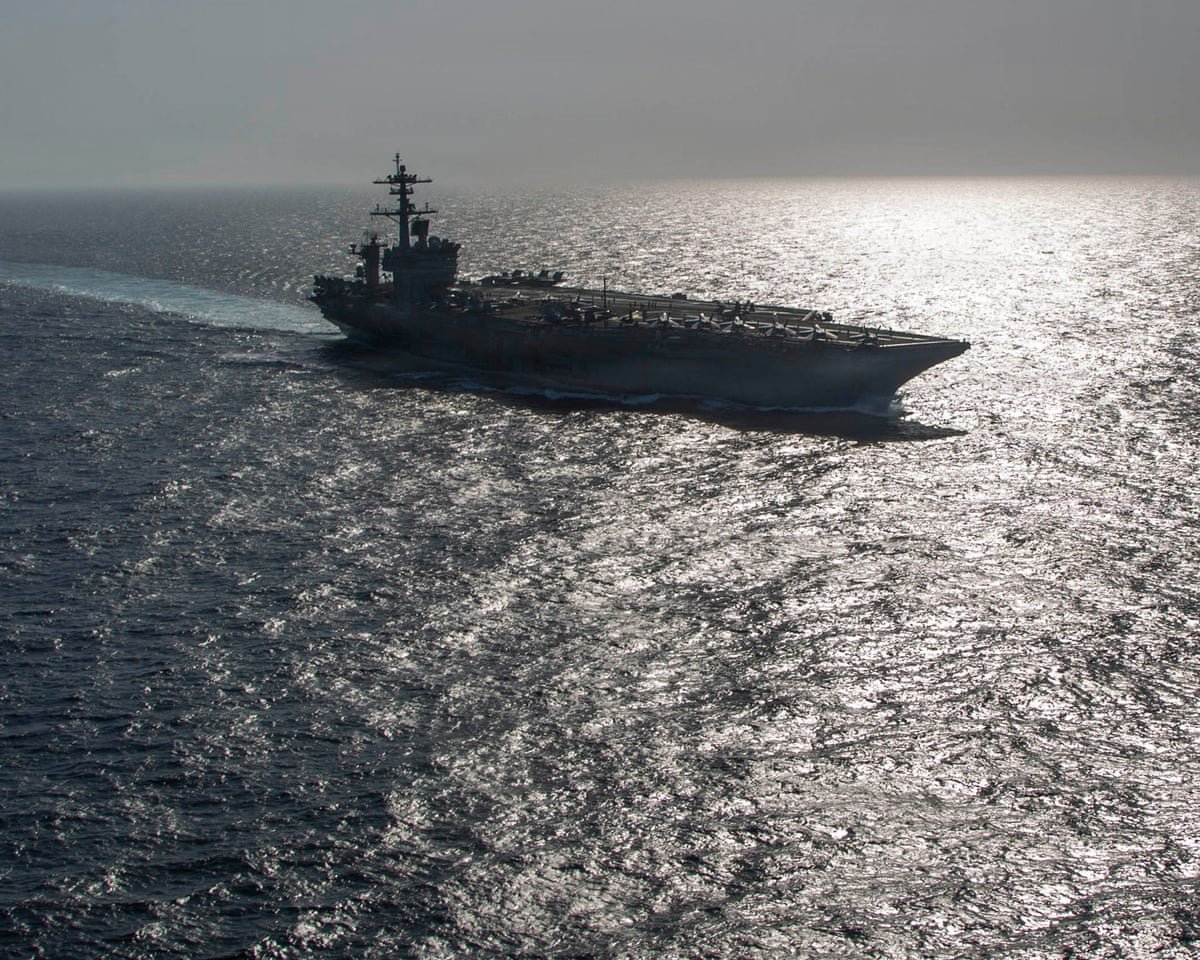
The image of a United States Navy aircraft carrier - the very symbol of American military might - has become a floating pressure cooker in the Arabian Sea. Nine months into a deployment that was meant to last seven, sailors aboard the USS Abraham Lincoln are reportedly so desperate that they have been throwing themselves into the sea. This is not merely an American problem.
The image of a United States Navy aircraft carrier - the very symbol of American military might - has become a floating pressure cooker in the Arabian Sea. Nine months into a deployment that was meant to last seven, sailors aboard the USS Abraham Lincoln are reportedly so desperate that they have been throwing themselves into the sea.
This is not merely an American problem. Britain is a co-belligerent in the war with Iran, and the strain on US personnel raises urgent questions about the sustainability of the conflict, the welfare of our own service people, and the moral arithmetic of a war that is becoming increasingly unpopular on both sides of the Atlantic.
"We're Not Animals": Sailors Jumping Overboard as Record Deployment Breaks the USS Abraham Lincoln's Crew
Arabian Sea / Washington - 16 August 2026 - The USS Abraham Lincoln (CVN 72), a Nimitz-class aircraft carrier carrying roughly 5,000 sailors and Marines, has now spent a record 250 days consecutively without making land. The crew has endured a stretch of more than 208 days at sea without a port call - shattering all previous US Navy records. And according to reports from Navy Times and Stars and Stripes, the mental toll has become so severe that multiple sailors have attempted to jump the 50 to 60 feet from the carrier's flight deck into the churning waters below.

A Record Deployment With No End in Sight
The Lincoln departed San Diego on 21 November 2025 for what was anticipated to be a routine seven-month Indo-Pacific deployment. After a brief visit to Guam in December, the carrier was abruptly redirected toward the Middle East in January as the US-Israel war with Iran erupted into open conflict. What was meant to be a show of force in the Pacific became a linchpin of American blockade operations in the Strait of Hormuz - a mission the carrier conducted on 16 April 2026, sealing off one of the world's most critical oil chokepoints.
That mission has now stretched into its ninth month. The crew has not felt solid ground beneath their feet since before Christmas. The previous record for consecutive days at sea without a port call was approximately 208 days - a mark the Lincoln's crew has now blown past by more than six weeks, with no relief in sight.
Channel 4 News published a report on 14 August 2026 by Communities Editor Darshna Soni, documenting the desperation aboard the vessel. The report, titled 'US sailors reportedly jump overboard to escape poor conditions on warship', paints a picture of a crew at breaking point - exhausted, isolated, and increasingly hopeless as the war with Iran grinds on with no endgame in sight.
What This Means for the UK
For British readers, this story should hit uncomfortably close to home. The UK is a key US ally in the Iran war, with Royal Air Force assets reportedly involved in strike operations and British intelligence playing a supporting role. The Royal Navy's own surface fleet - based in Portsmouth, Plymouth, and Faslane - has been stretched thin for years, with crews routinely spending months at sea without proper shore leave.
The armed forces covenant, which promises that UK service personnel should not be disadvantaged by their service, is already under strain. British sailors on Type 45 destroyers and Astute-class submarines have spoken privately of similar pressures - long deployments, limited communication with families, and a mental health support system that is often reactive rather than preventative.
If the United States - with its vast defence budget and global reach - cannot keep its sailors mentally healthy on a nine-month deployment, what does that say about the sustainability of the UK's own commitments? The Lincoln's crisis is a warning flare for every NATO ally that has signed up to this war.
Families Sound the Alarm
Annabelle Loma of San Diego has become an unwilling spokesperson for the crisis. Her husband, a 13-year Navy veteran, attempted to jump overboard and is now on medical hold. She has spoken with him only a few times since the incident.
"He's scared," Loma told Military Times. "He thinks he'll get a dishonorable discharge, and just because he was burnt out, his 13-year career is ruined, just like that. That's not fair, that's not right."
Her words capture a cruel irony: sailors who risk their lives for their country are now terrified that seeking help for mental health struggles will end their careers in disgrace. The fear of a dishonourable discharge - with its loss of benefits, pension, and reputation - is keeping sailors silent, which only deepens the crisis.
Military families have formed informal support networks, trading information about their loved ones aboard the Lincoln and pressing members of Congress to intervene. Several lawmakers have now quizzed the Pentagon about conditions aboard the carrier, demanding answers about the number of suicide attempts, the adequacy of mental health staffing, and the timeline for relief.
CNN has reported that at least one sailor went overboard from the Lincoln last month amid a possible mental health crisis. The sailor was reportedly recovered, but the incident has become a rallying point for families who say the Navy is not doing enough.
Washington's Response
The official response from Washington has been, at best, dismissive. Defence Secretary Pete Hegseth has rejected reports of poor conditions aboard the Lincoln, insisting that the crew is "mission-focused" and that morale remains high. He has provided no specific evidence to support this claim, and families say it contradicts everything they are hearing from their loved ones.
President Donald Trump, meanwhile, shrugged off concerns entirely. Speaking to Axios on 14 August, Trump declared that the deployment "wasn't long enough" - a remark that has been met with fury from military families and quiet disbelief from serving personnel.
"Wasn't long enough" is a phrase that will haunt this administration. For the sailors aboard the Lincoln, it is a signal that their suffering is not merely ignored but actively dismissed. For the UK, it raises a stark question: what does it mean to be allied with a leader who treats the mental health of his own troops as an afterthought?
There is some movement behind the scenes. US military officials have confirmed that the USS Theodore Roosevelt strike group is being prepared for relief, though no timeline has been provided. The Pentagon has also reportedly sent additional mental health personnel to the region, though critics note that sending counsellors to a ship that cannot make port is a band-aid on a haemorrhage.
The Human Cost of the Iran War
The Lincoln's crisis is not an isolated incident - it is the logical endpoint of a war strategy that has prioritised military objectives over human endurance. The blockade of the Strait of Hormuz, which the Lincoln has been enforcing since April, is a high-stakes operation that requires constant vigilance. There is no downtime, no shore leave, no respite. Every day at sea is another day of 12-hour shifts, cramped quarters, and the ever-present knowledge that a single mistake could trigger a regional conflagration.
The record 250 days without landfall is not a badge of honour; it is a failure of leadership. The US Navy has known for decades that prolonged deployments without port calls lead to deteriorating mental health, increased accidents, and declining readiness. The fact that the Lincoln has blown past all previous records is not a testament to the crew's toughness - it is an indictment of the commanders who allowed it to happen.
For UK forces, the parallels are uncomfortable. British service personnel have been involved in the Iran war from the outset, and the strain is showing. The Royal Navy's own deployment cycles have lengthened in recent years, and there are growing concerns about the mental health of submariners, who face unique pressures of isolation and confinement. The UK's military mental health programmes - including the Defence Mental Health Services and the Veterans' Mental Health Transition, Intervention and Liaison Service - are well-regarded, but they are designed to treat problems after they emerge, not prevent them.
The Lincoln's sailors are not statistics; they are human beings with families, hopes, and breaking points. Annabelle Loma's husband is one of them. So are the thousands of other sailors and Marines who have spent nine months at sea, watching the calendar tick past their expected return date with no end in sight.
The Bottom Line - What Comes Next
The USS Theodore Roosevelt is expected to relieve the Lincoln in the coming weeks, though the Pentagon has been characteristically vague about timelines. When the Lincoln finally does make port, the crew will face a new challenge: reintegration into a world that has moved on without them. The psychological scars of this deployment will not heal quickly, and the Navy will be dealing with the fallout for years.
For the UK, the lesson is clear. This war is not a video game; it is a grinding, exhausting conflict that is breaking the people who fight it. British defence planners should be watching the Lincoln's crisis with alarm, not complacency. If the US - with all its resources - cannot sustain its forces in this war, what hope is there for the rest of us?
The sailors of the USS Abraham Lincoln did not choose this war. They were sent to sea by politicians who have never spent a night in a berth the size of a coffin, who have never stared at an endless horizon with no idea when they will see their families again. The least they deserve is a leadership that takes their suffering seriously - not a president who says the deployment "wasn't long enough."
By Erica Thornton, Staff Writer
This article was produced with AI-assisted research and editorial support. Reporting is based on sources cited in the article.
What's Your Reaction?
 Like
0
Like
0
 Dislike
0
Dislike
0
 Love
0
Love
0
 Funny
0
Funny
0
 Wow
0
Wow
0
 Sad
0
Sad
0
 Angry
0
Angry
0

US Politics and Policy Correspondent at Global1.News. Based in Washington DC, covering American politics, policy, elections, and the courts. Knows how the system works and tells you what it actually means.














Comments (0)