
Czech Public Media Staged Its First Strike Over Who Pays for It
The first all-day strike in the history of Czech public broadcasting pulled normal programming off Czech Television and Czech Radio as thousands rallied in Prague against a plan to end the household licence fee and fund public media from the state budget. The bill has only cleared its first reading.
At midnight the ČT24 newsroom went dark on purpose. Presenters sat in black, reading from paper, and Czech Radio played music where the morning shows should have been. That was the first all-day strike in the history of Czech public-service broadcasting, called against a coalition plan to abolish the monthly household licence fee and pay for Czech Television and Czech Radio out of the state budget. The bill has cleared only its first reading. The fee is still collected. But the strike put the argument on screen: who pays for public media, and who then decides what it says.
Czech Public Media Staged Its First Strike Over Who Pays for It
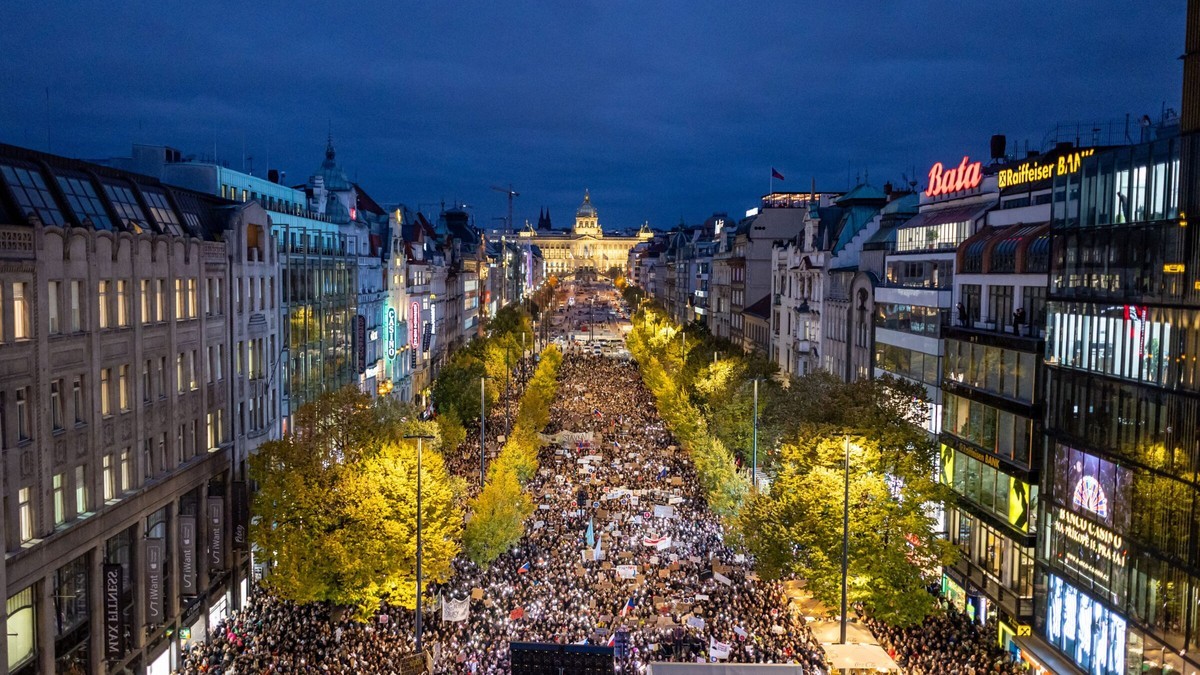
Prague, Czech Republic — Staff at Czech Television and Czech Radio walked out at midnight on Tuesday 3 November 2026, with a rally at Wenceslas Square and demonstrations also reported in Brno and Ostrava. Programming was reduced, not stopped, and management signed a memorandum guaranteeing essential news in an emergency. The strike was over within the day; the political fight was not. Opposition parties demanded talks with Prime Minister Andrej Babiš over a bill that would end the household licence fee and fund public broadcasting from the state budget. It is not law.
A Darkened Studio at Midnight
Michal Kubal, chief news editor at Czech Television, read from a sheet of paper to open the midnight bulletin: "An unprecedented day in the history of Czech public service media has begun." He said a large majority of men and women at both outlets had joined the action.
Presenter Daniel Stach told viewers the bulletin would look nothing like what they were used to, and closed it: "Thank you for watching Czech Television — in times of crisis, at historically pivotal moments and on entirely ordinary weekdays." Stach is a leading figure of the Veřejnoprávně initiative, which called the strike.
Output shrank to archived items and shorter news bulletins. Czech Radio played music through the morning, broken by a statement explaining the strike and a minute of silence. The on-screen notice read: "Czech Television employees are on strike. We are doing everything we can to ensure that we can continue providing a public service in full and to the highest standard in the future." Children's programming continued.
Four Thirty-Six on a Saturday Morning
The bill reached the floor on a Friday, outside the planned order of business. Speaker Tomio Okamura of the SPD limited debate. Speaking time for MPs was capped at 10 minutes, and 65 registered lawmakers never got to address the opening debate. The vote came at 4:36 a.m. on Saturday 24 October, after an all-night session. Eighty-one opposition MPs out of 177 present voted to reject it. The government had submitted the bill on 19 June 2026.
First reading did not abolish the licence fee and did not create a new funding system. The bill went to the media and culture committee, which issued a resolution on 30 October suspending consideration. The legislative record identifies 24 December 2026 as the date from which further consideration is possible. The bill remains before parliament.
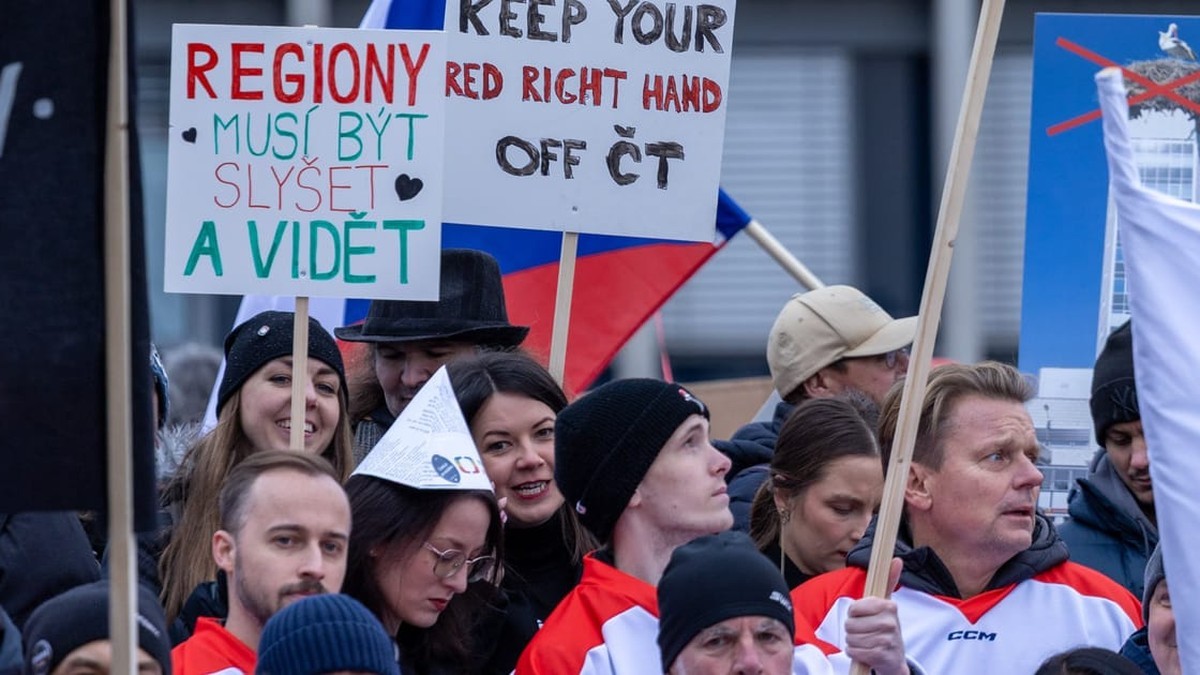
Outside, the hour became a slogan. A demonstration programme on Wenceslas Square began symbolically at 16:36, and sports staff wore hockey jerseys reading "Faul 4:36."
The Arithmetic the Broadcasters Say They Cannot Absorb
The coalition wants to cancel a monthly household broadcasting fee of 205 crowns, which Reuters put at $9.43. Czech Television would receive CZK 5.74 billion from the state budget next year, roughly CZK 1 billion below the licence-fee income it expects this year. Czech Radio would receive CZK 2.065 billion, CZK 400 million less.
The European Broadcasting Union and fellow signatories estimate the combined reduction at around CZK 1.4 billion — roughly 15 percent. That is an estimate of the bill's effect, not a cut already made. At that level, television's nominal budget would fall back to 2008 and radio's to 2005. Funding would rise by 10 percent once accumulated annual inflation reached 10 percent.
Hynek Chudárek, Director General of Czech Television, warned the broadcaster could not maintain its current services on that budget. Czech Radio's René Zavoral put the hit at 15 to 20 percent and listed what would go: "We would have to consider reducing regional broadcasting and original production. There would be cuts to investigative journalism and reductions in many services we provide to our audiences."
What the Prime Minister Says
Prime Minister Andrej Babiš rejects the framing. "There is no fight over democracy. Nobody wants to take over the public media or bring them under state control," he said, adding that changes could still be made in further debate.
On Facebook on Friday 23 October he wrote: "There is no war for independent media." He argues the money would be mandatory expenditure set by law and linked to inflation: "The state will therefore have to pay the money, and no government will be able to arbitrarily reduce it depending on whether it likes the broadcasting or not."
He says abolishing the fee keeps an election promise to lighten the burden on households. On 4 November he dismissed the reasons for the strike, said the changes would not restrict media independence, and said he was open to debate on the new funding model in the Chamber. His coalition, formed last year, teams ANO with the far-right Freedom and Direct Democracy and the eurosceptic Motorists.
The Coalition Has Not Agreed on What Replaces the Fee
Babiš told commercial broadcaster TV Nova the new arrangement should guarantee stable, predictable funding: "I simply want to come up with a proposal under which the money wouldn't come directly from the state budget. It has to be predictable and fixed, so it would effectively become mandatory expenditure."
Broadband TV News reported on 2 November that the Finance Ministry was examining a model combining voluntary payments with guaranteed funding for the broadcasters; the source and size of the guarantee were unspecified.
Tomio Okamura, Speaker of the Chamber of Deputies and leader of the SPD, said: "If this took the form of introducing a new tax for Czech citizens, a new tax to finance Czech Television and Czech Radio, we would certainly oppose it." He added: "I have absolutely no problem with making licence fee payments entirely voluntary. If that's what the majority of citizens want, then let people pay voluntarily." The governing parties have yet to agree a specific model.
The President's Rebuke
President Petr Pavel said the rushed proceedings raised serious doubts about the sponsors' intentions and undermined confidence in the government's intentions. Public-service media, he said, are fundamental pillars of Czech democracy, and substantial changes should follow broad expert and public discussion.
On X he wrote: "I ask politicians to calm their emotions and return to a factual debate, to follow the established rules of the Chamber, and to restore basic respect between the coalition and the opposition. I ask for democratic conduct and dignity. I believe the public expects the same from politicians."
After a government meeting on 2 November he told journalists the debate had been narrow: it had not addressed what is unsatisfactory in the current model, what should change, or whether a funding change is necessary at all. Public media need an outlook of at least three to five years, he said. He urged politicians not to rush: "If we are to be transparent, let us calmly discuss a change in financing ... and let us find a model that will ultimately satisfy all parties."
Five Parties Ask for a Meeting
On 4 November the leaders of five opposition parties called on Babiš to hold joint talks on the future of Czech Television and Czech Radio, with the directors of both broadcasters and independent experts in the room. Czech reporting names four of the five: the Civic Democrats (ODS), STAN, KDU-ČSL and TOP 09.
ODS leader Martin Kupka told the Chamber of Deputies that Babiš should propose a date if he was serious about his stated willingness to negotiate. The prime minister dismissed the reasons for the strike, said the changes would not restrict media independence in any way, and said the coalition would push ahead with abolishing the fees.
The Pirates moved against the Speaker instead, saying they would propose the recall of Tomio Okamura over his handling of the proceedings. Okamura had already shrugged off the walkout: "To be perfectly honest, I didn't notice the strike, because I haven't watched Czech Television for about fifteen years, and I don't listen to Czech Radio. So I'm not a user of these services."
Brussels Is Watching
The European Commission is following the case. At a Brussels briefing on 3 November, Markus Lammert said the Commission was aware the Chamber of Deputies had approved the bill at first reading and was watching developments closely. He confirmed contacts with the Czech authorities and receipt of a reply to the Commission's earlier letter; that reply is still being assessed. EU rules require adequate, sustainable and predictable funding under transparent criteria that protect editorial independence.
The European Federation of Journalists said: "The bill goes against the European Media Freedom Act (EMFA), which requires adequate, stable and predictable funding for public service media." A joint statement by the EFJ, Reporters Without Borders and several other groups said: "Such a funding model opens the door to political pressure and threatens editorial independence."
Opposition parties have compared the changes to reforms in Hungary under Viktor Orbán, a Babiš ally who built an array of pro-government media and was ousted from power in April 2026, and to Slovakia under Prime Minister Robert Fico.
What Czechs Tell the Pollsters
A STEM/MARK survey for Czech Television found 68 percent of Czechs agree public service media should stay well away from state control or private ownership. A 2025 Reuters Institute survey found the broadcasters were among the country's most followed and most trusted news sources.
Okamura argues that opinion polls show considerable public opposition to compulsory licence fees; surveys also suggest many Czechs are reluctant to see public-service broadcasters financed directly from the state budget.
René Zavoral, Czech Radio's director general, said more than 75 percent of its employees and collaborators joined the strike, forcing stations to replace live programming with documentaries, music and archival material.
Media analyst Marína Urbániková said financing is, alongside the election of media councils, the most significant lever politicians hold over public-service media. A state-budget shift, on international experience, risks weaker funding and weaker independence — and she read the coalition's timing as an attempt to cover its losses in recent municipal and Senate elections. The Czech-Moravian Confederation of Trade Unions said the change threatens independence and will mean less money and layoffs.
What Happens Next
The bill is not law. Licence fees remain in force, no cut has taken effect, and the committee's suspension still governs the timetable. The coalition plans to finish the second reading in January.
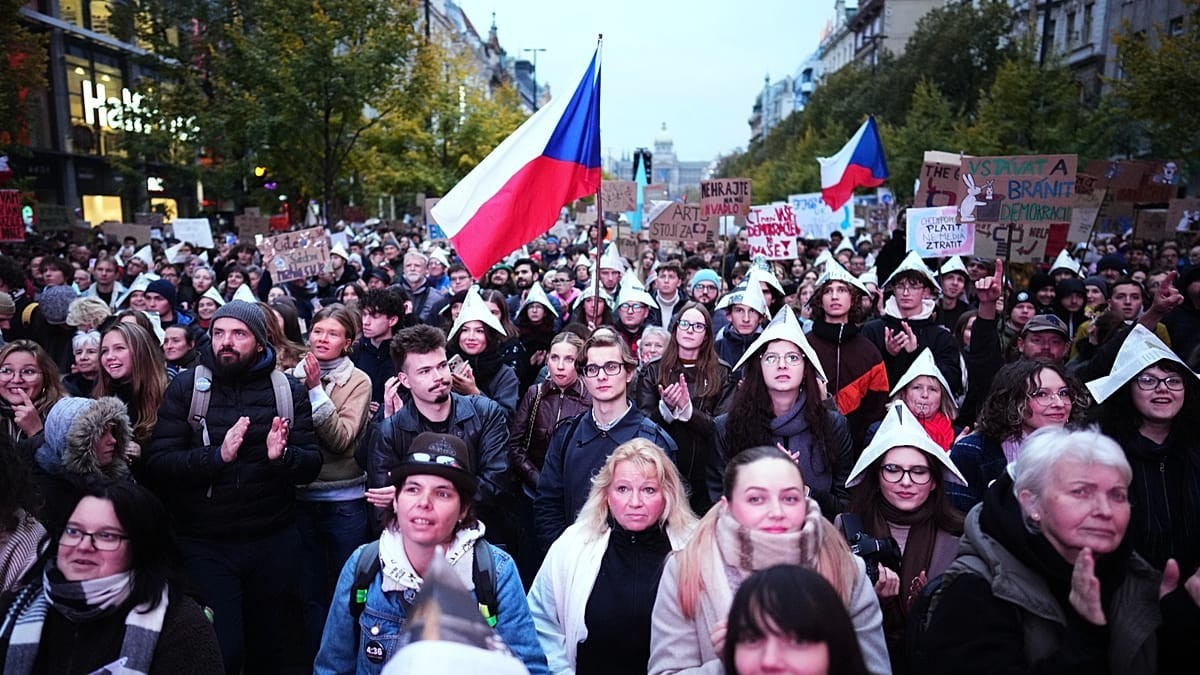
Another major protest is set for Prague's Letná park on Sunday 15 November, two days before the 17 November anniversary of the 1989 Velvet Revolution. Further protests were advertised for 10 November. No further strike has been announced.
Jan Moláček, a Czech Television reporter on the strike committee, set out what any deal would need: "This proposal, if passed, will give the government coalition tools to politically influence the content of both public media." A funding change was not impossible, he said, but it required thorough debate and legal safeguards. Babiš has attacked mainstream media before.
By Jessica Ali, Staff Writer
This article was produced with AI-assisted research and editorial support. Sources: Associated Press, Reuters, Czech Radio, ČTK, EUobserver, Expats.cz and 2eu.brussels. Photographs: EPA/Martin Divisek via EUobserver; Radio Prague International; Euronews. Cover: Global 1 News editorial image.
What's Your Reaction?
 Like
0
 Dislike
0
 Love
0
 Funny
0
 Wow
0
 Sad
0
 Angry
0

Editor-in-Chief at Global1.News. Atlanta-based journalist who cuts through the BS and tells it like it is. Lead anchor, host, and the voice you hear when the spin stops and the truth starts.











Comments (0)