
Newsom Commutes All 548 California Death Sentences
Governor Gavin Newsom commuted the death sentences of all 548 people on California's death row to life without the possibility of parole, the largest mass clemency in US history, as Indiana, Florida and Alabama carried out executions the same day.
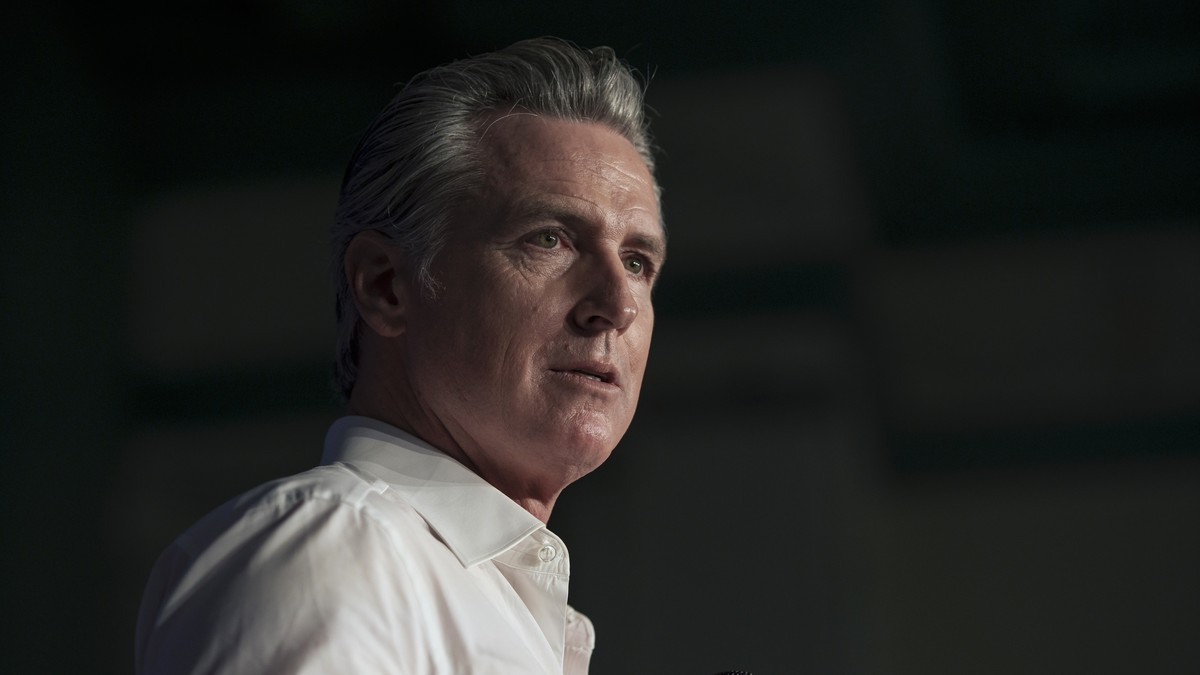
Gavin Newsom spent seven years refusing to put anyone to death in California. On Thursday he went further than any governor in American history, and in a single stroke emptied the largest death row in the Western Hemisphere.
Newsom Commutes All 548 California Death Sentences as Three States Execute the Same Day
Sacramento, California — The governor signed an open letter to Californians on 5 November converting every capital sentence in the state to life without the possibility of parole. The Death Penalty Information Center called it the largest act of mass clemency in the nation's history. By the time the day ended, Indiana, Florida and Alabama had each carried out an execution — the second time this year that three American states have put prisoners to death on the same date.
A Letter Built on One Argument
Newsom did not bury the argument in a press release. He wrote it out for the public record, and he put the case in one sentence: that state-sanctioned killing "is incompatible with California's values, undermines the foundations of our legal system, and diminishes each of us."
He opened with an admission of humility rather than triumph. "After nearly 30 years in public office, I have come to understand the limits of what government can justly accomplish," the letter reads. He adds that the state cannot "execute people in our imperfect legal system and remain true to our core values, first among them justice and human decency."
The sharpest passage is not moral at all. It is an audit. "By every measure, California's system for administering the death penalty is a failure," Newsom writes. "It has not been and cannot be fairly applied and has resulted in the conviction of innocent people."
That claim is the load-bearing wall of the whole decision, and everything that follows in the letter hangs from it.
Why He Would Not Sort the Condemned
The letter concedes, without flinching, that many Californians believe people who commit brutal crimes deserve to die. Newsom does not argue them out of it. He states his own position flatly: "as Governor, I have concluded the state cannot morally kill them."
What he refuses is the sorting. He writes that he "carefully considered different categories of capital crimes and offender characteristics," and that after speaking with victims' families he reached a conclusion that forecloses the case-by-case approach his critics demanded. Each family, he says, experiences its loss as the worst of the worst.
"I have concluded that attempting to distinguish among crimes and offenders for clemency would inadvertently create two classes of murder victims — those whose perpetrators deserve the death penalty and then the rest."
Every condemned prisoner therefore received an identical commutation: the most severe punishment he can lawfully impose. He compressed the outcome into a single line. "These offenders will die in prison but not by our hand."
The Court Decides 382 of Them
None of this is final. California's constitution requires Supreme Court review before a governor may grant clemency to anyone convicted of a felony more than once, and most of the condemned meet that description. By the governor's own count, 382 of the commutations — roughly seventy percent — must be approved by the justices. Four of the seven have to agree.
The recipient list his office published carries an asterisk beside every case in that category. The number of asterisks matches the stated figure exactly, which leaves 166 sentences that change on the governor's signature alone.
Newsom acknowledged the oddity of the arrangement with candor unusual in a clemency letter, describing a process that compels the Chief Justice and Associate Justices into what he called "a unique inter-branch constitutional process," and thanking them for work "they did not choose to take up and with which they may personally disagree."
The Names That Will Fill the Briefs
The list is not abstract, and it will supply the litigation. It includes Richard Allen Davis, convicted of kidnapping and murdering twelve-year-old Polly Klaas from a Petaluma slumber party in 1993. It includes Charles Ng, convicted of eleven murders in the Sierra Nevada foothills in the 1980s, and Cary Stayner, who killed four women near Yosemite in 1999.
Randy Kraft, who kept a written record of sixteen victims across the 1970s and 1980s, is on it. So is Marcus Wesson, convicted of killing nine of his own children in 2004, and Isauro Aguirre, sentenced in 2017 for torturing and killing his eight-year-old son.
Daniel Wozniak, who killed two people in Orange County in 2010 to pay for his wedding, appears there too. His victim's father would learn of the commutation from a reporter.
Newsom did not pretend the roster made his case easier. The letter calls the suffering of victims "indescribable" and says the harm "persists across generations." His argument is narrower and harder: that the state's answer was never lawful in practice, only slow.
Six Billion Dollars and Thirteen Executions
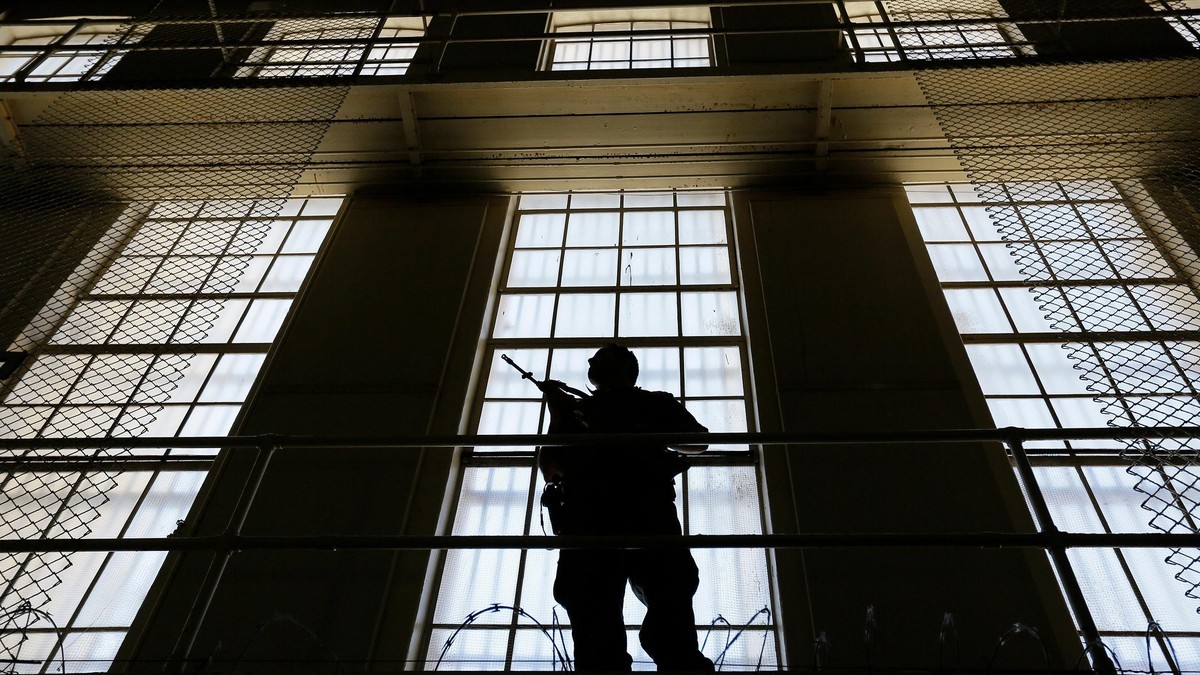
Since voters reinstated capital punishment in 1978, California has executed thirteen people. The Death Penalty Information Center estimates the state spent $6 billion doing so. The last was Clarence Ray Allen, put to death by lethal injection at San Quentin on 17 January 2006.
Newsom is careful to say money is not the reason. "California does not put a price on justice or the healing of victims," he writes. But he does name the cost of delay itself: the action closes capital cases "some of which have been languishing in the courts for more than 40 years."
His office's own figures describe what that wait looks like from the inside. Two hundred and twenty of the condemned had waited fifteen years or longer for habeas counsel. A hundred and thirty-nine had waited twenty years or more. Roughly forty-five could have faced an execution date but for the moratorium he imposed on 13 March 2019.
That is the unresolved tension at the centre of the document, and he does not pretend otherwise. Finality, he writes, "is not closure, something many victims have told me they never experience after a shattering crime."
Eight Exonerations and an Uneven Map
Eight men have been exonerated from California's death row, according to the Death Penalty Information Center. Nationally, at least 203 people sentenced to death since 1973 have later been cleared.
Public opinion has shifted without coming close to abolition. A Pew Research Center poll released in August found 66 percent of Americans supported the punishment for those convicted of murder — and about 73 percent accepted that an innocent person could be executed.
The geography is not neutral either. Los Angeles County alone sentenced 319 people to death, roughly 174 of whom were still on death row when the announcement came. Los Angeles, San Bernardino and Riverside counties account for half of California's condemned population and have together sent more people to death row than any state outside California.
The American Civil Liberties Union has long argued that this unevenness reflects racial bias. Its executive director, Anthony Romero, said the commutations "reflect what justice demands."
In Three Other States, the Injections Went Ahead
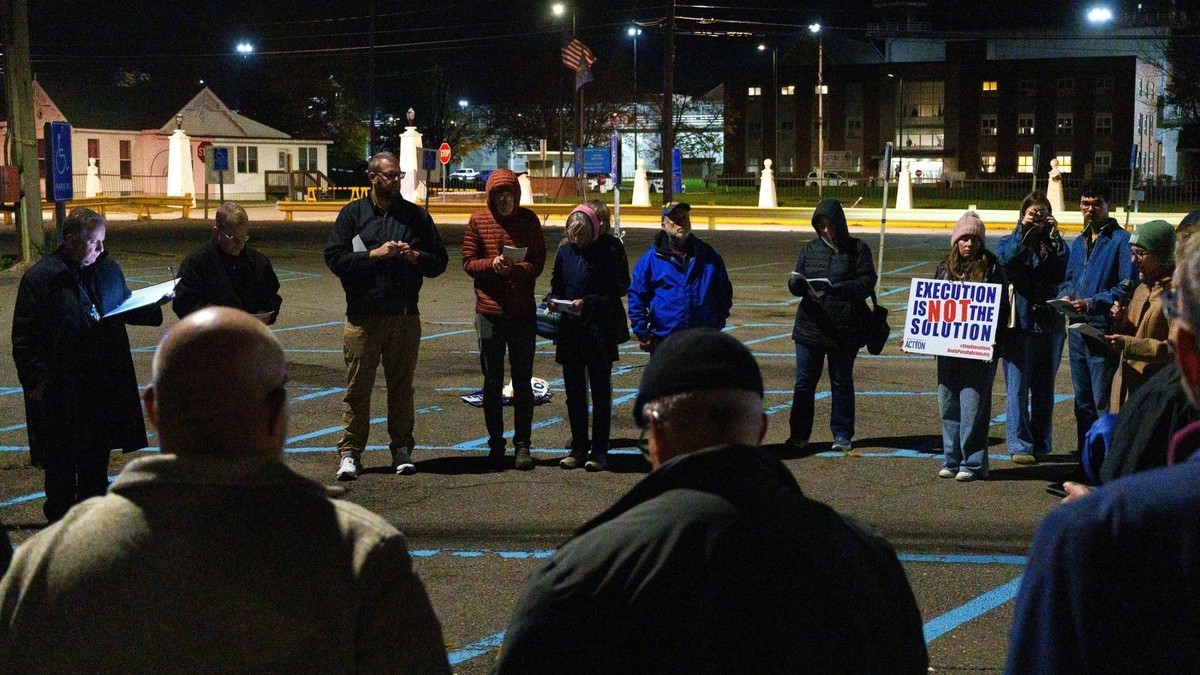
Across the same hours, three states did the thing Newsom says California cannot do. Indiana put Jeffrey Weisheit to death at 12:45 a.m. local time at the state prison in Michigan City, for the 2010 house fire near Evansville that killed his girlfriend's children, Alyssa Lynch, 8, and Caleb Lynch, 5. He offered no final words. Governor Mike Braun declined clemency.
Florida executed Jesse Guardado, 64, at 6:13 p.m. at Florida State Prison in Starke, for stabbing 75-year-old Jackie Malone in her Walton County home in 2004 and stealing a jewelry box and $80 to buy drugs. It was the state's nineteenth execution this year under Ron DeSantis, matching a record Florida set in 2025.
Alabama closed the day with Michael Taylor, 54, put to death for beating Ivan and Lucille Moore, aged 83 and 79, with a metal bar during a 1991 robbery in Gadsden, when he was 19. A judge had struck down nitrogen gas as unconstitutional, forcing a switch to lethal injection; his lawyers objected and lost.
The Families and the Prosecutors Who Say No
Steve Herr's son Samuel was killed by Daniel Wozniak in 2010. He told the Southern California News Group he learned of the commutation from a reporter and felt "anger, immense anger," calling the governor a coward who "didn't have the guts to at least take this case-by-case and address the families personally."
Marc Klaas, whose daughter Polly was murdered by Richard Allen Davis, said the prospect "upsets me terribly." He had already given up on an execution, he said, "but I was still secure in my mind that he and the rest of them would be on death row for the rest of their lives."
The California District Attorneys Association condemned the decision without qualification. Its president, Monterey County District Attorney Jeannine Pacioni, said the governor had "disregarded the decisions of hundreds of jurors and judges, and the anguish of families who lost loved ones to the worst crimes imaginable." Its chief executive, Greg Totten, accused him of turning "an extraordinary constitutional safeguard into a sweeping instrument of personal policy."
Anne Marie Schubert of the Criminal Justice Legal Foundation promised a challenge in the state Supreme Court, and said victims' families were never told.
The Families and the Advocates Who Say Yes
Jess Nichol, Polly Klaas's sister, answered her own father's position in public. "I won't pretend I've always opposed the death penalty," she said in a statement. "I used to think the man who killed my sister deserved execution." What changed, she said, was recognizing that "whether he's executed has absolutely nothing to do with my recovery or with real public safety."
"The system tells survivors that execution matters to our healing. It doesn't."
Robin Maher, executive director of the Death Penalty Information Center, said other governors have issued universal clemencies but "none have been at this scale," and that Newsom had "irrevocably changed California's relationship with the death penalty." Natasha Minsker of the California Anti-Death Penalty Coalition put it more bluntly: "The justice system treats you better if you are rich and guilty, than if you are poor and innocent."
The Rev. Jeff Hood, who has witnessed fourteen executions as a spiritual adviser, called it "the height of moral leadership."
What the Pen Does Not Do
The commutation does not abolish capital punishment in California, and Newsom says so himself. "The power to repeal the death penalty rests with the Legislature and voters," the letter states, while the discretion to seek and impose death sentences "remains, as ever, in the hands of prosecutors, juries, and courts."
Voters kept the punishment on the books in 2012 and again in 2016, and 23 states have banned it outright. The Los Angeles County district attorney, Nathan Hochman, has said his office will keep reviewing death-eligible cases "with the rigor, care and restraint these decisions demand."
The country is pulling in two directions. President Donald Trump's administration pledged in April to expand federal executions, including by firing squad, after Joe Biden commuted 37 of the 40 federal death row prisoners in 2024.
And Newsom is leaving. He is term-limited, hands over in January to the Democrat projected to succeed him, Xavier Becerra, and is widely discussed as a 2028 candidate. Whatever the court does with the 382, the political argument has already started without it.
By Jessica Ali, Staff Writer
This article was produced with AI-assisted research and editorial support. Sources: BBC, The Guardian, USA TODAY, KCRA 3, The Santa Barbara Independent, CapRadio, Al Jazeera, the Associated Press, PBS NewsHour, CNN, the Death Penalty Information Center and the Office of the Governor of California. Photographs: AP Photo/Eric Risberg (death row, San Quentin State Prison); John Tully/Getty Images (Newsom); Michael Clubb/South Bend Tribune/USA Today Network/Imagn Images (vigil outside Indiana State Prison). Cover: Global 1 News editorial image.
What's Your Reaction?
 Like
0
 Dislike
0
 Love
0
 Funny
0
 Wow
0
 Sad
0
 Angry
0

Editor-in-Chief at Global1.News. Atlanta-based journalist who cuts through the BS and tells it like it is. Lead anchor, host, and the voice you hear when the spin stops and the truth starts.













Comments (0)