
Climate action needs women in decision-making: COP31 ambassador
As the United Nations climate summit convenes in Antalya this November, the broader regional dynamics of energy security, great‑power rivalry and the pressing need for inclusive governance converge on a single theme: climate action cannot succeed without the full participation of women.
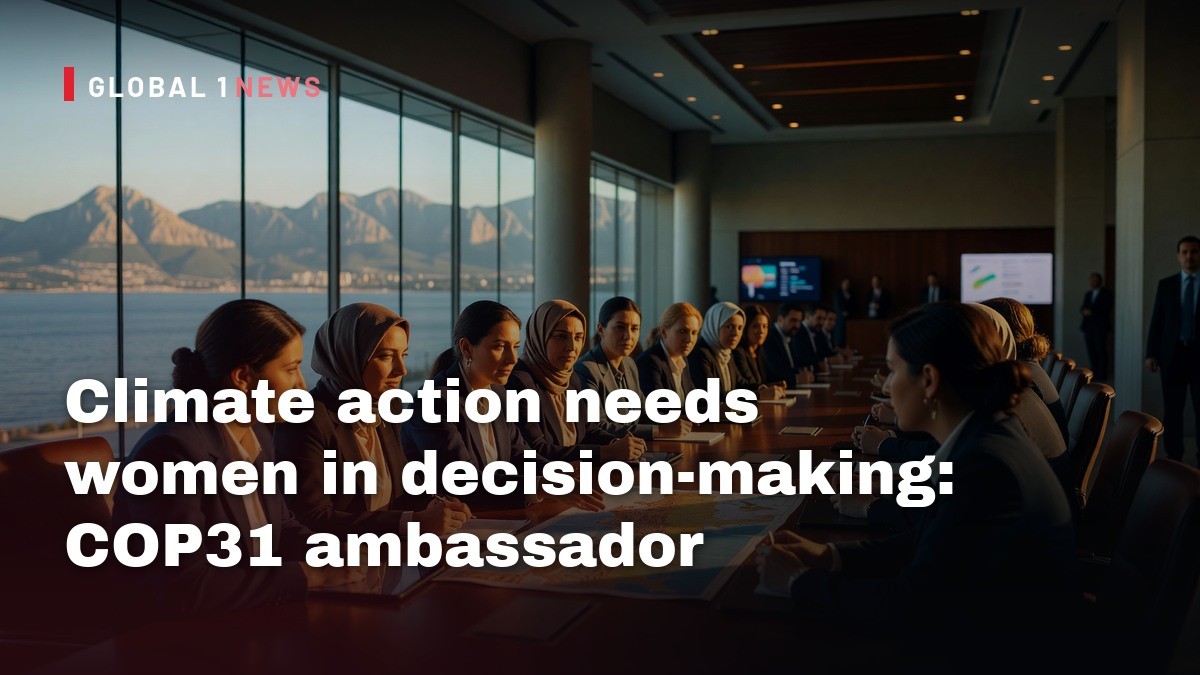
As the United Nations climate summit convenes in Antalya this November, the broader regional dynamics of energy security, great‑power rivalry and the pressing need for inclusive governance converge on a single theme: climate action cannot succeed without the full participation of women. Tuğba Işık Ercan, Turkey’s appointed Women’s Ambassador for COP31, underscored this point in a recent interview, arguing that women’s involvement must move beyond token representation to genuine decision‑making power across sectors ranging from energy to urban planning. Her remarks, set against Turkey’s own experience of mobilising women through large‑scale zero‑waste programmes, offer a lens through which to assess both the domestic and regional implications of gender‑inclusive climate policy.
Women as Essential Actors in Climate Policy
Ercan’s central claim is that women’s participation is not an optional add‑on but a prerequisite for effective and lasting climate policy. She stresses that women should be seen not merely as victims of environmental degradation but as leaders capable of shaping solutions. This framing aligns with a growing body of research suggesting that gender‑diverse decision‑making bodies tend to produce more comprehensive and resilient policies, particularly in areas such as resource management and disaster risk reduction.
In the Turkish context, Ercan points to the “Zero Waste: Possible with Women” programme, which has already reached approximately 45,000 women in six months. By training women in sustainability, waste management and circular‑economy principles, the initiative aims to embed climate‑friendly practices at the household level while also creating a pipeline of skilled participants for broader policy arenas. The emphasis on moving from “messengers” to “actors” reflects a strategic shift: women are being prepared not only to implement policies but to influence their design.
The Zero‑Waste Movement as a Model for Regional Cooperation
The Zero Waste Movement, championed by Turkey’s first lady Emine Erdoğan, serves as a showcase of how state‑backed environmental campaigns can mobilise large segments of the population, particularly women. Ercan highlights the programme’s expansion from a pilot in Siirt to a nationwide education effort across 81 provinces, indicating a systematic approach that could be replicated in neighbouring states facing similar waste‑management challenges.
Beyond domestic impact, the movement offers a template for regional cooperation on circular‑economy initiatives. By sharing training curricula, best‑practice workshops and success stories, Turkey could position itself as a hub for green‑technology transfer within the Middle East, a region where waste management infrastructure often lags behind rapid urbanisation. Such cooperation would dovetail with broader Gulf‑wide efforts to diversify economies away from hydrocarbons and invest in sustainable urban development.
Sectoral Expansion: From Households to Energy and Agriculture
Ercan insists that women’s roles must extend into traditionally male‑dominated sectors such as energy, agriculture, technology and finance. She argues that political parties, including the ruling Justice and Development Party (AK Party), should institutionalise mechanisms for consulting women experts and producers. This could involve formal advisory councils, gender‑balanced delegations to international climate negotiations, and targeted funding streams for women‑led enterprises.
In practice, this means that women who have completed the zero‑waste training could be equipped to contribute to renewable‑energy projects, sustainable‑agriculture initiatives and smart‑city planning. By integrating gender perspectives into these sectors, policy outcomes are likely to be more inclusive of household energy needs, water‑use practices and community‑level resilience, thereby enhancing the overall effectiveness of climate mitigation and adaptation strategies.
Political Party Initiatives and Institutional Support
The AK Party’s Women’s Branch, chaired by Ercan, has positioned environmental protection as a core pillar of its agenda since February 2025. Through its Department of Environment and Urban Policies, the branch has rolled out training programmes, workshops and pilot projects that blend environmental education with practical skill‑building. This institutional backing is crucial; without party‑level commitment, scaling gender‑inclusive climate initiatives would remain fragmented.
Ercan calls for political parties across the region to emulate this model by expanding training opportunities, granting women greater responsibility in policymaking, and forging partnerships with local governments, academia and civil society. Such multi‑stakeholder collaboration can amplify the impact of gender‑focused climate actions, ensuring that proposals move from concept to implementation.
COP31 Platform: Showcasing Women‑Led Solutions
During COP31, Turkey plans to host a series of panels, workshops and exhibitions that foreground women’s contributions to food security, energy management, climate‑resilient cities and sustainable production. Ercan emphasises that the summit’s success will hinge on whether these discussions translate into concrete partnerships and replicable projects at the local level.
One highlighted initiative is the “Cities Rising with Women: Following the Water” programme in Istanbul, which tackles water security, drought and flood risks. By presenting such case studies at COP31, Turkey aims to demonstrate the tangible benefits of integrating women’s expertise into urban resilience planning—a message that resonates across the water‑scarce Middle East, where climate‑induced water stress remains a critical security concern.
Financing and Technology Access for Women
Ercan stresses that access to green finance and emerging technologies is essential for women to fully participate in the green economy. She calls for mechanisms that channel funding to women‑led initiatives, ensuring that financial barriers do not sideline half the population from the climate transition.
In practice, this could involve dedicated grant programmes, low‑interest green loans and capacity‑building funds that target women entrepreneurs in renewable‑energy, sustainable‑agriculture and circular‑economy ventures. By linking financial support with training outcomes—such as those from the zero‑waste programme—policy makers can create a virtuous cycle where skills development leads to investment, which in turn fuels further innovation and job creation for women.
Measuring Impact: From Participation to Practical Solutions
Finally, Ercan argues that the true metric of COP31’s success should be the implementation of solutions that improve daily lives, not merely the number of participants. She proposes evaluating the impact of environmental training by tracking reductions in waste, improvements in resource efficiency and the adoption of sustainable choices at the community level.
This outcome‑oriented approach mirrors a broader shift in climate governance toward results‑based accountability. For the Middle East, where policy implementation often faces bureaucratic hurdles, establishing clear, gender‑sensitive indicators can help ensure that climate commitments translate into on‑the‑ground change. As Turkey seeks to position itself as a leader in gender‑inclusive climate action, the lessons from its zero‑waste programmes and the upcoming COP31 dialogues could set a benchmark for the region’s future climate strategies.
This article was produced with AI-assisted research and editorial support. Reporting is based on the source material cited below. Sources: Daily Sabah Middle East; dailysabah.com; Global1.News (06 November 2026).
By Malik Hassan, Staff Writer
What's Your Reaction?
 Like
0
 Dislike
0
 Love
0
 Funny
0
 Wow
0
 Sad
0
 Angry
0
Middle East Correspondent at Global1.News. Based in Beirut, covering politics, conflict, energy, and society across the Middle East. Brings context and depth to a region often reduced to headlines.










Comments (0)