
Iran’s IRGC says two tankers, tugboat were ablaze in Hormuz Strait
The Islamic Revolutionary Guard Corps (IRGC) announced on 5 November 2026 that two oil tankers and a tugboat caught fire while attempting to navigate the Strait of Hormuz.
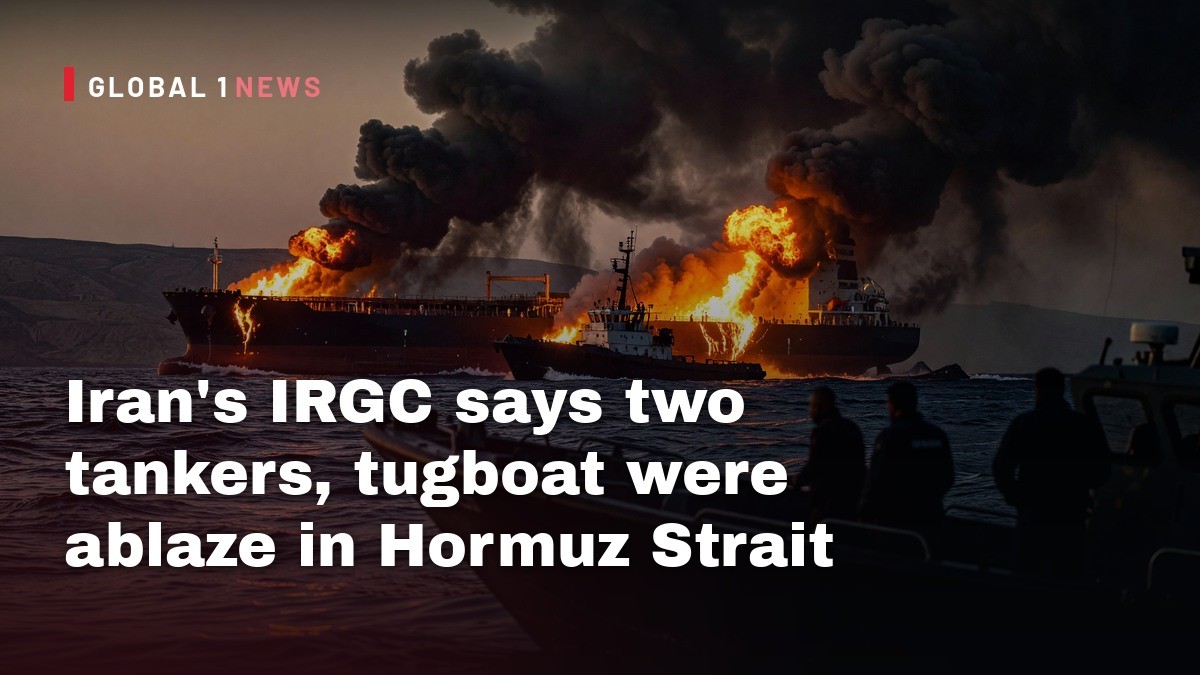
The Islamic Revolutionary Guard Corps (IRGC) announced on 5 November 2026 that two oil tankers and a tugboat caught fire while attempting to navigate the Strait of Hormuz. According to the IRGC statement, the vessels were using an “unauthorised route” when the incidents occurred, leading to a mine strike on one tanker and a massive blaze on a second supertanker. A tugboat dispatched to fight the fire subsequently ignited itself. The IRGC framed the events as a direct consequence of U.S. policy that, in its view, forces commercial shipping into dangerous, mined passages.
Details of the incidents
The IRGC described three separate but related events. The first involved a large oil tanker that, while traversing what the Guard called an “illegal southern passageway,” struck a mine and caught fire. The second incident concerned a supertanker exiting the eastern section of the waterway; it was engulfed in a “massive fire” after an unspecified mishap. Finally, a tugboat that had been deployed to extinguish the blaze on the supertanker “burst into flames” of its own, according to the statement.
All three vessels were said to be attempting to pass through an “unauthorised route.” The IRGC did not provide the names of the ships, their flags, or the cargo they carried, nor did it disclose the exact location of the mine or the cause of the supertanker’s fire. The description of the tugboat’s ignition suggests a rapid escalation of the emergency response, but details remain sparse.
IRGC’s political framing
The IRGC’s statement went beyond the immediate maritime incidents, linking them to broader U.S. policy and domestic politics. It accused the United States of imposing “very heavy insurance costs” on American taxpayers and regional allies by “insisting and inciting vessels to violate and pass through mined passages.” The Guard argued that the U.S. strategy forces commercial shipping into hazardous routes, thereby generating financial losses for the U.S. and its partners.
In a pointed reference to the 2026 U.S. mid‑term elections, the IRGC claimed that the “disgraceful electoral defeat” of the Democratic Party was tied to the costs incurred from these maritime incidents. It suggested that the U.S. could have avoided “heavy losses” and the political fallout by “releasing Iran’s frozen credits,” which the Guard said amount to “not less than half of these costs that have been made so far.” The narrative positions the incidents as a direct punishment for U.S. policy, framing them as both a security event and a political lever.
Implications for regional shipping
The Strait of Hormuz remains one of the world’s most critical chokepoints for oil transport, handling a substantial share of global petroleum flow. Any disruption—whether from mines, fires, or other hazards—has immediate repercussions for shipping costs, insurance premiums, and supply chain reliability. The IRGC’s claim that vessels were forced onto “unauthorised routes” raises questions about the safety of the main navigation lanes and the potential for further incidents.
Insurance firms and ship owners typically assess risk based on the presence of mines and the likelihood of conflict. An incident involving a mine strike, as described by the IRGC, would likely prompt a reassessment of risk premiums for vessels transiting the strait. Moreover, the loss of a supertanker to fire could temporarily reduce the available tonnage for oil shipments, potentially tightening global markets, especially if similar events recur.
U.S. maritime policy and the “unauthorised route” claim
The IRGC’s assertion that the vessels were using an “unauthorised route” implies that the United States may have directed or encouraged ships to deviate from the standard shipping lanes. The Guard’s statement does not provide evidence of such directives, but it frames the narrative as a direct cause‑and‑effect relationship: U.S. pressure leads to hazardous navigation, which then results in accidents and financial loss.
From a U.S. perspective, the strategic goal of maintaining open navigation in the Strait often involves escorting commercial vessels and providing real‑time threat assessments. If the United States had indeed advised ships to use alternative passages, it would reflect a risk‑mitigation approach in response to perceived Iranian mining activity. However, the IRGC’s framing suggests that any such guidance is portrayed as coercive, intended to “incite vessels to violate” international maritime law.
Economic impact on Iran’s frozen assets
The IRGC’s statement references “Iran’s frozen credits,” noting that releasing them would offset “not less than half of these costs” incurred by the United States and its allies. While the Guard does not quantify the total cost of the incidents, the mention of frozen assets indicates that Tehran continues to view its blocked financial resources as leverage in negotiations.
In practice, frozen Iranian assets have been a point of contention in diplomatic talks for years, with periodic releases tied to nuclear negotiations or humanitarian considerations. By linking the release of these credits to the financial losses from the Hormuz incidents, the IRGC is attempting to frame the situation as a cost‑benefit calculation: releasing the assets would mitigate U.S. expenses while also providing Iran with economic relief.
Regional diplomatic fallout
The incidents are likely to heighten tensions not only between Iran and the United States but also among Gulf states that rely on the strait for oil exports. Countries such as Saudi Arabia, the United Arab Emirates, and Oman monitor maritime security closely, and any escalation can affect regional stability. The IRGC’s narrative positions the United States as the primary provocateur, potentially rallying regional actors around a shared grievance.
At the same time, the incidents could prompt calls for increased naval presence by coalition forces to ensure safe passage. Historically, multinational naval patrols have been deployed in the strait to deter mining and protect commercial shipping. A renewed or expanded presence would be a direct response to the safety concerns raised by the IRGC’s report, reinforcing the security umbrella that many Gulf states depend upon.
Outlook and potential next steps
In the immediate aftermath, the focus will be on assessing the damage to the vessels, the extent of any oil spillage, and the environmental impact of the fires. International maritime agencies and environmental watchdogs are likely to request detailed incident reports, which the IRGC has not yet provided.
Strategically, the IRGC’s framing of the incidents as a consequence of U.S. policy suggests that Tehran may use the events to press for a reevaluation of maritime rules in the region. Expect diplomatic statements from Israel’s Ministry of Foreign Affairs and the Israel Innovation Authority to reference the broader security implications for Israeli shipping interests, especially as Israeli companies increasingly rely on global energy markets. The narrative may also be leveraged by Israeli analysts to argue for stronger regional security cooperation, emphasizing the need for reliable, insured shipping lanes that are free from the threat of mines or forced rerouting.
Overall, the Hormuz incidents underscore the fragile balance between commercial necessity and geopolitical risk in one of the world’s most contested waterways. How the United States, Iran, and regional partners respond will shape not only immediate shipping costs but also the longer‑term strategic calculus for energy security across the Middle East.
This article was produced with AI-assisted research and editorial support. Reporting is based on the source material cited below. Sources: Middle East Eye; middleeasteye.net; Global1.News (05 November 2026).
By Hannah Berg, Staff Writer
What's Your Reaction?
 Like
0
 Dislike
0
 Love
0
 Funny
0
 Wow
0
 Sad
0
 Angry
0

Israel Correspondent at Global1.News. Based in Tel Aviv, covering Israeli politics, security, technology, and society. Provides balanced, deeply-sourced reporting on one of the most closely-watched regions in the world.














Comments (0)