
UK House Prices Post Biggest Annual Fall in Three Years, One Day After the Bank of England Hikes
UK house prices fell 0.6% in October to an average of £296,285, and are now 1.2% lower than a year earlier, the biggest annual fall since October 2023. The drop came the day after the Bank of England raised Bank Rate to 4%, with southern England leading the decline and Northern Ireland still growing.
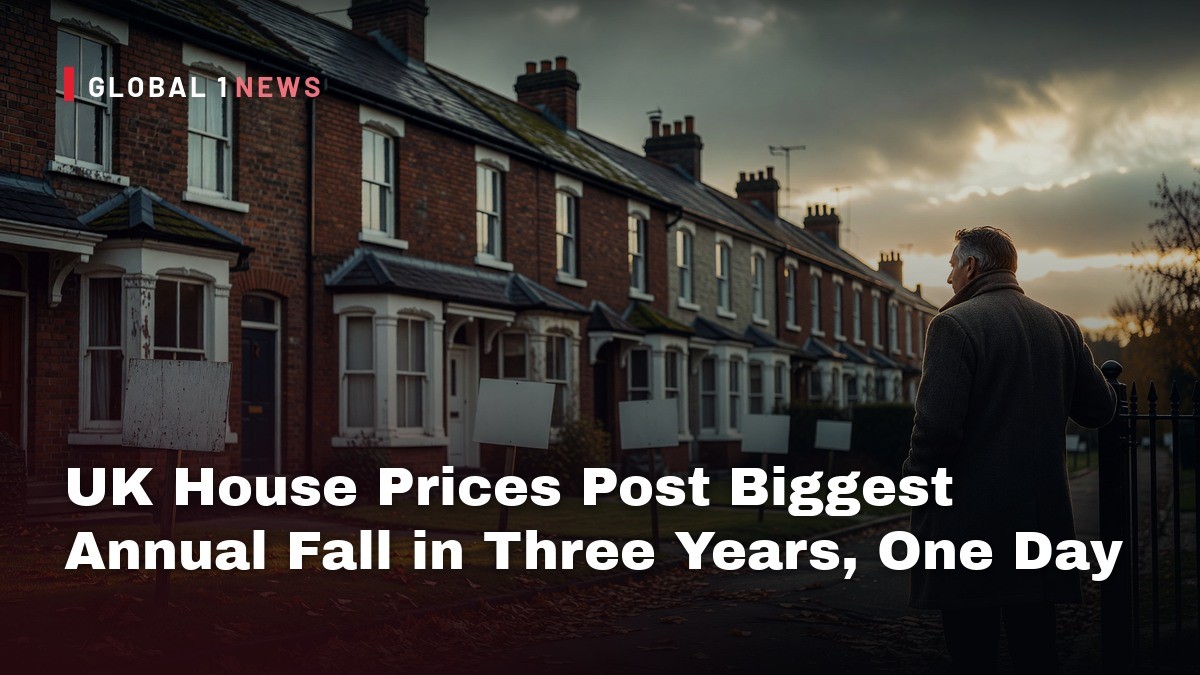
Folks, the housing market just handed down its verdict on the Bank of England's first rate rise in three years, and it took exactly one day to arrive. The average British home lost £1,882 in value last month, the steepest monthly fall since the summer of 2023, and the annual figure is now the weakest in three years. This is what a squeeze looks like when it finally reaches the street where you live.
UK House Prices Post Biggest Annual Fall in Three Years, One Day After the Bank of England Hikes
London, United Kingdom — The Lloyds House Price Index for October landed at 07:00 on Friday morning, and it was uglier than anyone had pencilled in: a 0.6 percent monthly fall, a 1.2 percent annual decline, and a fourth consecutive month in the red. Here is what the numbers actually say, who they hurt first, and what happens next.
What Lloyds Reported on Friday Morning
The average UK property was worth £296,285 in October, down £1,882, or 0.6 percent, from September's £298,167, Lloyds said. Measured against the same month a year earlier, prices are 1.2 percent lower, the biggest annual fall since October 2023, and this is the fourth consecutive monthly decline. It is also the steepest monthly drop since August 2023, when the same index recorded a 1.6 percent fall. The series is the longest-running monthly house price measure in the country, running back to January 1983, and it changed its name from the Halifax House Price Index to the Lloyds House Price Index in July, after Lloyds Banking Group dropped the Halifax brand, with the methodology unchanged. That rename matters for anyone reading the coverage this morning, because the measure that used to be quoted as Halifax is now quoted as Lloyds, and it is the same series underneath.
The Number Nobody Forecast
The consensus pointed the other way. Economists surveyed by FXStreet expected a monthly rise of 0.1 percent, which would have been the first monthly increase since June. They got minus 0.6 percent instead, and the three-month-on-three-month measure stood at minus 0.5 percent. Andrew Asaam, Lloyds' mortgages director, did not dress it up. "UK house prices fell by -0.6% in October, a larger drop than in recent months, taking the average property price down to £296,285," he said. "Prices were also -1.2% lower than a year ago, the biggest annual fall since October 2023." A miss of that size on a series this closely watched is not noise. When the forecasters are wrong in the same direction as the mortgage market is moving, the forecast is usually the thing that was wrong.
A Day After the Bank of England Moved
The timing is not subtle. On Thursday the Bank of England raised Bank Rate by a quarter point to 4 percent, its first increase since August 2023, on an 8-1 vote. Catherine Mann was the lone dissenter, arguing for half a point, to 4.25 percent. The Monetary Policy Committee said the degree of inflationary pressure "in the pipeline is now sufficient to warrant an increase in Bank Rate." Consumer price inflation was 3.5 percent in September and the Bank expects it to reach around 5 percent by the middle of next year. The conflict in the Middle East is now in its ninth month, and global energy prices have continued to rise from an already elevated level. Governor Andrew Bailey said the move "shouldn't be seen as the first in an inevitable long sequence of hikes," while conceding it did not look likely to be the last unless that conflict is resolved. The next decision falls on 17 December.

Mortgage Rates Are the Whole Story
What decides a purchase is not Bank Rate itself but the fixed rate a buyer is actually offered at the desk. Moneyfacts puts the average two-year fixed mortgage at 5.97 percent and the average five-year fix at 5.99 percent. That is the number that turns a viewing into a "we'll wait and see." Asaam points at the same mechanism. "Renewed inflationary pressures, driven in part by the conflict in the Middle East, are keeping borrowing costs high and adding to the squeeze on household finances, making some buyers understandably more cautious," he said. Oil has traded above $100 a barrel in recent months, which feeds through into fuel, heating and everything that has to be driven or shipped before it reaches a shelf. A buyer stretching for a deposit is not reading the Monetary Policy Report. They are reading a mortgage illustration, and that illustration is now priced off a Bank Rate of 4 percent.
The Demand Data Behind the Price Data
Prices are the last thing to move. Activity moves first, and it has been moving down for months. Bank of England data show mortgage approvals for house purchases fell to 53,443 in September, down 2.5 percent on the month and 19.4 percent on a year earlier. HMRC provisional figures put UK residential transactions at 94,800 in September, 0.5 percent lower on the month and 3.6 percent below September 2025, with the three months to September 3.3 percent weaker than the preceding three. The RICS residential market survey for September recorded new buyer enquiries at a net balance of minus 22 percent, from minus 18 percent in August, and agreed sales at minus 18 percent. One line in that survey pointed the other way: new instructions came in at plus 6 percent, the first positive reading since mid-2025, meaning more people put homes up for sale even as fewer people committed to buying them.
Two Housing Markets, Moving in Opposite Directions
A national average hides a great deal. Greater London recorded the steepest annual decline of any region, down 3.1 percent to £524,892. The South East fell 2.4 percent to £379,258 and the South West 2.4 percent to £298,057, while Eastern England dropped 2.3 percent to £327,241. Now look north and west. The North West rose 2.2 percent to £249,916 and the North East 2.0 percent to £184,318. The West Midlands edged up 0.3 percent to £261,656, the East Midlands slipped 0.3 percent to £244,426, and Yorkshire and the Humber fell 1.0 percent to £214,485. Northern Ireland still leads the country at plus 4.4 percent to £228,708, but that pace has slowed from 6.9 percent the month before. Scotland is up 2.8 percent at £222,667 and Wales up 1.6 percent at £233,116. Regional figures rest on the most recent three months of approved mortgage transactions.

"Sharp Correction Territory" in the South
The southern numbers drew blood from the people who sell houses for a living. "Southern England is in sharp correction territory now," said Jonathan Hopper, chief executive of Garrington Property Finders. "Prices there are sliding so far, and so fast, that they've dragged the national average into the red too." Hopper was careful to say the data cannot be dismissed as a blip. He points out that average prices across the UK have fallen on a quarterly basis for six months in a row, and that the annual pace of decline accelerated by a factor of 12 between September and October. The arithmetic backs him: an annual rate of minus 0.1 percent in September became minus 1.2 percent in October. He also attributed part of October's slowness to uncertainty in the run-up to the Budget on 28 October, which is a claim about timing rather than cause.
The Psychological Damage
Estate agents do not usually volunteer bad news, which is why the next quote is worth reading twice. "The market has lost some momentum as we head towards the end of the year," said Amy Reynolds, head of sales at the Richmond agency Antony Roberts. "Buyers are still out there, but they're being careful. The people hit hardest are those remortgaging and second-steppers trying to stretch to one more bedroom." Then she named the part that no index measures. "The real damage is psychological. Another rise tells people that borrowing is getting more expensive, not cheaper, and that makes them hesitate." That is how a rate decision becomes a housing story. Not through a formula, but through a hundred thousand households deciding, separately and silently, that this is not the month to move.
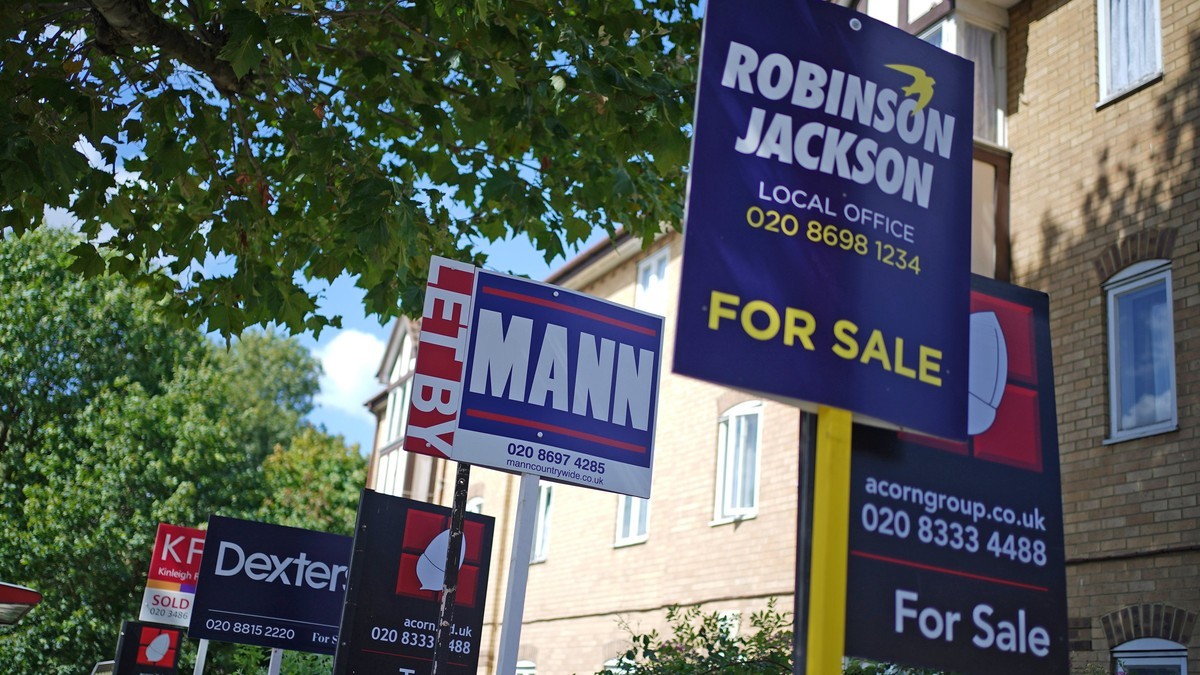
What Happens to First-Time Buyers
Falling prices are not automatically bad news for someone trying to get on the ladder, and Lloyds is keen to make that case. "House prices have changed relatively little over the past couple of years, as the market has gradually adjusted to higher interest rates," Asaam said, adding that higher energy and household costs made some adjustment unsurprising. His forward view is deliberately calm. "We don't expect this to lead to a sustained period of falling house prices. With wages continuing to rise faster than property prices, the gap between earnings and house prices should gradually narrow, helping affordability to improve over time." That is the mechanism the Bank of England is also leaning on: the Bank's minutes note that the 28 October Budget measures were expected to reduce inflation by about a quarter of a percentage point by the second quarter of 2027. None of it helps anyone whose fix expires next month.
What to Watch Between Now and Spring
Three things matter from here. The first is 17 December, the next Monetary Policy Committee decision, with inflation still climbing and Bailey refusing to promise anything. The second is the energy price, which is the same thing as saying the Iran war: the Bank's own projections put consumer price inflation at around 5 percent by the middle of 2027, and every barrel above $100 makes that path worse. The third is the spring selling season, the first real test of whether buyers reappear at these prices. Savills said this week that Britain's sluggish housing market is not expected to recover until 2028, when an improvement in the economy and in mortgage affordability is expected to support a recovery. If your fix expires in the next six months, 17 December is the date to have circled, because a member of the committee who voted for this rise, Alan Taylor, wrote in the minutes that it does not open a cycle and that the next step could be up, down or unchanged. Only one of those three brings a cheaper offer.
By Jessica Ali, Staff Writer
This article was produced with AI-assisted research and editorial support. Photographs: ColsTravel/Alamy via The Guardian, PA via The Independent, and It's No Game via Wikimedia Commons (CC BY 2.0). Cover: Global 1 News editorial image. Sources: Lloyds House Price Index (Lloyds Banking Group and S&P Dow Jones Indices), Bank of England Monetary Policy Summary and Minutes, Bank of England mortgage approvals data, HMRC residential transactions, RICS UK Residential Market Survey, Moneyfacts, The Guardian, The Independent, ITV News, Sharecast, Alliance News, Investing.com and Savills.
What's Your Reaction?
 Like
0
 Dislike
0
 Love
0
 Funny
0
 Wow
0
 Sad
0
 Angry
0

Editor-in-Chief at Global1.News. Atlanta-based journalist who cuts through the BS and tells it like it is. Lead anchor, host, and the voice you hear when the spin stops and the truth starts.















Comments (0)