
Hat Yai Monorail Clears Key Cabinet Hurdle, Bringing Southern Thailand Its First Mass Transit System
The Thai cabinet has approved MRTA authority to operate rail services in Songkhla, clearing the way for the Hat Yai monorail. Phase 1 spans 12.54km with 12 stations from Khlong Hwa to the van terminal, with Phase 2 to extend 9.87km to Hat Yai International Airport.
The Thai cabinet has formally approved a draft royal decree authorising the Mass Rapid Transit Authority of Thailand (MRTA) to operate rail services in Songkhla province, clearing the way for the Hat Yai monorail project to move from planning toward construction. The decision, reached on Wednesday, marks a historic step for southern Thailand, which has long awaited its first large-scale mass transit system.
Hat Yai Monorail Clears Key Cabinet Hurdle, Bringing Southern Thailand Its First Mass Transit System
Bangkok, Thailand — The Mass Rapid Transit Authority of Thailand (MRTA) is set to advance Songkhla province's Hat Yai monorail project after the cabinet approved its authority to operate rail services in the province. The decision paves the way for a study of a 9.87-kilometre Phase 2 extension to Hat Yai International Airport, a move that would complete a 22.41-kilometre network connecting the city's commercial heart with its key transport gateway.
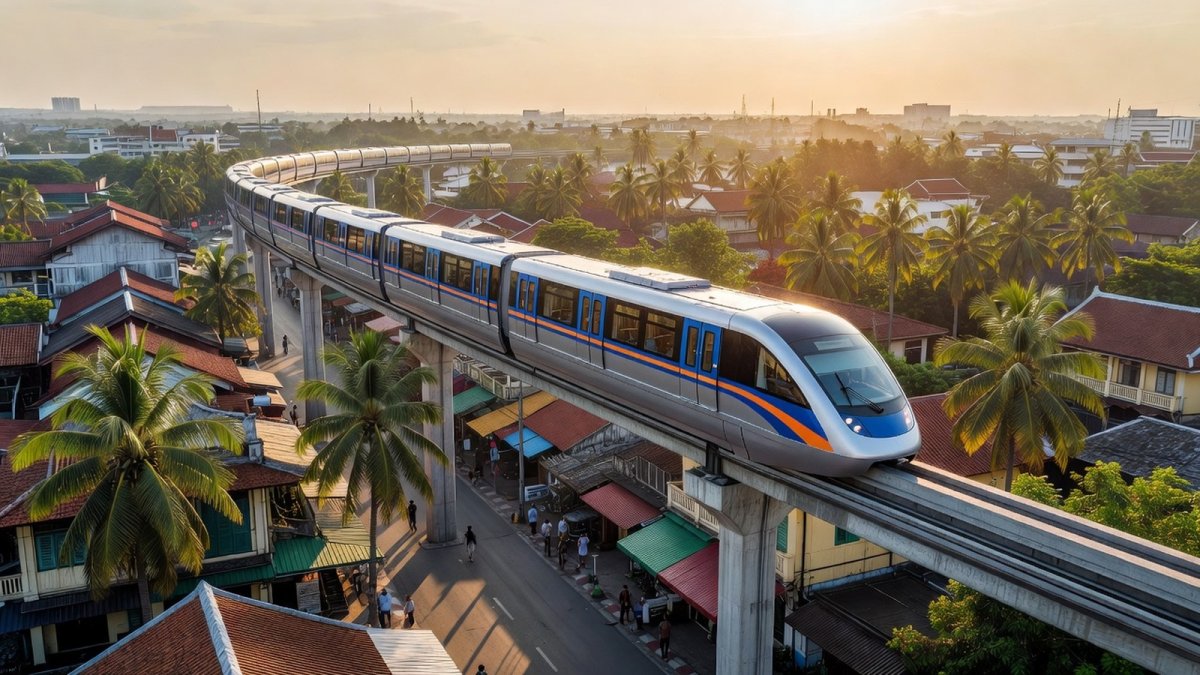
Cabinet Decision Gives MRTA Formal Mandate in Songkhla
The cabinet on Aug 5, 2026 approved the principle of a draft royal decree adding Songkhla to the provinces in which the MRTA is authorised to operate rail services. The decision gives the MRTA a formal mandate to pursue the project and marks a key step toward construction, according to officials familiar with the process.
Deputy government spokesperson Ploythalay Laksameesaengjan explained that the cabinet has instructed the Office of the Council of State to scrutinise the draft decree before the relevant agencies proceed with the next steps. The Transport Ministry was also directed to consider recommendations from the Ministry of Natural Resources and Environment and the National Economic and Social Development Council (NESDC), while the Budget Bureau will examine the project further. The Ministry of Interior has been asked to take the NESDC's recommendations into consideration.
The project has already been endorsed by the MRTA board and is consistent with the transport master plan and a resolution adopted by the Land Traffic Management Commission, giving it a solid legal and policy foundation as it moves forward.
Phase 1 and Phase 2: A 22.41-Kilometre Network for Hat Yai
Phase 1 will be a 12.54km monorail from Khlong Hwa in Hat Yai district to the van terminal, with 12 stations and a maintenance centre at Khlong Hwa. Phase 2 would add 9.87km, bringing the total route length to 22.41km and extending the line from the passenger van terminal to Hat Yai International Airport.
MRTA governor Gardphajon Udomdhammabhakdi said the MRTA would study Phase 2 to complete Songkhla's rail network and improve connectivity between the city and airport. The airport extension is considered critical for tourism and business travel, as Hat Yai International Airport serves as a major gateway for both domestic visitors and cross-border travellers from Malaysia.
The route will cover major economic zones and locations with heavy passenger traffic, with key stations designed to serve specific communities. Kho Hong station will accommodate passengers from nearby communities and the university area, particularly Prince of Songkla University, while a third interchange dubbed Minivan Station will serve passengers arriving from outlying districts and neighbouring provinces, helping provide seamless connections between different forms of transport.
Khlong Wa Station: Strategic Hub for the Southern Network
Deputy government spokesperson Ploythalay Laksameesaengjan explained that Khlong Wa station would serve as a strategic centre for the project, housing the depot and maintenance centre while also operating as a major interchange connecting the monorail with other transport services. This station is expected to become the operational backbone of the entire system.
The project design also includes pick-up and drop-off zones and park-and-ride facilities. These features are intended to encourage motorists to leave their vehicles and switch to public transport, helping reduce congestion on local roads that have long been a source of frustration for residents and visitors alike.
Designed as a flexible single-rail system, the monorail is considered suitable for the area's existing urban layout. Unlike heavy rail systems that require extensive land acquisition and major structural works, the monorail's elevated guideway can be integrated into Hat Yai's established street grid with relatively less disruption.
Former Provincial Leader Pushes Project Across the Finish Line
Niphon Bunyamanee, former president of the Songkhla provincial administrative organisation and a former deputy interior minister, recently met MRTA governor Gardphajon to thank the MRTA for advancing the project and discuss the Phase 2 study. Mr Niphon said the Hat Yai rail project was an initiative he had promoted while serving as provincial administration president.
The organisation had commissioned a feasibility and design study but lacked the budget to undertake a major rail project, prompting him to seek the MRTA's involvement. The Transport Ministry, MRTA and provincial administration subsequently agreed that the MRTA should take over the project and update the existing study, a collaborative approach that has proven essential in moving the project forward.
Mr Niphon said future urban development should prioritise moving people rather than cars into cities, helping reduce traffic and improve public transport. He also called for elevated structures and drainage systems to be designed to accommodate Hat Yai's heavy rains and flooding, a critical consideration for a city that experiences significant seasonal rainfall and has faced recurring flood issues.
Why the Hat Yai Monorail Matters for the Southern Economy
Hat Yai is a major commercial and tourism hub in southern Thailand, near the Malaysian border, known for its markets, food scene and role as a gateway for cross-border trade and travel. The city has long struggled with traffic congestion, which has hampered economic activity and diminished the quality of life for residents.
"If completed, the Hat Yai monorail would be more than a public transport system. It would be key infrastructure supporting investment, tourism and the southern economy, while providing more efficient and sustainable travel," Mr Niphon said. His statement underscores the broader economic significance of the project, which extends far beyond simply moving passengers from one point to another.
The monorail is expected to strengthen investor confidence in the southern region, signalling that the government is committed to developing infrastructure outside the Bangkok metropolitan area. For a region that has historically been underserved by large-scale public investment, this represents a meaningful shift in national priorities.
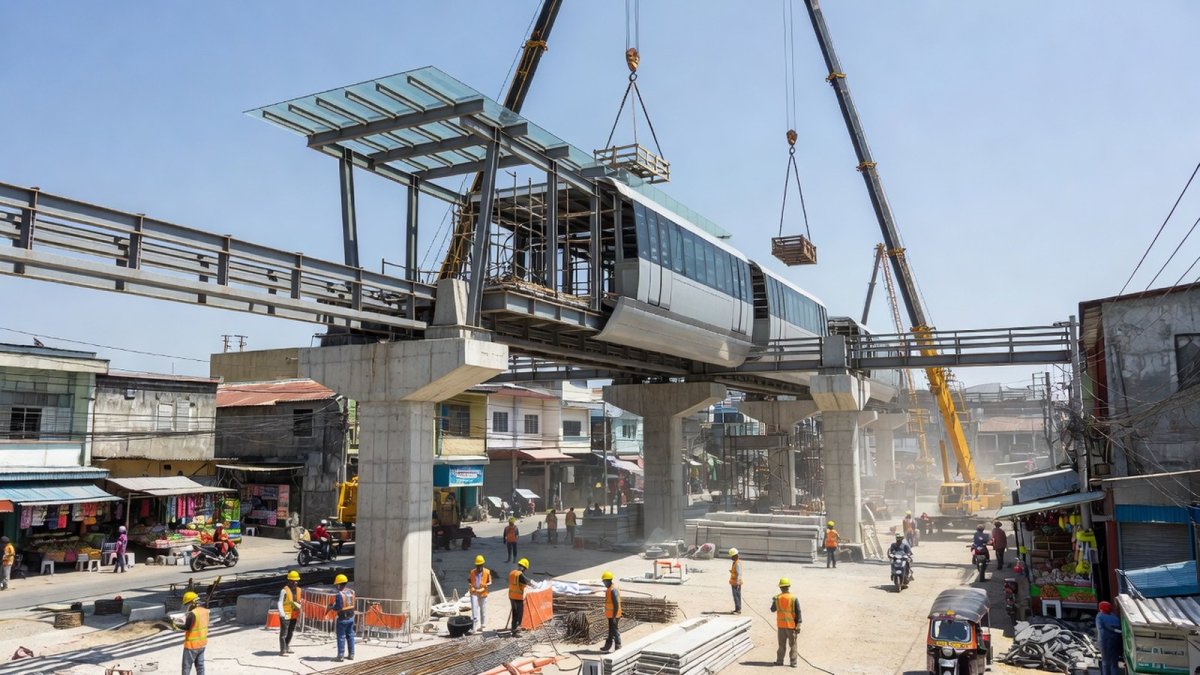
Thailand's Provincial Mass Transit Pioneer
Thailand's wider rail development has been heavily concentrated in Bangkok, where the MRT network has expanded under MRTA with the Blue, Purple, Yellow and Pink lines serving millions of passengers daily. Provincial mass transit remains rare, making Songkhla a pioneer outside Bangkok and a potential model for other provinces seeking to address urban mobility challenges.
The MRTA is currently conducting public consultations on the draft Royal Decree empowering it to operate the monorail system in Songkhla province. These consultations are designed to gather input from local communities, businesses and other stakeholders, ensuring that the project reflects the needs and concerns of those who will use it most.
The Transport Ministry and the MRTA will now accelerate site surveys and prepare detailed tender documents to ensure construction remains in line with the planned timetable. This preparatory work is essential to maintaining momentum and avoiding the delays that have plagued other infrastructure projects in Thailand.
Next Steps: Surveys, Tenders and Construction Timeline
With the cabinet's approval secured, the focus now shifts to the detailed planning and procurement phases. The Office of the Council of State will scrutinise the draft decree, while the Transport Ministry will consider environmental recommendations and the NESDC's economic guidance. The Budget Bureau will examine the project's financial structure, and the Ministry of Interior will incorporate NESDC recommendations into its implementation planning.
On 9 Dec 2025, the MRTA board approved moving forward with the project and agreed to study the feasibility of Phase 2 to extend the route from the van station to Hat Yai International Airport. This early commitment to the airport extension demonstrates the long-term vision behind the project, which aims to create a comprehensive transport network rather than a standalone line.
For the people of Hat Yai and the wider Songkhla province, the monorail represents more than just a new way to get around. It is a statement that southern Thailand matters, that its economic potential deserves investment, and that its residents deserve the same quality of public transport that Bangkok has enjoyed for decades. As the project moves from approval to implementation, all eyes will be on this southern city to see whether it can deliver on its promise as Thailand's provincial mass transit pioneer.
This article was produced with AI-assisted research and editorial support. Sources: Bangkok Post, The Nation Thailand, Thai Rath, PostToday.
By Ann Srisawat, Staff Writer
What's Your Reaction?
 Like
0
Like
0
 Dislike
0
Dislike
0
 Love
0
Love
0
 Funny
0
Funny
0
 Wow
0
Wow
0
 Sad
0
Sad
0
 Angry
0
Angry
0

Southeast Asia Correspondent at Global1.News. Based in Bangkok, covering Thai and Southeast Asian politics, economy, technology, and culture. Deep regional perspective on one of the world's most dynamic regions.














Comments (0)