
Capuozzo wings it for injury-hit Azzurri
Saturday’s Nations Championship clash in Turin promises a dramatic narrative, not just for the Springboks but for South African fans who have watched the Azzurri’s fortunes ebb and flow over the past decade.
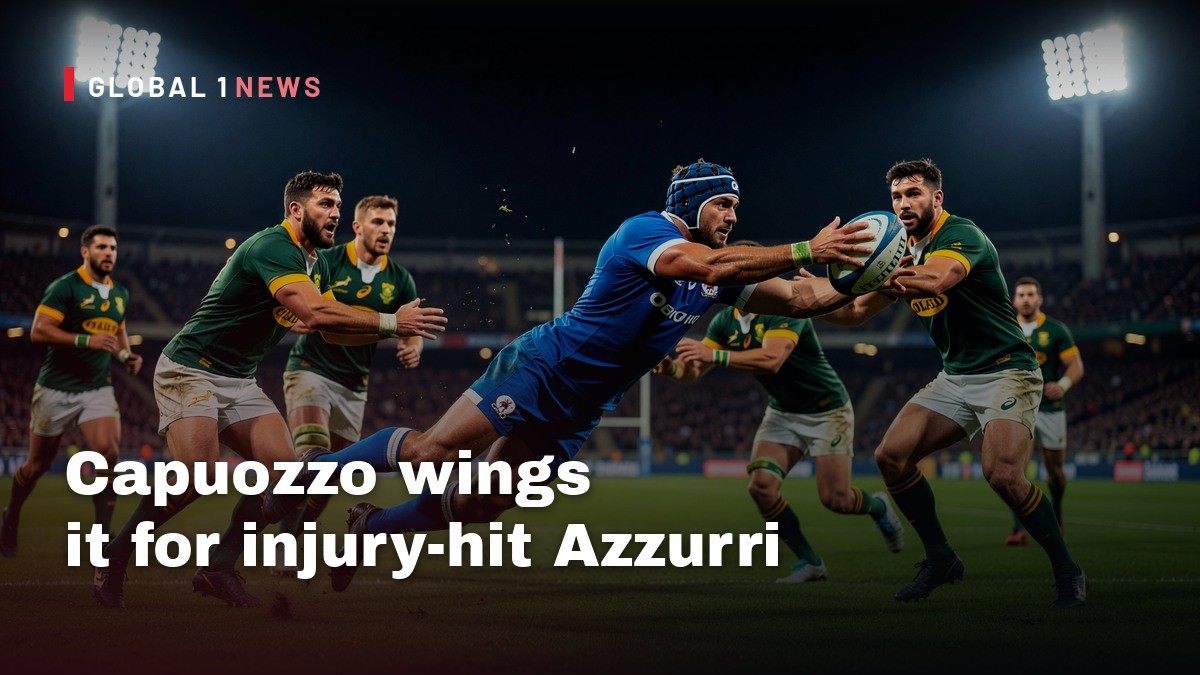
Saturday’s Nations Championship clash in Turin promises a dramatic narrative, not just for the Springboks but for South African fans who have watched the Azzurri’s fortunes ebb and flow over the past decade. With Italy fielding a side riddled by injury, the match becomes a litmus test for the depth of both squads and a reminder of how injuries can rewrite the script of international rugby. As the Boks prepare to face a rejuvenated Italian backline anchored by the returning Ange Capuozzo, the South African rugby community is bracing for a contest that could echo the historic 20‑18 victory in Florence back in 2016.
Injury Toll Forces Italy into a Forced Reshuffle
The Azzurri head into Turin missing a staggering sixteen players, a casualty list that reads like a who’s‑who of Italy’s recent talent pool. Among the absentees are captain and flank Michele Lamaro, centre duo Ignacio Brex and Tommaso Menoncello, and winger Louis Lynagh. The breadth of these losses forces head coach Gonzalo Quesada to reshuffle his backline and forward pack, creating opportunities for players who have been waiting in the wings.
Quesada’s response to the injury crisis is pragmatic. With his first‑choice midfield unavailable, he has paired Leonardo Marin at inside centre with Paolo Odogwu on the outside. Both have been part of Italy’s broader training group, but this match marks their first start together in the centre, a combination that will be tested against the Springboks’ seasoned defensive line. The forced reshuffle also sees the return of Ange Capuozzo, who has not featured since a shoulder injury against France in the Six Nations earlier this year.
Capuozzo’s Return: A Wing of Opportunity
Ange Capuozzo’s re‑introduction to the Italian side on the right wing is a storyline that resonates with South African fans who appreciate the resilience required to bounce back from injury. Capuozzo, who missed the bulk of the season after his shoulder setback, now lines up opposite the Springboks’ left side, sharing the back three with Australian‑born Monty Ioane on the opposite wing and Mirko Belloni at fullback.
Ioane, set to earn his 50th Test cap, brings a blend of experience and physicality that will test the Boks’ defensive patterns. Meanwhile, Belloni, a rising talent, will look to exploit any gaps left by the Springboks’ backline. Capuozzo’s pace and agility, honed during his recovery period, could provide Italy with a fresh attacking outlet, especially given the reduced options in the midfield.
The Halfback Duo: Fusco and Garbisi Steering the Ship
At the helm of Italy’s game management are scrum‑half Alessandro Fusco and fly‑half Paolo Garbisi. This pairing has been a mainstay in Quesada’s selections, and their familiarity will be crucial in a match where Italy’s forward platform is under pressure. Fusco’s quick service and Garbisi’s tactical kicking will aim to stretch the Springboks’ defensive line and create space for the newly‑formed centre partnership.
For South African supporters, the halfback battle is always a focal point. The Springboks’ own halfbacks will need to match the tempo set by Fusco and Garbisi, especially as Italy looks to use its limited backline options to launch counter‑attacks. The duel will likely hinge on who can dictate the pace and exploit the gaps left by the injury‑hit forwards.
Forward Dynamics: A Debutant Openside and Veteran Survivors
The forward pack tells a story of both continuity and fresh blood. Samuele Locatelli makes his Test debut at openside flank, stepping into a role previously occupied by seasoned campaigners. His inclusion reflects Quesada’s willingness to trust youth, a gamble that could pay dividends if Locatelli can match the intensity of the Springboks’ renowned back‑row.
Joining Locatelli are Lorenzo Cannone and Alessandro Ortombina in the loose trio, with Niccolò Cannone and Federico Ruzza anchoring the second row. Hooker Giacomo Nicotera, captaining Italy for the second time after first leading the side against Namibia last year, will be a pivotal figure in set‑piece execution. The front row also features Simone Ferrari and Muhamed Hasa, both of whom were part of the historic 20‑18 victory over South Africa in Florence in 2016.
Veterans of 2016: The Link to Past Glory
The presence of Simone Ferrari and replacement fly‑half Tommaso Allan on the bench serves as a living reminder of Italy’s past triumph over the Springboks. Their experience from that match, where Italy edged South Africa by two points, could provide intangible leadership in a high‑pressure environment. For South African fans, the memory of that upset still lingers, underscoring the notion that the Springboks can never take any opponent lightly.
Ferrari’s role in the front row will be especially scrutinised, as the Springboks’ pack is renowned for its power and technique. If Ferrari can hold his own against the South African forwards, it may signal that Italy still possesses the grit to challenge the Boks despite the injury list.
Bench Strategy: Five‑Three Split and South African Cover
Quesada’s bench configuration reflects a five‑three split, a tactical choice that offers flexibility in the back row. Notably, South African‑born Ross Vintcent occupies the bench, providing loose‑forward cover alongside fellow South African Manuel Zuliani. Their inclusion highlights the diaspora’s impact on Italian rugby and adds an extra layer of intrigue for South African viewers, who will be watching their compatriots battle against their adopted nation.
The bench also features Tommaso Di Bartolomeo, Danilo Fischetti, Ion Neculai, Enoch Opoku Gyamfi, Stephen Varney, and Tommaso Allan. This depth ensures Italy can maintain intensity throughout the match, even if the starting pack fatigues under the Springboks’ relentless forward pressure.
What This Means for South African Rugby Fans
For the Springboks, the Turin test is more than a routine fixture; it is an opportunity to reaffirm dominance after the 2016 upset and to gauge the depth of their own squad against a side forced to reinvent itself. The presence of South African players on the Italian bench adds a personal stake, as fans will be keen to see how Vintcent and Zuliani perform against their homeland.
Beyond the on‑field action, the match underscores the broader narrative of transformation and resilience within rugby. Italy’s ability to field a competitive side despite a crippling injury list mirrors the challenges South African rugby faces in balancing talent development, player welfare, and the demands of a congested international calendar. As the Springboks step onto the field in Turin, they do so not just as a powerhouse, but as a team aware that every opponent, injury‑hit or not, can produce moments of brilliance that echo across continents.
This article was produced with AI-assisted research and editorial support. Reporting is based on the source material cited below. Sources: SARugbyMag; sarugbymag.co.za; Global1.News (05 November 2026).
By Dante Williams, Staff Writer
What's Your Reaction?
 Like
0
 Dislike
0
 Love
0
 Funny
0
 Wow
0
 Sad
0
 Angry
0

Breaking News and Investigations Correspondent at Global1.News. Based in London, covering global breaking news, security, and investigative stories. Known for digging deeper and connecting the dots across continents.















Comments (0)