
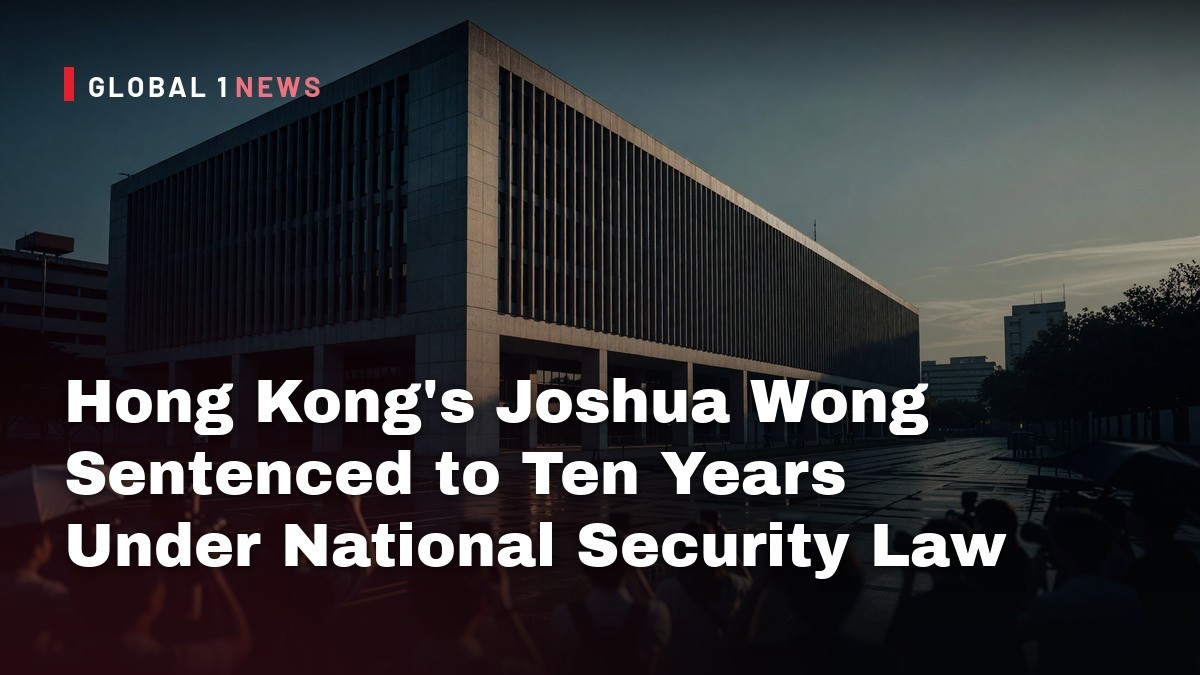
Joshua Wong, face of Hong Kong's pro-democracy protests, jailed for 10 years
Joshua Wong, once the emblematic face of Hong Kong’s pro‑democracy movement, was sentenced on 5 November 2026 to a ten‑year term for “colluding with foreign forces” under the city’s national security law (NSL).
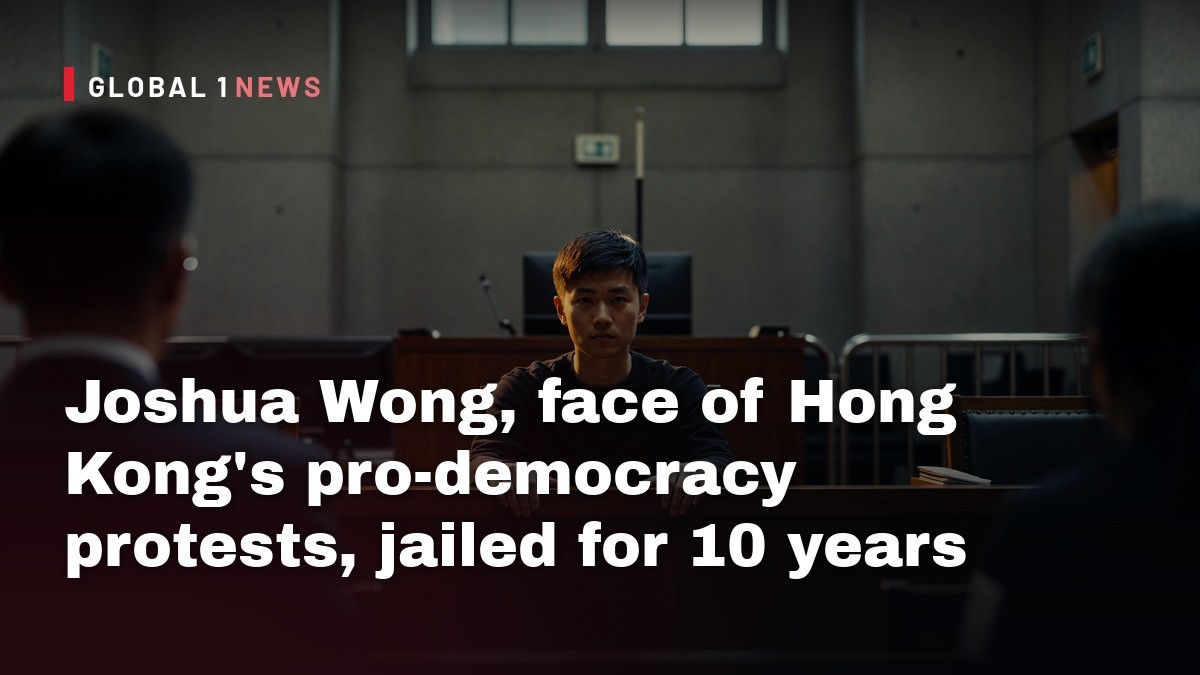
Joshua Wong, once the emblematic face of Hong Kong’s pro‑democracy movement, was sentenced on 5 November 2026 to a ten‑year term for “colluding with foreign forces” under the city’s national security law (NSL). The verdict, handed down by a Hong Kong court, adds a further decade to the six years Wong has already spent behind bars for subversion. His case, together with the broader wave of arrests that began after the NSL’s introduction in 2020, illustrates the tightening grip of Beijing on the territory’s political space and the increasingly severe legal penalties faced by activists.
The legal basis of the sentencing
The court found that Wong had conspired with other campaigners, including self‑exiled activist Nathan Law, to lobby for foreign sanctions and blockades against Beijing. Prosecutors said these activities took place between July and late November 2020, a period that coincides with the early implementation of the NSL. The judge noted that two months and two days of the ten‑year term would run concurrently with Wong’s existing subversion sentence, effectively extending his incarceration by nearly a decade.
Hong Kong’s chief executive, John Lee, characterised Wong and Law as “primary culprits” who undermined the city’s prosperity and stability. The statement emphasised that their alleged conduct “severely undermined national sovereignty, security, and development interests” and “prejudiced the well‑being of the general public.” Beijing’s foreign ministry echoed this view, affirming “firm support” for Hong Kong in safeguarding national security and urging “relevant parties” to respect China’s sovereignty and the territory’s legal system.
The NSL’s expanding reach
Since its enactment in 2020, the NSL has been used to detain hundreds of Hongkongers, ranging from high‑profile activists to ordinary citizens. Critics argue the law’s broad language has effectively silenced dissent, while authorities maintain it is essential for stability. The sentence handed to Wong is among the longest imposed under the NSL, surpassed only by the twenty‑year term given to former media tycoon Jimmy Lai for similar collusion charges.
The case also highlights a pattern of “stacking” charges. Human Rights Watch described the sentence as “cruel and unjust,” and its Asia director, Elaine Pearson, observed that Hong Kong appears to be “adopting the tactic of stacking charges against influential pro‑democracy leaders” to keep society subdued and minimise international outcry.
International reactions
The United Kingdom condemned the ruling as “a clear example of how the National Security Law is being used to target individuals for political expression and participation.” A UK government spokesperson called for “an immediate end to all unjust prosecutions” of those charged under the NSL. The United States consulate in Hong Kong echoed similar concerns, stating the sentencing demonstrated Beijing’s willingness to “go to extraordinary lengths to silence those who advocate for fundamental freedoms.”
These diplomatic criticisms underscore the growing tension between Western governments and Beijing over Hong Kong’s autonomy. While the Chinese government has dismissed external commentary as interference, the statements from the UK and US add to a broader pattern of international scrutiny of Hong Kong’s legal environment since the NSL’s introduction.
Wong’s activist trajectory
Born in October 1996 to an IT professional father and a homemaker mother, Wong was diagnosed with dyslexia in childhood but quickly emerged as a challenger of authority. At 14, he co‑founded Scholarism, a student activist group that mobilised more than 100,000 people in 2012 to protest mandatory “patriotic education” in schools. By 2014, he had become a leading figure in the Umbrella Movement, a mass civil‑disobedience campaign demanding greater democratic freedoms.
In 2016, Wong co‑founded Demosisto with Nathan Law and Agnes Chow, positioning the party as a platform for pro‑democracy advocacy. The party disbanded in 2020 after the NSL’s enactment, and Law left for the UK while Wong remained in Hong Kong, attempting unsuccessfully to run for a legislative seat. His continued activism, despite repeated arrests, has made him a persistent target of the authorities.
The personal cost of prolonged detention
When he appeared in court on the sentencing day, Wong wore a dark blue long‑sleeved shirt, khaki trousers and black‑rimmed glasses, looking slimmer than in earlier public appearances. He nodded to the packed public gallery, a scene that included dozens of Hongkongers queuing for hours to witness the hearing, underscoring the continued public interest in his fate despite the heavy police presence.
Friends and fellow activists have expressed deep anguish. Frances Hui, now based in the United States, described herself as “heartbroken” and “outraged,” saying the verdict was part of a broader crackdown aimed at erasing the contributions of an entire generation of activists. The emotional response reflects the personal toll that sustained legal pressure exerts on Hong Kong’s activist community.
The broader impact on Hong Kong’s civil society
Wong’s sentencing, alongside other high‑profile cases, signals a stark shift in Hong Kong’s civic landscape. The NSL’s enforcement has led to a chilling effect on public assembly, speech and political participation. The removal of prominent figures such as Jimmy Lai, who received a 20‑year sentence, and the continued incarceration of activists like Wong, serve as deterrents to new organisers.
Nevertheless, the persistence of underground networks and diaspora‑based advocacy suggests that dissent has not been wholly extinguished. The continued solidarity displayed by supporters at court and the international statements from governments and NGOs indicate that Hong Kong’s pro‑democracy movement retains a degree of resilience, even as it operates under increasingly restrictive conditions.
Future outlook and legal implications
With two months and two days of the new sentence running concurrently with his existing subversion term, Wong faces a total of over a decade behind bars, extending his release date well beyond the originally anticipated January 2027 liberation. The case sets a precedent for future prosecutions, signalling that the authorities may pursue even harsher penalties for perceived foreign collusion.
For observers, the sentencing underscores the importance of monitoring how the NSL continues to be applied. As long as the law remains in force, the legal environment in Hong Kong will likely remain hostile to overt political dissent, and the international community’s capacity to influence Beijing’s approach appears limited. The trajectory of Wong’s case will therefore remain a barometer for the broader state of Hong Kong’s autonomy and the resilience of its civil society under the shadow of national security legislation.
This article was produced with AI-assisted research and editorial support. Reporting is based on the source material cited below. Sources: BBC News Asia; bbc.co.uk; Global1.News (06 November 2026).
By Kenji Tanaka, Staff Writer
What's Your Reaction?
 Like
0
 Dislike
0
 Love
0
 Funny
0
 Wow
0
 Sad
0
 Angry
0

Japan Correspondent at Global1.News. Tokyo-based voice covering Japanese politics, technology, economy, and culture. Tracks the intersection of tradition and innovation in one of the world's most dynamic societies.










Comments (0)