
Hongkongers to draft end-of-life treatment refusals online from next year
Hong Kong is preparing to digitise a sensitive yet increasingly important aspect of personal healthcare: advance medical directives. The phrasing of the announcement underscores the administration’s intent to preserve the legal weight of the directives.
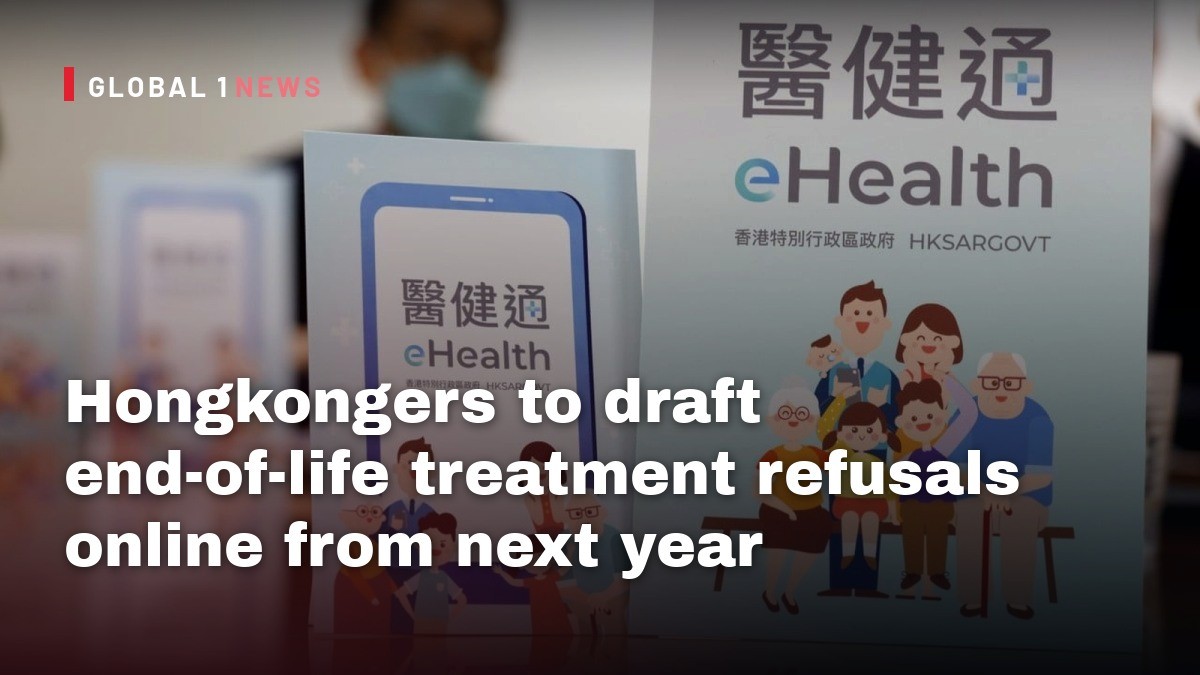
Hong Kong is preparing to digitise a sensitive yet increasingly important aspect of personal healthcare: advance medical directives. The city’s eHealth record platform will soon allow residents to draft electronic instructions that specify which life‑sustaining treatments they wish to refuse if they become terminally ill. The move, announced by Secretary for Labour and Welfare Chris Sun Yuk‑han, marks the first step toward a fully electronic system that previously existed only on paper.
Policy background and legislative intent
Advance medical directives have been part of Hong Kong’s healthcare framework for several years, but they have remained confined to physical documents. The government’s decision to transition these directives to a digital format reflects a broader policy aim to modernise public services and improve accessibility. In his written reply to lawmakers, Secretary Sun emphasized that the electronic service will be introduced “in phases,” signalling a cautious rollout that will allow authorities to monitor uptake and address any technical or legal issues as they arise.
The phrasing of the announcement underscores the administration’s intent to preserve the legal weight of the directives. Authorities have assured the public that the digital version will carry the same legal effect as the paper form, a reassurance that seeks to allay concerns about the enforceability of electronically stored wishes. This parity is crucial, as it ensures that clinicians and hospitals can rely on electronic directives with the same confidence they have placed in traditional paperwork.
Technical architecture of the eHealth platform
The eHealth record platform, already used for a range of health‑related services, will become the designated system for creating, storing, and revoking advance medical directives. While the source material does not detail the platform’s technical specifications, its existing role in handling personal health data suggests a secure, interoperable infrastructure capable of integrating new modules. The phased approach will likely involve pilot testing, user interface refinement, and data migration protocols to ensure that directives are both accessible to patients and reliably retrievable by medical professionals when needed.
Security considerations are implicit in the decision to use eHealth. The platform must safeguard highly sensitive information about end‑of‑life preferences, which could be vulnerable to unauthorized access or tampering. By anchoring the service within an established health‑IT ecosystem, the government can leverage existing encryption standards, authentication mechanisms, and audit trails to protect the integrity of each directive.
Legal continuity and the status of CPR orders
One notable distinction highlighted by the announcement is the treatment of do‑not‑attempt cardiopulmonary resuscitation (DNACPR) orders. Unlike advance medical directives, DNACPR orders will remain in hard copy form. This separation suggests that the government views DNACPR orders as requiring a different procedural handling, perhaps due to their immediate clinical relevance or the need for rapid verification in emergency settings.
The decision to keep DNACPR orders on paper also reflects a cautious legal stance. By maintaining the status quo for these orders, authorities avoid potential ambiguities that could arise from a sudden shift to digital formats, ensuring that existing legal safeguards remain intact while the broader directive system undergoes transformation.
Implications for healthcare providers
Hospitals, clinics, and other healthcare providers will need to adapt to the dual system of electronic directives and paper‑based DNACPR orders. Clinicians will be required to consult the eHealth platform to verify a patient’s wishes before initiating life‑sustaining treatments. This integration could streamline decision‑making processes, reducing the time spent locating physical documents and minimizing the risk of overlooking a patient’s preferences.
However, the transition also introduces operational challenges. Medical staff must be trained to navigate the eHealth interface, interpret electronic directives accurately, and understand the procedural steps for revoking or updating them. The phased rollout will likely include guidance documents and training sessions to ensure that providers can incorporate the new system without disrupting patient care.
Public reception and patient empowerment
For Hongkongers, the ability to draft advance medical directives online represents a significant empowerment tool. The convenience of a digital platform may encourage more individuals to formalise their end‑of‑life preferences, a step that has traditionally been hindered by the logistical burdens of paperwork. By lowering the barrier to entry, the government hopes to increase the prevalence of documented wishes, thereby reducing the emotional and ethical strain on families and clinicians during critical moments.
Public confidence will hinge on clear communication about how the electronic system works, the legal equivalence of digital directives, and the safeguards in place to protect personal data. Transparency about the phased implementation timeline and the avenues for revoking or amending directives will be essential to building trust and encouraging widespread adoption.
Comparative perspective within the region
Hong Kong’s move aligns with a broader regional trend toward digital health solutions. Neighboring jurisdictions have explored electronic health records and patient portals, though the specific focus on advance medical directives remains relatively novel. By positioning the eHealth platform as the central hub for end‑of‑life planning, Hong Kong may set a precedent for other Asian cities seeking to modernise similar services while preserving legal robustness.
The distinction between electronic directives and paper‑based DNACPR orders also offers a case study in incremental digital transformation. Rather than a wholesale shift, the government’s measured approach allows for evaluation of user experience, system reliability, and legal outcomes before expanding digital capabilities to other sensitive health documents.
Future outlook and policy considerations
Looking ahead, the phased rollout will likely reveal areas for refinement, such as improving user interface design, expanding multilingual support, and integrating the system with emergency medical services. As the eHealth platform gathers data on usage patterns, policymakers may consider extending digital functionality to other advance care planning tools, potentially including living wills or power‑of‑attorney arrangements.
Ultimately, the success of Hong Kong’s electronic advance medical directive service will depend on the seamless coordination of technology, law, and clinical practice. By ensuring that the digital version carries the same legal effect as its paper counterpart, the government has laid a solid foundation. The forthcoming phases will test the system’s resilience, user acceptance, and its capacity to uphold the deeply personal wishes of residents at the end of life.
This article was produced with AI-assisted research and editorial support. Reporting is based on the source material cited below. Sources: South China Morning Post; scmp.com; Global1.News (04 November 2026).
By Kenji Tanaka, Staff Writer
What's Your Reaction?
 Like
0
 Dislike
0
 Love
0
 Funny
0
 Wow
0
 Sad
0
 Angry
0

Japan Correspondent at Global1.News. Tokyo-based voice covering Japanese politics, technology, economy, and culture. Tracks the intersection of tradition and innovation in one of the world's most dynamic societies.















Comments (0)