
With Copyright Complaints, Even Imposters Can Silence Karakalpak Activists
In the wake of the 2023 constitutional referendum that preserved Article 89’s guarantee of a right of secession for Karakalpakstan, the autonomous republic’s civil‑society actors have increasingly turned to digital platforms to document state‑driven repression.
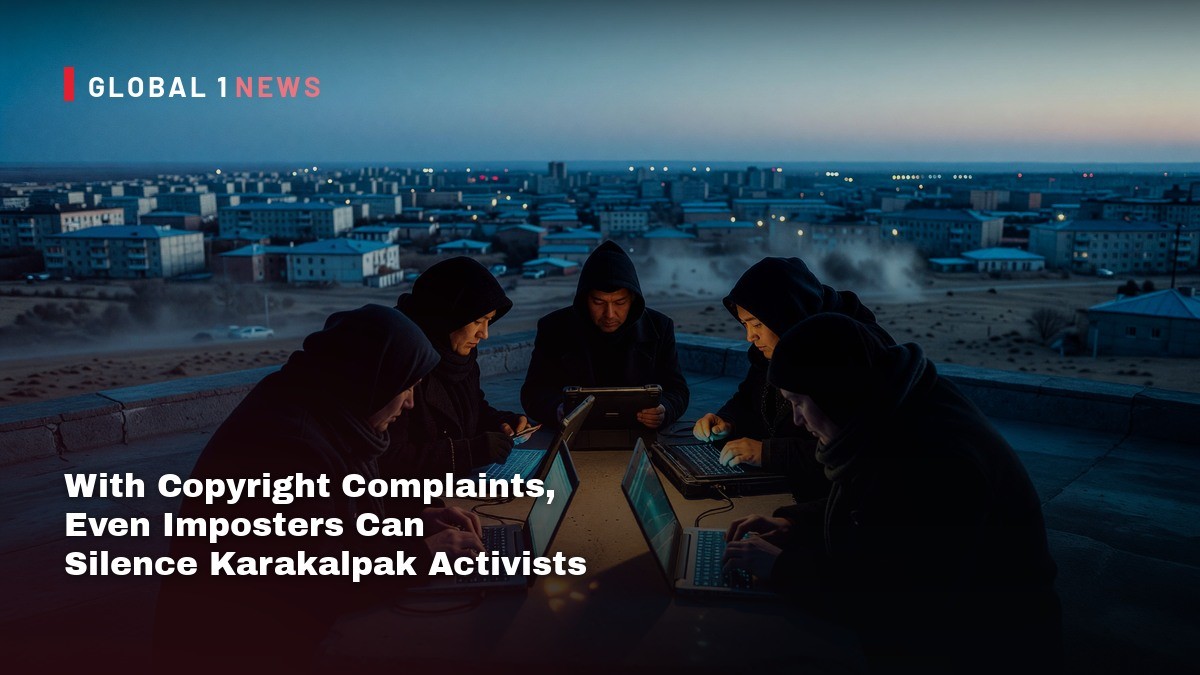
In the wake of the 2023 constitutional referendum that preserved Article 89’s guarantee of a right of secession for Karakalpakstan, the autonomous republic’s civil‑society actors have increasingly turned to digital platforms to document state‑driven repression. Yet the very mechanisms designed to protect intellectual property are being weaponised against them, as a recent incident involving a fraudulent copyright takedown on Meta’s Facebook illustrates. The episode underscores the fragility of online dissent in a region where legal safeguards such as the United States’ Digital Millennium Copyright Act (DMCA) safe‑harbor provisions paradoxically empower state‑aligned actors to silence opposition voices.
From Constitutional Debate to Digital Suppression
The constitutional debate of 2022‑2023 provides essential context for understanding the stakes of today’s online repression. In the summer of 2022, a draft referendum proposal excised the clause that allowed Karakalpakstan to secede via popular vote, prompting mass protests and a subsequent crackdown. Although the final referendum in April 2023 reinstated the secession clause under Article 89, public discussion of independence remains a taboo, and activists have been forced to rely on diaspora networks and social media to preserve testimonies of abuse.
Gulya Nur, president of the Via Serica Foundation, articulates this shift: “We are losing more than accounts and audiences… we are losing documentation: testimony, interviews, records of abuse, and years of civil society work.” Her warning captures the dual loss of both digital reach and archival material, a loss amplified when platforms such as Facebook act on spurious copyright claims without verifying the complainant’s standing.
The Fraudulent DMCA Complaint
On October 31, 2026, an activist named Aman Sagidullayev—a longtime exile leader of the Alga Karakalpakstan movement—shared an op‑ed authored by Gulya Nur that had been published by The Diplomat. The post was subsequently reported to Meta as a copyright violation. Meta’s notice to Sagidullayev cited “technology” as the basis for removal, reflecting the platform’s reliance on automated detection systems rather than a human assessment of the complainant’s legitimacy.
The complaint was filed under the name “Jasmina Jasurova,” who claimed to be an editor at The Diplomat. The Diplomat’s managing editor, on staff since 2014, confirmed that no individual by that name has ever worked for the publication. Moreover, attempts to verify the email address used for the complaint yielded no response, and a Google search of the name in English, Uzbek, and Russian produced no substantive results. This discrepancy highlights a systemic vulnerability: platforms accept DMCA filings at face value, trusting the perjury clause of the law without independently confirming the claimant’s authority.
Meta’s Automated Enforcement and Legal Incentives
Meta’s rapid takedown response is driven by the legal architecture of the DMCA, which obliges platforms to act swiftly upon receipt of a sworn notice to preserve their safe‑harbor protection. Failure to remove allegedly infringing content can expose a platform to costly litigation in U.S. courts. Consequently, Meta’s internal policy favours immediate content removal via automated algorithms, shifting the burden of redress onto the user who must file a counter‑notice.
This procedural asymmetry disproportionately harms activists like Sagidullayev, whose digital presence is already precarious. The removal of his Facebook post not only silenced a single piece of commentary but also risked the loss of a broader network of followers who rely on his “Civil Society of Karakalpakstan” YouTube channel and other accounts for information about human‑rights violations in Uzbekistan.
The Cumulative Impact on Karakalpak Civil Society
Sagidullayev’s experience is not isolated. His YouTube channel was terminated after multiple copyright strikes, many of which appear to have originated from email addresses bearing his own name—a pattern suggesting coordinated abuse of the DMCA process. Each takedown severs a conduit through which displaced Karakalpak voices reach a global audience, eroding the “digital public sphere” that diaspora activists have cultivated since the early 2010s.
Beyond the loss of individual accounts, the broader consequence is a chilling effect on documentation. As Nur observes, the erosion of “documentation” hampers future accountability mechanisms, including potential international legal actions or truth‑and‑reconciliation initiatives that depend on preserved testimonies.
Institutional Gaps and the Need for Reform
The Diplomat’s attempts to file a counter‑complaint reveal a structural blind spot in Meta’s grievance mechanisms. While the platform offers forms for reporting impersonation and trademark infringement, it does not provide a direct avenue for a legitimate copyright holder to contest a fraudulent takedown when the complainant’s identity is unknown. Moreover, Meta’s refusal to disclose the Facebook account associated with the fraudulent “Jasmina Jasurova” complaint leaves victims without a means to identify or pursue the perpetrator.
Calls for reform must therefore address two interlocking issues: (1) the verification of claimant authority before content removal, and (2) the establishment of transparent redress pathways for victims of wrongful takedowns. International bodies such as the International Association of Internet Law (IAIL) and regional think‑tanks like the Asan Institute could collaborate with platforms to develop best‑practice standards that balance safe‑harbor compliance with protection of human‑rights defenders.
Comparative Perspectives: Lessons from Other Regions
Other jurisdictions have experimented with stricter verification protocols for DMCA filings. For instance, the European Union’s Digital Services Act (DSA) mandates that platforms provide clearer information about the identity of complainants in copyright disputes, enabling affected users to contest claims more effectively. While the United States has yet to adopt comparable measures, the DSA’s framework offers a potential template for U.S. policymakers to mitigate abuse without undermining the DMCA’s protective intent.
In the context of Northeast Asian geopolitics, where state actors frequently leverage legal instruments to curb dissent, adopting such safeguards could serve as a bulwark against the exportation of repressive digital tactics. The Korean Ministry of Foreign Affairs (MOFA) and the Ministry of Education (MOE), through their collaborations with the Korea Development Institute (KDI) and the Korea Institute for International Economic Policy (KIEP), have highlighted the strategic importance of digital resilience for civil society in authoritarian‑adjacent states.
Forward‑Looking Assessment
The Karakalpak case illustrates a broader trend: the co‑option of intellectual‑property law as a tool of political suppression. As platforms continue to rely on automated enforcement to satisfy legal safe‑harbor requirements, activists in contested regions will face heightened vulnerability unless verification mechanisms are strengthened. Scholars and policymakers must therefore prioritize the development of transparent, accountable takedown processes that preserve the integrity of digital documentation essential for human‑rights advocacy.
In the immediate term, Meta should consider integrating a mandatory claimant‑verification step—such as requiring institutional email domains or legal documentation—before enacting automated removals. Simultaneously, civil‑society coalitions, supported by think‑tanks like the Asan Institute and research bodies such as KDI, should document and publicise instances of abuse to pressure platforms into reform. Only through coordinated legal, technical, and diplomatic efforts can the digital space remain a viable arena for Karakalpak activists and other marginalized voices to record, share, and contest the narratives imposed by repressive regimes.
This article was produced with AI-assisted research and editorial support. Reporting is based on the source material cited below. Sources: The Diplomat; thediplomat.com; Global1.News (06 November 2026).
By Prof. David Park, Staff Writer
What's Your Reaction?
 Like
0
 Dislike
0
 Love
0
 Funny
0
 Wow
0
 Sad
0
 Angry
0

East Asia/Technology Correspondent at Global1.News. Seoul-based voice covering Korean politics, technology, business, and culture. Analyzes how technology and geopolitics intersect across East Asia.













Comments (0)