
California Declares an El Niño Emergency. Then Newsom Vetoes the Levee Money.
Governor Gavin Newsom declared a statewide El Niño emergency on September 21 and vetoed Senate Bill 872 six days later. The bill would have created a $300 million annual fund for the Delta's aging levees. California's own agencies put the repair bill at $3.3 billion.
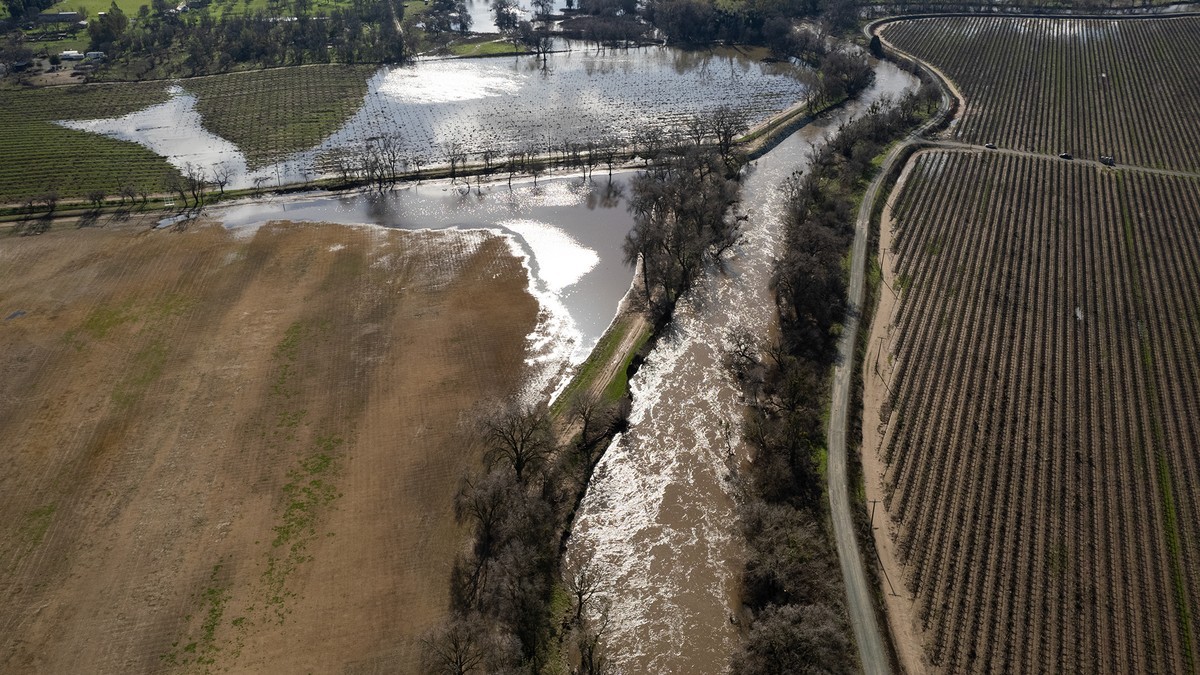
A statewide El Niño emergency is in force across California, coastal flood advisories run from San Diego to Monterey Bay, and the governor has just refused to sign the levee-funding bill that lawmakers sent him unanimously. Gavin Newsom proclaimed the emergency on September 21, warning that a strong and likely historic El Niño is building in the Pacific. Six days later he vetoed Senate Bill 872, the Delta levee and canal subsidence measure. The two decisions now sit side by side as California walks into its wet season.
California Declares an El Niño Emergency. Then Newsom Vetoes the Levee Money.
Los Angeles, United States — The proclamation, signed September 21 and attested by Secretary of State Shirley Weber, states that California "is entering the 2026-2027 wet season amid the ongoing development of a strong and likely historic El Niño event in the Pacific Ocean."
A State of Emergency, Ten Days Before the Water Arrives
The proclamation rests on the National Weather Service Climate Prediction Center's August 13 report, which found the El Niño strengthening with a greater than 90 percent chance of a very strong event this fall and winter. It cites the center's projection of a 69 percent chance that the event reaches historic strength during the October to December season, exceeding every El Niño in the record going back to 1950.
The order states that California "has already begun to experience effects attributed to this El Niño event, including unusual precipitation and significant coastal flooding," and warns that "very strong El Niño events do not produce uniform statewide outcomes, but can be associated with exceptionally wet and destructive winter conditions in California."
It names those at disproportionate risk: low-income communities, farmworker families, rural residents, seniors, people with disabilities and people experiencing homelessness. It orders the Department of Water Resources to stage sandbags, riprap, plastic sheeting and pumps ahead of the storms. One clause stands out: the Penal Code section 396 anti-price-gouging rules, normally triggered automatically by a state of emergency, are suspended and not imposed "at this time."
What a Kelvin Wave Actually Is
Separately, a Kelvin wave is traveling toward the California coast after moving up from South and Central America. It is not a surface wave. Dillon Amaya, an assistant professor of marine science at North Carolina State University, describes it as "a bulging of the nearest 20 to 30 kilometers of the ocean that propagates up the coastline."
"There's no mass transport here. It's not transporting water. It's transporting a signal, and that signal is an elevated sea state," Amaya said. Kelvin waves form when trade winds weaken and warm water piled up in the western equatorial Pacific sloshes back toward South America. NOAA says they can raise coastal sea levels by 6 to 12 inches, and in some places by a foot. A forecast carried by iHeartRadio puts the arrival around Wednesday, October 1.
Mike Jacox, a research oceanographer at the Southwest Fisheries Science Center, told The Guardian: "It's a wave unlike the ones you're used to at the beach. They don't crash, you can't really seem them come by. This winter, we're supposed to have some really high tides around Thanksgiving and Christmas. If you also have more storms, then you have storm surge. It's just like you're raising the floor on all that stuff that happens."
The Advisories Already Up Along the Coast
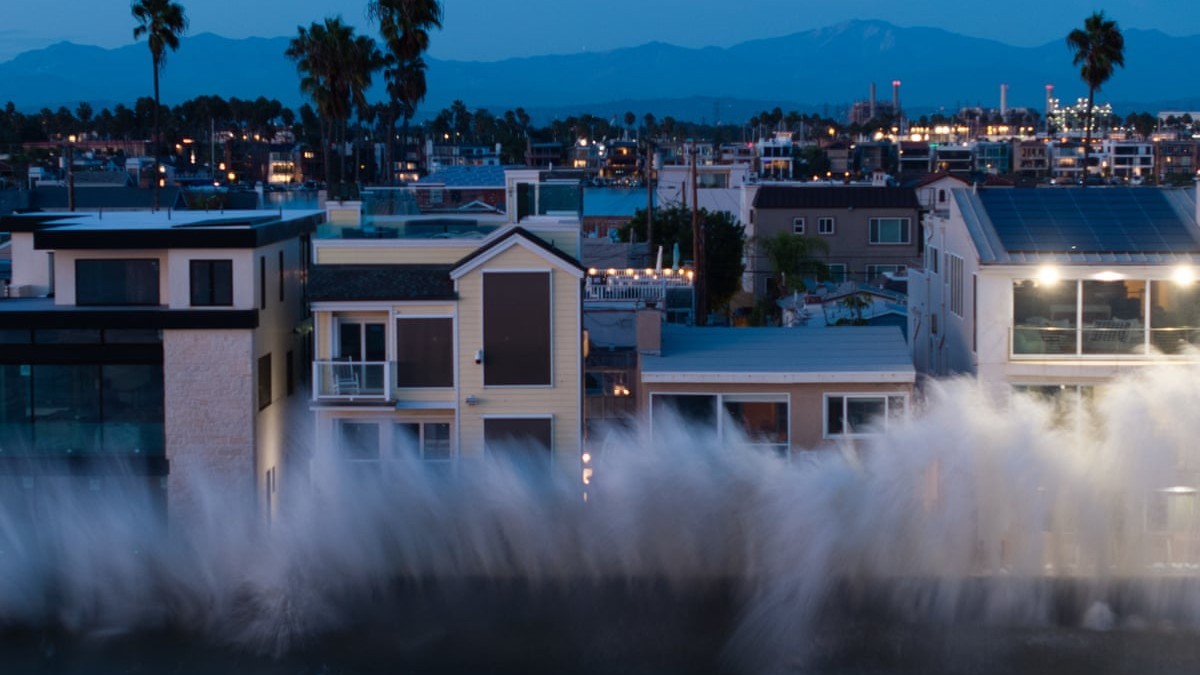
Five alerts were active for California on September 30, according to the National Weather Service. One coastal flood advisory covers San Diego and Orange County coastal areas until 5 PM PDT today, with minor flooding and erosion during high tides expected to peak between 6.9 and 7.1 feet early this afternoon.
A second coastal flood advisory covers San Francisco Bay, the North Bay interior valleys, Northern Monterey Bay and the Southern Monterey Bay and Big Sur coast, running through 5 PM PDT Thursday. Up to 1.2 feet of inundation above ground level is possible in low-lying areas near shorelines and tidal waterways, with flooding of lots, parks and roads. At the San Francisco tidal gauge, high tide is forecast at 1.2 feet above normal at 2:10 PM Wednesday and 1.1 feet Thursday, including up to 0.7 feet of surge.
Beach hazards statements cover Catalina and the Santa Barbara Islands, Ventura County beaches, the Malibu coast, Los Angeles County beaches and both Santa Barbara County coasts, warning of strong rip currents, tidal overflow and enhanced beach erosion. An extreme heat watch is also up, on the same day, for San Diego County coastal areas and the inland valleys, running through October 7.
The Veto
On September 27, Newsom returned Senate Bill 872 without his signature. The bill would have established a Delta Levees and Canal Subsidence Fund to support multi-benefit levee projects and repairs to water conveyance systems damaged by subsidence in the Sacramento-San Joaquin Delta, and would have required the Delta Conservancy to convene an advisory committee to recommend projects.
It passed the Legislature unanimously, with no votes against and five members not voting, and drew support from water agencies, local governments, environmental groups and business groups who often find themselves on opposing sides of California water legislation. The California Central Valley Flood Control Association urged Newsom in a letter to veto it, saying the fund could "disrupt existing funding programs and create additional bureaucracy around already complex reimbursement processes."
State Senator Jerry McNerney, a Democrat from Stockton, had wanted a $300 million annual repair fund, drawing partly on the state's embattled carbon market. The Delta Caucus secured a little over half that this year, and the bill eventually dropped the larger number. McNerney said the measure "brought together traditional adversaries on California water issues." He called the veto disappointing but described this year's funding as historic: "This historic investment is just a down payment."
The Argument in the Veto Message
Newsom's veto message does not dispute the scale of the problem. It disputes the accounting. This year's budget, he wrote, allocated $68 million to mitigate subsidence on the state's aqueducts and canals, $75 million for projects that repair levees and improve flood protection in the Delta, $20.2 million to the Delta Conservancy to reduce climate-change risks, and $7.9 million for mitigation costs on the levee projects. CalMatters put the total at more than $170 million.
"This bill would establish parameters for spending revenue from a Fund that did not receive resources in this year's budget," Newsom wrote. "While well-intentioned, this bill is unnecessary." He closed: "For these reasons, I cannot sign this bill."
His own emergency proclamation, signed six days earlier, points the other way on urgency. It ordered state environmental and natural resources agencies to prioritize permitting and technical assistance for levee and flood-management repairs, and required a joint recommendation to the Governor on or before October 16 on whether further emergency action is needed.
What the State's Own Numbers Say
CalMatters reported that the state's own data shows the enacted funding is nowhere close to what is needed to protect the Delta, as a region and as the heart of California's water supply. A network of 1,100 miles of federal and non-federal levees lines Delta waterways. The U.S. Army Corps of Engineers said in 2018 that many of these aging levees do not meet current construction standards and "could fail at water levels well below the top of the levee."
The price of fixing them is roughly $3.3 billion, according to the state's Delta Stewardship Council. Not fixing them costs more: $22 billion in assets and over $5 billion a year in economic activity could be exposed to flooding by 2085. The state has already spent hundreds of millions, including at least $400 million by the Department of Water Resources.
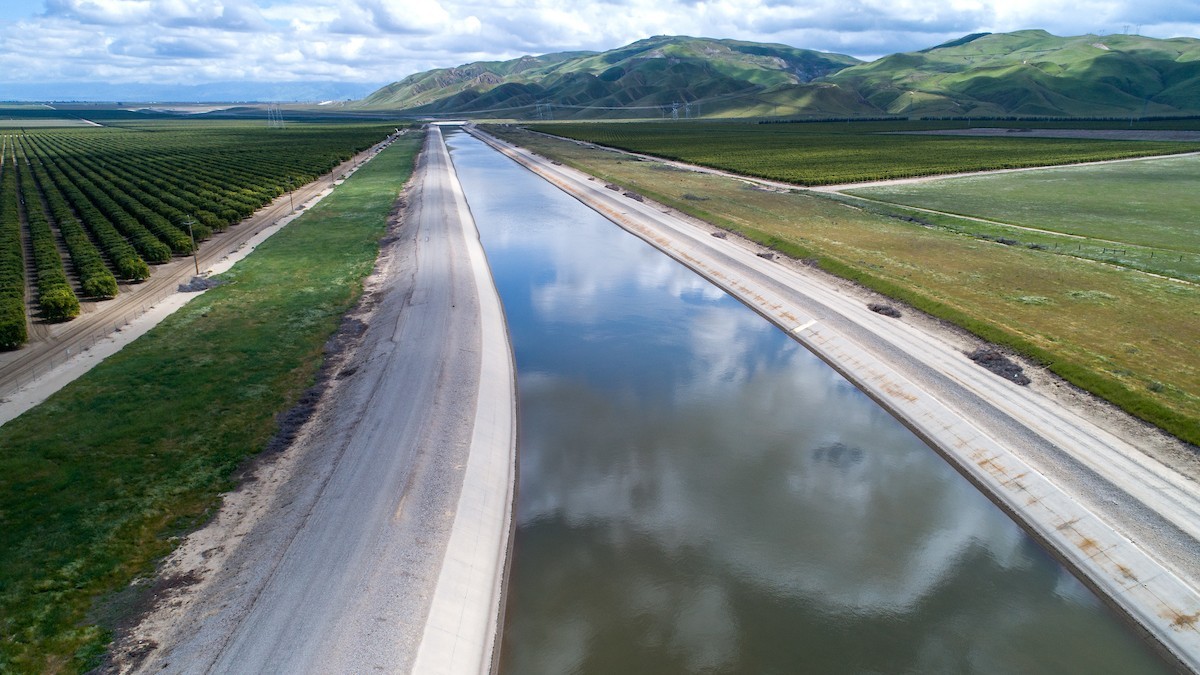
Subsidence is a separate and compounding problem. Groundwater over-pumping is causing the land beneath the California Aqueduct and other vital canals to sink. A state report found the damage could cut water deliveries by almost 90 percent in the next 17 years, and the Department of Water Resources estimates that fixing it, past and future, could cost nearly $4 billion.
The Water Two-Thirds of California Drinks
The vetoed fund would also have paid to repair the water delivery system that pumps Northern California river water south through the Delta, supplying two-thirds of the state's population and vast tracts of Central Valley farmland.
Restore the Delta, a Stockton nonprofit, compared the bill to one of Newsom's signature projects, the Delta Conveyance Project, or Delta tunnel. Like the bill, the tunnel is meant to shore up the state's water delivery against time, climate change and disaster, but its $20 billion price tag would go toward bypassing the Delta rather than protecting it. "It is (Newsom's) white whale," the group's executive director, Barbara Barrigan-Parrilla, said in a statement.
Local governments are not waiting. Sausalito Vice Mayor Melissa Saxe Blaustein said, "This is an urgent issue for Sausalito, and we are taking immediate action." The city council recently authorized $250,000 for El Niño, flooding and sea-level rise projects, including raising a flood-prone roadway near Varda Landing by several inches before an upcoming king tide. The Port of San Francisco says it is reviewing storm response protocols and inspecting stormwater infrastructure.
Polo's Two Landfalls and the Family in Jalisco
Hurricane Polo made two landfalls on Mexico's northwest coast before dissipating: as a Category 2 near Las Barrancas in Baja California Sur around midnight, then near Guaymas, Sonora around midday with 75 mph winds. Guaymas's city center, malecón and municipal palace flooded. Baja California Sur reported no deaths and kept power and water running in Comondú, Mulegé and Loreto.
The only victims tied to Polo were four members of one family swept away by a stream in Talpa de Allende, Jalisco. Those deaths came before the first landfall.
Farther south, the ocean is already running hot. Ecuador's Escuela Superior Politécnica del Litoral, which plays a key role in global El Niño monitoring, measured ambient sea levels nearly 15 inches above average, rising to nearly 17 inches above usual during high tides, El Universo reported. The Kelvin wave is driven by unseasonably warm Pacific water, up to 13.5 degrees Fahrenheit above normal. The World Meteorological Organization expects a weakening phase to begin in early spring 2027.
Rachel Is Still Out There
Hurricane Rachel became a hurricane late Tuesday as it moved along Mexico's Pacific coast. At the National Hurricane Center's 11 p.m. MST advisory, Rachel carried maximum sustained winds of 75 mph, a Category 1 storm, with a central pressure of 985 millibars. Its center sat about 305 miles west of Lázaro Cárdenas and 225 miles south-southwest of Cabo Corrientes, moving northwest at 12 mph.
The center forecast Rachel to become a major hurricane by Thursday, with the core moving away from mainland Mexico and south of Baja. A tropical storm warning runs from Punta San Telmo to Playa Perula, with a watch north to Cabo Corrientes. Hurricane-force winds reached only 25 miles from the center; tropical-storm-force winds reached 185. Manzanillo's airport measured sustained winds of 46 mph.
Rachel is forecast to drop 4 to 8 inches of rain, with isolated totals of 12 inches, on coastal Guerrero, Michoacán, Colima and Jalisco, with life-threatening flooding and mudslides possible in steep terrain. It is not forecast to hit California.
What Comes Next
California's coastline is already under strain. Powerful swells have battered beaches all summer, stripping sand and worsening erosion as the Pacific hurricane season runs hotter than normal. NOAA oceanographer William Sweet, in the agency's May 2026 high tide flooding outlook, said El Niño and high tide flooding usually end up being "a double whammy."
That is the mechanism the order is built around: a higher ocean floor under ordinary tides, with storms stacked on top. The Department of Water Resources' Division of Safety of Dams is to conduct outreach to dam owners, and the state is to expand multilingual public warnings.
What the state has not done is fund the Delta levee repairs at the level its own agencies say is required. The bill that would have started that work passed both chambers without a single no vote, and it was returned without a signature. The emergency order is in force. The water is still coming.
By Jessica Ali, Staff Writer
This article was produced with AI-assisted research and editorial support. Sources: CalMatters, The Guardian, USA TODAY, ABC7 San Francisco, Futurism, The Desert Sun, UPI, Reuters, El Universo, the Office of Governor Gavin Newsom and the National Weather Service.
What's Your Reaction?
 Like
0
Like
0
 Dislike
0
Dislike
0
 Love
0
Love
0
 Funny
0
Funny
0
 Wow
0
Wow
0
 Sad
0
Sad
0
 Angry
0
Angry
0

Editor-in-Chief at Global1.News. Atlanta-based journalist who cuts through the BS and tells it like it is. Lead anchor, host, and the voice you hear when the spin stops and the truth starts.













Comments (0)