
SpaceX's Starship goes orbital, deploying first next-gen Starlinks
SpaceX’s Starship finally broke the sub‑orbital ceiling on Monday, soaring from Starbase, Texas, into a stable low‑Earth orbit and delivering the first batch of next‑generation Starlink V3 satellites.
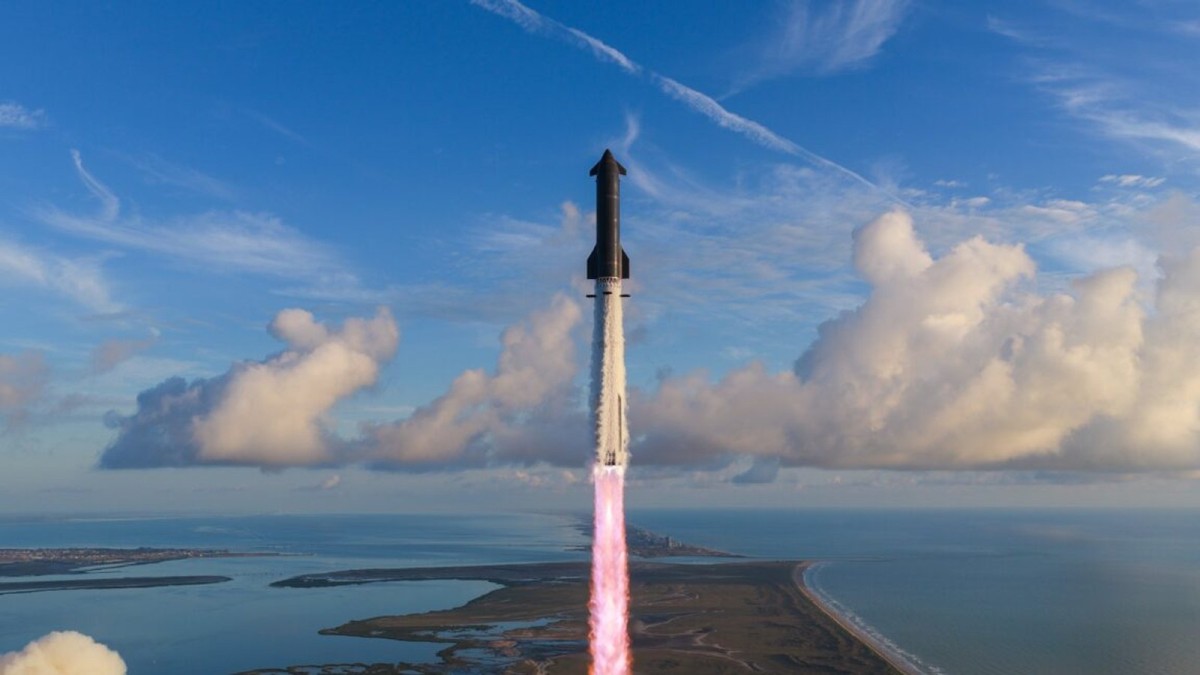
SpaceX’s Starship finally broke the sub‑orbital ceiling on Monday, soaring from Starbase, Texas, into a stable low‑Earth orbit and delivering the first batch of next‑generation Starlink V3 satellites. The 14th test flight of the 407‑foot‑tall, methane‑fueled behemoth marked a decisive step for the company’s long‑term vision of reusable, fully orbital launch capability, and it did so while navigating a handful of engine hiccups that could have turned a historic milestone into a safety nightmare.
From sub‑orbital tests to a true orbital mission
Since its inaugural flight, Starship has been deliberately throttled back to sub‑orbital trajectories, allowing the vehicle to arc back into the atmosphere before completing a full lap around the planet. Those early flights proved the massive 33‑engine Super Heavy booster and the six‑engine Starship upper stage could survive the rigors of launch, re‑entry and splashdown. On Monday, SpaceX executives decided to push the envelope and aim for low‑Earth orbit, a move that required the upper stage to generate a final burst of thrust to achieve orbital velocity.
The decision hinged on confidence in the core systems that keep a 100‑ton vehicle under control once it reaches space. Engineers held back the orbital insertion burn until they were convinced the remaining Raptor engines could deliver the required delta‑v. When the moment arrived, a single Raptor reignited for 19 seconds, adding roughly 204 mph—just over one percent of the vehicle’s total speed—to push Starship into a 276‑kilometer orbit.
Engine performance: a close call that was averted
During ascent, one of the six Starship Raptors shut down prematurely, forcing the five remaining engines to burn longer to compensate. The issue did not affect the engine slated for the orbital insertion burn, but it underscored the razor‑thin margin SpaceX operates under. Compounding the risk, two of the 33 Super Heavy booster Raptors also failed—one at liftoff and another during the booster’s return maneuver before its splashdown in the Gulf of Mexico.
SpaceX commentator Dan Huot reported that mission controllers briefly considered aborting the orbit insertion burn, which would have sent Starship on a coast‑back trajectory toward a re‑entry over the Indian Ocean, as in prior sub‑orbital tests. Ultimately, confidence in the remaining core engines and the desire to demonstrate true orbital capability won out, and the insertion burn proceeded without further incident.
Deploying the first Starlink V3 satellites
With orbit secured, Starship turned its attention to the payload: 26 flat‑packed Starlink V3 satellites. These next‑generation broadband nodes are too large for the Falcon 9 payload fairing, a fact that has driven SpaceX to develop Starship as the exclusive launch vehicle for the V3 platform. Each satellite weighs about two metric tons at launch and carries larger solar arrays and upgraded antennas designed to boost network capacity.
After separation, the satellites were released one by one via a pulley‑and‑cable system that resembled a Pez dispenser. SpaceX confirmed contact with all 26 units shortly after deployment, indicating the deployment mechanism functioned as intended and the satellites were healthy in orbit.
What the V3 upgrades mean for the Starlink network
The V3 satellites promise a tenfold increase in throughput over the older Falcon‑9‑launched units, adding roughly one terabit per second of capacity to the constellation. That boost, combined with the larger solar arrays, should translate into higher user speeds and more robust direct‑to‑device connectivity, especially in areas where ground‑based infrastructure is sparse.
SpaceX also hinted that the V3 platform could serve its Starshield service for the U.S. military, suggesting a dual‑use capability that could broaden the commercial‑military synergy of the Starlink system. While the current launch carried 26 satellites, SpaceX’s website notes that future Starship flights could ferry up to 60 V3 units in a single sortie, dramatically accelerating the network’s expansion.
Orbit parameters and future launch plans
Monday’s flight placed the satellites into a low‑inclination orbit, roughly 30 degrees north and south of the equator. This restriction stemmed from range‑safety rules that limit overflight of populated areas during launch. As SpaceX gains confidence with Starship’s performance, the company plans to target higher‑inclination orbits, which will broaden coverage and enable launches from new sites in Florida and Louisiana.
The successful orbital insertion and payload deployment demonstrate that Starship can transition from a testbed to an operational launch system. Future missions will likely see the vehicle delivering larger payloads—both commercial and governmental—while refining the rapid‑turnaround, fully‑reusable model that Elon Musk has championed since the program’s inception.
Safety considerations and public risk assessment
SpaceX’s cautious approach to the orbital insertion burn was driven by the specter of a 100‑ton vehicle stranded in orbit. An uncontrolled re‑entry could pose a public safety hazard, a scenario the company sought to avoid by only proceeding once core systems were deemed reliable. The decision to proceed after confirming the health of the three central Raptors highlighted a balance between ambition and responsibility.
The Super Heavy booster’s splashdown in the Gulf of Mexico proceeded as planned, with the stage executing a high‑altitude turnaround before returning to the ocean. Although two booster Raptors failed, the overall flight remained within acceptable safety margins, and no debris fell on populated land. This outcome reinforces SpaceX’s risk mitigation strategies while still exposing the inherent challenges of scaling up to a fully reusable orbital launch system.
Implications for the commercial launch market
Starship’s successful orbital flight and payload deployment signal a potential shift in the commercial launch landscape. The ability to loft large, heavy payloads—up to 60 V3 satellites per launch—could undercut the economics of existing launch providers, especially for constellations that require high‑capacity, low‑cost access to space. SpaceX’s claim that the V3 satellites will “greatly expand the network’s capacity and user speeds” aligns with a broader strategy to lock in market share for broadband services while leveraging Starship’s lower per‑kilogram cost structure.
Competitors will now have to contend with a launch vehicle that can deliver more mass to orbit in a single launch, potentially reshaping satellite‑deployment strategies across the industry. As Starship moves from testing to regular operational flights, the pressure will mount on other launch firms to innovate or risk losing contracts to the most cost‑effective, high‑capacity solution that SpaceX appears poised to provide.
This article was produced with AI-assisted research and editorial support. Reporting is based on the source material cited below. Sources: Ars Technica; arstechnica.com; Global1.News (30 September 2026).
By Jessica Ali, Staff Writer
What's Your Reaction?
 Like
0
Like
0
 Dislike
0
Dislike
0
 Love
0
Love
0
 Funny
0
Funny
0
 Wow
0
Wow
0
 Sad
0
Sad
0
 Angry
0
Angry
0

Editor-in-Chief at Global1.News. Atlanta-based journalist who cuts through the BS and tells it like it is. Lead anchor, host, and the voice you hear when the spin stops and the truth starts.














Comments (0)