
Authorities present 4 new lines of investigation in Ayotzinapa case
On the twelfth anniversary of the night that 43 Ayotzinapa students vanished, the federal government unveiled four fresh investigative tracks, promising to “re‑analyze” a case that has haunted Mexico for more than a decade.
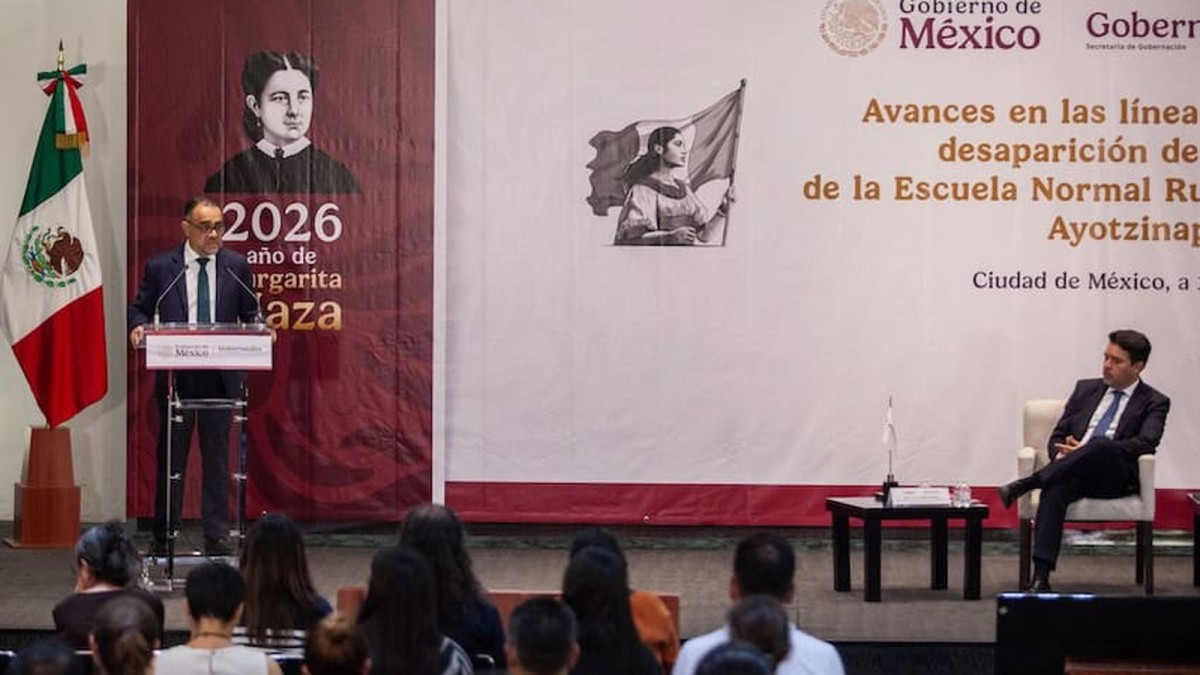
On the twelfth anniversary of the night that 43 Ayotzinapa students vanished, the federal government unveiled four fresh investigative tracks, promising to “re‑analyze” a case that has haunted Mexico for more than a decade. Deputy Interior Minister Arturo Medina and prosecutor Mauricio Pazarán presented the new leads at a press conference in Mexico City, emphasizing that the work stems from a fresh methodological approach that combines technical and scientific tools with the massive archive of documents and phone records accumulated since 2014. While the nation’s families and activists keep chanting “¡Vivos se los llevaron, vivos los queremos!” the authorities claim they have identified new suspects, uncovered possible burial sites, and even traced a hidden video that could finally illuminate the moments when the students’ bus was stopped in Iguala.
Re‑examining the evidence: a new methodological turn
The Interior Ministry (SEGOB) explained that the four new lines of investigation arise from a systematic re‑analysis of the case file, which now exceeds five million pages across more than three thousand volumes. By applying a methodology that “organizes, correlates, and compares” data collected over twelve years, investigators say they have spotted clues that had previously escaped notice. This technical overhaul includes a deep dive into telephone communications, forensic records from municipal funeral parlors, and the digital footprints of both public officials and criminal actors.
Medina stressed that the Ministry of National Defense has supplied all relevant military information, noting that seventeen soldiers are already under judicial scrutiny. He clarified that any alleged involvement of army personnel is treated as individual misconduct, not institutional complicity, underscoring the government’s stance that the armed forces as an institution are not accused of participation in the abduction.
Line 1: Funeral parlors and the discovery of human remains
The first investigative track focuses on telephone records that linked members of the Guerreros Unidos crime gang with staff at funeral establishments and the state forensic medical service (SEMEFO) in Iguala. Among the key figures is Rodolfo Rueda, whose family owned several funeral parlors and held licenses for SEMEFO facilities. In August 2025, investigators discovered that Rueda had used a phone belonging to an Ayotzinapa student, a finding that spurred a series of searches in October 2025.
Those searches uncovered a human femur, a firearm, documents, and a crematorium oven lacking official registration. Subsequent raids between March and June 2026 at SEMEFO facilities attached to Rueda’s funeral parlor yielded “hundreds of bone fragments, dental prostheses, biological remains, cartridges, bullet casings and documents.” All of these items are now undergoing expert analysis to determine whether they belong to any of the missing students. The ministry has formally placed seventeen new suspects, tied to funeral and forensic services, under investigation.
Line 2: The municipal lockup hypothesis
The second line of inquiry arose from a forensic review of three students’ mobile phones. After the disappearance, those phones were found in the hands of a municipal official, a police officer, and individuals close to a former public servant assigned to the municipal lockup. SEGOB says this “strengthens the hypothesis” that a portion of the students—estimated at seventeen—were taken to the Iguala lockup on the night of September 26, 2014.
The lockup theory rests on statements from municipal police officers, two alleged Guerreros Unidos members, and an Ayotzinapa student, all of whom suggested that the detainees were moved to the municipal facility. While the exact fate of those held there remains unclear, the phone evidence provides a concrete link between the students and the municipal detention system, prompting further scrutiny of the lockup’s records and personnel.
Line 3: A teenage suspect emerges
The third investigative thread emerged from a renewed document review that identified a previously unknown participant, who was only fourteen years old at the time of the abduction. According to the ministry, the teenager’s statement on July 30, 2026 supplied information that bolsters accusations against Guerreros Unidos members. Although the source does not disclose the suspect’s name, the revelation that a minor was involved adds a new layer to the complex web of actors surrounding the night of the kidnapping.
This finding underscores the breadth of the case file, which continues to yield new leads even after more than a decade of investigation. By pinpointing a youthful participant, authorities hope to trace additional connections within the criminal network that may have facilitated the students’ capture.
Line 4: The concealed video and the arrest of a former governor
The fourth line of investigation centers on the alleged concealment of security‑camera footage from the Superior Court of Justice in Igoula. Federal Attorney General Ernestina Godoy disclosed in August that former Guerrero Governor Ángel Aguirre ordered the suppression of video that apparently captured the students’ bus as it was stopped by police on September 26, 2014. While the footage has not yet been recovered—authorities suspect it was destroyed—the ministry claims to have reconstructed part of the decision‑making chain that led to its disappearance.
These revelations prompted the arrest of the former presiding judge of the Superior Court and its former inspector, both now facing criminal processes. Ultimately, Aguirre herself was detained on August 6, 2026, on charges of forced disappearance of the 43 students. The case highlights the extent to which high‑ranking officials may have attempted to hide evidence, reinforcing the protest chant “Fue el estado” (It was the state).
The army’s role and the broader accountability picture
Medina reiterated that the Ministry of National Defense has fully cooperated, providing all relevant information to the investigative team. Seventeen army members have been arrested and are under ongoing judicial proceedings. The interior minister emphasized that these soldiers are alleged to have acted independently, not under orders from the army hierarchy. This distinction seeks to protect the institution while still holding individual servicemen accountable.
Beyond the military, the case file now lists 168 individuals subject to judicial processes, including soldiers, high‑ranking army officers, police, members of Guerreros Unidos, and former public officials such as ex‑governor Ángel Aguirre. Despite the breadth of the file, no one has yet been convicted of direct involvement in the abduction and presumed murder of the students.
Families, protests, and the road ahead
The mothers and fathers of the disappeared students remain at the heart of the investigation, as SEGOB affirmed that “the mothers and fathers of the 43 young men remain at the center of this process.” Over the past twelve years, families have endured the loss of two mothers and six fathers, while continuing to march annually through the streets of Mexico City and beyond, demanding truth and justice.
As the new lines of investigation unfold, the nation watches for concrete outcomes: the identification of human remains, the verification of the lockup hypothesis, the prosecution of former officials, and the possible recovery of the concealed video. While the case file expands and the forensic work intensifies, many families still cling to the hope that the missing may one day be found alive, echoing the chant that has become a refrain of the movement: “¡Vivos se los llevaron, vivos los queremos!”
This article was produced with AI-assisted research and editorial support. Reporting is based on the source material cited below. Sources: Mexico News Daily; mexiconewsdaily.com; Global1.News (30 September 2026).
By Rosa Martinez, Staff Writer
What's Your Reaction?
 Like
0
Like
0
 Dislike
0
Dislike
0
 Love
0
Love
0
 Funny
0
Funny
0
 Wow
0
Wow
0
 Sad
0
Sad
0
 Angry
0
Angry
0
Latin America/Andes Correspondent at Global1.News. Based in Bogota, covering politics, environment, energy, and social movements across the Andean region. Passionate about environmental journalism and communities protecting their land.













Comments (0)