
Yemen's Houthis Seize Mokha Port, Closing In on Bab el-Mandeb Strait
Houthi forces have seized Mokha and are advancing on Dhubab and Perim island at Bab el-Mandeb, displacing over 20,000 people in two weeks. Saudi Arabia warns Iran via Pakistan as IRGC commanders reportedly coordinate attacks, threatening global energy routes already strained by the Hormuz closure.
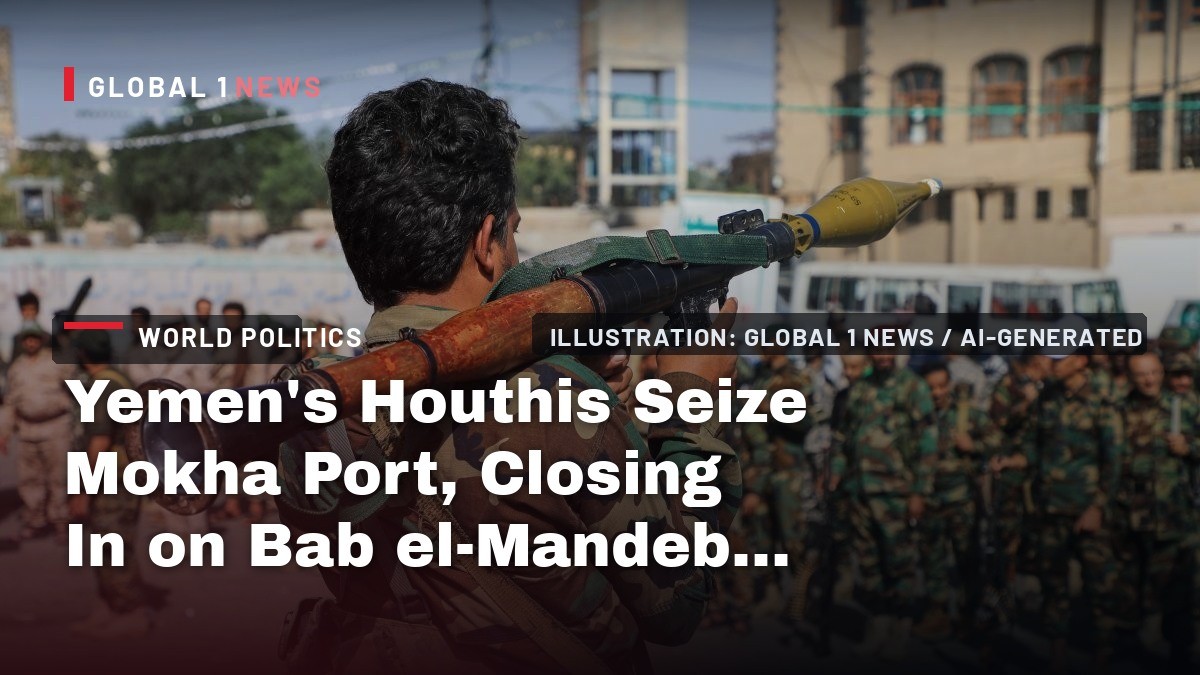
The Houthi movement has captured the Red Sea port city of Mokha and is pressing southward toward Dhubab, the coastal town that sits directly on the Bab el-Mandeb strait, according to Yemeni government sources cited by Reuters. Government forces and their allies are relocating south to Dhubab, which faces the island of Perim across the narrow passage. The Houthis are also launching attacks on the strategic Red Sea islands of Hanish, the same sources said.
The advance marks the most serious escalation in Yemen's civil war since a United Nations-brokered truce in 2022 largely halted years of fighting. That truce never produced a lasting settlement, and the latest clashes have created what officials describe as a second theater of war in the broader Iran conflict, one that directly threatens global energy supplies.
The Fall of Mokha and the Push on Dhubab
Mokha, a historic coffee port on Yemen's western coast, had served as a key staging point for the Saudi-backed internationally recognized government and its allied militias. Its loss represents a significant operational setback for the anti-Houthi coalition and opens the road toward the strait itself.
Control of Dhubab and Perim island is widely regarded as the key to holding Bab el-Mandeb. A military leader allied with Yemen's government forces said on Thursday that he directed his group on the west coast to establish an alternative command center in a safe location. The instructions came from Tarek Saleh, nephew of the assassinated Yemeni president Ali Abdullah Saleh, and were described as another sign that the Houthis were pushing his National Resistance Forces from the west.
The National Resistance Forces have historically operated along Yemen's western coast with backing from the United Arab Emirates and Saudi Arabia. Their displacement would remove one of the few organized military formations still contesting Houthi control of the coastline.
Why Bab el-Mandeb Matters to Energy Markets
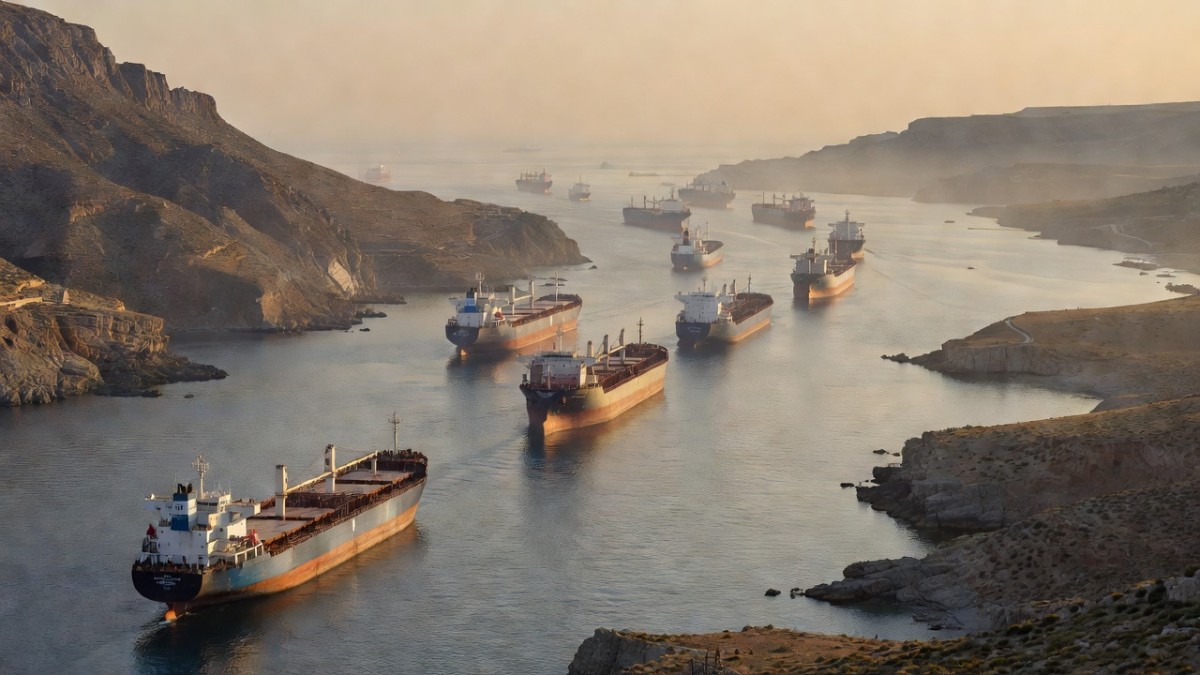
Bab el-Mandeb, Arabic for the Gate of Tears, is the southern outlet of the Red Sea, separating Yemen on the Arabian Peninsula from Djibouti and Eritrea on the African coast. It is one of the world's most important routes for crude oil and refined fuel moving from the Gulf toward the Mediterranean via the Suez Canal or the Suez-Mediterranean pipeline on Egypt's Red Sea coast. The same passage carries commodities bound for Asia, including Russian oil.
Blocking the narrow passage would isolate Gulf oil-producing countries, including energy superpower Saudi Arabia, from their main shipping routes. That prospect carries added weight because the Strait of Hormuz, the primary maritime energy artery between Asia and Europe, is effectively closed to most commercial traffic amid the wider Iran conflict. With both chokepoints compromised, Gulf exporters would face the loss of their two principal export corridors simultaneously, a scenario with no precedent in modern energy trading.
The Houthis have already demonstrated their capacity to disrupt global trade and energy markets through attacks on cargo ships and tankers in the Red Sea. They began firing on vessels and launching drones and missiles at Israel in November 2023, saying they were acting in support of Palestinians during Israel's war in Gaza. Those attacks on Red Sea shipping, as well as on Saudi Arabia, resumed this year in response to the US-led war against Iran, the Houthis' close ally.
The Iranian Hand and the IRGC Link
Tehran's role in the escalation is contested but increasingly documented. Two Iranian sources said Tehran told the Houthis last week to carry out attacks on Saudi Arabia, promising additional funding and weapons, while several Islamic Revolutionary Guard Corps commanders had traveled to Yemen to help coordinate the attacks.
A senior Iranian official confirmed that Pakistan conveyed a Saudi warning to Tehran on Tuesday, and that Iran's response was that "Iran does not control the Houthis." That denial sits awkwardly alongside the reported IRGC deployments and the alleged funding pledge. The contradiction reflects a long-standing feature of Iranian proxy strategy: maintaining plausible deniability while providing the material and advisory support that makes sustained operations possible.
For Riyadh, the distinction matters less than the effect. Saudi Arabia said Houthi attacks on the kingdom in recent days wounded 73 people, including women and children, after targeting civilian and economic sites in the south. The Houthis said Wednesday that Saudi strikes hit the Yemeni provinces of Jawaf, Marib and Saada, bordering the kingdom, as well as Taiz in the south and al-Hodeidah along the Red Sea coast, a Houthi stronghold used as a base for their broader campaign against shipping. Saudi Arabia did not confirm those strikes.
Pakistan's Mediation and Iran's Denial
Pakistan's decision to carry a Saudi warning to Tehran reflects Islamabad's unusual position in the crisis. Pakistan maintains working relations with both Saudi Arabia and Iran, and its mediation channel offers Riyadh a way to communicate urgency without direct escalation. Saudi, Pakistani and Iranian sources all confirmed the message was delivered.
Whether the channel produces restraint is unclear. Iran's public position that it does not control the Houthis gives Tehran room to disclaim responsibility for any further attacks while declining to rein in the group. For Saudi Arabia, that answer is unlikely to be satisfactory, particularly as Houthi strikes on Saudi territory continue.
The mediation effort also underscores a broader pattern in the region: as direct US-Iran tensions intensify, middle powers such as Pakistan, Qatar and Oman are increasingly positioned as conduits for de-escalation. Their leverage, however, depends on both sides wanting an off-ramp.
The Saudi Dilemma and Coalition Fragility
Saudi Arabia's position in Yemen has grown more difficult with each phase of the war. In 2014, the Houthis seized the capital Sanaa, driving the internationally recognized government south toward Aden. Fearful of growing Iranian influence on its border, Saudi Arabia led a military intervention in 2015 to dislodge the group and restore the government. The resulting civil war triggered one of the world's biggest humanitarian crises and years of bitter fighting.
Riyadh now faces a familiar trap. A large-scale ground campaign to retake Mokha and hold Dhubab would risk heavy casualties and renewed international criticism. Inaction, meanwhile, allows the Houthis to consolidate control over the strait's eastern shore and to threaten Saudi shipping and infrastructure at will. The coalition's Yemeni partners, including the National Resistance Forces and various factions in Taiz and al-Hodeidah, have their own rivalries and limited capacity to hold territory without sustained Saudi and Emirati support.
The escalation also arrives as Iran and the United States staged their biggest declared wave of tit-for-tat attacks on shipping in the Gulf region since the war began in February. That parallel confrontation limits Washington's bandwidth to focus on Yemen and complicates any coordinated response to a strait closure.
The Humanitarian Cost and Displacement
The human toll is mounting quickly. Hundreds of women and children left Mokha on Thursday for the provinces of Lahj and Aden, controlled by the Saudi-backed government, seeking shelter after losing relatives in fighting between the Houthis and government forces, according to Yemeni government data. In areas of Taiz and al-Hodeidah provinces, more than 20,000 people have been displaced due to clashes over the past two weeks.
Yemen's humanitarian infrastructure, already degraded by more than a decade of war, has limited capacity to absorb new displacement. Aid agencies have repeatedly warned that funding shortfalls and access restrictions constrain their operations. A return to full-scale war would compound those pressures and push more civilians toward the front lines rather than away from them.
The Hormuz Comparison and the Second Front
The strategic logic of the Houthi campaign mirrors Iran's approach at Hormuz. By threatening Bab el-Mandeb, the Houthis impose costs on Gulf exporters and their international partners without requiring a formal naval blockade. The mere risk of attack raises insurance premiums, diverts shipping, and forces navies to commit assets to escort duties.
If both chokepoints remain contested, the combined effect on global energy flows would be severe. Gulf producers would face longer, costlier alternative routes, while Asian and European importers would confront higher prices and supply uncertainty. Egypt, which depends on Suez Canal revenue, would suffer a direct fiscal blow. Djibouti and Eritrea, on the African side of the strait, would find their own ports and security arrangements drawn into the crisis.
For Israel, the Houthi advance adds a southern dimension to an already multi-front security environment. For Turkey, which has positioned itself as a diplomatic actor in Yemen and the wider region, the escalation tests Ankara's ability to influence outcomes without direct military involvement. For the Gulf Cooperation Council, the crisis exposes the limits of collective security arrangements when member states face asymmetric threats from non-state actors.
The coming weeks will determine whether the Houthis attempt to physically close Bab el-Mandeb or settle for the leverage that proximity alone provides. Either outcome reshapes the strategic map of the Red Sea and the balance of power in a conflict that has already outlasted repeated attempts to end it.
By Malik Hassan, Staff Writer
This article was produced with AI-assisted research and editorial support. Sources: Daily Sabah, Reuters, Agence France-Presse, Yemeni government statements.
What's Your Reaction?
 Like
0
Like
0
 Dislike
0
Dislike
0
 Love
0
Love
0
 Funny
0
Funny
0
 Wow
0
Wow
0
 Sad
0
Sad
0
 Angry
0
Angry
0
Middle East Correspondent at Global1.News. Based in Beirut, covering politics, conflict, energy, and society across the Middle East. Brings context and depth to a region often reduced to headlines.













Comments (0)