
Why Are China and Japan Still So Focused on the ‘Enemy State Clauses’ of the UN Charter?
On 22 September 2026 Japanese Prime Minister Takaichi Sanae addressed the United Nations General Assembly, urging the body to begin the process of deleting the “enemy state clauses” that remain embedded in the UN Charter.
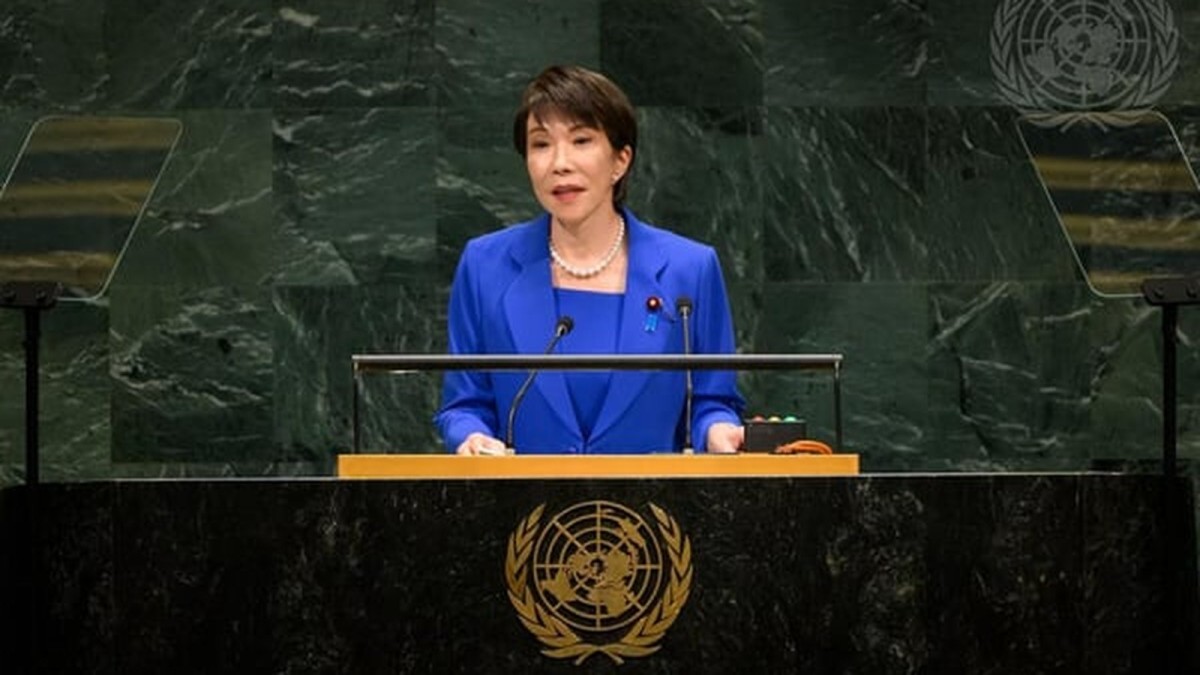
On 22 September 2026 Japanese Prime Minister Takaichi Sanae addressed the United Nations General Assembly, urging the body to begin the process of deleting the “enemy state clauses” that remain embedded in the UN Charter. The appeal, while rooted in a legal technicality, is emblematic of a deeper contest over how the post‑World War II order should accommodate Japan’s transformation from a defeated Axis power to a senior contributor to the international system. The renewed focus on Articles 53, 77 and 107 of the Charter reflects not only a legal debate but also the deteriorating diplomatic climate between Tokyo and Beijing.
Historical origins of the “enemy state clauses”
The United Nations Charter was drafted in the immediate aftermath of World II, when the victorious powers sought to embed safeguards against the resurgence of the defeated states. Articles 53, 77 and 107 specifically reference “enemy states,” a term that originally applied to Germany and Japan. Their purpose was to limit the political and military autonomy of former aggressors, ensuring that the new security architecture would not be undermined by a revival of militarism.
Japan’s postwar trajectory has been defined by its acceptance of the settlement and its subsequent integration into the UN system. Over the past seven decades, Tokyo has contributed to peacekeeping missions, development assistance and a range of multilateral initiatives. From this perspective, the clauses are increasingly seen as anachronistic, a relic of a bygone era that no longer reflects Japan’s role on the world stage.
Previous attempts to excise the clauses
The first formal push to remove the language came in 1995, when the General Assembly adopted Resolution 50/52 with 155 votes in favour, zero against and three abstentions. China voted in favour, indicating a willingness at that time to support a procedural step toward amendment. A decade later, the 2005 World Summit Outcome, adopted without a vote, reiterated the call for deletion. Despite these symbolic victories, the amendment process stalled, and the Charter remains unchanged.
The procedural hurdle is formidable. Under Article 108, any amendment must secure a two‑thirds majority in the General Assembly and ratification by two‑thirds of UN members, including all five permanent members of the Security Council. This requirement gives China, Russia and the other permanent members a de‑facto veto over any change that might affect their strategic interests.
Legal interpretations and practical relevance
International legal scholars are divided on the operative status of the clauses. Some argue that they have become effectively obsolete, given that no UN action has invoked them since the early Cold War period. Others caution that the mere presence of the language in the Charter means it cannot be ignored, especially when a powerful member state, such as China, attaches political significance to it.
In practice, the clauses have never been enforced against Japan. Their relevance is therefore largely symbolic, serving as a reminder of the historical burden that Japan carries in the eyes of some of its neighbours. This symbolic weight is precisely why the issue has resurfaced amid heightened Sino‑Japanese tensions.
China’s strategic use of the clauses
Chinese officials have linked the “enemy state clauses” to Japan’s wartime aggression and its contemporary security posture. In response to Prime Minister Takaichi’s speech, Foreign Ministry spokesperson Guo Jiakun emphasized that Japan’s actions matter more than its statements, tying the legal language to broader concerns about militarism and regional stability. For Beijing, the clauses function as an institutional safeguard, a reminder that Japan’s postwar conduct must be continually scrutinized.
This stance reflects a broader Chinese narrative that the post‑war order is not merely a set of outdated arrangements but a living embodiment of historical memory. By invoking the clauses, China reinforces a political understanding of Japan as a state that must demonstrate ongoing contrition and restraint, especially in the context of disputes over the East China Sea and broader security dynamics in the Indo‑Pacific.
Japan’s diplomatic calculus
For Tokyo, the removal of the clauses is both a legal and a symbolic objective. Legally, it would eliminate a vestigial provision that no longer aligns with Japan’s self‑image as a “normal” member of the international community. Symbolically, it would signal international recognition of Japan’s transformation and its desire to move beyond the constraints imposed by a charter drafted in 1945.
Prime Minister Takaichi’s appeal also dovetails with her broader call for Security Council reform, arguing that the current permanent membership still reflects the geopolitical realities of the mid‑twentieth century. By coupling the two issues, Japan is positioning itself as a reformist voice seeking to modernise the UN’s institutional architecture to better reflect contemporary power distributions.
The broader regional implications
The dispute over the “enemy state clauses” underscores a deeper contest over the meaning of the post‑war order in East Asia. While Japan seeks to shed the legal remnants of its defeated past, China insists that historical memory remains integral to regional security architecture. This divergence suggests that even if the clauses were formally removed, the underlying political tensions would persist.
Neighbouring states that experienced Japanese aggression during the war, such as South Korea and the Philippines, are likely to view the removal of the clauses with skepticism. Their acceptance of Japan’s postwar identity is contingent not only on legal reforms but also on tangible assurances of a pacifist security posture and continued reconciliation efforts.
Prospects for amendment and future trajectories
Given the stringent amendment requirements under Article 108, the immediate prospect of deleting the “enemy state clauses” appears slim. Achieving the necessary two‑thirds majority in the General Assembly is feasible, but securing ratification by all permanent Security Council members, particularly China and Russia, remains a formidable obstacle.
Nevertheless, the very act of raising the issue at the 2026 General Assembly serves a strategic purpose for Japan: it keeps the conversation alive, pressures the UN to confront anachronistic language, and signals to domestic and regional audiences that Tokyo is unwilling to accept symbolic constraints on its sovereignty. The outcome of this diplomatic push will hinge on Japan’s ability to persuade not only the broader UN membership but also its Asian neighbours that the historical grievances embodied in the clauses have been adequately addressed through decades of cooperation, aid and peacekeeping.
In sum, the “enemy state clauses” have become a proxy battleground for competing narratives about history, security and legitimacy in the Indo‑Pacific. As Sino‑Japanese relations continue to strain, the clauses will likely remain a point of contention, reflecting deeper disagreements over how the post‑war order should evolve to accommodate the realities of the twenty‑first century.
This article was produced with AI-assisted research and editorial support. Reporting is based on the source material cited below. Sources: The Diplomat; thediplomat.com; Global1.News (30 September 2026).
By Kenji Tanaka, Staff Writer
What's Your Reaction?
 Like
0
Like
0
 Dislike
0
Dislike
0
 Love
0
Love
0
 Funny
0
Funny
0
 Wow
0
Wow
0
 Sad
0
Sad
0
 Angry
0
Angry
0

Japan Correspondent at Global1.News. Tokyo-based voice covering Japanese politics, technology, economy, and culture. Tracks the intersection of tradition and innovation in one of the world's most dynamic societies.














Comments (0)