
Online hate researcher keeps hammering X despite deportation threat
When the US government starts branding independent tech researchers as national‑security threats, it’s not just a political stunt – it’s a direct assault on the ecosystem that keeps the internet safe.
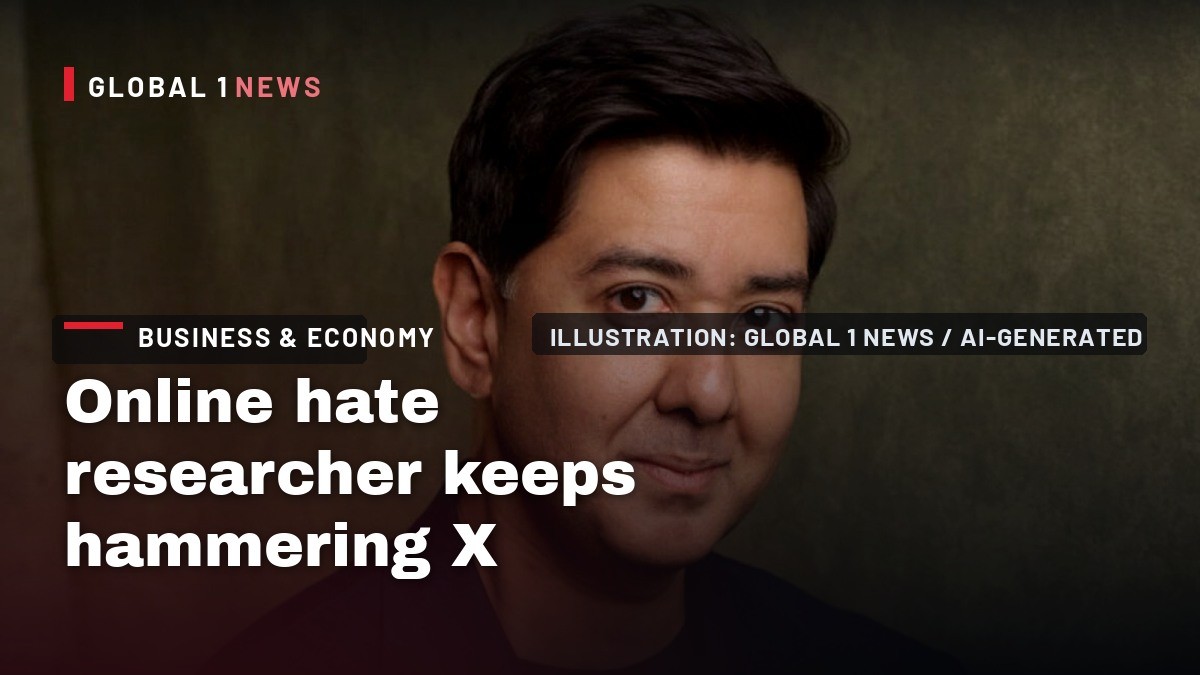
When the US government starts branding independent tech researchers as national‑security threats, it’s not just a political stunt – it’s a direct assault on the ecosystem that keeps the internet safe. The latest round of legal battles over a policy that could deport non‑citizen analysts for flagging illegal content shows exactly why founders of hosting firms need to keep a close eye on policy drift. The policy, championed by Secretary of State Marco Rubio, was meant to stop “foreign nationals from manipulating digital town squares and censoring Americans,” yet the courts have repeatedly found it overbroad and constitutionally shaky. For anyone running production servers, the fallout from such policies can translate into sudden loss of expertise, forced shutdowns, or even legal exposure for hosting the very data that researchers need to do their jobs.
Why the policy matters to hosting operators
The core of the controversy is a immigration rule that lets the State Department flag any non‑citizen who “flags illegal or harmful online content” as a potential security risk. In practice, that means a researcher who discovers child sexual abuse material (CSAM) on a platform like X could be detained or deported on a whim. For a hosting provider, losing a trusted analyst mid‑investigation can cripple incident response. The policy’s breadth – described by Judge James Boasberg as “too broad” to survive constitutional scrutiny – could sweep in anyone working in content moderation, a role that many of our engineers and ops staff perform behind the scenes.
When the policy was first challenged, the judge emphasized there was “no evidence linking any targeted researchers to a foreign power.” That tells us the government’s justification is flimsy at best, and the risk of arbitrary enforcement is high. Hosting firms that rely on external expertise for compliance checks or threat hunting should anticipate that the very people they contract could be pulled off the job board overnight, leaving gaps in monitoring and potentially exposing the provider to liability.
The legal tug‑of‑war: courts versus the State Department
In July, a district judge blocked the policy as unconstitutional, but the State Department quickly appealed. The appeal came just days after another court ruled it lacked jurisdiction to permanently strike down the rule, effectively keeping the policy alive while the legal limbo continues. Judge Loretta Preska, presiding over a related case involving Imran Ahmed of the Center for Countering Digital Hate (CCDH), called out Rubio for labeling Ahmed a threat based on his advocacy rather than any concrete foreign‑linked activity. She noted that Congress had stripped courts of the power to block removal proceedings, leaving Ahmed with only a “premature” lawsuit.
Even though Preska granted a temporary restraining order to halt Ahmed’s detention, the underlying policy remains untouched. The appellate court’s upcoming decision will be the real litmus test: will it allow the executive branch to continue using vague national‑security rationales to silence researchers? For hosting operators, the answer could dictate whether they can safely partner with independent watchdogs or whether they’ll have to pull the plug on any collaboration that might attract government scrutiny.
What the CCDH data reveal about platform risk
CCDH’s recent contribution to a New York Times investigation highlighted a glaring gap in X’s content moderation. The group supplied “more than four million links to Grok‑generated images” to the Canadian Center for Children Protection, which uncovered 65 AI‑generated CSAM images and 75 known CSAM images. Some of those files were viewed hundreds of times, underscoring how even the biggest platforms can miss the most egregious abuse. X’s public response – a safety post claiming “zero tolerance for CSAM” – does little to reassure regulators or the public.
From a hosting perspective, this data underscores why independent research matters. When platforms fail, the onus falls on downstream services, including hosting providers, to enforce strict controls. If the government starts targeting the very researchers who surface these gaps, the feedback loop that drives better security will be broken. That could leave providers exposed to downstream legal claims for hosting illegal content that they weren’t even aware of.
The chilling effect on free speech and compliance work
Ahmed’s own words capture the broader danger: “Transparency isn’t censorship and speaking truth to the most powerful person on the planet is precisely the intention of the First Amendment.” The State Department, however, frames his work as a potential “serious adverse foreign policy consequence.” This mismatch is the crux of the constitutional challenge – the government is using a national‑security label to chill protected speech. For hosting firms, the chilling effect can manifest as self‑censorship: refusing to host or process data that might attract government attention, even if that data is perfectly legal under US law.
When a policy threatens to deport researchers for merely doing their job, the ripple effect reaches every tier of the internet stack. Companies may start vetting employees for citizenship status, limiting the talent pool and driving up costs. Smaller hosting outfits, which already operate on thin margins, could find themselves forced to hire only US citizens, a costly and impractical shift that would erode the diversity and expertise that make robust security possible.
Business‑risk lens: what founders should watch
From a founder’s seat, the risk calculus is simple: policy uncertainty equals operational risk. If a key researcher is detained, any ongoing compliance audit could stall, leaving the provider exposed to regulator penalties for failing to detect illegal content. Moreover, the policy’s vague language – “any non‑citizen working in content moderation” – means that even engineers who occasionally review flagged posts could be caught in the net. This could trigger a talent exodus, as foreign‑born staff seek safer jurisdictions, and could also deter prospective hires who fear future deportation threats.
Another angle is reputational risk. Partnering with groups like CCDH can be a badge of credibility, showing clients that you take online safety seriously. But if the government starts branding those partners as security threats, the partnership itself becomes a liability. Companies might be forced to choose between maintaining a strong safety posture and staying off the government’s radar.
Actionable steps for independent hosting providers
First, audit your talent pool. Identify any non‑citizen staff who handle content moderation, threat hunting, or CSAM detection. Ensure they have clear documentation of their work scope and legal counsel ready in case of a government inquiry. Second, diversify your compliance partners. Relying on a single research group can make you a target; spread the load across multiple vetted NGOs and academic labs to reduce the chance that any one partnership triggers a policy breach.
Third, build internal detection capabilities. While external researchers are invaluable, having an in‑house team that can pick up the slack if external partners are silenced will protect you from sudden gaps. Fourth, stay on top of legal developments. The upcoming Second Circuit appeal could set a precedent that either narrows or expands the policy’s reach. Subscribe to court docket alerts and consider retaining counsel with expertise in immigration and First‑Amendment law.
Finally, be vocal. As a founder, you have a platform to push back against overbroad policies that threaten the very fabric of internet safety. Publicly supporting independent research, while framing it as a business necessity for compliance, can help shift the narrative away from “national security” to “operational risk.”
Bottom line: policy overreach threatens the safety chain
The US government’s attempt to weaponize immigration law against tech researchers is more than a political drama – it’s a direct threat to the safety chain that keeps platforms clean and users protected. The courts have signaled that the policy is constitutionally dubious, but until the appellate court weighs in, the risk remains real. For hosting providers, the stakes are high: loss of expertise, compliance gaps, talent churn, and reputational damage. By auditing staff, diversifying research partnerships, bolstering internal detection, and staying legally vigilant, founders can mitigate the fallout and keep their infrastructure resilient against policy‑driven disruption.
— Allan Ali, Founder
This article was produced with AI-assisted research and editorial support. Reporting is based on the source material cited below. Sources: Ars Technica; arstechnica.com; Global1.News (15 September 2026).
By Allan Ali, Global1.News
What's Your Reaction?
 Like
0
Like
0
 Dislike
0
Dislike
0
 Love
0
Love
0
 Funny
0
Funny
0
 Wow
0
Wow
0
 Sad
0
Sad
0
 Angry
0
Angry
0

Publisher of Global1.News. Automation architect, systems builder, and the guy making sure the truth gets published.











Comments (0)