
Russia Tightens Cash Outflow Limits to Neighboring Countries
President Vladimir Putin has signed a new executive order that sharply curtails the amount of cash Russians may take across their borders to neighboring states.
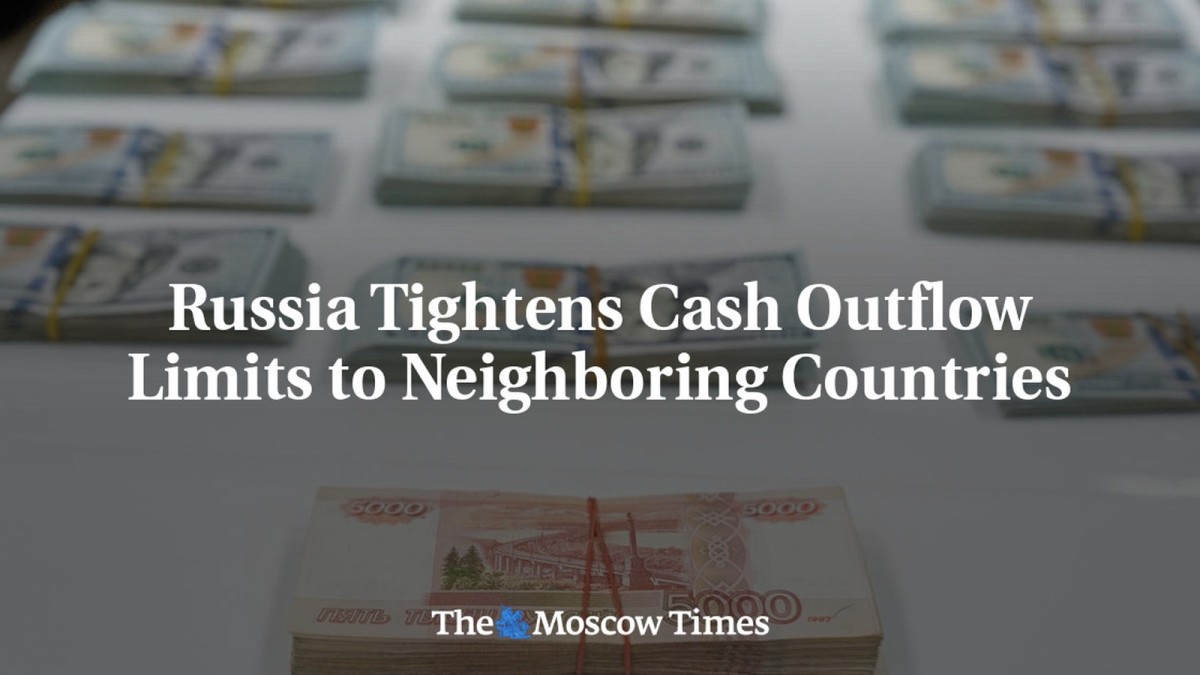
President Vladimir Putin has signed a new executive order that sharply curtails the amount of cash Russians may take across their borders to neighboring states. The decree limits individual travelers to a maximum of 1 million rubles – roughly $11,900 – when crossing into Armenia, Azerbaijan, Belarus, Kazakhstan, Kyrgyzstan, Tajikistan and Uzbekistan. The move represents a dramatic tightening of cash‑outflow controls that were already in place, and it signals a broader shift in Moscow’s financial strategy as it confronts mounting economic pressure.
Scope of the new cash‑outflow limits
The order applies to all individuals travelling to the seven listed countries, regardless of purpose. Under the new rule, any amount exceeding the 1 million‑ruble threshold will be seized in full, according to the newspaper Kommersant. The decree also extends to businesses, which are now prohibited from removing any cash from Russia for the same destinations. Companies caught attempting to transfer cash will be forced to surrender the entire amount, a stipulation that effectively bans cash‑based outbound transactions for corporate entities.
Exceptions are narrowly defined. Travelers who pass through government‑designated international airports, officials at diplomatic missions, and individuals who can provide a bank‑authorization statement are exempt from the restriction. This limited carve‑out suggests the Kremlin is aiming to retain control over cash flows while still permitting essential diplomatic and commercial travel.
Comparison with previous limits
Until this week, the cash‑outflow ceiling stood at the ruble equivalent of $100,000, a figure set by an order signed by Putin in March of this year. This contraction follows a pattern of tightening financial controls that began in March 2022, when Russia first capped the export of foreign currency at $10,000 in response to the full‑scale invasion of Ukraine.
The rapid tightening within a single year underscores the Kremlin’s escalating concern over capital flight. By shrinking the allowable cash outflow to a fraction of its previous level, Moscow appears to be tightening the leash on private wealth and corporate liquidity, likely in an effort to preserve foreign exchange reserves and limit the outflow of hard currency.
Implications for the Eurasian Economic Union
Four of the affected states – Armenia, Belarus, Kazakhstan and Kyrgyzstan – are members of the Russian‑led Eurasian Economic Union (EAEU). The EAEU is intended to facilitate the free movement of goods, services, capital and labour among its members. By imposing a cash‑outflow ceiling that is far lower than the previous $100,000 limit, Russia is effectively curbing the free‑movement of capital within the bloc.
This restriction could strain intra‑union trade, especially for businesses that rely on cash transactions in border regions. While the decree does not affect electronic transfers, the continued reliance on cash in many parts of the EAEU means that firms may face operational disruptions, prompting a shift toward digital payment channels that are more easily monitored by Russian authorities.
Business sector response and adaptation
For Russian enterprises, the ban on cash removal represents a significant operational hurdle. Companies that previously used cash to settle cross‑border obligations – such as paying suppliers, servicing debt, or facilitating employee travel – must now redesign their payment processes. The prohibition may accelerate the adoption of electronic banking and fintech solutions, but it also raises compliance risks for firms that have historically relied on cash for speed and anonymity.
Corporate compliance departments will need to adjust internal controls to ensure that no cash is taken out of the country for the listed destinations. Failure to do so could result in the forfeiture of entire cash holdings, a punitive measure that could cripple smaller firms with limited liquidity buffers. The decree thus creates a strong incentive for businesses to shift toward fully traceable financial channels, aligning with the Kremlin’s broader goal of tightening oversight of capital flows.
Geopolitical context and strategic motivations
The timing of the order coincides with a period of intensified Western sanctions and a deteriorating macro‑economic environment for Russia. By limiting cash outflows, the Kremlin may be seeking to prevent a surge in capital flight that could further deplete foreign‑exchange reserves already strained by sanctions. The restriction also serves a dual purpose: it curtails the ability of Russian elites and ordinary citizens to move wealth abroad, thereby reducing the risk of asset seizure or conversion into hard currency.
Moreover, the focus on neighboring states suggests a strategic calculus. These countries are either members of the EAEU or maintain close economic ties with Moscow. By imposing the limits specifically on travel to these states, the Kremlin can more easily monitor and enforce the rule, leveraging existing border controls and customs infrastructure. This selective approach also signals to regional partners that Russia remains the dominant economic authority within its sphere of influence.
Legal and enforcement considerations
The decree outlines severe penalties for non‑compliance. Individuals who exceed the 1 million‑ruble limit face total confiscation of the excess amount, a measure that effectively nullifies any attempt to circumvent the rule. For businesses, the penalty is even harsher: any attempt to transfer cash will result in the surrender of the entire cash amount, a blanket sanction that leaves little room for negotiation.
Enforcement will likely fall to customs officials at border checkpoints and to the Federal Customs Service, which has been tasked with overseeing cash declarations. The inclusion of exceptions for travelers passing through designated airports and diplomatic missions indicates that enforcement will be calibrated, focusing on high‑risk points of entry and exit rather than imposing a blanket ban on all forms of travel.
Impact on ordinary Russian travelers
For the average Russian citizen, the new limit represents a tangible reduction in financial flexibility. Many Russians travelling to the listed neighboring countries for family visits, tourism, or business will now need to plan their cash needs more carefully. The restriction may encourage greater reliance on electronic payment methods, such as bank cards or mobile wallets, which are subject to monitoring by Russian banks and, by extension, the state.
Travelers who previously carried larger sums of cash for convenience or to avoid exchange fees will now face the risk of confiscation if they exceed the limit. The requirement to present a bank‑authorization statement for larger transfers adds an administrative burden, potentially deterring spontaneous travel or informal cross‑border commerce. In the longer term, the decree may reshape travel habits, pushing more Russians to limit trips to the affected states or to adjust their spending patterns while abroad.
This article was produced with AI-assisted research and editorial support. Reporting is based on the source material cited below. Sources: The Moscow Times; themoscowtimes.com; Global1.News (03 October 2026).
By Irina Volkov, Staff Writer
What's Your Reaction?
 Like
0
Like
0
 Dislike
0
Dislike
0
 Love
0
Love
0
 Funny
0
Funny
0
 Wow
0
Wow
0
 Sad
0
Sad
0
 Angry
0
Angry
0
Russia/Eastern Europe Correspondent at Global1.News. Covering Russian politics, energy, security, and the shifting dynamics of the post-Soviet space. Provides clear-eyed analysis on one of the world's most opaque regions.















Comments (0)