
Hong Kong authorities probe Hotstone Yoga closure as customers turn to watchdog
The Consumer Council reported that 27 complaints have been lodged, totalling HK$429,326 in losses, after the sudden shutdown of the Hotstone Yoga chain on Thursday.
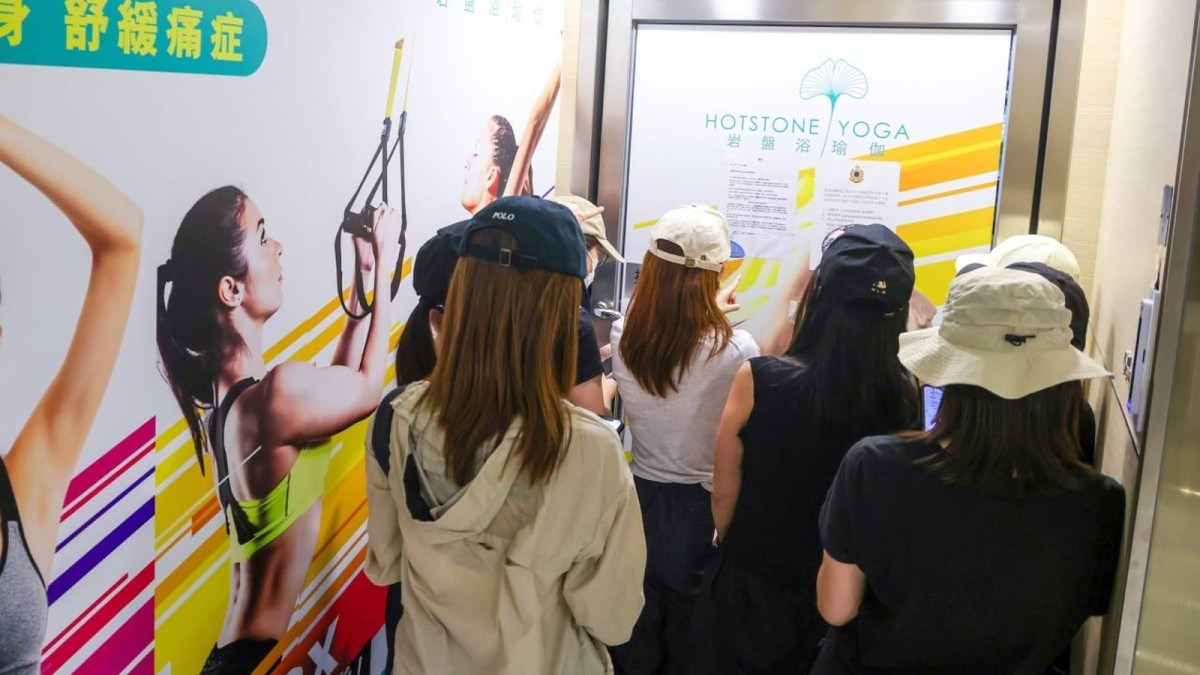
The Consumer Council reported that 27 complaints have been lodged, totalling HK$429,326 in losses, after the sudden shutdown of the Hotstone Yoga chain on Thursday. The figure, roughly HK$430,000 (US$54,800), reflects the amount claimed by customers who were left without refunds or access to prepaid classes. The abrupt closure has triggered a joint response from the Consumer Council and the Customs and Excise Department, both of which have posted notices at the Kwun Tong studio to inform the public that the matter is under investigation. While the exact cause of the shutdown remains unclear, the incident raises broader questions about consumer protection, business continuity, and the regulatory environment governing fitness and wellness enterprises in Hong Kong.
Background to the Hotstone Yoga shutdown
Hotstone Yoga, a chain of yoga studios that had established a presence in several districts, ceased operations without prior notice on Thursday. The Consumer Council’s data, collected up to 5 p.m. that day, indicates that at least 27 customers have formally complained, reporting a combined loss of HK$429,326. The complaints were filed through the Council’s standard consumer grievance channels, which allow individuals to seek mediation and, where appropriate, referral to law enforcement.
One customer, who identified herself only as Chan, told the South China Morning Post that she believed the number of affected patrons could be as high as 500. While Chan’s estimate is not corroborated by official figures, it suggests that the scale of the disruption may extend well beyond the complaints currently recorded. The lack of an official statement from Hotstone Yoga itself leaves a gap in the narrative, prompting authorities to act preemptively to safeguard remaining customers and to prevent further financial harm.
Regulatory response and consumer protection mechanisms
The Consumer Council’s immediate involvement underscores the role of Hong Kong’s consumer protection framework in addressing sudden business failures. By compiling the complaints and quantifying the total loss, the Council provides a baseline for potential restitution or legal action. Its mandate includes mediating disputes, conducting investigations, and, where necessary, recommending enforcement actions to the relevant authorities.
In parallel, the Customs and Excise Department posted a public notice outside the Kwun Tong studio, signalling that it is also examining the case. While the Department’s primary remit concerns customs, excise duties, and related offences, its participation indicates a broader concern about possible breaches of trade or commercial regulations, such as the handling of prepaid services and the proper registration of business operations. The joint visibility of both agencies aims to reassure the public that the matter is being taken seriously and to deter similar abrupt closures in the future.
Impact on consumers and the yoga market
The immediate impact on consumers is financial loss, as reflected in the HK$429,326 reported. For many, prepaid yoga memberships represent a significant personal investment in health and wellness. The sudden loss of access to classes not only erodes trust in the specific brand but may also affect confidence in the broader market for subscription‑based fitness services.
Beyond the direct monetary loss, the incident may influence consumer behaviour. Potential customers could become more cautious, seeking studios with clearer refund policies or those that hold client funds in escrow accounts. Existing studios might respond by enhancing transparency around payment terms, offering more flexible cancellation options, or providing additional guarantees to differentiate themselves from the perceived risk associated with Hotstone Yoga’s failure.
Legal considerations and potential remedies
From a legal perspective, the complaints lodged with the Consumer Council could evolve into civil claims for breach of contract, especially if customers can demonstrate that they paid for services that were not delivered. The Council’s role includes facilitating settlement negotiations, but should those fail, affected parties may pursue litigation in the courts.
The involvement of the Customs and Excise Department adds another layer of possible enforcement. If the investigation uncovers violations of trade regulations—such as failure to maintain proper licensing, misrepresentation of business status, or mishandling of prepaid funds—the Department could refer the case to the Companies Registry or the Trade and Industry Department for further action. Potential outcomes range from fines to the revocation of business licences, depending on the severity of any infractions uncovered.
Comparison with previous consumer protection cases
Hong Kong has a history of consumer protection interventions in the wellness sector, though the scale of the Hotstone Yoga incident appears notable. Past cases involving abrupt closures of retail or service businesses have similarly prompted coordinated responses from the Consumer Council and other regulatory bodies. In those instances, the Council’s data collection has been pivotal in quantifying consumer loss and shaping the subsequent policy or enforcement response.
One recurring theme is the importance of early reporting. The Consumer Council’s ability to capture 27 complaints by 5 p.m. demonstrates a relatively swift public reaction. This early aggregation of data helps authorities assess the magnitude of the problem and allocate resources accordingly. It also provides a clearer picture for any eventual restitution scheme, should the authorities decide to establish a compensation fund or mandate refunds from the business owners.
Potential implications for business practices
The Hotstone Yoga episode may serve as a cautionary tale for other businesses that rely on prepaid models. Companies might reassess how they manage client funds, possibly adopting more robust accounting practices or segregating prepaid amounts to ensure they are protected in the event of a sudden shutdown. Such measures could become a competitive advantage, signalling reliability to a market that is increasingly attentive to financial safeguards.
Furthermore, the incident could stimulate discussions within industry associations about standardising refund policies. While no statutory requirement currently mandates that fitness studios hold prepaid fees in a separate trust account, industry bodies could voluntarily adopt such standards to restore consumer confidence. The pressure to adopt best practices may also come from investors, who may view the risk of abrupt closures as a factor in evaluating the viability of fitness startups.
Outlook and next steps for affected consumers
For the 27 complainants who have already approached the Consumer Council, the immediate next step is to cooperate with the ongoing investigation, providing any receipts, contracts, or correspondence that substantiate their claims. The Council will likely continue to update its database as more complaints are filed, potentially revealing a larger aggregate loss.
Consumers who have not yet lodged formal complaints are encouraged to do so through the Council’s online portal or hotline. Early reporting not only aids personal restitution efforts but also contributes to a more accurate assessment of the overall impact. As the investigation proceeds, the public notices posted by the Customs and Excise Department will remain in place, signalling that authorities are monitoring the situation and are prepared to act if further irregularities are uncovered.
In the broader context, the Hotstone Yoga shutdown underscores the delicate balance between entrepreneurial dynamism and consumer protection in Hong Kong’s service economy. While the city continues to attract innovative wellness concepts, the incident reminds both providers and patrons that robust safeguards are essential to sustain confidence in the market. The outcomes of the current investigations will likely shape policy discussions and industry standards for years to come.
This article was produced with AI-assisted research and editorial support. Reporting is based on the source material cited below. Sources: South China Morning Post; scmp.com; Global1.News (01 October 2026).
By Kenji Tanaka, Staff Writer
What's Your Reaction?
 Like
0
Like
0
 Dislike
0
Dislike
0
 Love
0
Love
0
 Funny
0
Funny
0
 Wow
0
Wow
0
 Sad
0
Sad
0
 Angry
0
Angry
0

Japan Correspondent at Global1.News. Tokyo-based voice covering Japanese politics, technology, economy, and culture. Tracks the intersection of tradition and innovation in one of the world's most dynamic societies.















Comments (0)