
El Grito de Independencia: Common myths and misconceptions
When September rolls over the Mexican landscape, the air seems to change its rhythm. The whole country is gearing up for El Grito de Independencia, also known as El Grito de Dolores, the moment when the nation collectively remembers the spark that set the War of Independence ablaze.
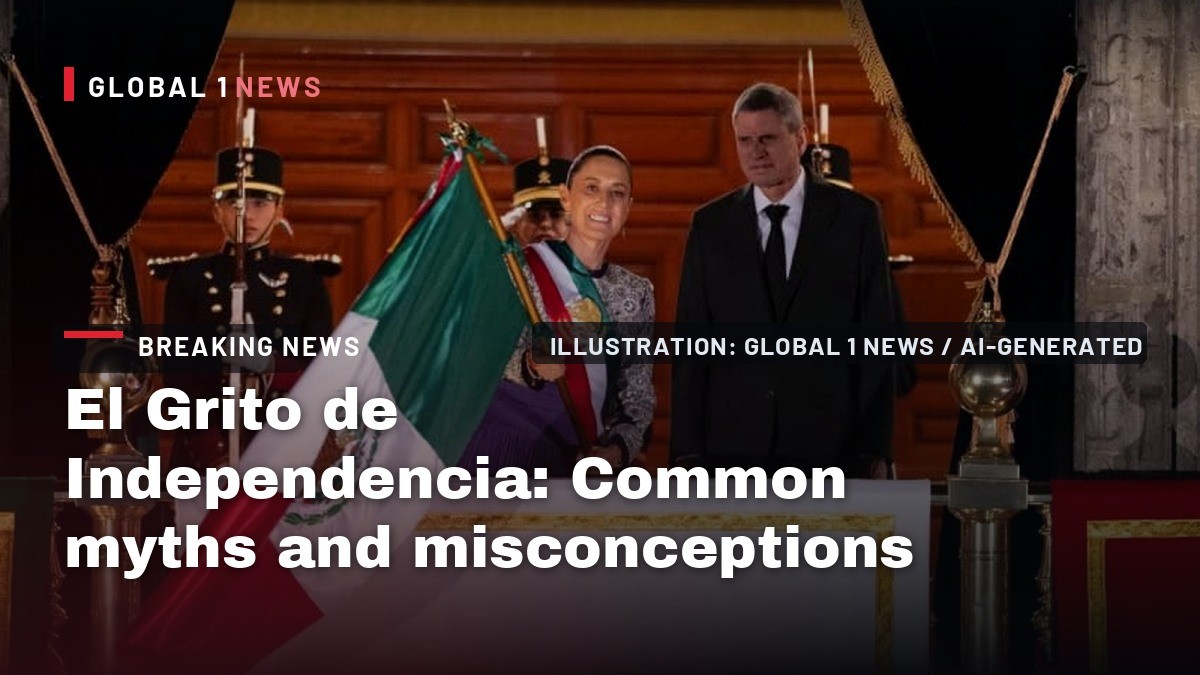
When September rolls over the Mexican landscape, the air seems to change its rhythm. The rain eases, the streets of every colonia and tianguis fill with the bright tricolor of green, white and red, and families begin to prepare the dishes that mark the season – steaming bowls of pozole, plates of tacos al pastor, and bottles of tequila waiting to be raised. The whole country is gearing up for El Grito de Independencia, also known as El Grito de Dolores, the moment when the nation collectively remembers the spark that set the War of Independence ablaze. Yet, amid the fireworks and the chorus of “¡Viva México!” a tangle of myths and misconceptions still circulates, clouding the true story of how this beloved holiday came to be.
The date we celebrate: a beginning, not an end
One of the most persistent misunderstandings is that Mexico’s Independence Day marks the conclusion of the war against Spain. In reality, the holiday commemorates the moment the rebellion began, not when it finished. The formal Declaration of Independence was signed on September 28, 1821, ending an eleven‑year armed conflict that had started in September 1810. The official celebration, however, is anchored to the earlier date – the night when Miguel Hidalgo rang the first alarm.
This distinction matters because, in many other nations, the national holiday falls on the day the sovereignty document was signed. Mexico’s two September dates sit close together, but they celebrate different milestones: the first is the spark that ignited the struggle; the second is the legal affirmation of a free nation.
Why September 15, not September 16?
The confusion over whether the Grito should be observed on the 15th or the 16th has given rise to several urban legends. One popular story claims that President Porfirio Díaz shifted the celebration from the 16th to the 15th to match his own birthday on September 15. While Díaz’s birthday does indeed fall on that day, historical evidence shows that the tradition of marking the evening of the 15th predates his presidency by decades.
Records indicate that around 1840, Mexicans began holding the festivities on the evening of September 15. The practical reason was simple: evening celebrations allowed for fireworks, music, and civic speeches to be staged after dark, rather than in the early hours of the 16th when most people were still asleep. This shift solidified the 15th as the focal point of the national ritual, even though the actual call to arms occurred in the early morning of the 16th.
The night the cry rang out
On the evening of September 15, 1810, Hidalgo and his fellow conspirators received news that their secret plan had been discovered. Forced to act immediately, they launched the uprising that night. By the early morning of Sunday, September 16, Hidalgo stood before the assembled people of Dolores, Guanajuato, and urged them to take up arms. The timing of the call aligns with the Sunday Mass, the most important gathering for a Catholic community, making the moment both urgent and symbolically resonant.
Hidalgo’s speech was not a simple declaration of rebellion. At the time, the Spanish crown had stripped the criollos – people of Spanish descent born in Mexico – of many privileges, including access to high‑ranking positions. This disenfranchisement fueled resentment, but the criollos were not initially seeking a full break from the monarchy. Hidalgo’s address reflected this complexity, blending loyalty to the Catholic faith and even to the imprisoned King Fernando VII with a call for justice against “bad government.”
What Hidalgo actually shouted
Primary sources and early historical accounts differ on the exact wording, but a widely accepted reconstruction includes a blend of religious, royal, and popular appeals. Hidalgo is reported to have proclaimed:
“¡Viva la religión! ¡Viva nuestra madre santísima de Guadalupe! ¡Viva Fernando VII! ¡Viva la América y muera el mal gobierno!”
In English, this translates to “Long live religion! Long live our most holy mother of Guadalupe! Long live Fernando VII! Long live America and death to bad government!” The crowd’s response echoed the religious fervor and anti‑Spanish sentiment of the day: “¡Viva la Virgen de Guadalupe y mueran los gachupines!” – “Long live the Virgin of Guadalupe and death to the gachupines (Spanish-born peninsulares).” This exchange illustrates how the early rebellion intertwined faith, loyalty to a deposed monarch, and a demand for social justice.
The myth of Porfirio Díaz’s birthday shift
The story that Díaz altered the official date to suit his birthday persists because it offers a tidy explanation for the 15th/16th ambiguity. Yet, the evidence shows that the practice of celebrating on the evening of September 15 was already established decades before Díaz took office. The adjustment to an evening celebration was driven by logistics – fireworks and public speeches are more effective after dark – rather than by any personal agenda of a later president.
Understanding this myth’s endurance helps us see how collective memory can be reshaped by convenient narratives. By attributing the date change to a single political figure, the story simplifies a more nuanced evolution of tradition that involved practical considerations, local customs, and the organic growth of national identity.
The spirit of El Grito today
Regardless of the exact hour the original cry rang out, September 15 remains the heart of Mexico’s collective identity. The day brings families together in plazas, at tianguis stalls, and in the kitchens of modest homes. The ritual of raising a glass of tequila, sharing a pot of pozole, and shouting “¡Viva México!” alongside the president’s televised address creates a shared experience that binds the nation.
These gatherings are more than festive noise; they are a living reminder of a moment when ordinary people, spurred by a priest’s urgent call, chose to challenge an oppressive system. The modern celebration, with its fireworks, music, and communal meals, echoes the original spirit of solidarity that surged through the streets of Dolores and continues to reverberate across the country’s diverse regions, from the ejidos of the south to the bustling markets of the north.
Why the myths matter
Debunking the myths surrounding El Grito does not diminish the holiday’s emotional power. Instead, it deepens our appreciation for the historical layers that have shaped it. Knowing that the celebration marks the start of a struggle, that the date was set for practical reasons long before Díaz’s era, and that Hidalgo’s original words blended religious devotion with a call for justice, enriches the meaning of the festivities.
For ordinary families, teachers, and community leaders, this clarity can become a tool for education. When children learn that the Grito was not a spontaneous chant but a response to a specific set of grievances, they gain a more nuanced view of their nation’s past. In a time when misinformation spreads quickly, grounding the holiday in verified history reinforces a collective memory rooted in truth, ensuring that the spirit of the original cry – a yearning for dignity, faith, and a better future – continues to inspire generations to come.
This article was produced with AI-assisted research and editorial support. Reporting is based on the source material cited below. Sources: Mexico News Daily; mexiconewsdaily.com; Global1.News (15 September 2026).
By Rosa Martinez, Staff Writer
What's Your Reaction?
 Like
0
Like
0
 Dislike
0
Dislike
0
 Love
0
Love
0
 Funny
0
Funny
0
 Wow
0
Wow
0
 Sad
0
Sad
0
 Angry
0
Angry
0
Latin America/Andes Correspondent at Global1.News. Based in Bogota, covering politics, environment, energy, and social movements across the Andean region. Passionate about environmental journalism and communities protecting their land.












Comments (0)