
Maradona's 'Hand of God' Ball Sells for $3.35 Million at Auction
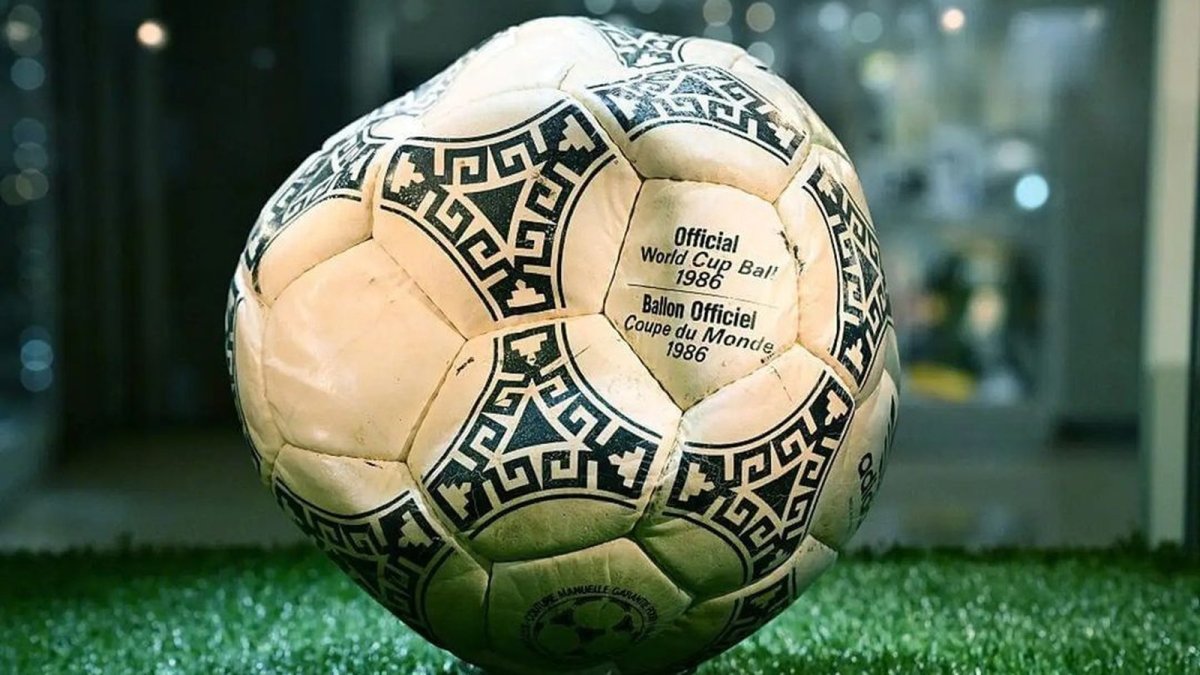
Diego Maradona's iconic 1986 World Cup ball, witness to the 'Hand of God' and 'Goal of the Century', sold for $3.35 million at Heritage Auctions - far below the $10 million estimate. The Adidas Azteca, kept for 36 years by Tunisian referee Ali Bin Nasser, remains one of football's most treasured relics.
The football world is still catching its breath this week after the most famous ball in the sport's history finally changed hands. Diego Maradona's Adidas Azteca from the 1986 World Cup quarterfinal — the ball that witnessed both the "Hand of God" and the "Goal of the Century" — sold for $3.35 million at Heritage Auctions in Dallas on Saturday night. The price was a fortune by any measure, yet it landed well below the pre-auction estimate of at least $10 million, sending a seismic ripple through the sports memorabilia market and leaving collectors and fans alike asking what this means for the value of football's most sacred relics.
Maradona's 1986 Ball Sells for $3.35m
Johannesburg, South Africa – This week — The ball that defined a World Cup, a nation, and a career has a new owner. Heritage Auctions, the Dallas-based powerhouse, confirmed on Saturday night that the Adidas Azteca match ball from Argentina's 2-1 quarterfinal victory over England on June 22, 1986, sold for $3.35 million. The auction house had billed it as "the most significant football in private hands" and suggested it could become the most valuable soccer item ever sold. Instead, bidding opened at $2.5 million on Saturday and climbed steadily but unspectacularly to a final hammer price that left the $10 million estimate in the dust.

A Ball Worth $3.35 Million
Let's put that number in perspective for the South African sports fan. Rands and cents aside, $3.35 million is a life-changing sum for any individual, but in the rarefied air of global sports memorabilia, it represents something of a reality check. Heritage Auctions had spent months building the narrative around this ball, with production manager Mike Provenzale telling The Athletic in July: "When it came in, I worked at Heritage for 20 years and there's been a lot of items that when they arrived, they just shut down the whole department. This is on that list. It's an item so iconic, even people who don't know anything about soccer or know the event can realize the value behind the ball. Having it photo matched to both goals is just the cherry on top."
Photo-matching is the gold standard in this industry, and this ball was matched to photographs from both of Maradona's goals on that fateful afternoon at Estadio Azteca in Mexico City. That dual verification made it unique — no other ball in history can claim to have been present for two of the most discussed goals ever scored. Yet the market spoke on Saturday, and it spoke at $3.35 million, a figure that, while astronomical to most of us, fell short of the record for a ball of any kind.
The Hand of God and the Goal of the Century
For those who need a refresher, and for the younger generation of Bafana Bafana supporters who never saw the footage live, let's set the scene. June 22, 1986. Estadio Azteca, Mexico City. A World Cup quarterfinal between Argentina and England, a fixture dripping with political tension just four years after the Falklands War. Maradona, the Argentina captain, scored both goals in a 2-1 victory. The first came in the 51st minute when he used his left hand to punch the ball past England goalkeeper Peter Shilton. The officials, with no VAR to save them, allowed the goal to stand. Maradona later admitted it should not have counted, famously calling it "a little with the head of Maradona and a little with the hand of God."
Four minutes later, he produced the second — the one that needs no caveats. Collecting the ball in his own half, Maradona embarked on a slaloming run that took him past five England outfield players before slotting the ball home. In 2002, a FIFA poll voted it the "Goal of the Century." Two goals, one ball, and a lifetime of debate. Argentina went on to lift the World Cup that year, beating West Germany 3-2 in the final in Mexico City, and Maradona's legend was sealed forever.
From a Tunisian Referee's Keeping to the Auction Block
Here's where the story takes a turn that should resonate deeply with African football fans. The ball was kept for 36 years not by a player, not by a club, but by the Tunisian referee who officiated that quarterfinal — Ali Bin Nasser. The man who missed the handball, who let the goal stand, and who then watched Maradona's genius unfold from the best seat in the house, held onto the ball as a personal memento for nearly four decades. In November 2022, Bin Nasser sold the ball at Graham Budd Auctions in London for GBP 2 million — roughly $2.37 million at the time. He described the proceeds as "a gift" after a long career in football, a sentiment that speaks to the humility of a man who never sought the spotlight but ended up custodian of its most famous artifact.
The ball was relisted in 2023, but the final bid of $2.04 million fell short of the predetermined reserve price, and no sale was completed. It sat in limbo until this summer, when the hype of the 2026 World Cup — held across the United States, Canada, and Mexico and ending in July — brought it back into the public eye. Heritage Auctions seized the moment, and on Saturday night, the ball finally found a permanent home. For Bin Nasser, the journey from a Tunisian referee's bag to the global auction stage is a remarkable African story, one that underscores how the continent's officials and players have long been part of football's grandest narratives.
Where It Sits in the Collectibles Market
The $3.35 million price tag places this ball in elite company, but it does not break the record. That distinction belongs to Shohei Ohtani's 50th home run ball from his historic 2024 MLB season, which sold for $4.392 million including the buyer's premium — the record for a ball of any kind. The Hand of God ball fell short of that mark, and it also trails the shirt Maradona wore in the same 1986 match, which sold for just under $9.3 million at Sotheby's later in 2022, setting a world record for a match-worn shirt. The overall sports memorabilia auction record remains the New York Yankees jersey Babe Ruth wore in Game 3 of the 1932 World Series, sold by Heritage for $24.12 million including the buyer's premium in 2024.
So what does this tell us? The market for football memorabilia is robust, but it is not immune to the laws of supply, demand, and buyer sentiment. The $10 million estimate was always ambitious, perhaps even aspirational. The $2.5 million opening bid on Saturday suggested a more cautious approach from bidders, and the final price of $3.35 million reflects a market that values this ball highly but not at the level of a Babe Ruth jersey or an Ohtani home run ball. For South African collectors and investors, the lesson is clear: iconic status does not always translate to record-breaking prices, and timing, provenance, and buyer appetite all play their part.
The South African Connection
For South African sports fans, this story carries layers of meaning that go beyond the auction results. In 1986, South Africa was in the grip of apartheid-era sporting isolation, banned from international football and watching the World Cup from the outside. The country returned to the global game in 1992 after apartheid ended, and Bafana Bafana made their World Cup debut at France 1998. When South Africa hosted the 2010 World Cup — the first on African soil — it was a moment of profound redemption and pride. And who was there? Diego Maradona, back in the spotlight as Argentina's head coach.
Maradona's Argentina opened their 2010 campaign against Nigeria at Ellis Park in Johannesburg on June 12, 2010, winning 1-0. Argentina also played at Soccer City in Johannesburg during that tournament, bringing the great man back to African soil and connecting the 1986 magic to the new era of African football. The fact that the ball's custodian for 36 years was a Tunisian referee — an African official — adds another thread to this tapestry. African football has grown in prominence since 1986, with AFCON tournaments, increased World Cup representation, and a generation of players and officials who have made the continent proud. This ball, in a sense, is a piece of that history too.
What to Watch For
The sale of this ball on Saturday is not the end of the story — it is a new chapter. The buyer, who remains unnamed, now holds one of the most significant artifacts in football history. Will it be displayed publicly, or will it disappear into a private collection? For South African fans, the hope is that it finds a home where it can be seen and appreciated, perhaps even loaned to museums or exhibitions that celebrate the beautiful game's rich history. The 2026 World Cup may be over, but the appetite for football memorabilia shows no signs of waning, and this sale will likely set the tone for future auctions of iconic items.
For South Africa, the deeper lesson is about the enduring power of sport to create moments that transcend generations. We may not have been on the pitch at Estadio Azteca in 1986, but we felt the echoes of that match in 2010 when Maradona walked the touchline at Ellis Park. We understand what it means to be excluded from the world stage and to fight our way back. This ball, with its handball and its genius, its controversy and its beauty, is a reminder that football is never just a game. It is history, it is identity, and it is hope. And for $3.35 million, someone now owns a piece of that forever.
By Dante Williams, Staff Writer
This article was produced with AI-assisted research and editorial support. Reporting is based on sources cited in the article.
What's Your Reaction?
 Like
0
Like
0
 Dislike
0
Dislike
0
 Love
0
Love
0
 Funny
0
Funny
0
 Wow
0
Wow
0
 Sad
0
Sad
0
 Angry
0
Angry
0

Breaking News and Investigations Correspondent at Global1.News. Based in London, covering global breaking news, security, and investigative stories. Known for digging deeper and connecting the dots across continents.










Comments (0)