
Thousands demand end to violence in Mexican cartel hotspot
Thousands of citizens poured into the streets of Culiacán on Sunday, demanding an end to the relentless violence that has turned their city into a battlefield.
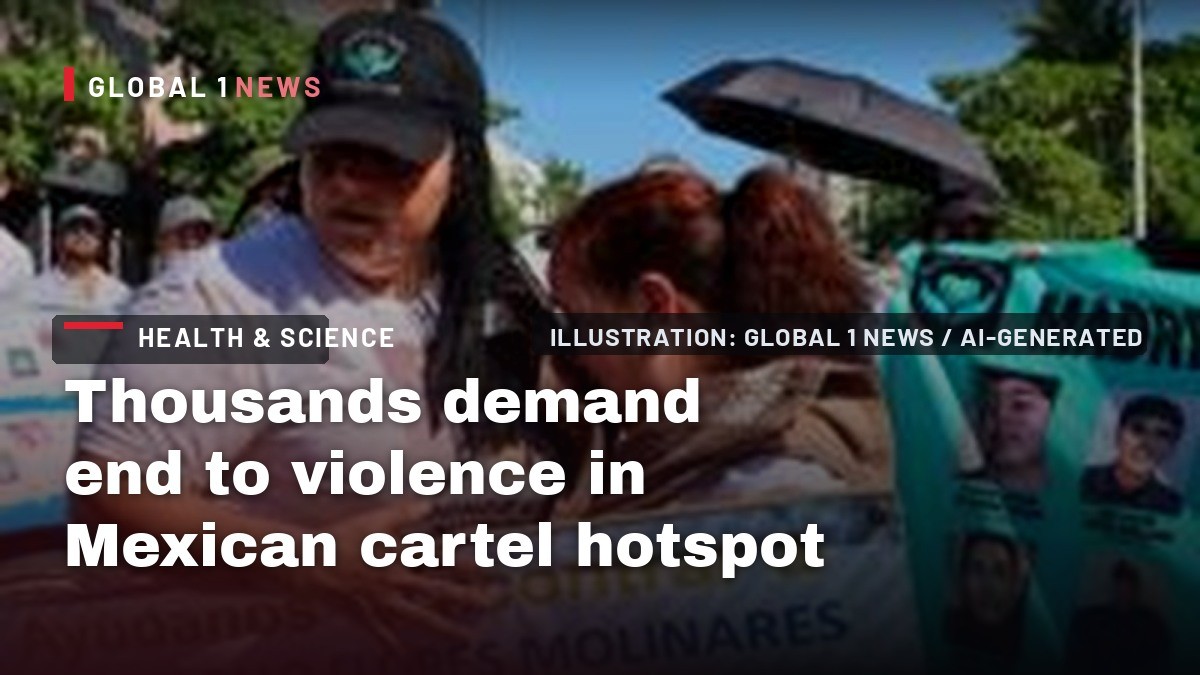
Thousands of citizens poured into the streets of Culiacán on Sunday, demanding an end to the relentless violence that has turned their city into a battlefield. Dressed in white, families held photographs of missing loved ones and banners that read “We don’t want fear, we want peace,” a stark reminder that the conflict between rival factions of the Sinaloa cartel has seeped into every corner of daily life. The protest, timed to mark the second anniversary of the feud, underscores a growing desperation among ordinary people who have watched murders, disappearances and extortions surge since the split of the once‑unified cartel.
The roots of a deadly split
The bloodshed in Sinaloa traces back to a power vacuum created two years ago when US authorities arrested Ismael “El Mayo” Zambada, a long‑standing drug lord. His capture ignited a fierce rivalry between his loyalists, known as La Mayiza, and the faction led by the sons of Joaquín “El Chapo” Guzmán, called Los Chapitos. La Mayiza claims betrayal by the younger Guzmán heirs, accusing them of turning on Zambada’s supporters. This accusation has fueled a cycle of retaliation that now defines the streets of Culiacán.
Both groups have adopted brutal tactics to assert dominance. Ambushes, drive‑by shootings and the hijacking of trucks to set up fiery roadblocks have become commonplace, turning ordinary highways into war zones. The violence is not confined to cartel members; civilians are caught in the crossfire, as illustrated by the tragic death of a one‑year‑old boy who was struck by a bullet during a recent shootout. The human cost of this feud is reflected in the rising numbers of murders and disappearances reported across the state.
Economic fallout and community resilience
The economic impact of the cartel war is palpable. Local businessman Sergio Esquer, a leader in the centre‑left Movimiento Ciudadano, told reporters that more than five thousand businesses have shuttered since the conflict began. The closures ripple through families that depend on small‑scale commerce for survival, compounding the sense of insecurity that already pervades the region.
Yet, amid the turmoil, community organizations and the Catholic Church have stepped forward to give voice to the suffering. The protest was organized by relatives of victims, civil‑society groups and local clergy, illustrating a collective resolve to demand change. The bishop of Culiacán opened the gathering with a solemn mass, urging the warring factions to consider the lives they are destroying. His plea—“No amount of power, of money, territory or ambition is worth more than a human life”—resonated deeply with a crowd that has grown weary of living under the shadow of cartel firepower.
Political turbulence adds another layer
The violence in Sinaloa is intertwined with a broader political crisis. In April, US prosecutors accused the state’s governor, Rubén Rocha, and nine other officials of colluding with Los Chapitos to smuggle drugs into the United States. Although Rocha denied any wrongdoing, the allegations forced him to step down temporarily while Mexican prosecutors opened their own investigation.
Rocha’s brief return to office was followed by another leave of absence after President Claudia Sheinbaum posted a veiled criticism on social media, warning that “power without principles becomes arrogance.” While she did not name him directly, the comment amplified public scrutiny of the governor’s ties to criminal networks and highlighted the fragile legitimacy of political leaders in a region plagued by cartel influence.
The human toll behind the statistics
Official figures confirm a sharp rise in murders, disappearances, extortions and robberies since the feud erupted. Yet behind each statistic lies a personal story of loss and fear. Families clutch photographs of missing relatives, children navigate streets where gunfire is a daily soundtrack, and small business owners watch their livelihoods evaporate as customers stay home out of fear.
The protest’s visual tableau—white clothing symbolizing mourning, placards bearing the names of the vanished—served as a powerful reminder that the conflict’s victims are not abstract numbers but real people whose lives have been irrevocably altered. The collective grief on display underscores a yearning for a return to normalcy, a life where markets open without the threat of roadblocks and schools can operate without the specter of gunfire.
Cartel tactics and the erosion of public space
Los Chapitos and La Mayiza have turned public infrastructure into strategic assets. By hijacking trucks and setting them ablaze, they create makeshift roadblocks that disrupt commerce and sow chaos. Drive‑by shootings and ambushes are staged in public thoroughfares, turning ordinary routes into lethal gauntlets. These tactics not only intimidate rival factions but also send a chilling message to civilians: the streets are no longer safe.
Such tactics erode the social fabric of Culiacán. Public spaces that once hosted markets, festivals and everyday gatherings are now avoided after dark, as fear replaces routine. The bishop’s appeal during the mass was a direct challenge to this climate of intimidation, urging the cartels to consider the broader societal damage they inflict.
International dimensions and the limits of foreign intervention
The involvement of US authorities—both in the arrest of El Mayo and in the prosecution of cartel leaders—highlights the transnational nature of the drug trade. While the United States’ legal actions have removed a key figure from the cartel hierarchy, the resulting power vacuum has intensified internal conflict rather than delivering peace.
This pattern raises questions about the efficacy of external pressure in resolving deeply rooted criminal networks. The violence that has surged in Sinaloa illustrates how foreign interventions can unintentionally destabilize local power structures, leaving civilians to bear the brunt of ensuing battles. The community’s demand for peace reflects a growing skepticism toward solutions imposed from outside, favoring instead locally driven initiatives that prioritize human lives over geopolitical agendas.
Pathways forward: community demands and the search for accountability
The mass protest in Culiacán signals a pivotal moment. Residents, civil‑society actors and religious leaders have united to demand an end to the bloodshed, calling on both cartel factions and political authorities to respect the sanctity of civilian life. Their message is clear: the status quo—characterized by endless retaliation, economic paralysis and political corruption—is untenable.
For lasting change, accountability must extend beyond symbolic gestures. Investigations into the alleged collusion between state officials and cartels need to be thorough and transparent, ensuring that any links are exposed and punished. Simultaneously, community‑based security measures, such as neighborhood watches and local mediation efforts, could help reclaim public spaces from the grip of violence.
Ultimately, the hope expressed by the thousands who marched is that the streets of Culiacán can once again be places of commerce, celebration and ordinary life—not battlefields for rival drug lords. Their demand for peace is a call to both the cartels and the state: prioritize human dignity over profit, and let the people of Sinaloa decide the future of their own cities.
This article was produced with AI-assisted research and editorial support. Reporting is based on the source material cited below. Sources: BBC News Latin America; bbc.co.uk; Global1.News (14 September 2026).
By Elena Vasquez, Staff Writer
What's Your Reaction?
 Like
0
Like
0
 Dislike
0
Dislike
0
 Love
0
Love
0
 Funny
0
Funny
0
 Wow
0
Wow
0
 Sad
0
Sad
0
 Angry
0
Angry
0

Latin America Correspondent at Global1.News. Based in Mexico City, covering politics, economics, energy, and culture across the region. Brings an on-the-ground perspective to stories spanning from the Rio Grande to Patagonia.











Comments (0)