
Qatar's Al Janoub Arena Opens as One-Year Countdown to Historic FIBA World Cup Begins
Exactly one year from now, the basketball world will descend on the Middle East for the first time in the sport’s history. And on Thursday, the countdown officially begins in spectacular fashion as Al Janoub Arena throws open its doors for a blockbuster Asian Qualifier between Qatar and China. This is more than a game — it’s the opening salvo of a 12-month march to the FIBA Basketball World Cup 2027, a tournament that promises to reshape the region’s sporting identity.
Exactly one year from now, the basketball world will descend on the Middle East for the first time in the sport’s history. And on Thursday, the countdown officially begins in spectacular fashion as Al Janoub Arena throws open its doors for a blockbuster Asian Qualifier between Qatar and China. This is more than a game — it’s the opening salvo of a 12-month march to the FIBA Basketball World Cup 2027, a tournament that promises to reshape the region’s sporting identity.
Qatar’s Al Janoub Arena Opens as One-Year Countdown to Historic FIBA World Cup Begins
Doha, Qatar - this week — The transformation is complete. The Al Janoub Stadium, a jewel of the 2022 FIFA World Cup, has been reborn as an approximately 8,000-capacity basketball cathedral, and it will host its first official hoops action on Thursday when Qatar faces China in Window 4 of the Asian Qualifiers. The occasion marks the official start of the One Year to Go celebrations for the 2027 FIBA Basketball World Cup, the first ever staged in the Middle East.
A First-of-Its-Kind Stadium Transformation
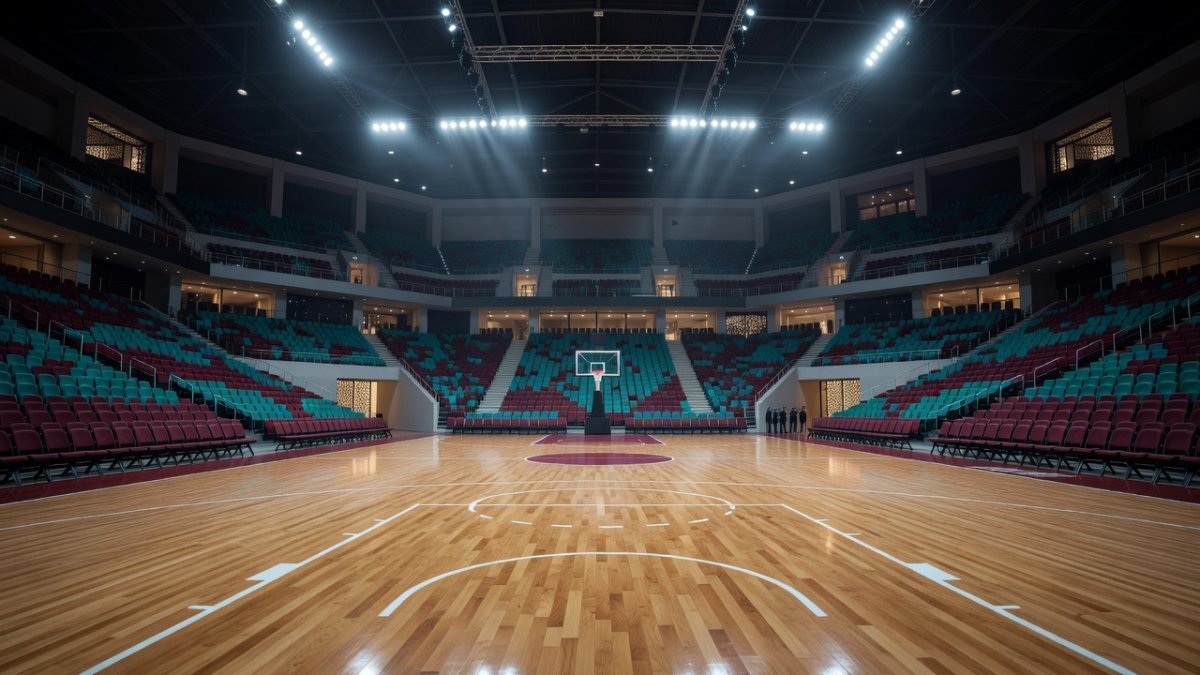
This is not a simple retrofit. The Al Janoub Stadium, which roared to life during the football World Cup in Al Wakrah, has undergone a pioneering conversion into a purpose-built basketball venue. It’s a first-of-its-kind transformation in global sport, turning a football-specific arena into a hoops haven with Sky Boxes, premium hospitality seating, and Courtside Seats that put fans inches from the action.
The venue also boasts dedicated team changing rooms and recovery facilities, ensuring world-class conditions for the 32 nations that will battle across 92 games next year. Al Janoub Arena becomes Qatar’s new home for basketball, and it will be one of four venues — alongside sites in Doha, Al Rayyan, and Lusail — hosting the tournament from August 27 to September 12, 2027.
Qatar vs China: A Statement of Intent
Thursday’s clash is no mere exhibition. Qatar, guaranteed a place as hosts, are playing for pride and momentum. They finished second in Group D of the first phase of the Asian Qualifiers with 10 points, behind Lebanon, and now face a China side desperate to reassert itself on the continental stage. The current Asia/Oceania Group F standings show Lebanon leading at 5-1, with Japan and Qatar tied at 4-2, and Korea, China, and Saudi Arabia all locked at 3-3.
For Qatari basketball, this is a chance to prove the host nation can compete, not just participate. After Thursday, they face home-and-away battles with Japan and South Korea in upcoming windows — a brutal test that will sharpen their edge before the world arrives on their doorstep.
NBA Stars Already Lighting Up Qualifiers
This is not a second-tier qualification process. The FIBA World Cup qualifying windows have already featured the biggest names in the game. Victor Wembanyama of the San Antonio Spurs has suited up for France, Nikola Jokic of the Denver Nuggets has anchored Serbia, and Shai Gilgeous-Alexander of the Oklahoma City Thunder has led Canada. The message is clear: no one is treating these games as a formality.
For Qatar, hosting a tournament that attracts this level of talent is a seismic moment. The 2027 World Cup will bring the planet’s elite to the Gulf, and the qualifying windows are proving that every nation — from giants to minnows — is bringing its full arsenal.
Africa’s Five Tickets: A Continental Battle Royale
While Qatar’s focus is on Asia, the African qualifiers are delivering their own drama. Africa has five spots at the 32-team World Cup, and the race is ferociously tight. Cameroon lead Group E at 5-1, with South Sudan — the side that stormed to the 2023 World Cup quarter-finals — among the front-runners, while Senegal, Ivory Coast, and Mali all sit at 5-1 in Group F. Angola, Nigeria, and Tunisia are close behind at 4-2, with Egypt and Cape Verde at 3-3 and Guinea at 4-2. DR Congo trails at 2-4.
This is no ordinary qualifying cycle. The Basketball Africa League, launched by FIBA and the NBA back in 2021, has fundamentally rewired the continental game. Twelve clubs now battle it out each season in a professional environment that simply did not exist a decade ago, and the ripple effect is being felt in every national-team camp across the continent. The days of African sides being physical but tactically naive are gone. These are organised, drilled, professional outfits now, and the five tickets on offer for the 2027 World Cup are being treated like gold dust because everyone knows the standard has risen. Just look at the evidence: South Sudan, the world's youngest nation, reached the quarter-finals of the 2023 FIBA World Cup and, as the best-placed African team, secured the continent's automatic qualifying spot for the Paris 2024 Olympics. That was a historic first, a moment that sent shockwaves through the sport and proved that African basketball is no longer a novelty act.
The pedigree runs deeper than that one fairytale run, of course. Angola remain the continent's benchmark, with 11 FIBA AfroBasket titles and a regular presence at World Cups and Olympics that commands respect from every opponent. Nigeria's D'Tigers have qualified for multiple World Cups and the Tokyo 2020 Olympics, with NBA talent like Josh Okogie flying the flag at the highest level. These are not minnows. These are nations with genuine basketball cultures, and they are all chasing the same prize. But here is the twist that raises the stakes even higher: the 2027 World Cup will award qualifying places for the Los Angeles 2028 Olympics. So every single qualifier in this cycle is not just playing for Qatar — they are playing for a shot at Hollywood, for a chance to compete on the grandest stage of all. For African federations, for the players, for the fans, this is the most consequential qualifying campaign in the history of the sport on this continent.
This week’s Africa window fixtures are mouth-watering: South Sudan face Guinea, DR Congo host Angola, Cameroon battle Nigeria, Ivory Coast take on Mali, Cape Verde meet Tunisia, and Egypt travel to Senegal. Every game carries World Cup implications, and the intensity will be ferocious.
What This Means for South African Basketball
Here’s the hard truth: South Africa’s national men’s team is not in the second round of African World Cup qualifying. While continental giants like Angola, Nigeria, Senegal, Ivory Coast, Cameroon, South Sudan, Tunisia, and Mali fight for the five African tickets, they are watching from the sidelines. That absence stings, and it should galvanise the sport at home.
But there is hope. The Cape Town Tigers have flown the flag with distinction, playing three seasons in the Basketball Africa League from 2022 to 2024 and winning the 2023 Basketball National League title. They went undefeated, 5-0, in the 2024 Road to BAL qualifiers — proof that South African talent can compete at the continental level when given the platform.
Back home, the picture is more complicated, but the potential is undeniable. Basketball is one of the fastest-growing participation sports in South African townships and schools, with grassroots leagues springing up in communities where rugby and football have traditionally ruled. The energy is real, the talent is raw, and the hunger is unmistakable. These local leagues are feeding clubs like the Cape Town Tigers, who have now played three BAL seasons and won the 2023 BNL title, proving that South African club basketball can compete at the continental level. But here is the hard truth: club success and national-team progress are two different beasts, and the gap between them is where South African basketball has historically lost its way. The pathway exists — from township court to school league to BNL to BAL — but it is fragile, underfunded, and far too dependent on individual passion rather than institutional support.
What South Africa needs is not a miracle. It needs infrastructure, coaching, and structured player pathways that can take a talented 15-year-old from Soweto or Khayelitsha and develop them into a national-team regular. The BNL is a start, the Tigers' BAL presence is a statement, but the national men's team missing the second round of African qualifying is a sobering reminder of how far we still have to go. The transformation agenda in South African sport has rightly focused on rugby, cricket and football, but basketball is the sport that is growing fastest at the grassroots, and it deserves the same investment, the same structured development, the same long-term vision. The talent is there. The passion is there. What is missing is the system to connect the two, and until that changes, we will keep producing brilliant club sides and underachieving national teams.
A Wake-Up Call for SA’s Basketball Governance
The gap between South Africa’s club success and national team failure is a damning indictment of the sport’s governance and development pipeline. While the Tigers thrive, the national programme lags. The 2027 World Cup in Qatar should be a wake-up call for Basketball South Africa, the SA Sports Ministry, and every stakeholder in the game.
Transformation and grassroots development are not just buzzwords — they are the lifeline for a nation that should be a continental powerhouse. With five African spots on the line and the World Cup in our own time zone, the infrastructure, coaching, and player pathways must be built now, not in 2031.
The Road to 2027: A Region Transformed
Al Jazeera’s David Stokes reported from Al Janoub Stadium this week, capturing the scale of what Qatar has built. The conversion of a football World Cup venue into a basketball arena is a statement of intent — a signal that the Gulf state is not a one-sport wonder. The 2027 World Cup will be a festival of hoops, with 92 games across four cities and a global audience watching the Middle East’s first taste of basketball’s biggest stage.
Step back and look at the bigger picture, because this is about more than just basketball. Qatar hosting the 2027 FIBA World Cup is the latest chapter in the Middle East's sporting transformation, a story that began in earnest with the 2022 FIFA World Cup and has not slowed down since. The region has proven it can host global events with world-class infrastructure, and a 32-team, 92-game basketball festival is a statement of intent. For African fans, this is a game-changer in practical terms. The time zones are friendly, the travel is manageable, and the broadcast reach into Africa will be unprecedented. This is not a World Cup in Asia or the Americas where African supporters are watching at 3am. This is a World Cup where the continent can actually tune in, where families can gather around the television, where the next generation of African basketball fans can be born.
And South African fans should care deeply, because this World Cup will shape the next Olympic cycle and the future of the sport on this continent. The 2027 qualifiers are not just about who goes to Qatar — they are about who goes to Los Angeles in 2028, about which African nations will be competing on the Olympic stage, about the direction of the game for the next decade. The BAL has raised standards, the qualifying windows have created structure, and the World Cup in Qatar will provide the stage. For South Africa, the question is whether we will be part of that story or watching from the sidelines. The Cape Town Tigers have shown what is possible at club level. The grassroots are buzzing with potential. The pieces are there. The question is whether we have the will to put them together before 2027 comes knocking.
For South African fans, the tournament is a chance to dream. The Tigers have shown what is possible. The national team must follow. As the countdown clock hits 365 days, the question is not whether Qatar is ready — it clearly is. The question is whether South Africa is ready to seize its moment in the sport’s global spotlight.
By Dante Williams, Staff Writer
This article was produced with AI-assisted research and editorial support. Reporting is based on sources cited in the article.
What's Your Reaction?
 Like
0
Like
0
 Dislike
0
Dislike
0
 Love
0
Love
0
 Funny
0
Funny
0
 Wow
0
Wow
0
 Sad
0
Sad
0
 Angry
0
Angry
0

Breaking News and Investigations Correspondent at Global1.News. Based in London, covering global breaking news, security, and investigative stories. Known for digging deeper and connecting the dots across continents.











Comments (0)