
North Korea Confirms September 12 Missile Launch Was Joint Firepower Drill
North Korea’s state media confirmed on Monday that a joint firepower drill involving artillery and missile units took place on September 12, coinciding with a short‑range ballistic missile launch detected by South Korea’s Joint Chiefs of Staff.
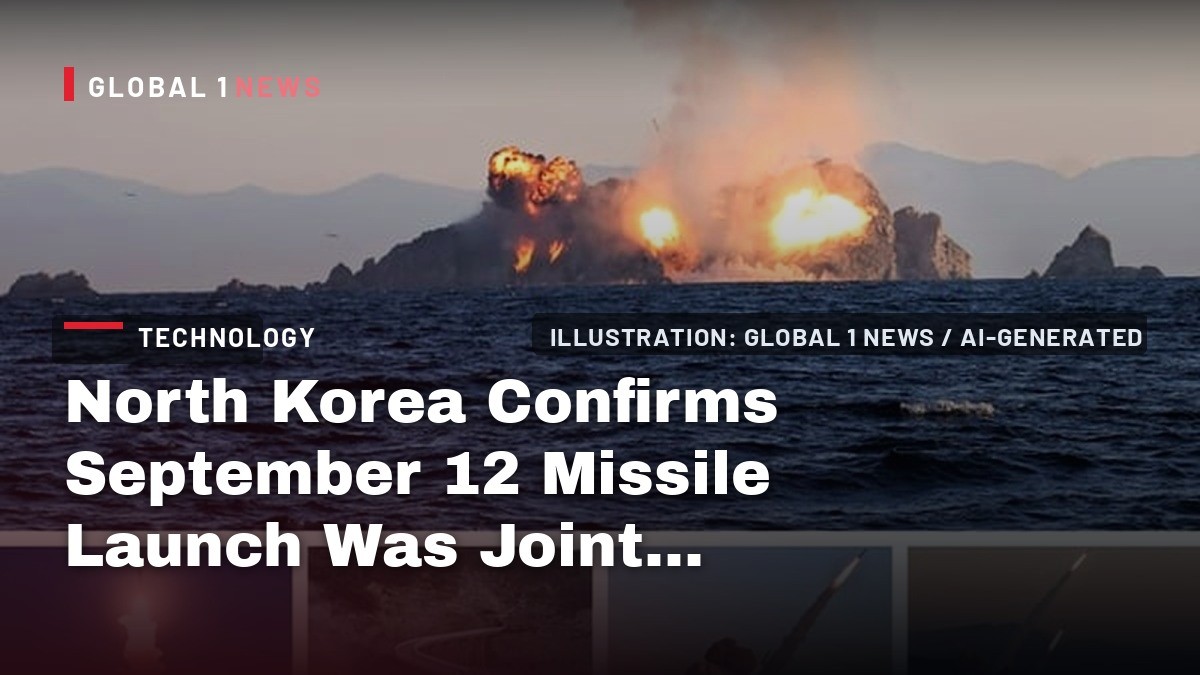
North Korea’s state media confirmed on Monday that a joint firepower drill involving artillery and missile units took place on September 12, coinciding with a short‑range ballistic missile launch detected by South Korea’s Joint Chiefs of Staff. The timing of the launch—just a day after the conclusion of the trilateral Freedom Edge exercises—reinforces a well‑established pattern in which Pyongyang uses missile tests to signal its readiness and to respond to allied drills that it characterises as provocations. This article examines the technical details of the drill, the diplomatic backdrop involving President Donald Trump’s outreach to Kim Jong Un, and the broader strategic implications for the Korean Peninsula and the wider Indo‑Pacific security environment.
Details of the September 12 Drill and Missile Launch
The Joint Chiefs of Staff reported that at approximately 5:20 a.m. KST on September 12, multiple short‑range ballistic missiles were launched from the Wonsan area on North Korea’s east coast. The missiles travelled roughly 250 kilometres before landing in the ocean east of the peninsula. South Korean forces monitored the launch closely under a combined defense posture with the United States.
Two days later, the Korean Central News Agency (KCNA) described the launch as part of a “joint firepower attack drill” that involved subunits from five artillery and missile joint units. The drill incorporated a range of systems: attack drones, a tactical cruise missile, a large‑calibre thermal‑pressure multiple rocket launcher, and a tactical ballistic missile. Director of the Artillery Bureau Yu Chang Son was quoted as saying the exercise aimed to familiarise troops with the integrated firepower control system, improve the automatic fire‑control of various combat systems, and increase the efficiency of concentrated fire against targets.
The Freedom Edge Trilateral Exercise
Freedom Edge, a five‑day trilateral drill involving South Korea, the United States, and Japan, ran from September 7 to September 11. The exercise focused on enhancing air, maritime, and cyber coordination to counter North Korean nuclear and missile threats. The conclusion of Freedom Edge on September 11 was followed the next day by the North Korean fire‑power drill, underscoring a recurring pattern in which Pyongyang schedules missile launches immediately after allied exercises.
North Korean officials have repeatedly framed such allied drills as provocations, using them to justify missile testing and to demonstrate the resilience of their strategic weapons system. The September 12 launch therefore served both a training purpose—testing the integrated firepower control system—and a signaling purpose, reminding regional actors of the regime’s capacity to launch ballistic missiles on short notice.
U.S. Diplomatic Overtures and Trump’s Summit Push
President Donald Trump has been actively seeking a new summit with Kim Jong Un, reviving the personal diplomacy that produced three meetings during his first term. Trump has discussed a possible meeting during a fall trip to Asia, with aides considering the Asia‑Pacific Economic Cooperation (APEC) summit in Shenzhen, China, in November as a potential venue. No formal arrangement has yet been made.
Despite Trump’s outreach, Kim Jong Un has kept the diplomatic overture at arm’s length. He did not mention Trump’s initiative during a Workers’ Party political bureau meeting in late August, even as he called for “extraordinary responsibility” in executing state projects. The absence of a direct response suggests that while Pyongyang remains open to dialogue in principle, it continues to prioritise its own security agenda, as reflected in the ongoing missile testing programme.
North Korea’s Missile Testing Tempo in 2026
The September 12 launch marked the first ballistic missile test since August 20, when North Korea fired a barrage of short‑range ballistic missiles shortly after Trump announced his intention to meet Kim later in the year. The frequency of tests indicates that neither major allied exercises nor renewed diplomatic overtures have disrupted Pyongyang’s testing tempo this year.
Analysts note that the inclusion of a tactical cruise missile and attack drones in the September 12 drill points to a diversification of Pyongyang’s arsenal. By integrating multiple platforms—artillery, rockets, missiles, and unmanned systems—North Korea is seeking to develop a more flexible and layered firepower capability that can be coordinated through an integrated control system.
South Korean Humanitarian Assistance and Domestic Debate
On September 14, South Korea’s Unification Ministry announced plans to supply Kangdong County Hospital in Pyongyang with 166 types of medical equipment under a health‑and‑medical cooperation programme aimed at modernising rural hospitals. Kangdong is highlighted as the first completed example of Kim Jong Un’s push for improved medical facilities.
The assistance has sparked debate within South Korea. People Power Party legislator Kim Dae‑sik argued that providing medical aid while North Korea continues to pursue nuclear weapons warrants reconsideration. This reflects a broader domestic tension between humanitarian outreach and security concerns, especially as public opinion, according to a Hankuk Gallup poll on September 11, shows that 55 percent of respondents do not support deploying troops to the Strait of Hormuz—a measure being discussed in the upcoming Korea‑U.S. Integrated Defense Dialogue.
Korea‑U.S. Integrated Defense Dialogue and Regional Security
From September 16 to September 18, Seoul and Washington will hold their 29th Korea‑U.S. Integrated Defense Dialogue in Busan. Topics include a possible South Korean deployment to the Strait of Hormuz, where Iranian forces have blocked shipping since Israeli‑U.S. strikes began in February, as well as the transfer of wartime operational control and shipbuilding cooperation.
While no decision has been made on the Hormuz deployment, the dialogue underscores the United States’ effort to involve its allies in broader regional security challenges beyond the Korean Peninsula. South Korea’s participation reflects its strategic calculus of balancing commitments to the U.S. alliance with domestic public opinion that remains wary of overseas deployments.
Strategic Implications and Outlook
The September 12 joint firepower drill illustrates how North Korea blends training with strategic signaling. By conducting a drill that incorporates a range of weapon systems and then launching a ballistic missile that matches the drill’s timing, Pyongyang demonstrates both operational readiness and a willingness to respond swiftly to allied exercises.
In the short term, the drill is likely to reinforce Pyongyang’s bargaining position in any forthcoming summit talks, as President Trump seeks to arrange a meeting with Kim. The integration of drones and cruise missiles suggests that future drills may involve even more sophisticated coordination, potentially complicating missile defence planning for Seoul and Washington.
Long‑term, the continuation of missile testing alongside humanitarian assistance programmes indicates a dual‑track approach by the North Korean regime: maintaining a credible deterrent while seeking limited engagement on non‑security issues. South Korea’s internal debate over aid versus security, combined with public reluctance to commit troops abroad, may shape the next phase of inter‑Korean relations and the broader regional security architecture.
This article was produced with AI-assisted research and editorial support. Reporting is based on the source material cited below. Sources: The Diplomat; thediplomat.com; Global1.News (15 September 2026).
By Kenji Tanaka, Staff Writer
What's Your Reaction?
 Like
0
Like
0
 Dislike
0
Dislike
0
 Love
0
Love
0
 Funny
0
Funny
0
 Wow
0
Wow
0
 Sad
0
Sad
0
 Angry
0
Angry
0

Japan Correspondent at Global1.News. Tokyo-based voice covering Japanese politics, technology, economy, and culture. Tracks the intersection of tradition and innovation in one of the world's most dynamic societies.















Comments (0)