
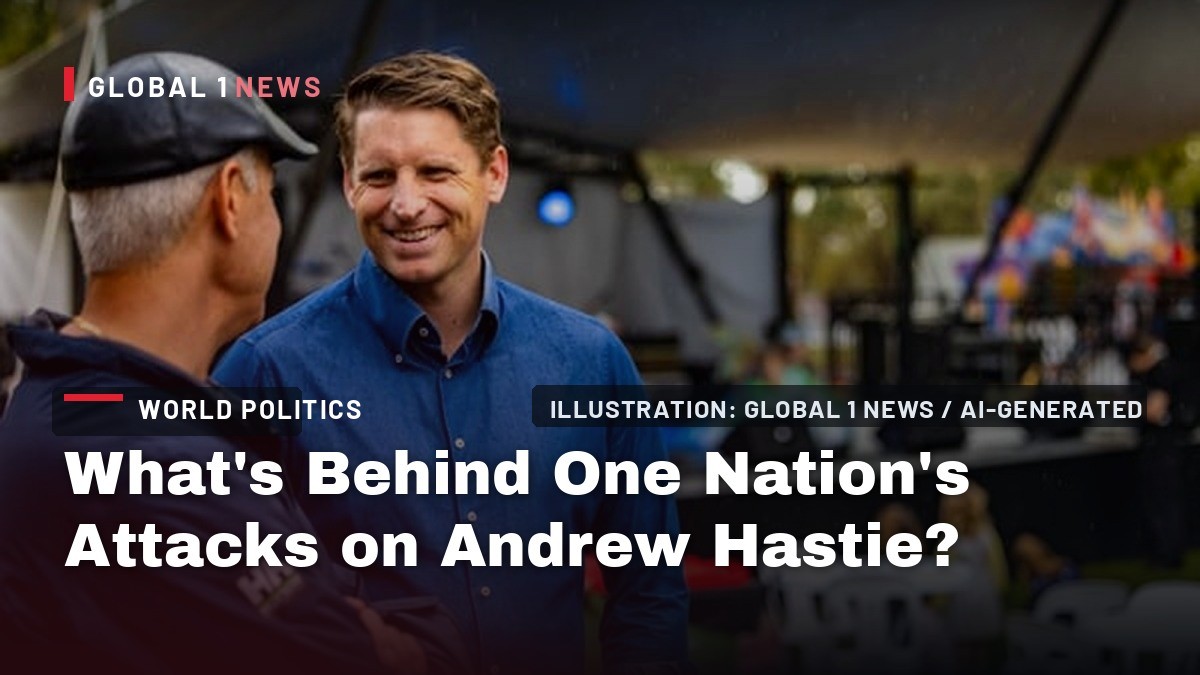
What’s Behind One Nation’s Attacks on Andrew Hastie?
The recent surge of vitriolic attacks by Australia’s One Nation party against Liberal MP Andrew Hastie offers a stark illustration of how populist nationalism can weaponize the concept of “patriotism” to undermine the rule of law.
The recent surge of vitriolic attacks by Australia’s One Nation party against Liberal MP Andrew Hastie offers a stark illustration of how populist nationalism can weaponize the concept of “patriotism” to undermine the rule of law. The episode, rooted in Hastie’s testimony in a high‑profile defamation case involving former Special Air Service (SAS) corporal Ben Roberts‑Smith, reveals a broader ideological clash: a populist movement that rejects legal constraints in favor of an imagined, hierarchically ordered nation‑state. This analysis situates the Australian episode within the larger scholarly discourse on nationalist populism, drawing on comparative insights from Korean political dynamics where similar tensions between law‑bound liberalism and authoritarian‑leaning nationalism have emerged.
Legal Foundations and Populist Rejection
At the core of One Nation’s rhetoric is a profound contempt for the rule of law, which the party frames as an obstacle to its vision of a monolithic national identity. The source material emphasizes that “the idea that there should be an equal and impartial exercise of laws is an affront” to the party’s belief in social hierarchies and arbitrary power. This ideological stance mirrors the classic populist rejection of legal egalitarianism, wherein law is perceived not as a neutral arbiter but as a tool to be reshaped according to partisan objectives.
In the Australian context, the rule of law is embodied in the Federal Court’s findings that Roberts‑Smith was “responsible for, or complicit in, unlawful killings” in Afghanistan. The court’s decision, based on a balance of probabilities, underscores the judiciary’s role in adjudicating alleged war crimes—a function that One Nation explicitly dismisses. By labeling the law itself as “fraudulent,” the party seeks to delegitimize any institutional check on its preferred narrative of military masculinity and national virtue.
The Defamation Case as a Flashpoint
The defamation case that placed Hastie at the center of One Nation’s ire originated from media reports alleging war crimes by Roberts‑Smith. Hastie, a former SAS captain, was among twenty SAS veterans subpoenaed to testify. The Federal Court’s unanimous dismissal of Roberts‑Smith’s appeal and the pending criminal trial further entrenched the legal process as a focal point of political contention.
One Nation’s hostility toward Hastie is rooted not in the substantive findings of the case but in the symbolic breach of its “national virtue” narrative. The party portrays any challenge to the reputation of a celebrated soldier as a betrayal, thereby conflating individual legal accountability with an assault on the nation’s imagined martial ethos. This conflation transforms a routine judicial proceeding into a battleground for competing definitions of patriotism.
Patriotism Re‑engineered: From Institutions to Individuals
According to the source, One Nation’s conception of patriotism has shifted from loyalty to “the country’s institutions and principles” toward allegiance to a singular embodiment of national virtue—embodied in figures like Roberts‑Smith. This re‑engineering of patriotism serves to sideline democratic institutions, positioning them as foreign impositions that dilute a purportedly authentic national character.
The party’s narrative casts the Australian Defence Force (ADF) as an institution that should operate above both domestic and international law. By asserting that “the military is considered an institution that sits above” legal frameworks, One Nation elevates a mythicized martial identity above the rule‑of‑law safeguards that normally constrain state power. This mirrors patterns observed in other nationalist contexts where the military is venerated as the ultimate guarantor of national sovereignty, often at the expense of civilian oversight.
Electoral Calculus and Symbolic Targeting
Beyond ideological fervor, One Nation’s campaign against Hastie carries clear electoral motivations. The source notes that Hastie’s status as a Liberal Party MP makes him an “ideal target” for a party seeking to supplant the Liberals as the principal right‑wing force. The recent by‑election victory in a Western Australian seat overlapping Hastie’s federal constituency underscores the strategic value of such symbolic attacks.
By framing Hastie as a “traitor” and a “gutless maggot” through commissioned cartoons, One Nation seeks to erode his personal legitimacy while simultaneously signaling to its base that the Liberal Party is vulnerable. This tactic reflects a broader populist strategy: weaponizing personal vilification to destabilize established parties and reconfigure the political landscape in favor of a more radical, anti‑establishment alternative.
Implications for Liberal Democratic Norms
The campaign against Hastie raises profound questions about the resilience of liberal democratic norms when confronted with populist assaults on the legal order. The Liberal Party, traditionally positioned as the guardian of “classical liberal tradition” and the rule of law, appears paradoxically constrained by its own opposition to the Labor Party. As the source observes, the Liberals “cannot comprehend threats from anywhere else,” suggesting a strategic myopia that may inadvertently enable One Nation’s encroachment.
This dynamic illustrates a potential feedback loop: as mainstream parties focus on partisan rivalry, they may overlook the existential threat posed by movements that reject the very legal foundations of liberal democracy. The resulting erosion of institutional legitimacy can create a vacuum that populist actors readily fill with narratives of victimhood and moral purity.
Comparative Perspectives: Lessons from Korean Political Discourse
While the Australian case is distinct, it resonates with scholarly observations of Korean political developments where nationalist populism has similarly challenged legal and institutional norms. Korean ministries such as the Ministry of Foreign Affairs (MOFA) and think tanks like the Asan Institute have documented how nationalist rhetoric can be mobilized to delegitimize judicial decisions perceived as contrary to national interests. The Korean experience underscores the importance of robust civil‑society mechanisms and transparent legal processes to counteract populist narratives that equate patriotism with the subordination of law.
In both contexts, the central tension lies between a vision of the nation as an organic, hierarchically ordered community and the liberal democratic model that places law and individual rights at the core of political order. The Australian episode, therefore, offers a cautionary illustration of how populist forces can weaponize legal outcomes to advance a mythicized, exclusionary nationalism, a pattern that Korean scholars have warned against in policy briefs to the Ministry of Education (MOE) and the Korea Development Institute (KDI).
Forward‑Looking Assessment and Policy Recommendations
Given the trajectory of One Nation’s campaign, several policy considerations emerge for safeguarding the rule of law. First, mainstream parties must broaden their strategic horizon beyond traditional partisan competition to address the ideological threat posed by populist movements that reject legal constraints. Second, media outlets and civil‑society actors should amplify factual reporting on judicial processes to counteract the misinformation that fuels vilification campaigns.
Finally, comparative research—drawing on insights from Korean institutions such as the Korea Institute for International Economic Policy (KIEP)—can inform Australian policymakers on effective counter‑populist strategies. By reinforcing the legitimacy of legal institutions, fostering transparent public discourse, and resisting the conflation of individual military figures with national identity, Australia can mitigate the destabilizing impact of populist nationalism on its democratic fabric.
This article was produced with AI-assisted research and editorial support. Reporting is based on the source material cited below. Sources: The Diplomat; thediplomat.com; Global1.News (15 September 2026).
By Prof. David Park, Staff Writer
What's Your Reaction?
 Like
0
Like
0
 Dislike
0
Dislike
0
 Love
0
Love
0
 Funny
0
Funny
0
 Wow
0
Wow
0
 Sad
0
Sad
0
 Angry
0
Angry
0

East Asia/Technology Correspondent at Global1.News. Seoul-based voice covering Korean politics, technology, business, and culture. Analyzes how technology and geopolitics intersect across East Asia.













Comments (0)