
UN thanks Thailand for peacekeeping service and sacrifice
Thailand’s long‑standing commitment to United Nations peacekeeping reflects a deep‑rooted sense of duty that resonates with the nation’s Buddhist values of compassion and service.
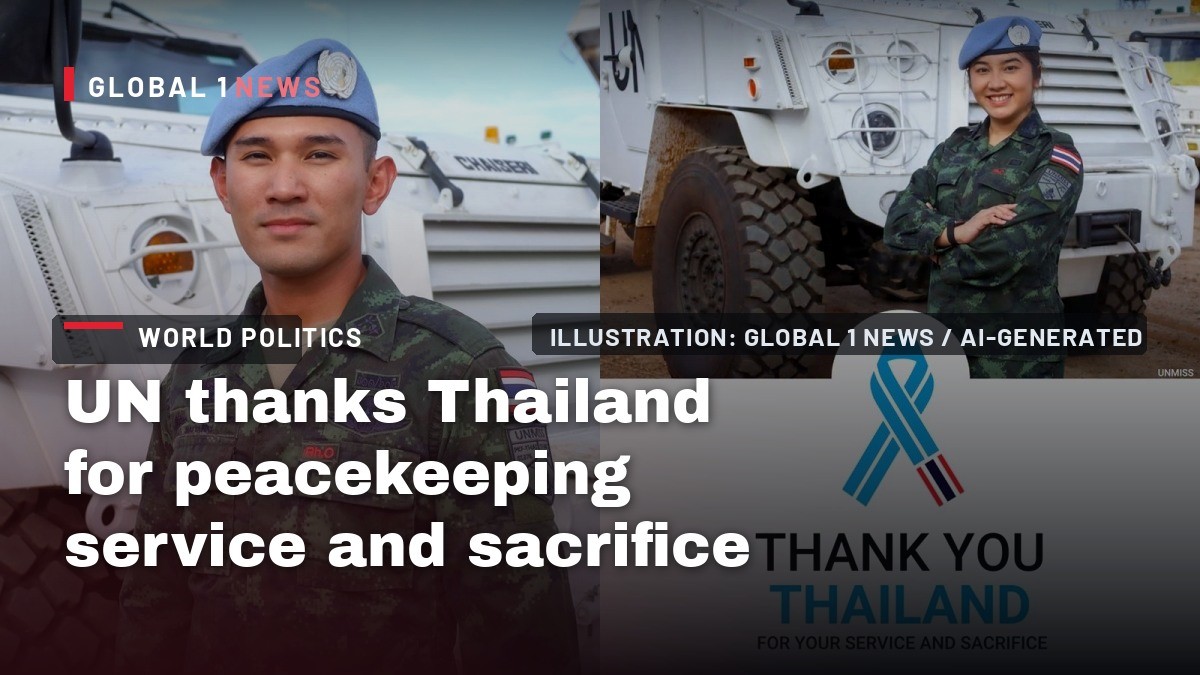
Thailand’s long‑standing commitment to United Nations peacekeeping reflects a deep‑rooted sense of duty that resonates with the nation’s Buddhist values of compassion and service. In a recent acknowledgement, the UN highlighted that nearly three hundred Thai military and police personnel are currently deployed across three critical missions—Abyei, the India‑Pakistan border, and South Sudan. This gratitude, expressed publicly on social media, underscores both the scale of Thailand’s contribution and the personal sacrifices made by its peacekeepers, reminding us of the intertwined threads of national pride, spiritual duty, and regional stability.
Historical roots of Thailand’s peacekeeping tradition
Thailand’s involvement in UN peace operations dates back to 1958, making it one of the earliest Asian contributors to the global effort. Over the decades, Thai troops have participated in more than twenty missions, a testament to the country’s consistent willingness to support international peace and security. This legacy aligns with the Buddhist principle of “mettā,” or loving‑kindness, which encourages individuals and communities to act for the welfare of others beyond their immediate surroundings.
The continuity of this tradition reflects a broader cultural narrative: Thailand has long viewed itself as a bridge between East and West, and between the many ethnic groups within Southeast Asia. By sending peacekeepers abroad, the nation extends its role as a stabilising force, echoing the historic Thai concept of “Thainess” that blends national identity with a responsibility toward the wider world.
Current deployments and their strategic importance
Thai peacekeepers are presently serving in three distinct UN missions. In Abyei, a contested border region between Sudan and South Sudan, the United Nations Interim Security Force for Abyei works to maintain a fragile peace and protect civilians. Thai personnel contribute to patrols, community outreach, and the monitoring of ceasefire agreements, embodying the careful balance of firmness and empathy that Thai military doctrine often emphasizes.
Along the volatile India‑Pakistan frontier, the United Nations Military Observer Group in India and Pakistan (UNMOGIP) continues a decades‑long observation role. Thai officers here assist in monitoring the ceasefire line, reporting violations, and fostering dialogue between the two nuclear‑armed neighbours. Their presence adds a neutral, respected voice to a delicate diplomatic environment, reinforcing Thailand’s reputation as a trustworthy mediator in regional disputes.
In South Sudan, the United Nations Mission in South Sudan (UNMISS) faces the daunting task of protecting civilians amid ongoing conflict and humanitarian crises. Thai troops, alongside police units, support community security, help train local forces, and engage in projects that rebuild infrastructure. Their work in such a challenging setting highlights the resilience and adaptability of Thai peacekeepers, qualities nurtured by the nation’s own experiences with natural disasters and internal security challenges.
The human cost behind the numbers
While the UN’s gratitude focuses on the collective effort, it also reminds us of the personal sacrifices involved. Ten Thai peacekeepers have lost their lives while serving under the UN flag, a solemn reminder that peacekeeping is not merely a diplomatic exercise but a perilous duty. The UN’s statement, “We honour their memory,” pays tribute to these individuals, whose families and communities bear the weight of loss.
In Thai society, the concept of “sangkhom” (community) is central. When a peacekeeper falls, the grief extends beyond the immediate family to the wider community, including the villages and temples that often host farewell ceremonies. Such moments reinforce the collective responsibility to support the families left behind, a practice rooted in Buddhist teachings about compassion and interdependence.
Connecting peacekeeping to Thai domestic values
The ethos of Thai peacekeepers mirrors the country’s own approach to internal security and disaster response. Thailand regularly mobilises military and police forces for flood relief, wildfire control, and pandemic response—tasks that require rapid coordination, empathy, and a calm under pressure. These domestic experiences shape the mindset of peacekeepers, who bring a familiar blend of discipline and humanitarian concern to foreign missions.
Moreover, the Buddhist practice of “karuṇā” (compassion) informs the way Thai personnel interact with local populations abroad. In Abyei and South Sudan, where communities have endured years of violence, Thai peacekeepers often engage in simple acts of kindness—sharing meals, assisting in school repairs, or providing medical aid. These gestures, though modest, echo the Thai cultural belief that small, sincere actions can foster trust and lay the groundwork for lasting peace.
Regional geopolitics and Thailand’s diplomatic standing
Thailand’s active role in UN peacekeeping enhances its diplomatic profile within Southeast Asia and beyond. By contributing to missions that involve neighboring countries—such as the India‑Pakistan border—Thailand demonstrates a commitment to regional stability that aligns with ASEAN’s broader goals of peace and non‑interference. This participation also offers Thailand a platform to share its experiences in conflict resolution, disaster management, and community‑based security, strengthening ties with fellow ASEAN members.
In the context of the evolving security landscape of the Indo‑Pacific, Thailand’s contributions signal a willingness to engage constructively with major powers that support UN operations. This balanced approach helps Thailand navigate complex geopolitical currents while maintaining its traditional policy of neutrality and constructive engagement.
Future outlook and the path ahead
Looking forward, the UN’s recognition serves as both commendation and encouragement for Thailand to sustain, and possibly expand, its peacekeeping involvement. As new conflicts emerge and existing missions evolve, Thai expertise in community‑centric security and disaster response could prove invaluable. Continued investment in training, language skills, and cultural awareness will ensure that Thai peacekeepers remain effective and respected on the global stage.
Domestically, the government and civil society may consider strengthening support systems for the families of peacekeepers, honoring the memory of those who have fallen, and promoting public awareness of the peacekeeping mission. Such measures would reinforce the cultural values of “sangkhom” and “karuṇā,” ensuring that the spirit of service remains a shared national aspiration.
Honouring the sacrifice and celebrating the service
The UN’s heartfelt thank‑you captures more than a statistical contribution; it acknowledges the lived experiences of Thai men and women who have left their homes, temples, and families to protect strangers in distant lands. Their stories, woven into the larger tapestry of Thailand’s national identity, illustrate how Buddhist compassion can translate into concrete action on the world stage.
As the nation reflects on the ten fallen peacekeepers, their legacy endures in the safety of the communities they helped protect and in the continued dedication of their comrades. Their sacrifice reminds us that peace is not a distant ideal but a daily practice—one that Thai peacekeepers embody with humility, courage, and a deep sense of interconnectedness that resonates from Bangkok’s bustling streets to the remote villages of Abyei, the desolate plains of South Sudan, and the tense borderlands of India and Pakistan.
This article was produced with AI-assisted research and editorial support. Reporting is based on the source material cited below. Sources: Khaosod English; khaosodenglish.com; Global1.News (15 September 2026).
By Ann Srisawat, Staff Writer
What's Your Reaction?
 Like
0
Like
0
 Dislike
0
Dislike
0
 Love
0
Love
0
 Funny
0
Funny
0
 Wow
0
Wow
0
 Sad
0
Sad
0
 Angry
0
Angry
0

Southeast Asia Correspondent at Global1.News. Based in Bangkok, covering Thai and Southeast Asian politics, economy, technology, and culture. Deep regional perspective on one of the world's most dynamic regions.











Comments (0)