
Palestinian woman gives birth in Israel’s Damon prison following arrest during pregnancy
Palestinian prisoner Dana Joudeh, a 35‑year‑old mother‑to‑be from Iraq al‑Tayeh in the Nablus governorate, gave birth to a baby girl inside Israel’s Damon prison on Monday.
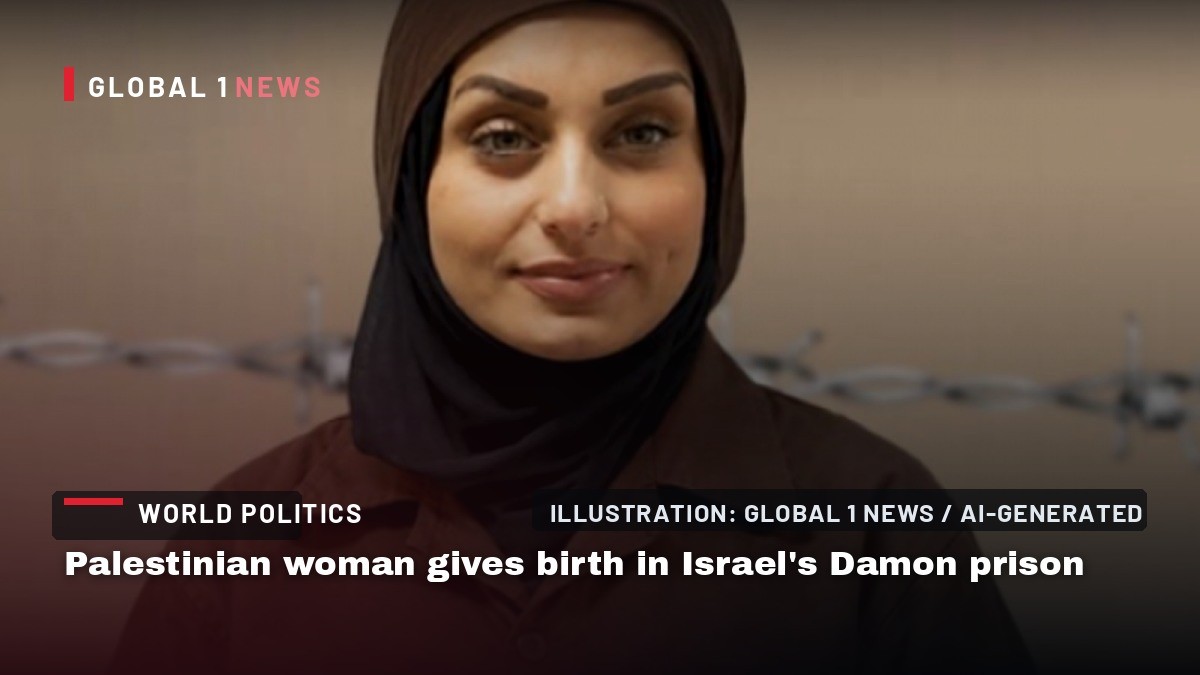
Palestinian prisoner Dana Joudeh, a 35‑year‑old mother‑to‑be from Iraq al‑Tayeh in the Nablus governorate, gave birth to a baby girl inside Israel’s Damon prison on Monday. The delivery came six months after Joudeh was placed under administrative detention – a legal mechanism that permits the Israeli authorities to hold Palestinians without charge or trial. Her family and human‑rights groups say the circumstances of her arrest, the conditions of her confinement and the denial of adequate medical care constitute clear violations of international law and humanitarian conventions.
Administrative detention and the arrest of a pregnant woman
The case of Dana Joudeh highlights the broader practice of administrative detention, which the Israeli authorities use to imprison Palestinians for extended periods without formal charges. Joudeh spent six months in this regime before giving birth, a timeline confirmed by local sources. Her family and advocacy organisations argue that arresting a woman while she is pregnant, and then holding her under a system that denies basic legal safeguards, breaches the protections afforded to pregnant detainees under international humanitarian law.
International law, including the Fourth Geneva Convention, obliges occupying powers to ensure the health and safety of civilian populations, especially vulnerable groups such as pregnant women. By placing Joudeh in a prison setting without providing the necessary prenatal care, the authorities have, according to her relatives and rights defenders, failed to meet these obligations.
The conditions inside Damon prison
According to the source material, Damon prison currently holds about 88 Palestinian women prisoners. These women face a range of hardships that human‑rights monitors describe as “medical neglect, starvation, repression and denial of basic rights and religious practices.” The report also mentions isolation and restrictions on daily life, underscoring a broader pattern of punitive conditions for female detainees.
The Palestinian Commission of Detainees and Ex‑Detainees Affairs singled out the safety of vulnerable groups within the prison – pregnant women, the sick, minors, the elderly and those with disabilities – as a particular concern. Their call for international monitoring reflects a deep mistrust of the prison administration’s ability or willingness to protect these prisoners’ health and dignity.
Human‑rights reactions and calls for accountability
Human‑rights organisations, both local and international, have condemned the treatment of Joudeh and other women in Damon prison. They argue that the denial of necessary healthcare, especially for a pregnant detainee, amounts to a breach of both humanitarian and human‑rights law. The commission’s statement urges urgent action from the global community to monitor conditions and press for the upholding of basic rights.
These calls are part of a wider pattern of criticism aimed at Israel’s handling of Palestinian detainees. The source material references a related report on the deteriorating health of female prisoners, suggesting that Joudeh’s case is not isolated but part of a systemic issue.
The impending release and its uncertainty
Joudeh’s administrative detention order was set to expire on Tuesday, the day after her delivery, according to the source. However, the possibility of renewal remains, leaving her legal status in limbo. This uncertainty underscores the precarious nature of administrative detention, where release is contingent on the discretionary renewal of orders rather than any judicial review.
If the order is not renewed, Joudeh would become one of the few women released after giving birth in custody, a circumstance that could draw further international attention to the practice of detaining pregnant women without trial.
International legal implications
The allegations of medical neglect and denial of care intersect with several international legal frameworks. The International Covenant on Civil and Political Rights, to which Israel is a party, guarantees the right to liberty and security of person, as well as protection against arbitrary detention. Moreover, the Convention on the Rights of the Child obliges states to ensure the health of newborns, a duty that becomes complicated when the mother is detained.
Human‑rights advocates argue that by arresting Joudeh while pregnant and failing to provide adequate medical support, Israel may be infringing upon both the mother’s and the newborn’s rights under these treaties. The call for urgent monitoring by international organisations reflects a desire to hold the occupying power accountable to its treaty obligations.
Broader impact on Palestinian families and communities
The birth of a child inside a prison walls reverberates far beyond the confines of Damon. For families like Joudeh’s, the experience compounds the trauma of separation, loss of livelihood and the constant fear of further detention. Community members see the event as a stark illustration of how the conflict penetrates the most intimate aspects of life, including childbirth.
Such incidents also fuel a collective sense of injustice among Palestinians, reinforcing narratives of systemic oppression. The emotional weight of a newborn’s first breaths taken under armed guard amplifies calls for international solidarity and intervention.
Looking ahead: monitoring, advocacy and possible reforms
In the wake of Joudeh’s delivery, the Palestinian Commission of Detainees and Ex‑Detainees Affairs has urged international human‑rights and humanitarian organisations to intensify monitoring of women’s prisons. Their appeal seeks not only immediate safeguards for pregnant detainees but also longer‑term reforms to the administrative detention system.
Advocates argue that transparent reporting, independent medical examinations and the involvement of neutral observers could mitigate the risk of neglect. While the source material does not detail any concrete policy proposals, the repeated emphasis on urgent action signals a growing pressure on Israeli authorities to address the humanitarian concerns raised by cases like Joudeh’s.
This article was produced with AI-assisted research and editorial support. Reporting is based on the source material cited below. Sources: Middle East Monitor; middleeastmonitor.com; Global1.News (15 September 2026).
By Fatima Al-Rashid, Staff Writer
What's Your Reaction?
 Like
0
Like
0
 Dislike
0
Dislike
0
 Love
0
Love
0
 Funny
0
Funny
0
 Wow
0
Wow
0
 Sad
0
Sad
0
 Angry
0
Angry
0

Gulf/MENA Correspondent at Global1.News. Based in Doha, covering Gulf politics, energy markets, diplomacy, and development across the Middle East and North Africa. Tracks the economic transformation of the Gulf states.














Comments (0)