
Saudi Arabia raises Jeddah, Mecca alarm, vows response to Houthis
Saudi Arabia’s recent emergency alerts for Jeddah, Mecca and Taif underscore a widening front in the Gulf’s long‑running Sunni‑Shia contest, now amplified by a broader great‑power rivalry that pits Washington against Tehran.
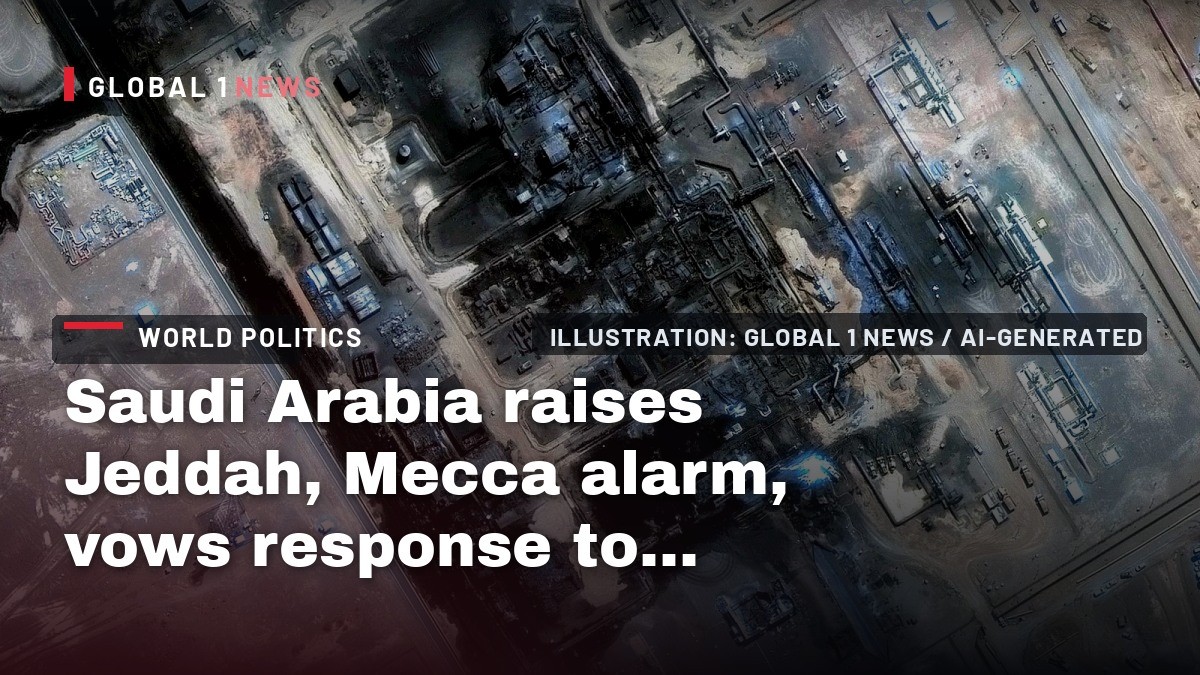
Saudi Arabia’s recent emergency alerts for Jeddah, Mecca and Taif underscore a widening front in the Gulf’s long‑running Sunni‑Shia contest, now amplified by a broader great‑power rivalry that pits Washington against Tehran. The alerts, issued through the National Early Warning Platform for Emergencies, came after Iran‑backed Houthi forces launched a coordinated missile and drone assault that wounded thirteen civilians across the kingdom. While the civil defence briefed the public on safety measures—seeking shelter inside buildings, avoiding windows and open areas—the underlying strategic calculus reveals a volatile escalation that could reverberate through regional energy markets, maritime chokepoints and diplomatic overtures.
Escalation of Houthi missile and drone strikes
The latest Houthi operation employed “dozens of ballistic missiles and drones” against targets that include King Khalid airbase in Khamis Mushait, a southern Saudi city. According to the Riyadh‑led coalition, the attacks also hit Abha and Taif, injuring thirteen civilians, damaging seven houses and two vehicles. The Houthis claim responsibility for the strike, asserting it forms part of a broader “lightning offensive” that has intensified since the group declared a maritime blockade on Riyadh in July.
In response, Saudi Arabia launched more than fifty airstrikes on Houthi‑held positions, mirroring a similar barrage the previous day. The coalition’s statement framed these counter‑operations as “firm” measures to protect national sovereignty and deter what it described as a “hostile and extremist approach.” Yet, despite the intensity of the Saudi response, the Houthi campaign has persisted, suggesting that kinetic pressure alone may be insufficient to blunt the rebels’ momentum.
Strategic significance of the Red Sea and Bab el‑Mandeb
The Houthis’ recent seizure of Yemen’s Red Sea coast and the Bab el‑Mandeb Strait carries outsized strategic weight. Control of this narrow waterway, which links the Red Sea to the Gulf of Aden, offers the group a leverage point over global shipping and, by extension, oil markets. The article notes that the Bab el‑Mandeb has become “vital as the wider U.S.-Iran war chokes the Strait of Hormuz,” highlighting how Tehran’s broader confrontation with Washington can amplify the impact of a Yemeni proxy’s actions.
Saudi Arabia, the world’s leading crude exporter, has already felt the economic reverberations of Houthi attacks on its oil infrastructure, which have pushed crude prices above the $100 per barrel threshold. The disruption of Red Sea traffic, combined with the threat to the Hormuz corridor, creates a dual‑choke scenario that could force oil‑importing nations to reassess supply routes and heighten the strategic importance of alternative pipelines and storage facilities.
Iran’s role and the limits of deniability
Tehran’s relationship with the Houthis is a cornerstone of its “axis of resistance” against Israel and its regional rivals. While Iran’s foreign ministry officially denied direct interference—asserting that the Houthis are “entirely independent actors”—the group’s access to ballistic missiles and drone technology points to Iranian support. The source material records that Iran’s top security chief, Mohsen Rezaei, dismissed any negotiation until Tehran’s conditions—war reparations and the lifting of sanctions—are met, reinforcing the notion that Tehran views the Yemen front as a bargaining chip in broader diplomatic talks.
Complicating matters, a proposed Gulf‑Iran meeting on the future of the Strait of Hormuz was postponed after Riyadh was accused of using Yemen as a pretext to delay the talks. This accusation reflects a deepening mistrust: Saudi Arabia sees Iranian backing of the Houthis as a direct threat to its security, while Iran frames the conflict as a legitimate proxy struggle against Saudi aggression in Yemen.
U.S. positioning and the Trump factor
The United States remains a pivotal external actor, though its posture appears ambivalent. According to the source, former President Donald Trump publicly rejected a personal request from Crown Prince Mohammed bin Salman to intervene in the Yemen war, while simultaneously signalling openness to talks with Iran. Trump’s remarks on his Truth Social platform suggested a willingness to consider engagement, provided Iran meets its preconditions.
This duality—refusing direct Saudi appeals while courting Tehran—highlights a broader U.S. strategic calculus that seeks to balance containment of Iranian influence with the avoidance of a direct military confrontation. The U.S. stance, however, leaves Riyadh to shoulder the operational burden of counter‑Houthi strikes, potentially straining Saudi resources and political capital.
Domestic implications for Saudi security policy
The emergency alerts issued across six regions underscore the domestic dimension of the conflict. Saudi civil defence instructed motorists to pull over away from bridges and high‑rise buildings, and urged the public to avoid gatherings, reflecting concerns about collateral damage and civilian safety. The fact that the alerts were lifted shortly after being issued suggests that the perceived threat was localized, yet the very need for such warnings indicates an erosion of the sense of invulnerability that Saudi authorities have cultivated.
Moreover, the Crown Prince’s expected talks with Egyptian President Abdel‑Fattah el‑Sissi signal an attempt to consolidate regional support against the Houthi threat. Egypt, as a key Arab partner, could provide political backing and potentially coordinate security measures, but the effectiveness of such diplomatic outreach will hinge on the ability of Riyadh to demonstrate tangible progress in curbing Houthi attacks.
Potential pathways to de‑escalation
Any durable de‑escalation will likely require a multi‑track approach that addresses both the immediate security threat and the underlying geopolitical grievances. On the security front, Saudi Arabia may need to enhance its air‑defence capabilities, perhaps by integrating more advanced missile‑intercept systems, to mitigate the risk of future missile and drone incursions. Simultaneously, a calibrated diplomatic effort—potentially mediated by neutral Gulf states—could reopen talks on the Strait of Hormuz, linking the Yemen cease‑fire to broader regional security guarantees.
From Tehran’s perspective, the preconditions articulated by Rezaei—war reparations and sanction relief—remain non‑negotiable unless the Iranian leadership perceives a strategic advantage in conceding. Therefore, any progress would likely require a reciprocal concession from Riyadh, such as a reduction in support for the Saudi‑backed Yemeni government or a commitment to a humanitarian corridor in the conflict‑hit areas.
Outlook for the Gulf’s energy security and regional balance
The confluence of Houthi missile strikes, Iranian diplomatic leverage, and U.S. ambivalence creates a precarious environment for Gulf energy security. As Saudi oil exports continue to dominate global supply, any sustained disruption—whether through attacks on domestic infrastructure or through the strategic chokepoints of Bab el‑Mandeb and Hormuz—could reverberate through world markets, reinforcing price volatility and prompting importing nations to diversify their energy sources.
Strategically, the ongoing stalemate in Yemen reflects a broader equilibrium in the Sunni‑Shia rivalry, where neither side can secure a decisive victory without risking wider escalation. The Saudi emergency alerts serve as a reminder that the conflict’s spillover effects are no longer confined to Yemen’s borders. In the months ahead, the kingdom’s ability to balance kinetic responses with diplomatic outreach will determine whether the Gulf can avert a deeper confrontation that threatens both regional stability and the global energy order.
This article was produced with AI-assisted research and editorial support. Reporting is based on the source material cited below. Sources: Daily Sabah Middle East; dailysabah.com; Global1.News (15 September 2026).
By Malik Hassan, Staff Writer
What's Your Reaction?
 Like
0
Like
0
 Dislike
0
Dislike
0
 Love
0
Love
0
 Funny
0
Funny
0
 Wow
0
Wow
0
 Sad
0
Sad
0
 Angry
0
Angry
0
Middle East Correspondent at Global1.News. Based in Beirut, covering politics, conflict, energy, and society across the Middle East. Brings context and depth to a region often reduced to headlines.









Comments (0)