
Lebanon's Elite Courtship of Zionism: A Century-Old Pattern Resurfaces
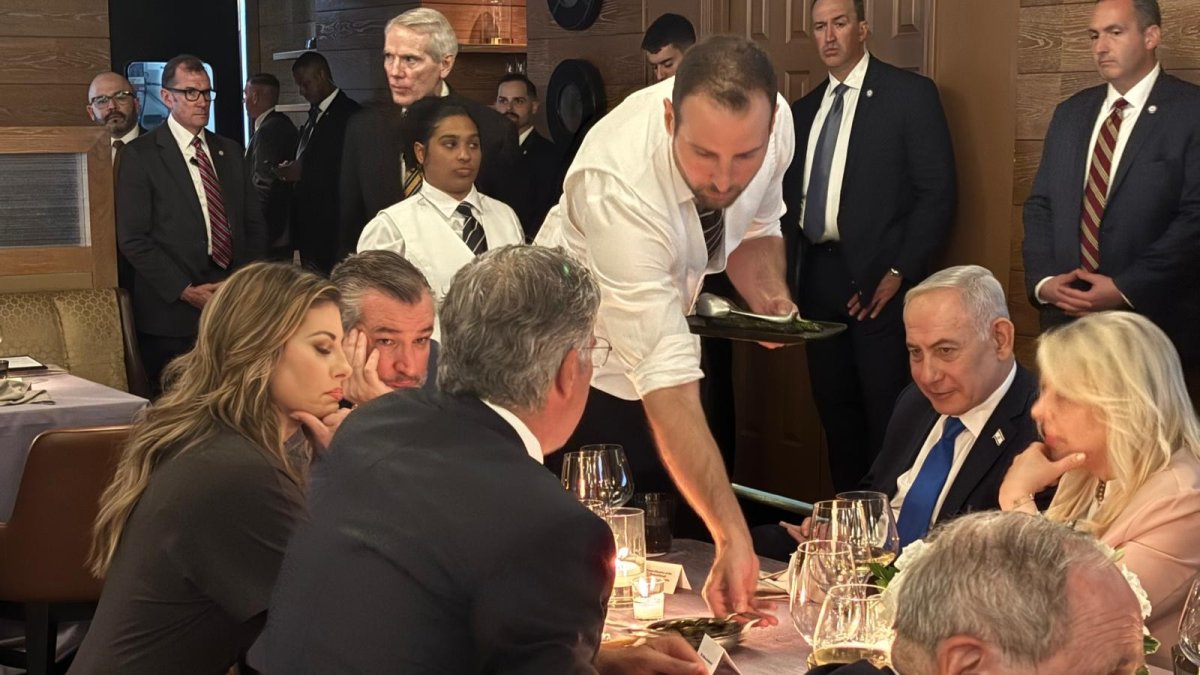
In a recent Middle East Eye report, historian Hicham Safieddine traces the deep roots of Lebanese elite collaboration with Zionism, a history that has resurfaced with striking clarity in the past month. The report centers on a 27 July 2026 dinner in Washington, where Lebanese banker and film producer Antoun Sehnaoui hosted Israeli Prime Minister Benjamin Netanyahu and his family in commemoration of the late US Senator Lindsey Graham, a self-described ardent Zionist.
In a recent Middle East Eye report, historian Hicham Safieddine traces the deep roots of Lebanese elite collaboration with Zionism, a history that has resurfaced with striking clarity in the past month. The report centers on a 27 July 2026 dinner in Washington, where Lebanese banker and film producer Antoun Sehnaoui hosted Israeli Prime Minister Benjamin Netanyahu and his family in commemoration of the late US Senator Lindsey Graham, a self-described ardent Zionist. The dinner came just days after Lebanese President Joseph Aoun, during his own Washington visit, called for ending the state of hostility between Lebanon and Israel "forever," and weeks after the signing of the Trilateral Framework in late June 2026 — an agreement that critics say effectively surrenders Lebanese sovereignty to Israel. These developments, Safieddine argues, are not aberrations but the latest chapter in a century-old pattern of Lebanese elites courting Zionism across sect and region.
Full Article: Lebanon's Elite Courtship of Zionism — A Century-Old Pattern Resurfaces
Beirut, Lebanon – 19 August 2026 — The image of a Lebanese banker toasting an Israeli prime minister in a Washington dining room would have been unthinkable to most Lebanese a generation ago. Yet Antoun Sehnaoui's dinner with Benjamin Netanyahu on 27 July 2026 was not a secret back-channel meeting but a public celebration, attended by figures from Washington's political elite and covered openly by Israeli media. For Safieddine, an associate professor of history and Canada Research Chair in the History of the Modern Middle East at the University of British Columbia, the dinner is the logical culmination of a project that began long before Israel's creation in 1948 — a project in which Lebanese elites, from Maronite patriarchs to Sunni prime ministers, have repeatedly sought accommodation with the Zionist movement.
A Banker's Journey from Beirut to Washington
Sehnaoui's personal trajectory illustrates the mechanisms through which Lebanese elites have historically aligned themselves with Zionist interests. Once a prominent figure in Beirut's financial sector, Sehnaoui's career took a dramatic turn following a shooting incident and the filing of money laundering charges against him during Lebanon's devastating financial crisis. He settled in the United States, where he reinvented himself as a financier of Israeli cultural propaganda and a vocal advocate for normalisation between Lebanon and Israel.
His new partner, Morgan Ortagus, the former US envoy to Lebanon, has been remarkably candid about Sehnaoui's role. At a public event, Ortagus praised him for acts that are "technically illegal in Lebanon," where citizens are banned from direct dealings with Israelis. She described Sehnaoui as "trained to be a supporter of the state of Israel" and noted that he "hails from a family of committed Lebanese Christian Zionists." The Sehnaoui family's generational affinity with Zionism, Safieddine notes, is not an anomaly in Lebanese history but part of a broader pattern that cuts across region and sect.
The Mandate Era: Grooming Maronite Allies
The Zionist movement's engagement with Lebanese elites began in earnest during the British Mandate period, when Zionist leaders sought to break the diplomatic isolation of their settler-colonial project. Their primary targets were Maronite Christian leaders, whom they identified as the powerbrokers in Lebanon's sectarian system. By invoking the logic of an "alliance of minorities," the Zionist movement cultivated figures such as Emile Edde, who served as Lebanon's president under the French Mandate, and Maronite Patriarch Antoine Arida.
According to Zionist reports from the period, Edde expressed willingness to consider settling 100,000 Jews in the Saida-Tyre area of southern Lebanon. In 1946, the Jewish Agency and the Maronite Church signed a secret pact in which the Church acknowledged the right to Jewish settlement and statehood in Palestine. Even Maronite leaders who were invested in Muslim-Christian relations, such as Bishara al-Khoury, Lebanon's first independence-era president, did not shy away from cooperating with the Zionists to maintain a Christian-majority Lebanese state. During the Second World War, al-Khoury allegedly proposed getting rid of the Shia population in the south — a chilling precursor to later displacements.
Beyond the Maronites: Sunni and Shia Elites in the Zionist Orbit
The Zionist movement's reach extended well beyond the Maronite community. Prominent Sunni political figures, including prime ministers Khayr al-Din al-Ahdab and Riad al-Solh, maintained longstanding contacts with Zionist leaders. Al-Solh, who would later rally Arab armies against Israel in 1948, was nonetheless seen by the Zionists as an important player on the Arab stage worthy of cultivation.
Economic imperatives drove the Zionists to weave contacts across the entire political and sectarian spectrum of Lebanese elites. Lebanese landowning families — the Sursuqs (Greek Orthodox), the Salams and Beyhums (Sunni), and the Asads (Shia) — sold large tracts of land to Zionist purchasers. These transactions, which predated Israel's creation, helped establish the territorial basis for the Jewish state while enriching Lebanese aristocratic families.
Zionist leaders like Chaim Weizmann and David Ben Gurion were also keen to secure vital fresh water sources, including Lebanon's Litani River and tributaries of the Jordan River in the Mount Hermon region. At the Paris Peace Conference in 1919, the World Zionist Organization petitioned the Great Powers to include these water sources as part of the proposed Jewish state. Anglo-French interests ultimately set the mandate borders differently, but the Zionists continued to contemplate joint hydroelectric and irrigation ventures. One proposal, reportedly based on a study commissioned for the American University of Beirut, was promoted by Alfred Naccache, a Lebanese architect and businessman who founded the "Young Phoenicians" society.
Security Collaborations and the 1948 War
Zionist security-based relations with Lebanese elites were governed by the demands of securing the colony's frontiers and conducting counterinsurgency operations. The primary targets were Shia and Druze notables who held sway near the borders with Mandate Palestine. These contacts were operative during periods of military activity — the Syro-Arab resistance against French occupation in 1920, the Great Syrian Revolt of 1925, the Palestinian uprising of 1936, and the Arab-Israeli war of 1948. Money and threats of military action were used to either defend Zionist settlements from rebel attacks or to deter Lebanese notables from joining their comrades inside Palestine.
Amicable relations with the Zionists, however, did not shield Lebanese elites from Zionist violence. During the 1948 war, Israel's Ministry of Immigration rejected a request by the Maronite Church to send a church envoy to Haifa to attend to church business, citing the lack of arrangements for non-Jews to return. The Zionist leadership was also angered by Premier Riad al-Solh's rallying of Arab armies and reportedly devised, though did not execute, a plot to assassinate him.
The 1982 Invasion and the May 17 Agreement
Until the 1970s, Zionist ties to Lebanese elites were often clandestine, thanks to popular anti-Zionist sentiments in Lebanon and the wider Arab region. The US-incited civil war, which broke out in 1975, exposed the deepening alliance between Tel Aviv and Lebanese right-wing forces. These included a proxy militia in southern Lebanon and the Phalangist Party based in Mount Lebanon and Beirut.
The zenith of Zionist influence in Lebanon was reached after Israel's 1982 invasion and the signing of a "peace" treaty between the two countries, known as the May 17 agreement. Back then, only two members of parliament — one Christian and one Muslim — voted against it. The treaty's near-unanimous support reflected the extent to which Lebanese elites of all sects had been co-opted or cowed by Zionism and its Lebanese right-wing allies.
Thanks to an armed uprising the following year, as well as successive and deadly attacks on US and French military bases, the May 17 treaty was never implemented. Israel's dream of establishing a satellite Maronite state came to naught. The subsequent liberation of southern Lebanon by leftist and Islamist forces seemed to put the question to rest.
The Trilateral Framework: A New May 17?
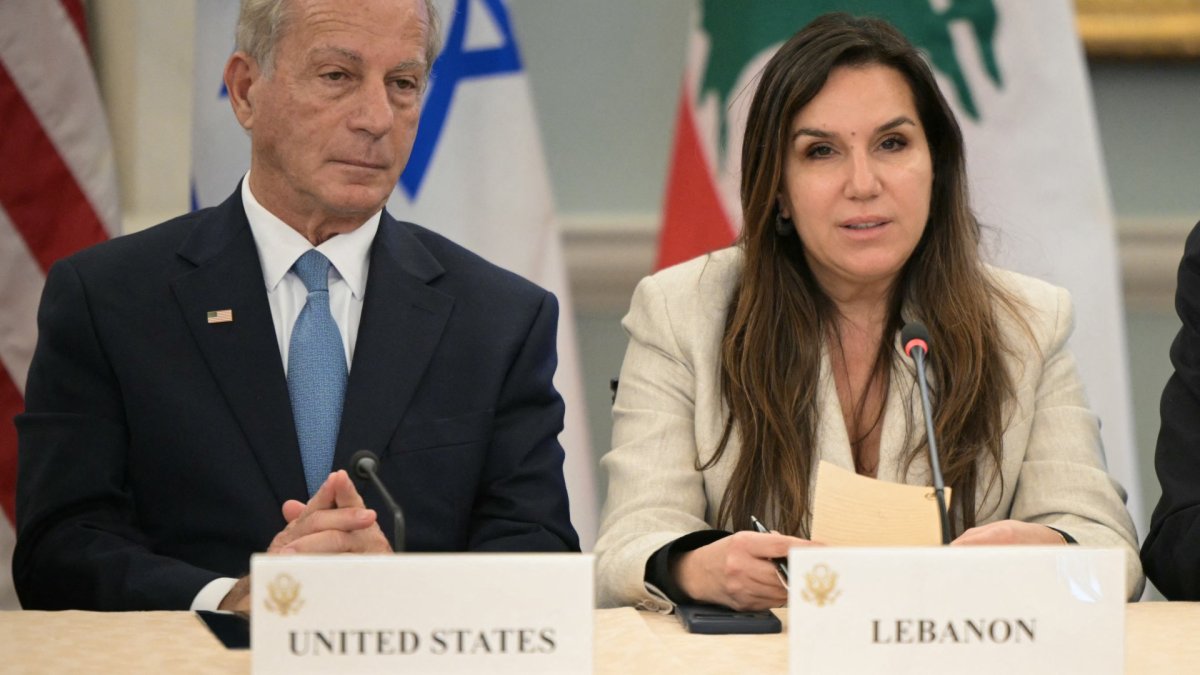
Today, more than four decades after the May 17 agreement, normalisation with Zionism has again reared its head. The Trilateral Framework signed in Washington in late June 2026 effectively surrendered Lebanese sovereignty to Israel, according to critics. But the geopolitical context differs dramatically from the 1980s. Back then, Israel's military gains were swift and occupation forces reached all the way to Beirut, yet geopolitical alignments were not in favour of Lebanese normalisation. With the exception of Egypt, no Arab country had signed a normalisation treaty, the Soviet Union was still around, and Syria under Hafez al-Assad opposed the prospect, particularly in Lebanon. The leftist and Islamist resistance forces in Lebanon were also in revolutionary mode and did not form part of the state apparatus, giving them leverage in delegitimating the treaty.
Today, Israeli military gains in Lebanon are incremental and have been achieved at high costs. But the Soviet Union is no more, Palestine is post-Oslo, the majority of Arab states have either normalised relations or have secret ties with Israel, and Syria's new regime is seeking a security treaty with Tel Aviv rather than supporting resistance groups. The political pressure to normalise in Lebanon is greater than ever.
What Normalisation Means for Palestine and the Region
The complicity and emboldening of Lebanese elites to normalise is part of the broader complicity of ruling Arab elites. With southern Lebanon acting as the last active front of resistance against Israeli expansionism outside of Palestine, foresaking anti-normalisation forces in Lebanon is forsaking Palestine itself. The presence of Lebanese armed resistance, a weak central state, and popular opposition to normalisation is putting brakes on the process, but long-term opposition is equally dependent on a reversal of Israel's geopolitical gains in the region. That would include undoing decades of normalisation with Egypt, Jordan and the Palestinian Authority, as well as a turnaround in Syria's position towards Israel.
For ordinary Lebanese, the stakes are existential. The Trilateral Framework and the push for normalisation threaten to transform Lebanon into a client state of Israel, repeating the patterns of the May 17 agreement but without the resistance infrastructure that defeated it in the 1980s. President Aoun's embrace of counterinsurgency rather than liberation politics — identifying sovereignty with disarming non-state actors rather than freedom from settler-colonialism — echoes Zionist claims by situating the root cause of armed resistance in Hezbollah's religious ideology rather than Israeli occupation.
The history Safieddine documents is not merely academic. It is a warning that the current push for normalisation is not a new phenomenon but a recurring one, driven by Lebanese elites who have consistently chosen accommodation with power over solidarity with the Palestinian cause. Whether the current iteration succeeds where the May 17 agreement failed will depend on whether the Lebanese people — and the broader Arab public — can resist the pressures that their elites have historically succumbed to. The dinner in Washington may have been a celebration for Sehnaoui and Netanyahu, but for millions across the region, it is a reminder that the battle for Lebanon's soul — and Palestine's future — is far from over.
By Fatima Al-Rashid, Staff Writer
This article was produced with AI-assisted research and editorial support. Reporting is based on sources cited in the article.
What's Your Reaction?
 Like
0
Like
0
 Dislike
0
Dislike
0
 Love
0
Love
0
 Funny
0
Funny
0
 Wow
0
Wow
0
 Sad
0
Sad
0
 Angry
0
Angry
0

Gulf/MENA Correspondent at Global1.News. Based in Doha, covering Gulf politics, energy markets, diplomacy, and development across the Middle East and North Africa. Tracks the economic transformation of the Gulf states.











Comments (0)