
Developer ends lucrative screensaver deal with Roku because Fox bought it
Roku’s “Aquatic Life” screensaver has been a quiet staple for a decade, a calming backdrop for anyone who’s ever stared at a living‑room TV while the world spins.
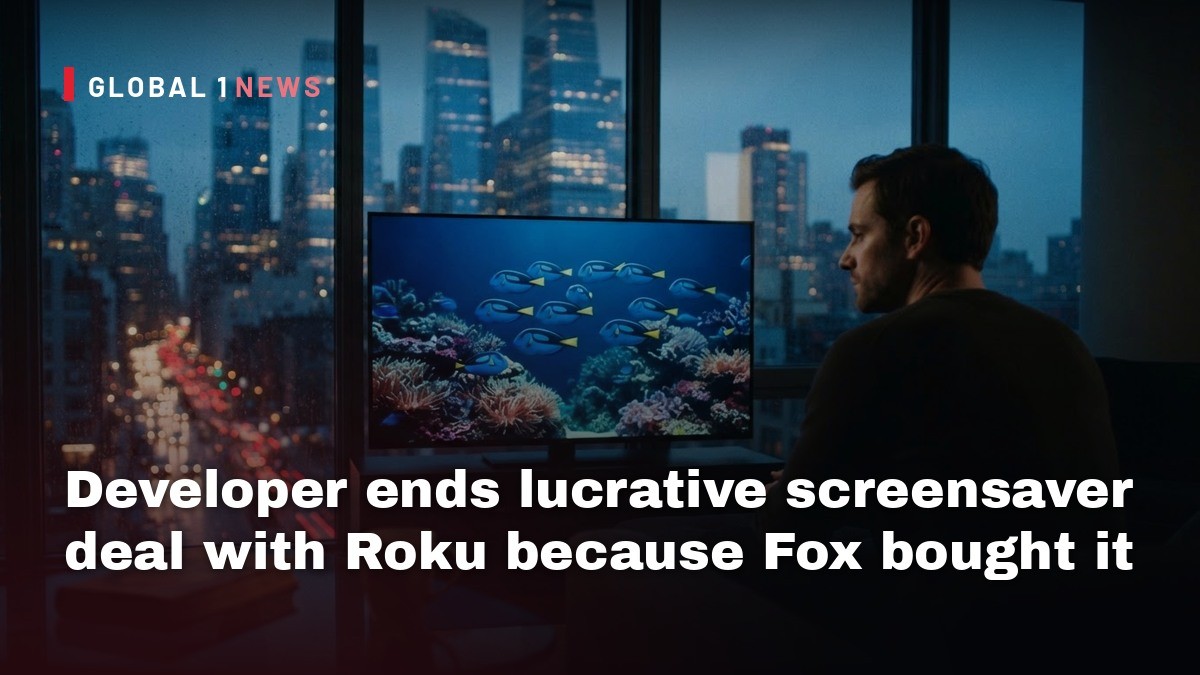
Roku’s “Aquatic Life” screensaver has been a quiet staple for a decade, a calming backdrop for anyone who’s ever stared at a living‑room TV while the world spins. Now, thanks to Fox’s $22 billion takeover of Roku, that soothing animation is being yanked off the platform on December 1. The move is a textbook example of how corporate M&A can rip out the little things that keep users loyal, and it should set off alarm bells for any independent hosting or streaming service that thinks a single licensing deal can be taken for granted.
The licensing arrangement that got ripped
Jim Sachs, the creator behind the Marine Aquarium animation, has been licensing his work to Roku through his company SereneScreen and the intermediary Prolific Publishing. According to the Ars Technica interview, the contract runs on an annual renewal cycle every October and can be canceled by either side for any reason. That flexibility proved fatal when Fox announced its acquisition of Roku and Sachs decided he could not be part of the “Fox world.”
Sachs told Ars that the deal paid $80,000 per year for exclusive rights across all set‑top devices, or $60,000 for a non‑exclusive arrangement. Roku has historically chosen the exclusive option, meaning the entire Roku ecosystem has been paying the higher fee to keep the screensaver ad‑free and universally available. When the deal was terminated, Roku will automatically replace Aquatic Life with its “Roku City” screensaver, which carries subtle advertisements—another reminder that the “no‑ads” promise is eroding.
Why the screensaver mattered to users
For most Roku owners, the Aquatic Life screensaver was a background feature, but for a segment of users it was a mental health aid. One Reddit user described how the animation helped calm an over‑active mind, especially when dealing with ADHD. The screensaver’s ad‑free nature made it a rare oasis in a platform that has been increasingly peppered with sponsored themes and ad‑laden interfaces.
The backlash on social media underscores a broader sentiment: Roku’s appeal has long hinged on its curated, low‑ad experience. When users see a beloved feature disappear, especially without a clear alternative, it chips away at brand loyalty. That’s a risk independent operators can’t afford to ignore—once you lose a differentiator, you’re left competing on price alone against hyperscalers that can undercut you with deep pockets.
Fox’s acquisition and the ripple effect
Fox’s $22 billion purchase of Roku is a strategic play to secure a distribution pipeline for its content and advertising ecosystem. Sachs’ comment that Fox “simply wants another venue for spreading their philosophy” hints at the cultural clash that often accompanies such deals. For a small creator, the prospect of his work being used to funnel viewers into a corporate agenda is a deal‑breaker.
From a business‑risk perspective, the acquisition illustrates how a change in ownership can instantly invalidate existing partnerships. Independent providers that rely on licensing deals, API access, or platform agreements must build contingency plans. A single corporate decision can yank a revenue stream, as it did for Sachs, whose primary income came from the Roku license. His “high property tax bill” was the only major expense, yet losing the $80,000 annual payment forced him to halt planned projects.
The financial calculus of licensing
The numbers in this case are stark. An $80,000 annual fee for exclusive rights may seem modest in the grand scheme of streaming economics, but for a solo creator it represented a stable cash flow that underwrote personal expenses and future development. When the contract was terminated, Sachs admitted his “needs are very small,” yet the loss still mattered enough for him to publicly protest.
For independent hosting providers, the lesson is clear: never let a single client constitute a majority of your revenue. Diversify across multiple platforms, and negotiate contracts that include notice periods, renewal clauses, and exit penalties that protect you if a partner’s ownership changes. Relying on a single licensing deal is a recipe for volatility, especially when the partner is a public company subject to M&A activity.
What Roku’s users get instead
Roku’s fallback is the “Roku City” screensaver, which, unlike Aquatic Life, includes subtle advertisements. The shift from a pure, ad‑free experience to one that monetizes the background display is symptomatic of a broader trend: platforms increasingly monetize every pixel. Users who valued Roku for its cleaner aesthetic now face a diluted experience, and that could accelerate churn to competitors that still offer ad‑free themes.
From a technical standpoint, the automatic switch is a simple configuration change on the device firmware. It shows how little effort is required to replace a user‑facing feature when the underlying content is owned by a third party. For hosting providers, this underscores the importance of owning your own assets—whether that’s custom UI elements, branding, or content—so you’re not at the mercy of a vendor’s licensing whims.
Strategic takeaways for independent operators
First, treat licensing agreements as strategic assets, not just line‑item expenses. Secure terms that protect you against ownership changes: include clauses that require a minimum notice period before termination, or that give you a right of first refusal if the licensor is sold.
Second, build a diversified revenue model. Sachs’ experience shows that even a modest, stable stream can become a single point of failure. Spread risk across multiple products, services, or geographic markets.
Third, keep your user experience under your own control. If you’re offering a platform where users expect an ad‑free or low‑ad environment, any intrusion—like the ad‑laden Roku City screensaver—will be a red flag. Invest in in‑house design assets or partner with creators who are willing to sign longer‑term, exclusive contracts that align with your brand values.
Actionable steps for founders right now
1. **Audit all licensing contracts**—list each partner, renewal dates, termination clauses, and the financial weight of each deal.
2. **Create a contingency content library**—whether it’s UI skins, screensavers, or promotional assets, have backups ready to deploy if a third‑party source disappears. This reduces downtime and protects the user experience.
3. **Engage legal counsel early**—draft agreements that include change‑of‑control provisions, ensuring you can either retain the license under the same terms or receive compensation if the partner is acquired.
4. **Communicate transparently with your users**—when a feature is at risk, give them a heads‑up and a clear roadmap. Users respect honesty, and early communication can mitigate backlash.
5. **Monitor M&A activity in your ecosystem**—track potential acquisitions that could affect your partners. A proactive stance lets you anticipate disruptions before they hit your bottom line.
In short, the loss of the Aquatic Life screensaver is a micro‑event with macro implications. It shows how a corporate takeover can cascade down to the tiny screensaver that kept a few users calm. For anyone running a hosting or streaming service, the lesson is to keep control of your content, diversify your income, and build contracts that survive ownership changes. Otherwise, you’ll find yourself watching the same old screensaver—only now it’s riddled with ads.
— Allan Ali, Founder
This article was produced with AI-assisted research and editorial support. Reporting is based on the source material cited below. Sources: Ars Technica; arstechnica.com; Global1.News (09 November 2026).
By Allan Ali, Global1.News
What's Your Reaction?
 Like
0
 Dislike
0
 Love
0
 Funny
0
 Wow
0
 Sad
0
 Angry
0

Publisher of Global1.News. Automation architect, systems builder, and the guy making sure the truth gets published.












Comments (0)