
Egypt Train Crash Inquiry Finds a Disabled Safety System and an Altered Logbook
Egypt's inquiry into the El Ayyat train collision has found the driver disabled the automatic train control system and station staff failed to watch the signal panel. Seven people died; two officials are in custody and the transport minister faces a parliamentary committee.
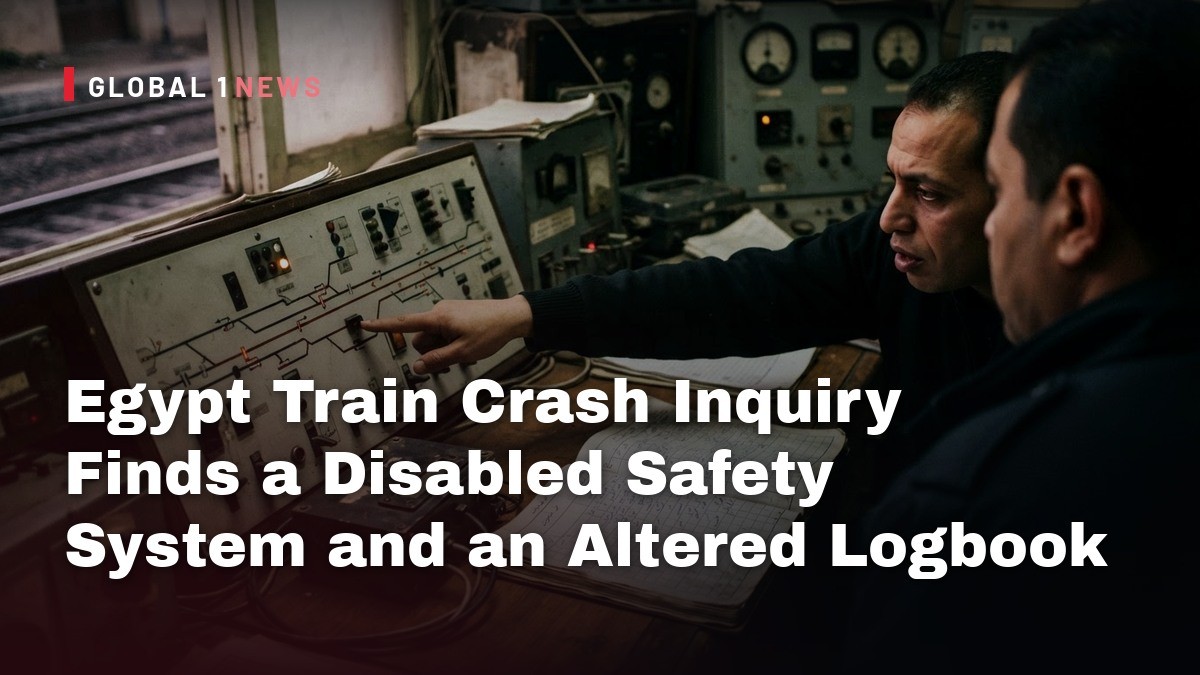
Seven people are dead on a railway line south of Cairo, and the inquiry that followed has put two station officials in custody, found a safety system disabled and a signal logbook altered, and reached the desk of the transport minister. Two days after the collision at al-Ayyat, a parliamentary committee meets him this morning.
Egypt Train Crash Inquiry Finds a Disabled Safety System and an Altered Logbook
Al-Ayyat, Egypt — The official account of what went wrong is now in writing. What follows is what the Public Prosecution has established, what the railway's own staff told investigators, and what three separate inquiries are now chasing.
Seven Dead, and a Safety System Switched Off
Two passenger trains collided in the afternoon of Sunday, 8 November 2026, in al-Ayyat district of Giza governorate, about 52 kilometres south of Cairo, and seven people are dead, among them the driver of Train No. 134. The Giza-to-Fayoum "Tahya Misr" service struck the rear of Train No. 2010, the Cairo-to-Aswan service, which was stationary on the same track. Both trains were travelling in the same direction.
Examinations of the train's automatic control system and of station equipment found that the driver of Train No. 134 had disabled it, the Public Prosecution said on Monday. The prosecution's account is a finding at the investigation stage, not a conviction, and the engineering committee appointed to examine the crash is still working. President Abdel Fattah al-Sisi ordered an urgent investigation on Sunday and said anyone found to have been negligent would be held accountable. The collision occurred between Kafr Ammar and Al-Raqqa stations, near the village of El-Raqqa and the Gerza junction.
What the Prosecution Says the Panel Showed
The Public Prosecution issued a detailed statement on Monday, 9 November 2026, after a technical examination by a committee of professors from Cairo University's Faculty of Engineering. The automatic train control system that the Giza–Fayoum driver had disabled monitors train speeds, checks compliance with track speed restrictions and applies the brakes automatically if a driver fails to respond to a signal or exceeds the permitted speed.
The Head of the Central Administration for Signals and Telecommunications confirmed that the Al-Raqqa station controller and the station master had failed to monitor the control panel, which displays the status of signal tower T-10; both acknowledged the failure during questioning. Investigators found the station controller had tampered with the signal logbook in an attempt to conceal evidence of his failure to monitor the panel.
Three Men Detained, and the Chairman Questioned
Detention was ordered on Monday, 9 November 2026, pending investigation for two employees of Al-Raqqa station — the controller and the station master — and for the assistant driver of Train No. 134 until he could be questioned. The driver himself could not be questioned. The Public Prosecution questioned the chairman of Egyptian National Railways and several of his deputies, along with officials responsible for infrastructure, maintenance, operations, safety, quality, signalling and telecommunications.
Its teams visited hospitals in Giza and Beni Suef to interview injured passengers, and it examined the bodies of the dead and heard statements from relatives. The engineering committee was directed to evaluate operational and monitoring systems, equipment, human resources, signalling systems and the effectiveness of development projects. The prosecution inspected the site, reviewed surveillance footage and heard several witnesses. The investigation continues, and the technical committee examining the crash is still working.
The Run From Al-Ayyat Station
Witnesses told the Public Prosecution that Train No. 134 had been travelling at high speed from the moment it departed Al-Ayyat station until the collision. Train No. 2010, the Cairo-to-Aswan service, was stationary on the same track; initial reports said it had broken down at the site and remained there for some time, Egypt Today reported.
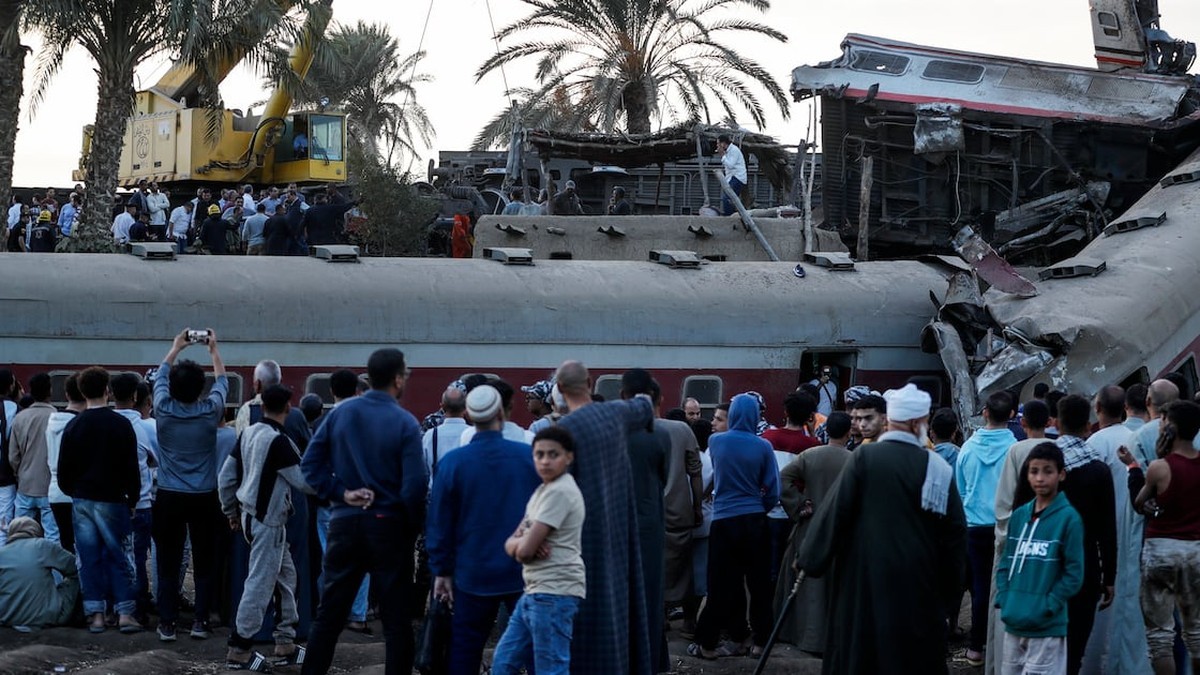
The prosecution said four passenger carriages derailed. The BBC reported that several fell down an embankment, that some overturned, and that the body of at least one carriage appeared to have split in two. More than 70 ambulances were deployed, the Health Ministry said, and hospitals in Giza and Beni Suef governorates were placed on heightened alert; Health Minister Khaled Abdel-Ghaffar ordered readiness raised. Resident Ayman Gamal of Kafr Girza said neighbours pulled out survivors and called ambulances. Traffic on the line was running normally again by Monday morning, the National Railway Authority said.
A Minister Summoned to Parliament This Morning
The House of Representatives' Transport and Communications Committee holds an emergency session on Tuesday morning, 10 November 2026, on the collision. Chair Wahid Qorqar asked Speaker Hisham Badawy to convene it; the request was approved and invitations were sent to committee members, the transport minister and other officials, Egypt Daily News reported.
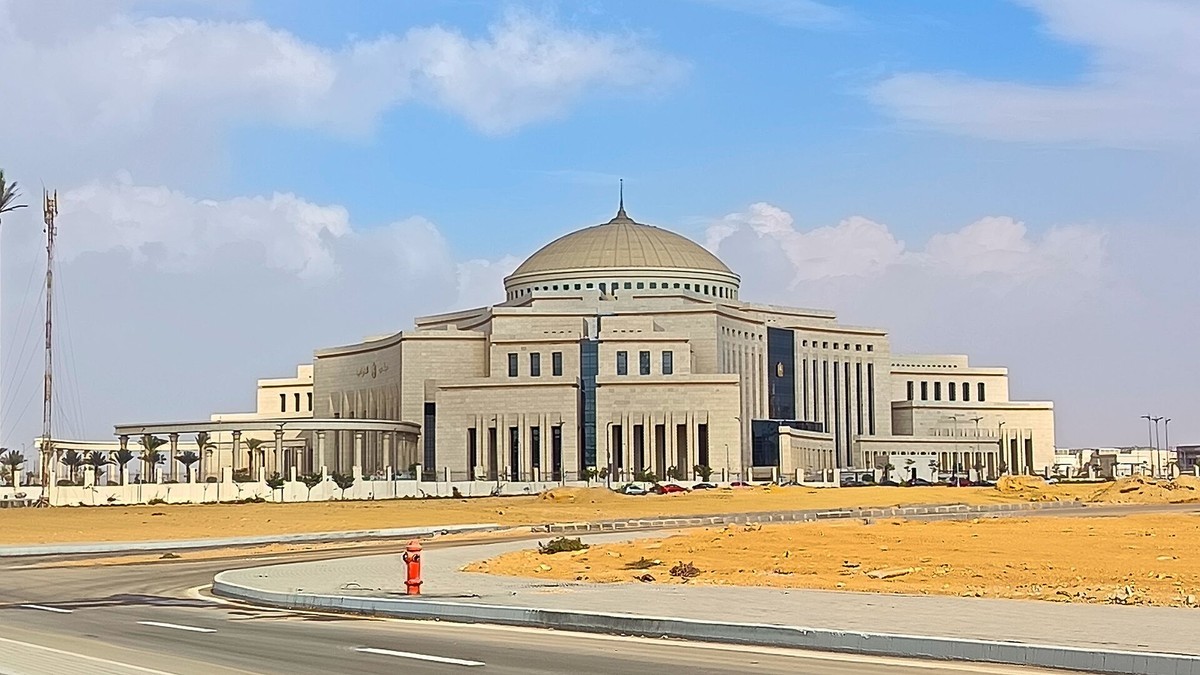
Al Jazeera Arabic reported that the committee summoned Transport Minister Kamel El-Wazir to the session and that he raised no objection to attending. The committee says the meeting is intended to establish the real causes of the crash and to find practical solutions, not to confront the minister with pre-set accusations. El-Wazir visited the site of the collision on Sunday and had not spoken publicly by Sunday night. A former head of the army's Engineering Authority, he was appointed transport minister in March 2019 and is also Deputy Prime Minister for Industrial Development.
The Revolt From Inside the Government's Own Coalition
The anger has come from inside the government's own bloc. Al Adl Party, which won seats on the pro-government National List, filed three urgent motions asking for the transport minister to be summoned before parliament. Hussein Haridy, an Al Adl MP, told Amr Adib, a pro-state television host, on Sunday evening: "I hope he resigns and takes political responsibility." He added: "People's blood isn't cheap." Senator Basel Adel, head of the Al Waie Party, said the time had come "for the transport minister to resign and leave".
Adib himself asked on air: "How many have to die for the Minister to go?" The opposition Egyptian Social Democratic Party's MP Reham Abdel Nabi filed a formal interpellation, and the party's head, Ahmed Fawzi, held El-Wazir and Egyptian National Railways chief Mohamed Amer politically responsible. Homat El Watan, one of the largest parties, called for accountability "in light of the President's directives" without naming the minister. The National Front pledged 100,000 Egyptian pounds, about $1,850, to each bereaved family. The minister has not resigned.
The Toll the Ministry Keeps Revising
The injury count has moved since Sunday afternoon. The Health Ministry first reported 88 injured, then put the number at 112. The Public Prosecution's initial estimate, carried by the BBC, put the injured at 114 after its teams interviewed patients at Al-Ayyat Central Hospital, Atfih Central Hospital and Beni Suef University Hospital. The Associated Press reported at least 125 injured.
The ministry said 71 injured passengers had been discharged, 61 of them from Al-Wasta Central Hospital and 10 from El-Ayyat Central Hospital, while 11 patients were transferred to Beni Suef University Hospital and Beni Suef Specialist Hospital, 10 from Al-Wasta and one from El-Ayyat. The ministry listed fractured limbs and cuts to the head and face among the injuries. Separately, the insurance pool will raise compensation for death and permanent total disability from EGP 30,000 to EGP 50,000, Ahram Online reported. Ministry statements and wire reports have not converged on one figure.
Three Hundred Billion Pounds Later
MP Reham Abdel Nabi, in her interpellation, put railway investment since 2014 at about 300 billion Egyptian pounds, or $5.54 billion. Transport Minister Kamel El-Wazir replied that his ministry's loans of about $14 billion were a small share of national debt. Independent MP Ahmed Farghali, who sits on the House economic committee, said the ministry accounted for 52 per cent of state borrowing. In June 2026 several MPs objected to a $3.9 billion loan for the high-speed railway; parliament pushed the funding through later that month.
The Central Agency for Public Mobilization and Statistics recorded 170 train accidents in 2025, down 22.7 per cent from 220 in 2024, a year in which accidents had risen from 181 in 2023. The Central Delta region recorded the highest number at 41; East Delta had the lowest at 16. The past decade's projects include two monorail lines linking Greater Cairo to new satellite cities, a nationwide high-speed rail network, an electric light rail link to the New Administrative Capital and extensions to Cairo's metro.
The Same District, Fifty-Nine Days Earlier
On 10 September 2026, two freight trains collided at Al-Balyada station in Giza's El-Ayyat, injuring a driver and his assistant and derailing a locomotive and two wagons. Al-Balyada lies in the same district as Sunday's collision. The district's record runs further back. In September 2016 a derailment at El-Ayyat killed five people and injured 27. In July 2018 a derailment in Giza injured at least 55 people.
In May 2026 an incident in Aswan left three people with minor injuries, and in June 2026 six carriages derailed near Kafr El-Zayat without injuries. In March 2021 a collision at Sohag killed at least 20 people and injured 199. Egypt's deadliest rail disaster came in February 2002, when more than 300 people were killed after a fire broke out on an overnight train from Cairo to southern Egypt. The Public Prosecutor has directed the engineering committee to review records of previous railway accidents to identify common factors and recurring causes.
What the Committee Has to Answer
No final cause has been confirmed, and no one has been convicted. The technical committee of Cairo University engineering professors must establish the sequence that ended with a moving train striking a stationary one, and it must do so while the prosecution's file remains open. The Public Prosecutor directed it to identify anyone whose failure to perform their duty contributed to the accident and hold them accountable "regardless of their position", wording that reaches past the two detained station employees and the assistant driver. The Administrative Prosecution is running a parallel inquiry, Egypt Daily News reported.
What the committee can establish is cause and professional failure. What it cannot settle is political responsibility: whether a minister answers for a network where a safety system was disabled and a control panel went unwatched. Lawmakers from the government's own coalition have raised that question. No technical finding will answer it.
By Jessica Ali, Staff Writer
This article was produced with AI-assisted research and editorial support. Sources: Associated Press, BBC News, Reuters, Ahram Online, Egypt Today, Egypt Independent, The National, Al Jazeera, Egypt Daily News. Cover: Global 1 News editorial image. Photographs: EPA via The National; Abdelrhman 1990 / Wikimedia Commons, CC BY 4.0.
What's Your Reaction?
 Like
0
 Dislike
0
 Love
0
 Funny
0
 Wow
0
 Sad
0
 Angry
0

Editor-in-Chief at Global1.News. Atlanta-based journalist who cuts through the BS and tells it like it is. Lead anchor, host, and the voice you hear when the spin stops and the truth starts.













Comments (0)