
At Least 17 Die at a Turkish Steelworks, the Third Death There in Under Three Weeks
At least 17 workers died when a crane collapsed into an electric arc furnace at the HABAŞ steelworks in Aliağa, Turkey, the third fatal incident at the plant in under three weeks. Officials say the toll may rise.
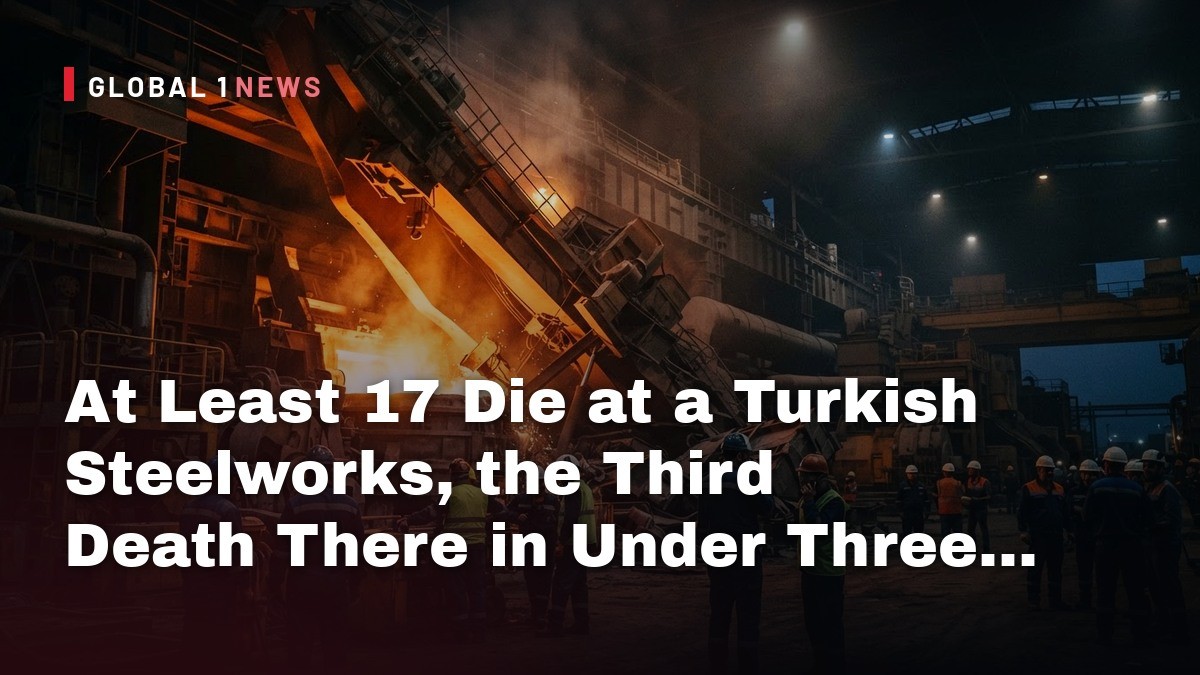
ALIAĞA, Turkey — The sound came first, a boom that people in this industrial district on the Aegean coast mistook for an earthquake. Then the smoke, a column of it climbing over the steelworks. By the time rescue teams reached the wreckage on Monday afternoon, at least 17 workers were dead, and it was the third time in under three weeks that someone had been killed on that site.
At Least 17 Die at a Turkish Steelworks, the Third Death There in Under Three Weeks
Aliağa, Turkey — At least 17 workers were killed and a dozen or more injured when an explosion tore through the steelmaking hall of the HABAŞ plant on Monday, according to Turkey's health ministry. Officials said the blast came at 11:46 local time, during planned maintenance work on one of the plant's electric arc furnaces, and the death toll rose through the afternoon as rescue teams worked through the rubble.
What Happened at 11:46
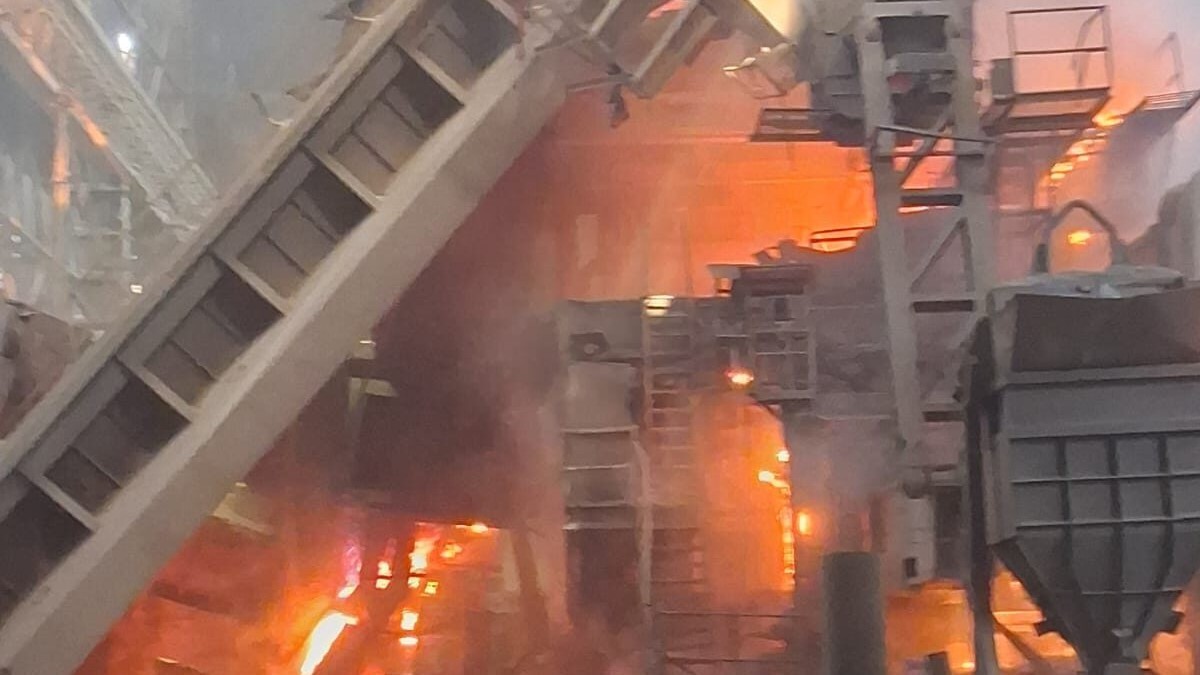
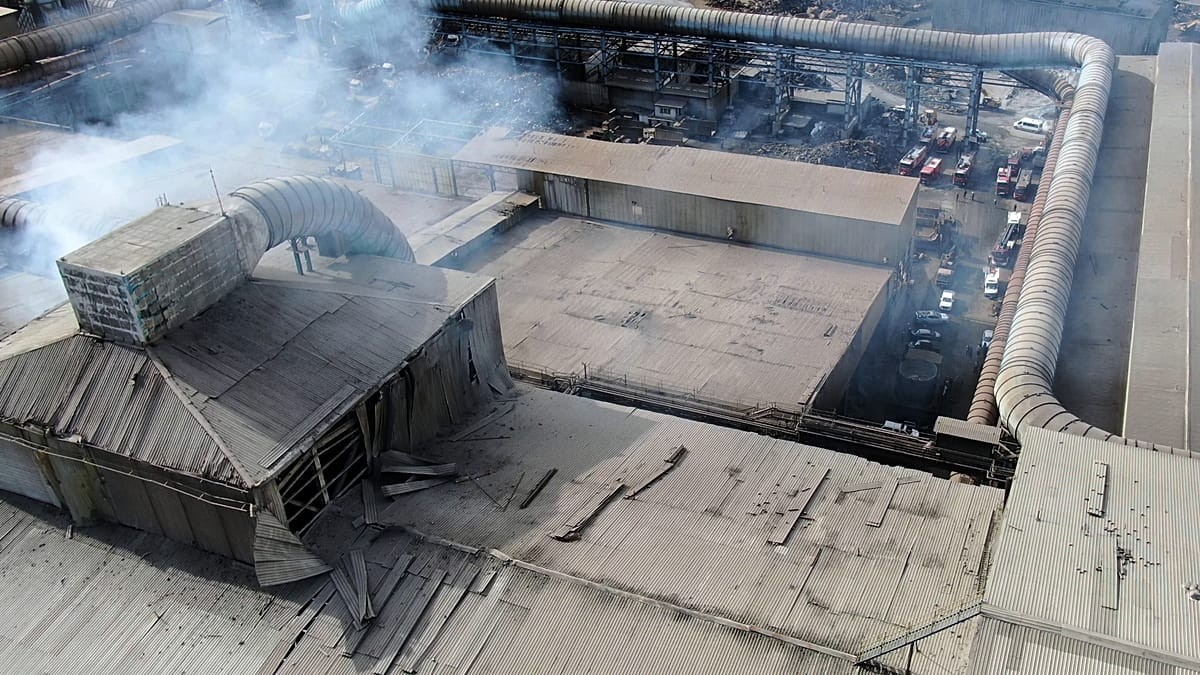
The blast struck the HABAŞ Demir Çelik facility on the Yeni Foça road in Bozköy, in the Aliağa district of İzmir province. Footage from the scene showed a large fire inside the plant and a towering column of black smoke above the industrial complex, with emergency vehicles surrounding the site and ambulances ferrying casualties to hospitals across the province.
Witnesses described a force that felt geological rather than industrial. "The ground shook," Nuri Ali Ülker told the state-run Anadolu agency. Another witness, Deniz Ülker, said the explosion "felt like the earth's crust was shifting beneath us. I thought it was an earthquake."
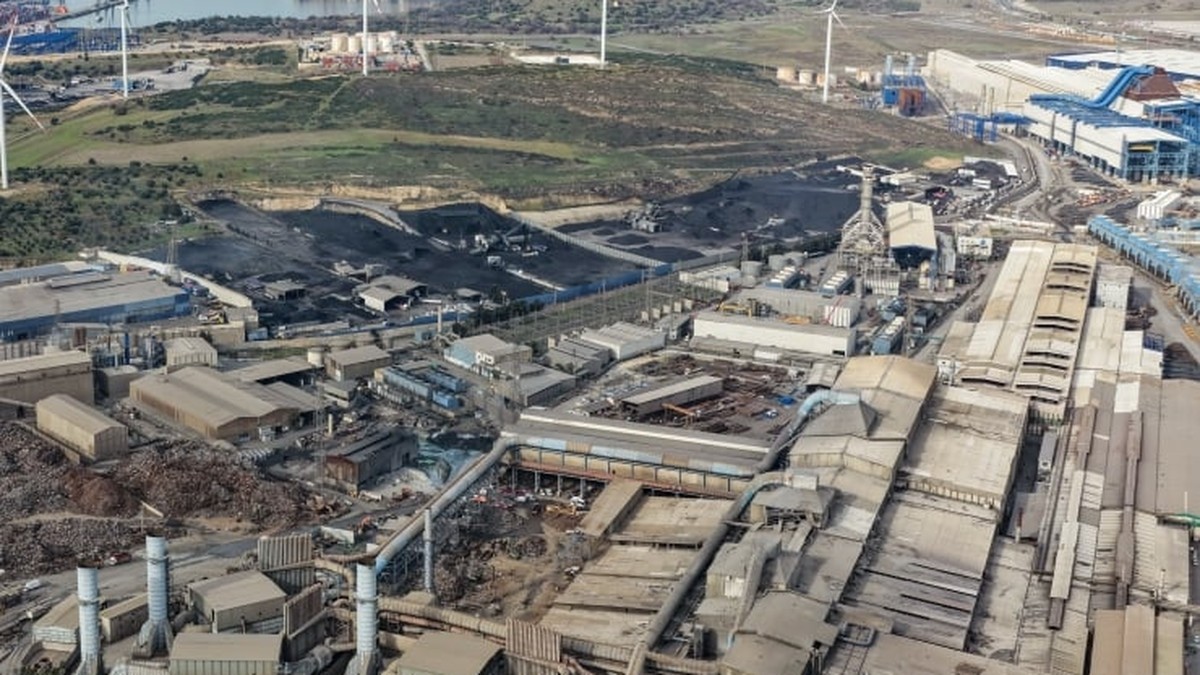
Aliağa is one of Turkey's principal heavy-industry clusters, a major port district that is also one of the country's main shipbreaking hubs, where end-of-life vessels are cut apart on the shoreline. The HABAŞ works sits inside the Aliağa iron and steel industrial zone.
A Crane, a Boiler, and a Gas Line
The sequence that produced the explosion has been described by the provincial governor and, in outline, by the company, though the precise mechanics remain under investigation. İzmir governor Süleyman Elban said the plant was carrying out a boiler replacement when an overhead crane collapsed, sending material crashing down into the electric arc furnace below. The falling debris struck a natural gas line, and the steelmaking hall exploded.
The company said in a statement that the accident occurred during scheduled maintenance work on one of the plant's electric arc furnaces. Production had been halted for that maintenance, a detail that limited the number of people in the most dangerous part of the plant but did not empty it.
One worker gave AFP a more granular account, saying a snapped crane cable had sent roughly 120 tonnes of molten steel onto the furnace, triggering a violent reaction. That figure has not been confirmed by investigators. Elban said eight of the first ten workers recovered died from being struck or crushed by the falling material, while two died in hospital.
The Toll Kept Changing
The casualty count moved in stages through Monday, and the final figure is still not settled. Elban announced ten dead and 15 injured in the early afternoon, four of them described as seriously hurt. President Recep Tayyip Erdoğan, speaking after a cabinet meeting, put the toll at 16. Health Minister Kemal Memişoğlu then announced that one of the critically injured had died, taking it to 17.
The number of wounded is reported differently. The BBC put it at 12. Erdoğan's cabinet remarks were carried as 13 injured by Deutsche Welle and as 15 by the labour news outlet Sendika. İzmir mayor Cemil Tugay said the initial fire had been extinguished, but that the exact number of dead and injured would become clear only after the debris was cleared.
Detentions are also reported inconsistently. At least five people have been taken into custody, according to the BBC's Turkish service and the ANKA news agency, while the Kıbrıs Gazetesi newspaper reported six. Elban said some people were believed to still be under the rubble as search and rescue continued into the night.
A Third Fatal Incident in Three Weeks
What separates this accident from the routine catalogue of Turkish industrial casualties is what preceded it. According to the Evrensel newspaper, Monday's blast was the third workplace death at the HABAŞ site in under three weeks.
On 21 October, Hakan Doğan, 55, who worked for the subcontractor Akyaka, died after falling from a ladder eight metres above the ground. On 5 November, Eyüp Eğinli, 20, a subcontracted worker, was killed when a tyre on a piece of heavy machinery that was being inflated exploded. Monday's explosion killed at least 17 more.
The gap between the first of those deaths and the third is 19 days. Both men who died before Monday worked for subcontractors rather than for the plant directly.
Eleven Deaths in Ten Years
Diken reported that 11 workers have died at the HABAŞ site over the past decade, a figure that does not include Monday's dead. The company, formally Habaş Sınai ve Tıbbi Gazlar İstihsal Endüstrisi AŞ, was established in 1987 and produces industrial and medical gases alongside steel. Its website states capacity of 4.5 million tonnes of steel a year.
At that scale the plant is one of the anchors of Turkish heavy industry.
No published finding on any of those deaths was cited in the coverage reviewed for this report. What is established is the count. What is not established is whether any of the earlier incidents produced a prosecution, a fine, or a mandated change in procedure.
Come In Tomorrow, and Do Not Produce Anything
One detail from Monday's aftermath has travelled further on Turkish social media than the casualty figures. According to Diken, HABAŞ management summoned workers from sections outside the affected rolling mill and told them to report as normal the following day.
The instruction, as workers relayed it, was: "Yarın herkes iş yerine gelsin, biriminde hazır bulunsun ancak üretim olmayacak." Everyone should come to work tomorrow, be ready in their unit, but there will be no production.
Read one way, it is an administrative instruction about a plant with a burned-out steelmaking hall and nowhere to put its workforce. Read another, it is the clearest available signal of how the company intends to treat the days after a disaster: attendance first.
The Investigation, and Those Held
The Menemen Chief Public Prosecutor's Office has opened an investigation. Four prosecutors and two senior civil administration inspectors have been assigned, and Justice Minister Akın Gürlek confirmed the deployment of the prosecutors.
At least five people have been detained, and Turkish outlets report that those held are believed to have had administrative and technical responsibility for the work being carried out at the time. No charges have been announced, and no court has made any finding of criminal liability. Under Turkish procedure, detention during an investigation is not a determination of guilt.
The scope of the inquiry, as described by officials, covers whether occupational safety practice, the conduct of the maintenance work, and the condition of the equipment used played a role. It does not, on the statements made so far, extend to how two earlier deaths at the same site were handled.
The Regime of Bosses Has Declared War
The political reaction was immediate and, on the left, furious. Turkey's Workers' Party, known by its Turkish initials TİP, described the explosion as workplace homicide and said it had again laid bare how completely occupational health and safety is disregarded in the country.
"The regime of bosses has declared war on the workers," the party's leader, Erkan Baş, said in a post online. A union leader, Başaran Aksu, went further, saying the deaths called for the resignation of the labour minister.
Erdoğan, for his part, confirmed the deaths after the cabinet meeting, said investigations were under way and that search and rescue operations were continuing. He did not address the earlier fatalities at the same plant, and no minister has announced a nationwide inspection of the sector.
Turkey's Ledger of Workplace Deaths
The HABAŞ explosion lands on a national ledger that independent monitors say is getting worse, not better. The Health and Safety Labour Watch, known as İSİG Meclisi, recorded at least 226 worker deaths in September 2026 alone, and at least 1,736 across the first nine months of the year.
The monthly sequence published by the monitor runs 155 in January, 129 in February, 151 in March, 190 in April, 214 in May, 228 in June, 216 in July, 227 in August and 226 in September. It is the first time since the group began keeping records in 2013 that five consecutive months have each exceeded 200 deaths. At least 66 child workers died in the first nine months of 2026.
İSİG does not use the word accident. The monitor classifies these deaths as "iş cinayeti", workplace homicide, on the argument that every industrial fatality is preventable and that the word accident conceals the decision-making behind it. The BBC, reporting Monday's blast, noted that workplace accidents remain a chronic problem in Turkey.
What Happens Next
The immediate sequence is mechanical. Rescue teams will finish clearing the steelmaking hall, and the toll may rise again. Those detained will be questioned, the four prosecutors will assemble a file, and the two civil inspectors will report.
The larger question is whether Monday changes anything. Three fatal incidents in 19 days at one plant, 11 deaths in a decade at the same site, and a national count above 1,700 in nine months describe a system that is producing fatalities at a steady rate rather than suffering isolated failures. What the record does not show is a mechanism that has ever interrupted that rate.
For the families in Aliağa, that is the shape of the wait. For everyone else, the useful question is the one the investigation will be asked to answer in private: who signed off on the maintenance, who inspected the crane, and whether anyone will still hold that responsibility when the file closes.
By Jessica Ali, Staff Writer
This article was produced with AI-assisted research and editorial support. Sources: BBC News, Euronews, Deutsche Welle, Diken, Sendika.org, Evrensel, Anadolu Agency, AFP, the Health and Safety Labour Watch (İSİG Meclisi), and statements from the İzmir governor's office and Turkey's health and justice ministries. Photographs: Euronews (damaged steelmaking hall); Sendika.org (fire); Anadolu Agency via Diken (aerial). Cover: Global 1 News editorial image. Reporting on the casualty figures reflects accounts that do not fully agree.
What's Your Reaction?
 Like
0
 Dislike
0
 Love
0
 Funny
0
 Wow
0
 Sad
0
 Angry
0

Editor-in-Chief at Global1.News. Atlanta-based journalist who cuts through the BS and tells it like it is. Lead anchor, host, and the voice you hear when the spin stops and the truth starts.












Comments (0)