
Court inspects Quezon City jail over alleged Romualdez irregularities
On Monday, November 9, 2026, the Sandiganbayan’s Third Division stepped inside the Quezon City Jail’s male dormitory in Payatas to check on the detention conditions of former House Speaker Martin Romualdez.
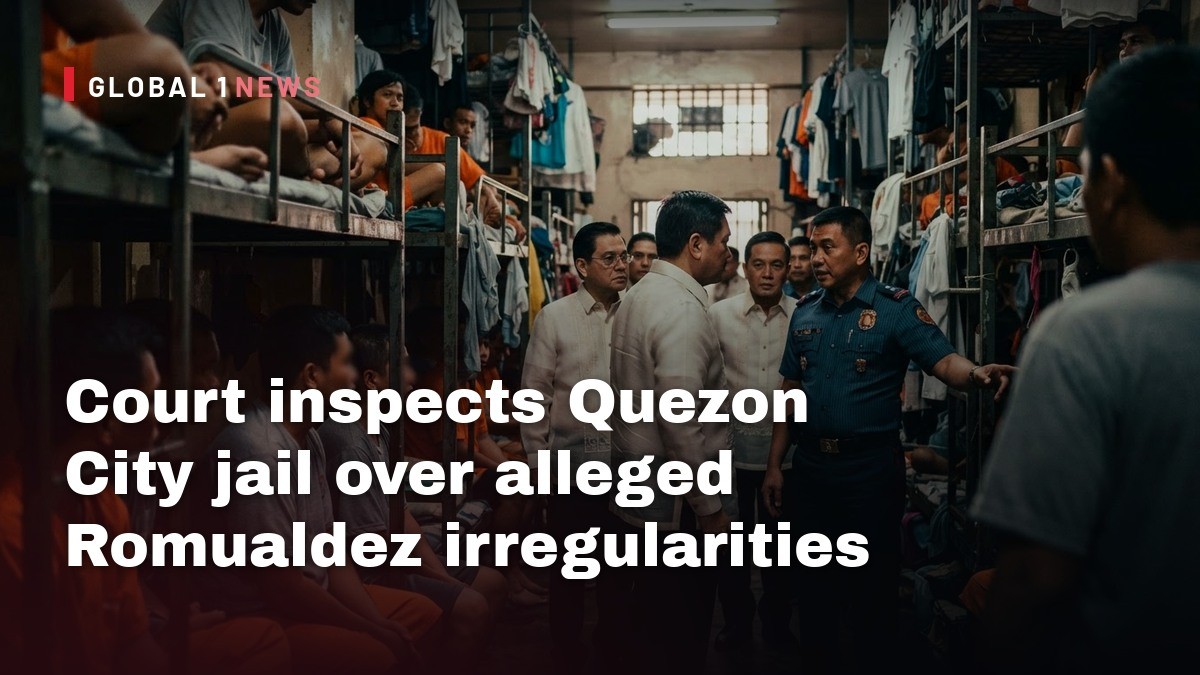
On Monday, November 9, 2026, the Sandiganbayan’s Third Division stepped inside the Quezon City Jail’s male dormitory in Payatas to check on the detention conditions of former House Speaker Martin Romualdez. The visit, led by Associate Justice Karl Miranda, was framed as an “ocular inspection” to verify that the court’s earlier commitment order was being observed. While the anti‑graft court emphasized that the inspection was not a determination of any wrongdoing, the very presence of the justices underscored the lingering public concern over how high‑profile detainees are treated in the Philippine penal system.
Background of the Inspection
The Sandiganbayan’s move came after the Bureau of Jail Management and Penology (BJMP) launched its own probe on November 3, 2026. The trigger was a social‑media post by journalist Ramon Tulfo, who claimed Romualdez had been escorted out of the jail in an ambulance. Although Tulfo later retracted the allegation on November 5, saying he had been given incorrect information, the episode sparked enough doubt to prompt the court’s own fact‑finding mission.
Justice Miranda’s division issued a statement that the inspection aimed to “verify compliance with the Court’s commitment order and determine whether established procedures are being faithfully observed.” The court also ordered the BJMP to produce CCTV footage and other records of Romualdez’s movements, and to have jail officials testify about his detention. This procedural step reflects the Sandiganbayan’s broader mandate to ensure that its orders are respected and that the rule of law is upheld, especially in cases involving former legislators.
The Allegations and Their Retraction
Ramon Tulfo’s claim that Romualdez was leaving the jail in an ambulance generated a wave of speculation on social media and among barangay leaders who wondered whether a former speaker could enjoy special privileges behind bars. The BJMP’s investigation, launched just two days after Tulfo’s post, sought to verify the veracity of the claim. When Tulfo withdrew his statement on November 5, he cited misinformation, but the damage to public perception had already been done.
The retraction did not erase the lingering questions about Romualdez’s access to external assistance. Even without the ambulance story, concerns persisted about the presence of a personal aide, Arvin de Guzman, who was reported to have assisted Romualdez with daily and medical needs during visiting hours. The warden, Maria Lourdes Pacion, later clarified that de Guzman’s role was limited to visiting hours and apologized for any earlier impression that the aide stayed with Romualdez around the clock. This clarification, however, left many wondering how strictly visitation policies are applied to high‑profile inmates.
Romualdez’s Legal Situation
Martin Romualdez remains detained at the Quezon City Jail while facing a plunder case valued at billions of pesos. The case alleges that he received kickbacks from flood‑control, infrastructure and other government projects, a charge that has kept him in the public eye since his arrest. The magnitude of the alleged financial loss underscores why the Sandiganbayan is keen to ensure that the detention process is transparent and free from any appearance of preferential treatment.
For ordinary Filipinos, the case is not just a matter of high‑level politics; it touches on everyday concerns about corruption in public works that affect barangay roads, schools, and health centers. The public’s demand for accountability is amplified when the accused holds a former leadership position, as the case serves as a litmus test for the nation’s commitment to justice and the rule of law.
Procedural Safeguards in the Jail
The BJMP’s role in managing the Quezon City Jail includes ensuring that detainees receive basic medical care, food, and access to legal counsel. In Romualdez’s case, the presence of a personal aide raised questions about whether those safeguards were being stretched. While the warden confirmed that de Guzman was allowed to assist during visiting hours, the exact scope of that assistance—whether it included medical facilitation, paperwork, or personal comfort—remains unclear.
Justice Miranda’s division asked the BJMP to submit CCTV footage and movement records, a step that could reveal whether any irregularities occurred, such as unauthorized exits or extended stays for the aide. The court’s insistence on documentary evidence reflects a broader push for transparency in the penal system, especially when the detainee is a former high‑ranking official. By demanding concrete proof, the Sandiganbayan signals that procedural compliance will be scrutinized, not merely assumed.
Impact on the Community and Public Perception
For many Filipinos, stories of privileged treatment for politicians behind bars fuel cynicism about the justice system. In a country where the concept of bayanihan—mutual aid and solidarity—remains a cultural cornerstone, any perception that a former speaker receives special favors can erode trust in institutions. Residents of Payatas, a densely populated barangay near the jail, have expressed both curiosity and concern about the inspection, wondering whether the presence of a former speaker changes the daily rhythm of the dormitory.
Local civic groups have called for the Sandiganbayan’s findings to be made public, arguing that transparency will help restore confidence in the Department of Justice and the BJMP. The community’s interest is not merely voyeuristic; it reflects a broader desire to see that the law applies equally, whether one is a jeepney driver or a former speaker. The outcome of the inspection could set a precedent for how future high‑profile detainees are treated, influencing public attitudes toward the justice system for years to come.
Legal and Institutional Implications
The Sandiganbayan’s inspection underscores the delicate balance between respecting the rights of detainees and ensuring that no one is above the law. By ordering jail officials to testify and to produce CCTV footage, the court is reinforcing the principle that procedural compliance is a cornerstone of due process. This move also signals to the Office of the Ombudsman and other oversight bodies that the anti‑graft court expects thorough documentation and accountability from the BJMP.
Should the inspection uncover any deviation from established protocols—such as unauthorized movement of the detainee or extended access for personal aides—the case could prompt a broader review of detention policies across the nation’s jails. The Department of Justice may be called upon to issue clearer guidelines on visitation and aide access for high‑profile inmates, ensuring that the same standards apply to all, regardless of political stature.
Looking Ahead: What the Inspection Means for Justice
While the Sandiganbayan has made clear that the inspection is not a judgment on Romualdez’s guilt or innocence, the very act of scrutinizing the jail’s procedures sends a powerful message. It reaffirms the court’s commitment to uphold the law and to ensure that its orders are respected, even in the face of public speculation and media sensationalism.
For the Filipino public, the inspection offers a moment to reflect on the broader fight against corruption and the importance of transparent institutions. Whether the findings will lead to concrete reforms in jail management or simply reinforce existing protocols remains to be seen. What is certain, however, is that the eyes of the nation— from the bustling streets of Manila to the quiet corners of provincial barangays—are now watching how the justice system handles one of its most prominent cases. The outcome will likely influence how future cases involving former officials are managed, shaping the narrative of accountability that underpins our democracy.
This article was produced with AI-assisted research and editorial support. Reporting is based on the source material cited below. Sources: Philstar.com; Global1.News (10 November 2026).
By Bella Reyes, Staff Writer
What's Your Reaction?
 Like
0
 Dislike
0
 Love
0
 Funny
0
 Wow
0
 Sad
0
 Angry
0

Philippines/Southeast Asia Correspondent at Global1.News. Manila-based journalist covering Philippine politics, environment, maritime security, and social issues. Passionate about marine conservation and the communities protecting the Philippines' natural heritage.















Comments (0)