
‘Ban the ugly, boring rolling maul’
When Paul Lewis of the New Zealand Herald took a swipe at the rolling maul, he didn’t just target a single tactic – he rattled a cornerstone of South African rugby identity.
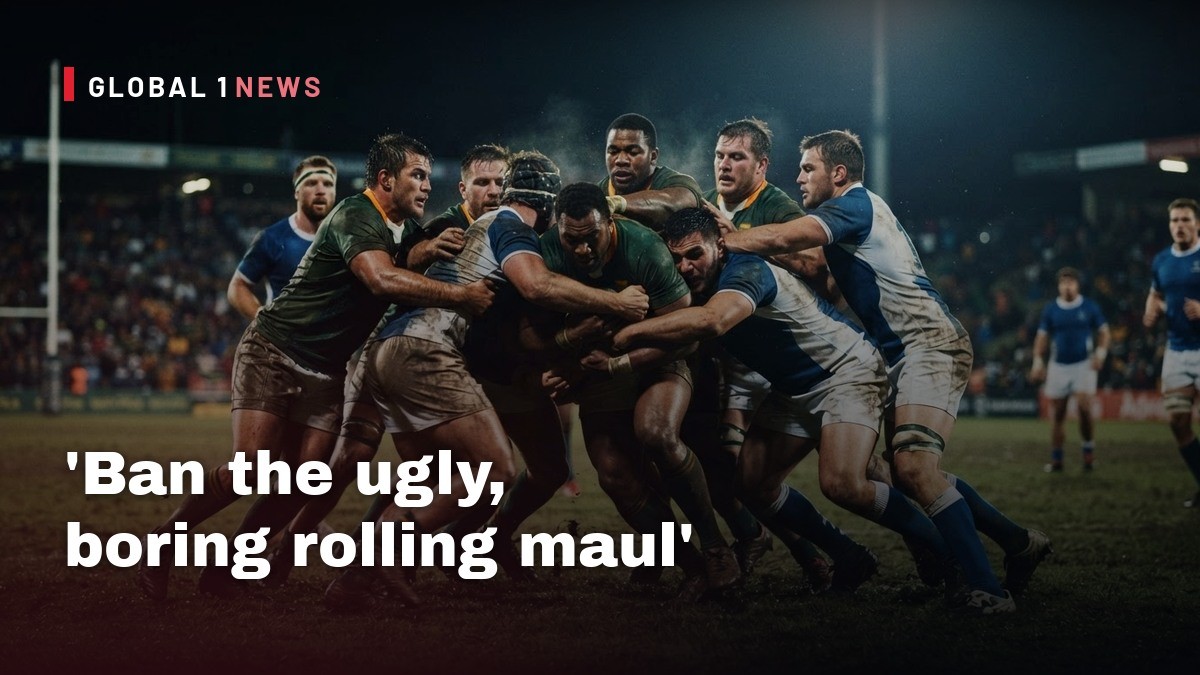
When Paul Lewis of the New Zealand Herald took a swipe at the rolling maul, he didn’t just target a single tactic – he rattled a cornerstone of South African rugby identity. Writing after the All Blacks’ 43‑21 win over Scotland at Murrayfield, Lewis argued that the maul has become a “total bore” for anyone not a tight‑forward, and even called for World Rugby to outlaw it. The column sparked a familiar debate in South Africa, where the Springboks have built a reputation for turning the maul into a weapon of choice. As the Springboks gear up for the upcoming Rugby World Cup qualifiers, the conversation about whether the maul is a glorious tradition or a predictable spectacle is louder than ever.
The spark that lit the controversy
Lewis’s column was triggered by two high‑profile matches that, on paper, looked like rugby fireworks. At Murrayfield, the All Blacks and Scotland combined for ten tries and 64 points, yet Lewis described the game as “dull”. He pinpointed the culprit: a surge in penalties kicked into touch, followed by line‑outs that birthed rolling mauls. Five of the ten tries at Murrayfield emerged from that very platform, including two of Scotland’s three scores.
The Springboks were not spared. In Turin, South Africa’s 66‑7 demolition of Italy featured nine tries, five of which came from rolling mauls. Lewis used the Italian match to illustrate his point that the Springboks “could have beaten Italy by playing their expansive game”, yet chose the easier, formulaic route of maul‑derived scores. The column’s blunt language – “Pretty, it ain’t” – struck a nerve with fans who see the maul as a hallmark of South African forward power.
Why the maul matters to South African rugby
For many SA supporters, the rolling maul is more than a set‑piece; it’s a cultural expression of the country’s physical, gritty style. From the days of Joost van der Westhuizen’s dominance to the modern era of Siya Kolisi’s leadership, the Springboks have used the maul to dominate opponents in the tight exchanges that define Test rugby. The maul’s success in the Italy game reinforced the narrative that South Africa can impose its forward strength even when the opposition is outmatched.
Beyond the scoreboard, the maul carries symbolic weight in the transformation agenda. It showcases the impact of grassroots development programmes that have produced powerful forwards from townships and rural areas. When a Springbok forward powers a maul to the try line, it’s a visual reminder of how the sport can lift communities and unite a nation divided by history.
Lewis’s proposed law tweaks
Lewis didn’t just call for a ban; he offered a menu of possible rule changes if World Rugby balked at outlawing the maul outright. His suggestions included handing the line‑out throw to the defending side after a penalty kicked into touch inside the 22‑meter line. This would flip the field‑position advantage and force teams to think twice before opting for a penalty kick.
He also floated the idea of replacing penalties for minor defensive offences with free kicks, imposing a 30‑second limit on rolling mauls, and capping the number of mauls inside the opposition’s 22 at two or three per match. Each proposal aims to curb the predictability Lewis laments while preserving the maul’s existence for teams that rely on it, such as the Springboks.
South African reaction to the call for change
The Springboks’ coaching staff and former players have responded with a mixture of defensiveness and openness. While the source material does not contain direct quotes, the sentiment in South African circles is clear: the maul is a strategic asset that cannot be discarded without reshaping the team’s identity. Critics argue that any restriction would force a shift toward a more expansive, back‑line‑oriented game, a style that has proven effective for teams like England when they faced a “toothless” Australia.
Nonetheless, there is a growing acknowledgement that the spectacle of rugby must evolve to keep casual fans engaged. The debate mirrors earlier discussions about the pace of play and the balance between forward dominance and open, running rugby. South African pundits are watching World Rugby’s response closely, aware that any amendment could ripple through domestic competitions, from the Currie Cup to the United Rugby Championship franchise.
Implications for the upcoming World Cup qualifiers
As the Springboks prepare for the next round of World Cup qualifiers, the potential law changes could influence squad selection and game plans. If a 30‑second limit on mauls were introduced, coaches might lean more heavily on mobile forwards who can transition quickly from set‑piece to open play. Conversely, a restriction on the number of mauls inside the opposition’s 22 could push teams to develop alternative scoring avenues, such as structured back‑line moves.
For South African fans, the prospect of a less maul‑centric Springbok side raises both excitement and anxiety. The excitement stems from the promise of a more fluid, attacking brand of rugby that could attract new supporters. The anxiety lies in the fear that abandoning a tried‑and‑tested weapon could erode the team’s competitive edge, especially against nations that already excel in expansive play.
Global perspective: how other nations view the maul
Lewis’s column highlighted England’s use of an expansive game against a “toothless” Australia, suggesting that a shift away from mauls can be successful when the opposition lacks forward firepower. This observation resonates with teams that have embraced a faster, back‑line‑focused style, such as New Zealand’s All Blacks, who often blend a powerful maul with dynamic running rugby.
Other rugby powers, including France and Argentina, have also experimented with limiting maul usage to keep matches open and entertaining. The global conversation about the maul reflects a broader tension between tradition and innovation, a balance that World Rugby must navigate to preserve the sport’s heritage while appealing to a new generation of viewers.
What the future may hold for the rolling maul
Whether World Rugby decides to impose Lewis’s suggested limits or retain the status quo, the rolling maul will remain a focal point of strategic debate. For South Africa, the maul is intertwined with national pride, player development pathways, and the narrative of a physically dominant Springbok identity. Any change will require a careful recalibration of tactics, coaching philosophy, and fan expectations.
In the meantime, the Springboks will continue to showcase the maul’s potency on the world stage, as they did in Turin. As the sport evolves, the dialogue sparked by Paul Lewis’s column will keep South African fans, coaches, and administrators engaged in a passionate discussion about the soul of rugby – a conversation that, like the maul itself, will keep rolling forward.
This article was produced with AI-assisted research and editorial support. Reporting is based on the source material cited below. Sources: SARugbyMag; sarugbymag.co.za; Global1.News (10 November 2026).
By Dante Williams, Staff Writer
What's Your Reaction?
 Like
0
 Dislike
0
 Love
0
 Funny
0
 Wow
0
 Sad
0
 Angry
0

Breaking News and Investigations Correspondent at Global1.News. Based in London, covering global breaking news, security, and investigative stories. Known for digging deeper and connecting the dots across continents.















Comments (0)