
Chinese men risk lives to support girl stuck between window bars outside 12th-floor home
In the early hours of 17 October, a residential community in Zhangping, Fujian province became the stage for a dramatic rescue that highlighted both the vulnerabilities of high‑rise living and the spontaneous courage of ordinary citizens.
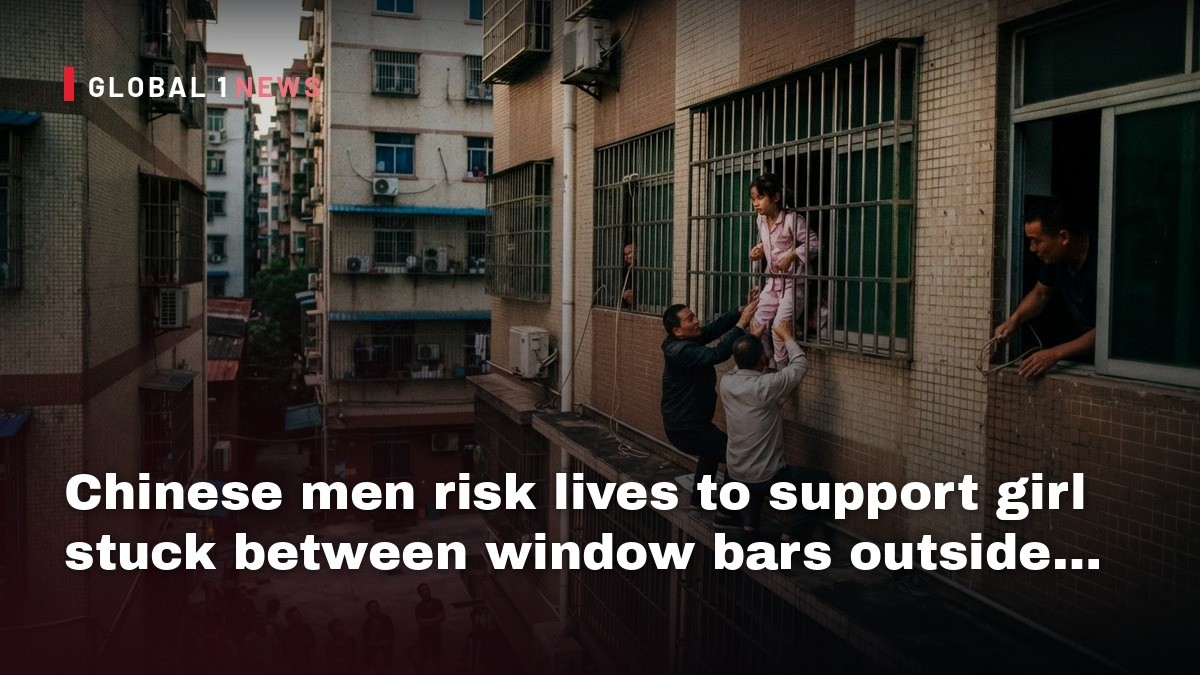
In the early hours of 17 October, a residential community in Zhangping, Fujian province became the stage for a dramatic rescue that highlighted both the vulnerabilities of high‑rise living and the spontaneous courage of ordinary citizens. A three‑year‑old girl found herself trapped on the exterior of her 12th‑floor flat, her neck caught in the wire mesh of an open window. When a resident posted a photo of the perilous scene to the community’s online chat group, a chain of events unfolded that saw six men—some of whom admitted a fear of heights—risk their lives to prevent a tragedy. Local authorities subsequently honoured them as Good Samaritans, underscoring the social value placed on collective responsibility in contemporary Chinese neighborhoods.
The incident as reported
According to the state news agency Xinhua, the emergency began when a resident captured a picture of the child hanging outside her window and shared it in the community’s digital chat platform, urging security personnel to intervene. The image showed the girl, estimated to be about three years old, clinging to the window’s wire mesh while facing inward, a posture that left her vulnerable to a sudden fall. The report emphasizes that the child’s neck was trapped between the mesh, a detail that heightened the urgency of the situation.
The narrative describes the moment the men arrived: despite some of them being “terrified of heights,” the sight of the child dangling from the high‑rise window erased their fear. The description suggests a rapid shift from personal anxiety to decisive action, a transformation that is central to the story’s emotional impact.
Community dynamics and digital mobilization
The rescue was triggered by a digital alert within the residential community’s online chat group. This platform, increasingly common in Chinese apartment complexes, serves as a rapid communication channel for residents to share information, request assistance, and coordinate responses to emergencies. In this case, the resident’s decision to share a photograph provided a visual cue that galvanized immediate attention. The use of a photo rather than a text description amplified the sense of urgency, allowing the security guards and other responders to assess the severity of the situation at a glance.
The incident illustrates how digital tools can compress the timeline between hazard identification and response. While the report does not detail the exact speed of the reaction, the fact that the men arrived and acted promptly suggests that the community’s online network functioned effectively as an early‑warning system. This aligns with broader trends in Chinese urban environments where neighborhood chat groups have become de‑facto extensions of local governance, facilitating citizen participation in safety and welfare matters.
Physical challenges of high‑rise rescue
Rescuing a child from the exterior of a 12th‑floor window presents a set of technical and physical challenges. The description that the girl’s neck was caught in the wire mesh indicates that any attempt to free her required careful manipulation to avoid further injury. Moreover, the fact that the child was gripping the wires while facing inward meant that rescuers could not simply pull her upward; they needed to stabilize her while working to release the entrapment.
The men’s fear of heights, as noted in the source, underscores the psychological barrier that high‑rise rescues impose. Overcoming such fear in a high‑stakes scenario reflects a rapid shift in risk perception, where the immediate danger to a vulnerable child outweighs personal discomfort. The report’s emphasis on “all fear vanished” suggests a collective prioritization of the child’s safety over individual apprehensions, a dynamic that is often observed in emergency responses where adrenaline and moral imperatives dominate.
Recognition and the cultural significance of the Good Samaritan label
Following the successful rescue, local authorities designated the six rescuers as Good Samaritans. In Chinese civic culture, this title carries both moral and practical implications. It publicly acknowledges the individuals’ bravery, reinforcing societal norms that value altruism and communal responsibility. The designation also serves a communicative purpose: by highlighting exemplary behavior, authorities aim to encourage similar conduct in future emergencies.
The public recognition aligns with a broader governmental emphasis on “community cohesion” and “civilized behavior.” By celebrating ordinary citizens who act decisively in crises, officials reinforce the narrative that public safety is a shared duty, not solely the remit of professional emergency services. This approach can strengthen trust between residents and local governance structures, fostering a sense of collective efficacy.
Implications for residential safety standards
The incident raises questions about the safety features of high‑rise residential buildings, particularly regarding window design. The fact that a three‑year‑old could access the exterior of a 12th‑floor window suggests that the window’s opening mechanism allowed sufficient clearance for a child’s head or neck to become trapped. While the source does not detail the specific type of window, the presence of a wire mesh indicates an attempt at safety mitigation, yet it proved insufficient to prevent the accident.
In the wake of such events, local housing authorities often review building codes and safety guidelines. The incident may prompt a reassessment of window mesh strength, the spacing of wires, and the need for additional safeguards such as child‑proof locks or secondary barriers. Although the article does not mention any subsequent policy changes, the public attention generated by the rescue could catalyze discussions among municipal officials, developers, and resident associations about enhancing preventive measures.
Social media, public perception, and the narrative of heroism
The rapid dissemination of the rescue story through official channels like Xinhua, combined with the initial community chat post, illustrates a layered media environment. The official report frames the event as a testament to citizen bravery, while the original digital alert underscores grassroots communication. This duality shapes public perception, positioning the rescuers as everyday heroes and reinforcing a narrative that ordinary individuals can make decisive differences in critical moments.
Such narratives can have a reinforcing effect on community solidarity. When residents see that their peers are willing to confront danger, it may encourage a culture of vigilance and mutual assistance. Conversely, the story also serves as a cautionary reminder of the latent hazards present in high‑rise living, prompting families to adopt safer practices at home.
Broader context: urbanization and emergency preparedness
China’s rapid urbanization over recent decades has led to a proliferation of high‑rise residential complexes, especially in provinces like Fujian. As more families inhabit vertical living spaces, the frequency of accidents involving windows, balconies, and building exteriors has risen. The Zhangping incident exemplifies the intersection of urban density, architectural design, and community response.
In this context, the role of community‑based emergency preparedness becomes increasingly vital. The effectiveness of the rescue hinged on a resident’s quick observation, the use of a digital platform to alert others, and the willingness of nearby individuals to intervene despite personal fears. Strengthening such community networks—through regular safety drills, clearer guidelines on window usage, and enhanced communication tools—could reduce reliance on external emergency services and improve outcomes in similar scenarios.
This article was produced with AI-assisted research and editorial support. Reporting is based on the source material cited below. Sources: South China Morning Post; scmp.com; Global1.News (10 November 2026).
By Kenji Tanaka, Staff Writer
What's Your Reaction?
 Like
0
 Dislike
0
 Love
0
 Funny
0
 Wow
0
 Sad
0
 Angry
0

Japan Correspondent at Global1.News. Tokyo-based voice covering Japanese politics, technology, economy, and culture. Tracks the intersection of tradition and innovation in one of the world's most dynamic societies.













Comments (0)