
JD Vance’s Israel Tweet Sparks Political Turmoil at Home and Abroad
In a JNS TV report that has already amassed more than 100 million views, the channel’s correspondents dissect the ripple effects of a single tweet by U.S.
In a JNS TV report that has already amassed more than 100 million views, the channel’s correspondents dissect the ripple effects of a single tweet by U.S. Senator JD Vance. The message, which questioned the wisdom of a war with Iran, has intersected with a series of domestic Israeli developments – from Prime Minister Benjamin Netanyahu’s fraught coalition talks to an investigation of an Israeli journalist for alleged foreign‑agent contacts. The report also highlights President Donald Trump’s recent declaration that U.S. military aid to Israel will end, a move that could reshape the strategic calculus of the region. Below we unpack the multiple layers of this story, drawing on the on‑the‑ground analysis provided by JNS CEO Alex Traiman and correspondent Josh Hasten.
Vance’s Tweet and the American Political Landscape
The JNS segment begins by situating Vance’s tweet within the broader context of the 2026 U.S. midterm elections. According to the report, the former Senate Republican leader framed the war with Iran as a key factor behind recent Republican losses, suggesting that the conflict has become a political liability for the party. This framing aligns with the channel’s observation that President Trump’s crushing defeat in the midterms has thrown “America’s relationship with Israel into uncertainty.” The implication is that a shift in the U.S. political balance – notably a Democratic takeover of Congress – could alter the tone of American support for Israel.
Traiman notes that Vance’s criticism is not merely a personal opinion but part of a larger debate among Republicans about the cost of confronting Tehran. The report points out that Vance blames the Iran war and strained U.S.–Israel relations for the party’s electoral setbacks, a narrative that could influence how Republican lawmakers approach future aid packages and diplomatic initiatives concerning Israel. While the video does not provide exact polling numbers, it emphasizes that the tweet has already “backfired,” suggesting that it may have alienated a segment of the pro‑Israel constituency within the GOP.
Beyond the immediate political fallout, the report raises the question of whether former President Trump will abandon his earlier pledges for renewed military action against Tehran. The channel’s correspondents argue that Trump’s weakened political standing, combined with Vance’s public criticism, could diminish the likelihood of a new U.S. offensive posture toward Iran. This potential shift would have direct implications for Israel, which has long counted on American backing for its deterrence strategy against Tehran’s nuclear ambitions.
Trump’s Announcement on Military Aid
The JNS video highlights a dramatic development: President Trump’s announcement that American military aid to Israel will end. The report frames this decision as a “fundamental reshaping” of the U.S.–Israel alliance, suggesting that the cessation of aid could grant Israel greater independence over its defense decisions. While the segment does not specify the exact amount of aid being withdrawn, the emphasis is on the symbolic weight of the move, which signals a departure from the long‑standing policy of robust U.S. military assistance.
According to the analysis, the end of aid could affect several areas of cooperation, including joint missile‑defense projects and intelligence sharing. The correspondents caution that Israel may need to accelerate its own indigenous defense capabilities to compensate for any shortfall. This scenario dovetails with the broader theme of Israel confronting regional threats without reliable American backing, a point that the report underscores throughout its coverage.
Traiman also points out that the aid decision comes at a time when the Israeli government is already under pressure from multiple fronts – domestic political battles, investigations into alleged foreign interference, and the looming threat of Iranian aggression. The timing of the aid termination thus adds another layer of uncertainty to Israel’s security calculations, potentially prompting a re‑evaluation of its strategic posture toward Tehran and other adversaries.
Netanyahu’s Coalition Struggles
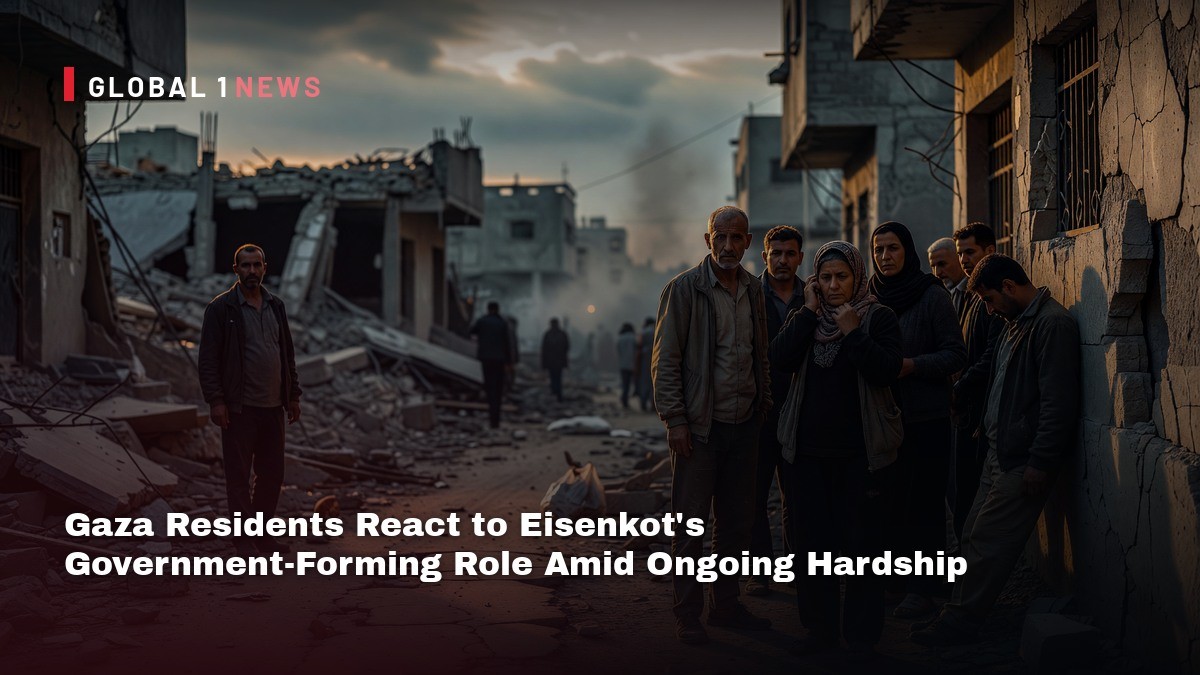
Back in Jerusalem, the JNS report turns to the domestic political arena, where Prime Minister Benjamin Netanyahu is wrestling with a fragile coalition formation process. The video notes that Gadi Eisenkot, a senior political figure, has secured 67 recommendations to form a government. While the number of recommendations indicates a degree of parliamentary support, the report emphasizes that Netanyahu’s position remains precarious.
Netanyahu faces a series of legal and political challenges that could undermine his ability to maintain power. The segment lists allegations of election fraud, suspected foreign interference, and an opposition‑driven effort to replace the Knesset speaker. These moves, according to the correspondents, could potentially bar Netanyahu from running in future elections. The report does not provide specific details about the nature of the alleged fraud, but it underscores that the accusations are part of a broader campaign to weaken the prime minister’s grip on power.
The coalition negotiations are further complicated by internal party dynamics and the need to appease both right‑wing and centrist factions. The JNS analysts suggest that Netanyahu’s ability to secure a stable governing majority will be critical in determining Israel’s response to external threats, especially if American aid dwindles and the Iranian question intensifies.
Investigation of an Israeli Journalist
One of the more surprising elements of the JNS report is the mention of an ongoing investigation into an Israeli journalist accused of foreign‑agent contacts. The segment does not name the journalist but notes that the probe is part of a broader crackdown on alleged foreign interference in Israeli politics. This investigation reflects heightened sensitivity within Israel’s security establishment to external influence operations, particularly those that could affect the country’s strategic decision‑making.
The correspondents link the journalist’s case to the broader narrative of suspected foreign interference that Netanyahu is confronting. While the report does not specify which foreign power is alleged to have been involved, the context of the investigation suggests that Israeli authorities are vigilant about any attempts to shape public discourse or policy through covert channels. This vigilance is heightened by the concurrent concerns about Iran’s regional activities and the potential for other actors to exploit Israel’s internal divisions.
By highlighting the journalist investigation, the JNS piece underscores how domestic political battles intersect with security concerns. The scrutiny of media figures reflects a broader trend of governments tightening controls over information flows in times of heightened threat perception, a pattern that is evident across the region.
UNIFIL’s Planned Withdrawal from Lebanon
The JNS video also touches on a development outside Israel’s borders: the United Nations Interim Force in Lebanon (UNIFIL) is planning a withdrawal from the country. While the report does not elaborate on the timeline or the exact scale of the pull‑out, it signals a potential shift in the security architecture along Israel’s northern frontier.
A UNIFIL withdrawal could have several implications for Israel. First, it may alter the balance of forces along the Israel‑Lebanon border, potentially creating a vacuum that could be exploited by Hezbollah or other militant groups. Second, the move could affect Israel’s ability to monitor cross‑border activity, a key component of its northern security strategy. The JNS correspondents suggest that the planned withdrawal adds another layer of uncertainty to Israel’s regional security environment, especially as it navigates the challenges posed by Iran and internal political turbulence.
The report does not indicate any direct coordination between Israel and UNIFIL regarding the withdrawal, but the mention of this development within the broader analysis signals that Israeli officials are likely monitoring the situation closely. Any changes in the UNIFIL mandate could prompt Israel to adjust its own border‑security posture, possibly increasing reliance on its own surveillance and defensive capabilities.
Strategic Outlook: Israel Without Reliable U.S. Support
Bringing together the various strands of the JNS report, the final segment offers a strategic assessment of Israel’s position should American backing wane. The correspondents argue that the convergence of a Democratic takeover of Congress, Trump’s cessation of military aid, and Vance’s public criticism of the Iran war could leave Israel “confronting its enemies without American support.” This assessment reflects a broader concern that Israel may need to recalibrate its defense and diplomatic strategies in the near term.
In practical terms, the report suggests that Israel may accelerate the development of indigenous defense systems, such as missile‑defense technologies, to offset any shortfall in U.S. assistance. Additionally, Israel could seek to deepen security cooperation with other regional partners, including Egypt, Jordan, and potentially even Gulf states that share concerns about Iranian expansionism. The JNS analysts note that Israel’s diplomatic outreach will be crucial in building a coalition of support that can compensate for a reduced American role.
The political turbulence at home, highlighted by Netanyahu’s coalition challenges and the journalist investigation, adds a domestic dimension to the strategic calculus. A stable government will be essential for making decisive policy choices, especially if Israel must navigate a more autonomous security posture. The report concludes that the interplay of internal politics, regional threats, and shifting U.S. policy creates a “complex and uncertain” environment for Israel in 2026, one that will require careful balancing of military readiness, diplomatic engagement, and domestic consensus.
By Hannah Berg, Staff Writer
This article was produced with AI-assisted research and editorial support. Reporting is based on the source material cited below. Sources: JNS TV video report (08 November 2026); JNS TV; Global1.News
What's Your Reaction?
 Like
0
 Dislike
0
 Love
0
 Funny
0
 Wow
0
 Sad
0
 Angry
0

Israel Correspondent at Global1.News. Based in Tel Aviv, covering Israeli politics, security, technology, and society. Provides balanced, deeply-sourced reporting on one of the most closely-watched regions in the world.










Comments (0)