
Nine Zimbabweans caught allegedly trying to leave South Africa to fight in Ukraine
South African police arrested nine young Zimbabweans this weekend on suspicion that they were preparing to travel abroad to join the armed conflict in Ukraine.
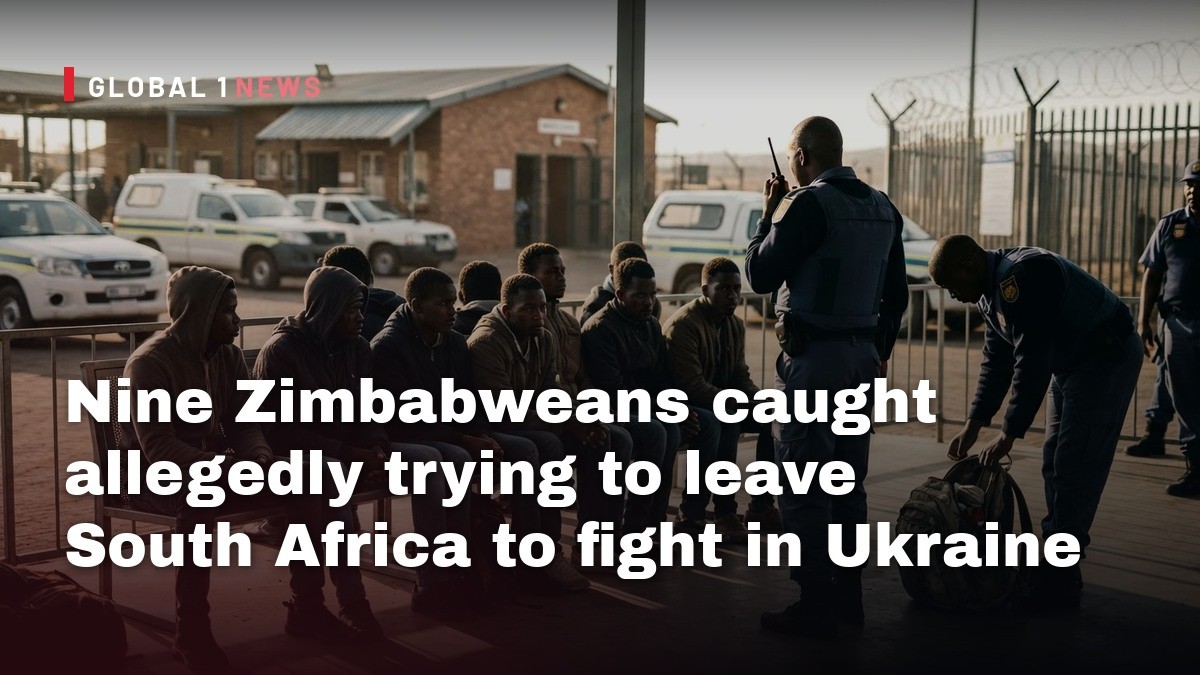
South African police arrested nine young Zimbabweans this weekend on suspicion that they were preparing to travel abroad to join the armed conflict in Ukraine. The arrests, carried out in Johannesburg and at the country’s largest airport, OR Tambo, underscore a growing concern across the continent: the recruitment of African nationals by foreign actors to fight in wars far from home. While the exact destination of the group remains unclear, the episode adds to a mounting list of cases where African citizens have been lured, sometimes deceitfully, into the battlefields of Eastern Europe.
How the arrests unfolded
According to a police statement, the multidisciplinary team—including Interpol officers—detained the nine individuals, aged between 20 and 26, as they were “preparing to board flights out of the country.” Five were taken at OR Tambo airport, while the remaining four were seized at a hotel in Bruma, an eastern suburb of Johannesburg. The coordinated operation highlights the seriousness with which South African authorities are treating alleged mercenary activity under the Regulation of Foreign Military Assistance Act, a law that criminalises participation in foreign conflicts without state permission.
All nine suspects were promptly brought before a court, where they faced charges for contravening the act. The involvement of Interpol and other international law‑enforcement bodies, as noted by the police, suggests that the suspects may also be under investigation for breaching statutes in their home country of Zimbabwe. However, officials have not disclosed whether the group intended to fight for Russia or for Ukraine, nor have they identified any recruitment networks facilitating the travel.
The broader African footprint in the Ukraine war
Zimbabwe’s recent tragedy is part of a larger pattern. Ukrainian intelligence earlier this year estimated that more than 1,700 individuals from 36 African nations had been recruited to fight for Russia. Kenya, for instance, reported that 252 of its citizens had been illegally conscripted, prompting a diplomatic visit by Foreign Minister Musalia Mudavadi to Moscow in March. Mudavadi claimed an agreement was reached to halt the recruitment of Kenyan nationals, though the persistence of cases suggests enforcement remains uneven.
Zimbabwe itself disclosed in March that 15 of its citizens had been killed while fighting for Russia, with over 60 still trapped on the frontlines. The grim tally reflects the human cost of these recruitment drives, which often target young men seeking economic opportunity, only to find themselves caught in a distant and deadly conflict.
South Africa’s own entanglement
South Africa has not been immune to the phenomenon. In the month preceding the Zimbabwe arrests, the country secured the return of 17 South Africans who had been allegedly duped into joining the war. Earlier, in December of the previous year, South African authorities arrested five individuals—including a journalist—on suspicion of recruiting compatriots for the conflict. These actions demonstrate a growing vigilance by South African law‑enforcement agencies, yet the recurrence of such cases indicates a persistent demand for recruitment that continues to lure vulnerable youths.
The recent operation’s reliance on a multidisciplinary team, including Interpol, signals an expanding regional cooperation to combat illegal foreign military assistance. By targeting both the recruiters and the would‑be fighters, authorities aim to dismantle the networks that profit from the desperation of African youths.
The lure of “lucrative” offers
Reports from the region repeatedly cite the promise of high wages as a primary driver behind recruitment. Young Africans, often facing limited job prospects at home, are presented with the prospect of earning money far above local standards. Yet many discover, sometimes only after departure, that the reality is far different—ranging from forced conscription to dangerous frontline deployment. The BBC’s coverage highlighted stories of Kenyan athletes and women who were misled into serving in the Russian army or even assembling drones, underscoring the deceptive tactics used by recruiters.
These narratives reveal a painful paradox: the very promise of financial security that draws individuals into recruitment also becomes the source of their exploitation. The lack of transparent, regulated pathways for overseas work compounds the vulnerability of young Africans, making them prime targets for illicit recruiters.
Legal frameworks and their limits
South Africa’s Regulation of Foreign Military Assistance Act provides a legal basis to prosecute citizens who join foreign conflicts without permission. The recent arrests demonstrate the act’s applicability, yet the law’s effectiveness hinges on the ability to detect and intercept recruitment before individuals board flights. The involvement of Interpol indicates that cross‑border intelligence sharing is essential, as many recruitment schemes operate through transnational networks.
However, enforcement faces challenges. The act does not address the root causes that make recruitment appealing—high unemployment, poverty, and limited access to legitimate overseas work. Without broader socio‑economic interventions, legal measures alone may struggle to curb the flow of recruits.
Regional cooperation and the way forward
The pattern of African nationals being drawn into the Ukraine war calls for a coordinated regional response. Kenya’s diplomatic engagement with Moscow, resulting in a purported agreement to stop recruitment, illustrates one avenue—direct talks with recruiting states. Simultaneously, the sharing of intelligence through Interpol and other agencies, as seen in the South African operation, proves vital for intercepting recruitment pipelines.
Beyond diplomatic and law‑enforcement measures, civil society and governments must amplify public awareness about the risks of false recruitment promises. Educational campaigns, especially in communities with high youth unemployment, can help potential recruits recognise and reject deceptive offers. Moreover, expanding legitimate overseas employment programmes could provide safer alternatives for those seeking better livelihoods.
Human stories behind the headlines
While statistics and diplomatic talks dominate coverage, the human dimension remains stark. The nine Zimbabweans arrested this weekend are young men in the prime of their lives, caught between the hope of a better future and the grim reality of being thrust into a foreign war. Their arrest, and the broader phenomenon across Africa, reflects a continent grappling with the lure of quick money and the peril of being used as pawns in distant geopolitical struggles.
As African nations confront this challenge, the stories of those who have already paid the ultimate price—such as the fifteen Zimbabwean soldiers killed on the frontlines—serve as a sobering reminder of the stakes involved. The collective response must balance strict legal action with compassionate support for vulnerable youths, ensuring that the promise of a brighter future does not become a pathway to tragedy.
This article was produced with AI-assisted research and editorial support. Reporting is based on the source material cited below. Sources: BBC News Africa; bbc.co.uk; Global1.News (10 November 2026).
By Amara Diop, Staff Writer
What's Your Reaction?
 Like
0
 Dislike
0
 Love
0
 Funny
0
 Wow
0
 Sad
0
 Angry
0

West Africa/Sahel Correspondent at Global1.News. Dakar-based journalist covering politics, security, climate, and development across Francophone and Anglophone West Africa. Tells the stories of a region undergoing profound transformation.











Comments (0)