
DR Congo Ebola Outbreak Deadliest in History
Folks, let’s cut the preamble and get straight to the public health emergency unfolding in Central Africa. The Democratic Republic of the Congo is not just fighting another Ebola outbreak. It is losing. The numbers are in, and they are brutal: nearly five thousand confirmed cases, over two thousand three hundred dead, and a virus that is now spreading faster than the people tasked with stopping it can move. This is not a drill, and it is not a distant problem.
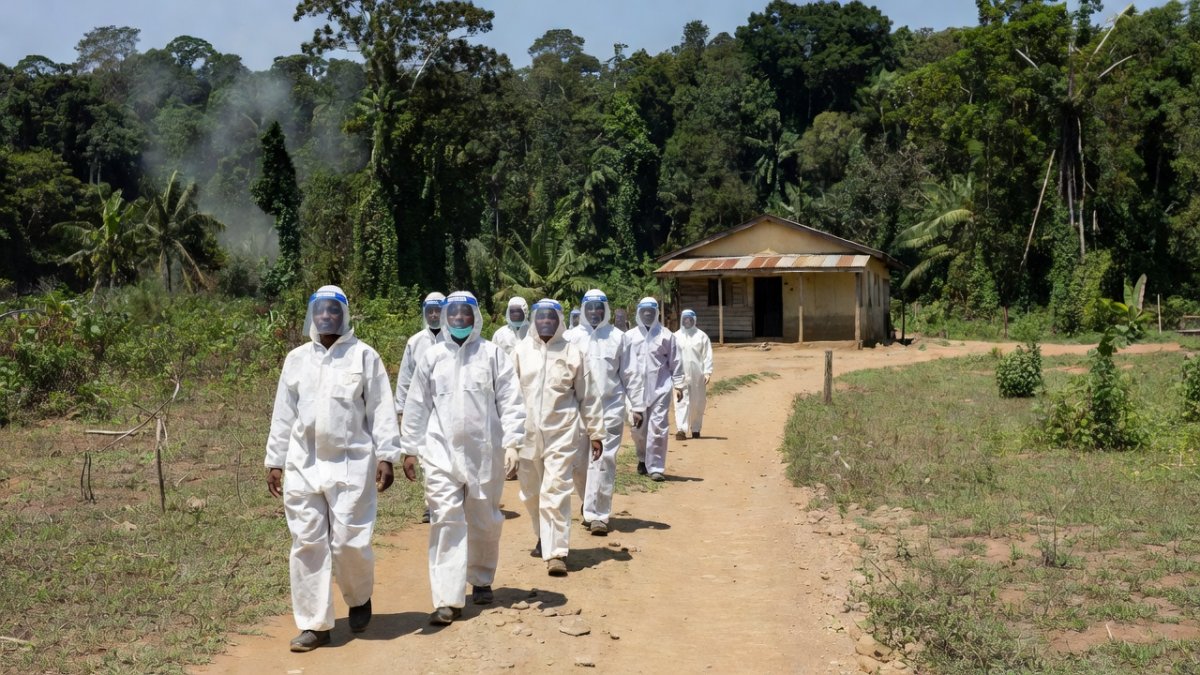
Folks, let’s cut the preamble and get straight to the public health emergency unfolding in Central Africa. The Democratic Republic of the Congo is not just fighting another Ebola outbreak. It is losing. The numbers are in, and they are brutal: nearly five thousand confirmed cases, over two thousand three hundred dead, and a virus that is now spreading faster than the people tasked with stopping it can move. This is not a drill, and it is not a distant problem. This is the deadliest Ebola outbreak in the history of that nation, and the world is sleepwalking into a catastrophe.
Kinshasa, DR Congo — article continues...
The Grim Milestone: A Record Written in Blood
Let’s put this in perspective, because numbers can numb you if you let them. As of the middle of this month, the Democratic Republic of the Congo has recorded 4,945 confirmed cases of Ebola and 2,325 deaths. That is not a rounding error. Those are not just numbers. Those are people. This outbreak has now officially surpassed the 2018-2020 outbreak, which killed roughly 2,280 people. We have blown past that grim benchmark, and we are not slowing down.
Think about the velocity of death here. Last week alone, the virus was claiming a life nearly every half hour. The UN News desk put it plainly: this epidemic is killing one person every 30 minutes. Let that sink in. By the time you finish reading this article, another human being will likely be dead. By the time you finish your coffee, a family will have lost a mother, a father, a child. This is not a slow burn. This is a wildfire, and the fire department is still arguing about who brings the water.
The case fatality rate is hovering around 46 to 47 percent. That means nearly one in two people who contract this virus are dying. For context, the Zaire strain that ravaged West Africa between 2014 and 2016 had a similar kill rate, but we had tools for that one. We had a vaccine. We had treatments. We had a playbook. This time, folks, the playbook is missing a few chapters.
On the Ground: A Sixth Province, A Spreading Stain
Here is the latest intelligence from the front lines, and it is not good. Over the weekend, the head of the Africa Centres for Disease Control and Prevention, Dr. Jean Kaseya, confirmed that the outbreak has now breached a sixth province. Bas-Uele, a region previously untouched by this outbreak, has recorded its first death. That is not just a line on a map. That is a strategic failure. Every new province means new logistics, new community engagement, new burial teams, and new opportunities for the virus to find a vulnerable host.
The World Health Organization’s Disease Outbreak News is not sugar-coating this either. Since the beginning of August alone, we have seen an additional 1,060 confirmed cases and 597 confirmed deaths. And before you ask the obvious question—no, this is not just better surveillance. The WHO explicitly states that most of this increase reflects genuine expansion of the outbreak. The virus is winning. It is moving into new territory, finding new victims, and outrunning the response teams that are stretched thinner than a politician’s promise.
We are talking about a geographic nightmare. Eastern DRC is a patchwork of remote villages, dense urban centers, and conflict zones. You have humanitarian crises layered on top of armed group activity. You have communities that are deeply skeptical of outsiders, and frankly, can you blame them? They have been abandoned by the international community before. They have seen their neighbors die. They have seen responders arrive with promises and leave with body bags. Trust is a currency that is in short supply, and Ebola thrives on that distrust.
Why This Ebola Is Different: The Bundibugyo Nightmare
Now, let’s get into the science, because this is where the real fear should kick in. The virus tearing through DRC right now is not the Zaire strain that we have learned to fight. This is the Bundibugyo species of Ebola. And here is the kicker: there is no licensed vaccine for it. There is no specific treatment. Nothing. Zilch. Nada.
During the 2014-2016 West Africa epidemic, we had experimental vaccines that were fast-tracked. During the 2018-2020 DRC outbreak, we deployed the rVSV-ZEBOV vaccine, which was highly effective against the Zaire strain. We had monoclonal antibody treatments that could save lives if administered early. We had a fighting chance. With Bundibugyo, we are in a position of far greater vulnerability. We are relying on isolation, protective gear, and hope. And hope, folks, is not a strategy.
There is work being done on promising vaccine candidates. Scientists are scrambling. But the reality is that we are in a race against time, and the virus has a head start. Every day that passes without a deployable vaccine is another day that the death toll climbs. The WHO has acknowledged this is the "fastest-growing outbreak on record." That is not a compliment. That is a warning siren.
The Response: Outpaced, Underfunded, and Fighting Shadows
Let’s talk about the response, because there is a lot of finger-pointing happening, and I want to be clear about who deserves the blame. The WHO Director-General, Tedros Adhanom Ghebreyesus, has been blunt: "The Ebola outbreak is outpacing our response." He has also said it is "far from being under control." That is the head of the world’s premier health agency admitting that we are losing. That is not a political statement. That is a factual assessment from the man who should know.
The WHO has said that, theoretically, the outbreak could be controlled within three months. Theoretically. I could theoretically win the lottery, but I am not going to quit my day job. Many experts are questioning whether that timeline is realistic, and I am with them. Health authorities on the ground are warning that this could continue for nine to twelve months, or longer, if transmission is not brought under control. That is a massive gap between the official line and the on-the-ground reality.
Why is it so hard? Let me break it down for you. First, you have the insecurity. Eastern DRC is a war zone. Armed groups are active, and they do not care about your vaccination campaigns. They attack health workers. They burn down treatment centers. They kidnap responders. In 2018, we saw attacks on Ebola facilities that forced the WHO to pause operations. We are seeing similar dynamics now. You cannot vaccinate a village if you are dodging bullets to get there.
Second, you have the geography. The affected areas are remote. Roads are terrible. Some villages are only accessible by helicopter or on foot. Moving cold-chain vaccines and medical supplies into these areas is a logistical nightmare. And third, you have community mistrust. People have seen outsiders come and go. They have seen their loved ones taken to treatment centers and never return. Rumors spread faster than the virus. Misinformation is a co-conspirator in this outbreak.
The Regional Threat: Uganda and the Cross-Border Time Bomb
Now, let’s zoom out, because this is not just a DRC problem. This outbreak was confirmed in both the DRC and neighboring Uganda back in May. That means it has already crossed an international border. That is a flashing red alert for the entire region. Uganda has a robust health system compared to some of its neighbors, but it is also a transit hub. People move across these borders constantly for trade, for family, for survival. You cannot build a wall against a virus.
The Africa CDC is on high alert. Dr. Kaseya is sounding the alarm. But regional coordination is only as strong as its weakest link, and there are a lot of weak links in Central and East Africa. South Sudan is fragile. Rwanda is on edge. Burundi is a question mark. If this virus gets a foothold in a major urban center like Kampala or Goma, we are looking at a regional catastrophe that will make the 2014-2016 West Africa epidemic look like a dress rehearsal.
And let’s not forget the global angle. We live in an interconnected world. A plane from Kinshasa to Paris is a direct flight. A truck from Goma to Juba crosses three borders. Ebola is not a respecter of passports. The international community has a vested interest in stopping this at the source, not because we are altruistic, but because self-preservation is a powerful motivator. The longer we wait, the harder it gets.
The Bottom Line: Accountability and Action, Not Excuses
So, what is the bottom line, folks? Here it is. We are facing a biological emergency that is spiraling out of control. The numbers are not abstract. They are people. They are mothers and fathers and children who are dying because the world is too slow, too bureaucratic, and too distracted to act with the urgency this demands.
I have strong opinions about accountability, and I am not going to mince words. The WHO needs to stop setting unrealistic timelines and start telling the truth about the scale of this disaster. The Africa CDC needs more resources, more funding, and more political backing from African leaders who have been silent for too long. The international community needs to step up with cash, with personnel, and with a coordinated strategy that treats this like the global security threat it is.
And to the governments in the region: stop hiding behind sovereignty and start cooperating. This is not a time for pride. This is a time for action. Every day of delay is a day of death. The tools we have are insufficient, but they are not useless. We can still contain this if we move now. But "now" is a rapidly closing window.
I am not going to tell you this will be fine, because it will not be fine unless we make it fine. I am going to tell you the truth: this is the deadliest Ebola outbreak in DRC history, it is spreading to new provinces, it is outpacing the response, and there is no vaccine for this strain. That is the reality. The question is whether we have the courage to face it.
Stay informed. Stay vigilant. And hold your leaders accountable. Because this is not just their problem. It is ours. And if we ignore it, we do so at our own peril.
This article was produced with AI-assisted research and editorial support. Sources: WHO, UN News, Al Jazeera, The Guardian, CGTN, Africa CDC.
By Jessica Ali, Staff Writer
What's Your Reaction?
 Like
0
Like
0
 Dislike
0
Dislike
0
 Love
0
Love
0
 Funny
0
Funny
0
 Wow
0
Wow
0
 Sad
0
Sad
0
 Angry
0
Angry
0

Editor-in-Chief at Global1.News. Atlanta-based journalist who cuts through the BS and tells it like it is. Lead anchor, host, and the voice you hear when the spin stops and the truth starts.









Comments (0)