
Japan's Generational Pivot from China Reshapes Northeast Asian Alignments
Historical Foundations of Japan-China Engagement Japan’s engagement with the People’s Republic of China predates formal diplomatic ties. An unofficial trade mechanism established in 1962 permitted bilateral commerce even without mutual recognition. Normalization occurred only in 1972. Former U.S. Vice President Richard Nixon’s 1967 Foreign Affairs article argued that the United States could not afford to leave China outside the family of nations, yet Japanese policy had already advanced further
Historical Foundations of Japan-China Engagement
Japan’s engagement with the People’s Republic of China predates formal diplomatic ties. An unofficial trade mechanism established in 1962 permitted bilateral commerce even without mutual recognition. Normalization occurred only in 1972. Former U.S. Vice President Richard Nixon’s 1967 Foreign Affairs article argued that the United States could not afford to leave China outside the family of nations, yet Japanese policy had already advanced further than Washington’s preferences at the time. Throughout the 1960s, U.S. diplomatic pressure discouraged Tokyo from recognizing Beijing. The 1971 announcement of Nixon’s planned visit to China therefore produced particular frustration in Tokyo because Washington reversed its stance without prior consultation.
After 1972, shared suspicion of the Soviet Union produced a quasi-alliance phase. From the late 1970s through the 1980s, Japan expanded industrial assistance to China while the United States deepened military cooperation, including technology transfers. The June 4, 1989, suppression of protests in Tiananmen Square marked a turning point. Although Japan suspended its aid program, it resisted full Western sanctions. At the G7 summit in Paris that year, Tokyo successfully inserted language urging conditions that would avoid China’s isolation and permit a return to cooperation based on reform and openness.
Japan’s postwar strategy toward China was rooted in the Yoshida Doctrine’s emphasis on economic recovery and avoidance of entanglement in ideological conflicts, allowing Tokyo to pursue commercial engagement as a means of stabilizing the region without direct military commitments. This approach framed China as an economic partner whose integration could mitigate security risks, even as Tokyo navigated U.S. alliance obligations. The “hot economics, cold politics” pattern emerged from this calculus, where trade and investment served as buffers against political friction, exemplified by Japan’s role in facilitating China’s entry into global markets during the reform era. After the Cold War, the dissolution of the Soviet threat removed a shared strategic rationale for cooperation, exposing underlying territorial and historical tensions that had been subordinated to economic priorities. This shift prompted Tokyo to reassess dependence on a single market, particularly as China’s military modernization accelerated regional uncertainties.
The end of bipolarity also coincided with Japan’s own domestic economic stagnation, which reduced the leverage once derived from aid and technology transfers. Korean observers noted parallels in how both Northeast Asian economies recalibrated their China policies amid shifting great-power dynamics, with Seoul similarly balancing U.S. security ties against Chinese market access. By the early 1990s, Japanese policy documents began highlighting the need for diversified supply chains, foreshadowing later economic-security doctrines. These adjustments reflected a broader recognition that engagement alone could not guarantee stability once ideological containment ceased to align interests across the Pacific.
From “Hot Economics, Cold Politics” to Cooling Relations
For decades the bilateral relationship was characterized as “hot economics, cold politics.” Economic exchange persisted across political difficulties, and strategic calculations occasionally reinforced ties. Today the pattern has shifted toward what observers describe as cooling economics and colder politics. Diplomatic contacts have stagnated, and a bilateral summit between Prime Minister Takaichi Sanae and President Xi Jinping appears unlikely in the near term. Japan continues to signal openness to a reset, yet policy statements increasingly emphasize economic security and resilient supply chains among like-minded partners rather than unconditional engagement.
This trajectory reverses a long-standing Japanese inclination to nurture ties with Beijing despite external pressures. The change reflects both immediate frictions and deeper structural adjustments in how Tokyo calculates risk.
Takaichi’s Taiwan Remarks and Beijing’s Economic Retaliation
The current downturn traces directly to Prime Minister Takaichi Sanae’s late-2025 statements suggesting possible Self-Defense Forces deployment in a Taiwan contingency. Beijing responded with intensified pressure on critical mineral supply chains and targeted export controls affecting Japanese defense firms and dual-use technology companies. China controls approximately 90 percent of global rare-earth refining capacity; the resulting disruptions have already affected Japanese manufacturers. Additional measures include the arrest of Japanese company employees in mainland China on charges related to rare-earth magnet exports. These actions have unsettled firms still dependent on the Chinese market.
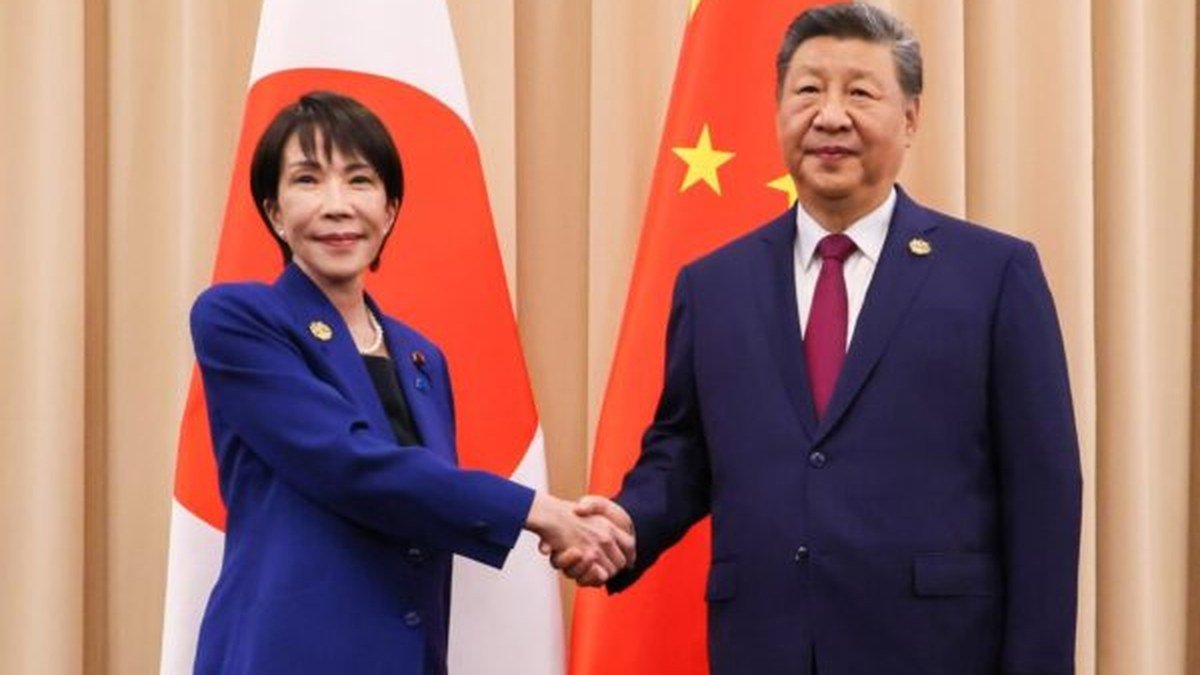
An October 31, 2025, handshake between Takaichi and Xi at the APEC summit in Gyeongju, South Korea, offered no visible thaw. The episode illustrates how quickly economic interdependence can be weaponized when political trust collapses.
China’s deployment of export controls on rare earths and related minerals underscores the weaponization of economic interdependence, targeting Japan’s vulnerabilities in high-tech manufacturing sectors such as semiconductors and electric vehicles. These measures exploit Tokyo’s historical reliance on Chinese refining capacity, which accounts for the bulk of global processing despite Japan’s upstream mining investments elsewhere. Economic security frameworks in Japan now prioritize friend-shoring initiatives with partners like Australia and the United States, aiming to reduce single-point failures that could disrupt defense-related production. The arrests of Japanese personnel on export-related charges further illustrate how legal instruments can amplify coercive pressure, creating compliance costs that deter corporate engagement.
Such tactics mirror South Korea’s 2019 experience when Japan imposed export restrictions on chemical materials essential for Korean chip fabrication, prompting Seoul to accelerate its own localization efforts and diversify suppliers. Both episodes reveal how middle powers in Northeast Asia face asymmetric economic coercion from larger neighbors, compelling institutional responses like Japan’s Economic Security Promotion Act. For Korean firms, these patterns highlight the risks of over-dependence on any single market, fostering trilateral dialogues on critical minerals that bypass direct bilateral friction with Beijing.
Generational Change in Japanese Leadership
Analysts attribute part of the policy shift to generational turnover within the Liberal Democratic Party. Earlier cohorts of China specialists retained personal awareness of Japan’s wartime conduct in China and viewed investment partly as atonement for past aggression, especially given Beijing’s decision to forgo war reparations. These figures are now retiring. Their successors, including Prime Minister Takaichi and former Prime Minister Ishiba Shigeru, both visited Taiwan before assuming office—an emerging pattern among aspiring leaders. Both politicians have drawn support from younger voters who do not share the same sense of historical obligation.
Former Prime Minister Abe Shinzo’s 2015 government statement declared that children and grandchildren bearing no responsibility for the war should not face indefinite apology obligations. Takaichi herself, in 1994, criticized Prime Minister Murayama Tomiichi’s impending apology, arguing that no one could apologize on her behalf without consent. These positions reflect a revised historical framing that treats wartime debts as settled rather than perpetually binding.
Generational turnover within the Liberal Democratic Party has recalibrated Japan’s diplomatic posture by diminishing the influence of officials who viewed engagement with China through the lens of historical atonement. Younger leaders prioritize alliance interoperability with Washington and normative alignment on issues such as maritime security, altering the tone of Northeast Asian summits. This evolution strengthens Japan’s commitment to the Quad and expanded U.S.-Japan defense guidelines, yet it also introduces friction in trilateral formats where Seoul seeks balanced mediation. The resulting hawkish consensus facilitates faster legislative responses to supply-chain threats but complicates historical reconciliation efforts that once facilitated people-to-people exchanges across the region.
Alliance politics benefit from this shift as Tokyo coordinates more seamlessly on technology export controls and joint exercises, reducing past hesitations rooted in domestic pacifist legacies. Korean analysts observe that the change narrows the window for autonomous Japanese initiatives toward Beijing, potentially aligning Japan more closely with U.S. Indo-Pacific strategies that emphasize deterrence over dialogue. Consequently, regional diplomacy now operates with fewer personal networks bridging wartime memories, elevating institutional mechanisms as the primary vehicles for managing escalation risks.
South Korea’s Position in Shifting Trilateral Dynamics
South Korea occupies an exposed position as these changes unfold. Seoul must manage its own alliance with Washington while preserving economic access to China, its largest trading partner. Japan’s accelerated hedging reduces the diplomatic space for trilateral Japan-Korea-China cooperation that Seoul has periodically sought to cultivate. Historical disputes between Tokyo and Seoul already complicate coordination; a more hawkish Japanese posture toward Beijing may further constrain Korea’s room for maneuver between the two larger powers.
At the same time, shared concerns over supply-chain resilience and technology security could open avenues for closer Japan-Korea alignment under U.S. auspices. Korean policymakers will need to calibrate responses to Chinese economic coercion without alienating Beijing or appearing to follow Tokyo’s lead too closely.
South Korea’s middle-power positioning requires careful navigation of Japan’s pivot, as Seoul maintains substantial trade volumes with China while deepening security cooperation under the U.S. alliance umbrella. The cooling trajectory in Japan-China relations compresses opportunities for trilateral summits on economic issues, forcing Korean policymakers to pursue bilateral hedging strategies that avoid perceptions of bandwagoning with Tokyo. This dynamic strains Korea-Japan coordination on shared concerns like technology security, even as both capitals explore joint responses to Chinese economic statecraft through frameworks such as the Indo-Pacific Economic Framework.
Trilateral mechanisms focused on functional topics, including disaster response and health cooperation, persist but lack the strategic depth once envisioned during periods of warmer Japan-China ties. For Korea, the implications include heightened pressure to diversify export markets and invest in domestic capabilities, lest Chinese retaliation tactics tested against Japanese firms extend to Korean entities. Ultimately, the generational realignment in Tokyo signals a more constrained environment for middle-power diplomacy, where Seoul must balance alliance loyalty against the economic imperatives of its largest trading partner without triggering secondary sanctions or market exclusions.
Forward-Looking Implications for Regional Stability
The emerging pattern suggests that Japan no longer regards the integration of China into the international order as an overriding imperative that must be pursued regardless of cost. Instead, Tokyo is constructing economic-security frameworks that explicitly prioritize resilience over maximal engagement. For South Korea, this development underscores the necessity of diversified partnerships and credible deterrence capabilities. Trilateral mechanisms may persist on narrow technical issues, yet broader strategic convergence among Japan, Korea, and China appears increasingly remote. The region is entering a phase in which middle-power diplomacy must operate within tighter constraints imposed by great-power competition and generational policy realignments.
By Prof. David Park, Staff WriterThis article was produced with AI-assisted research and editorial support. Reporting is based on sources cited in the article.
What's Your Reaction?
 Like
0
Like
0
 Dislike
0
Dislike
0
 Love
0
Love
0
 Funny
0
Funny
0
 Wow
0
Wow
0
 Sad
0
Sad
0
 Angry
0
Angry
0

East Asia/Technology Correspondent at Global1.News. Seoul-based voice covering Korean politics, technology, business, and culture. Analyzes how technology and geopolitics intersect across East Asia.















Comments (0)