
Trump says Iran has ‘virtually given up’ any plans for nuclear weapons
President Donald Trump’s recent remarks that Iran has “virtually given up” its nuclear ambitions reverberate far beyond diplomatic rhetoric. Families in the region continue to bear the brunt of sanctions, military posturing and the lingering threat of renewed strikes.
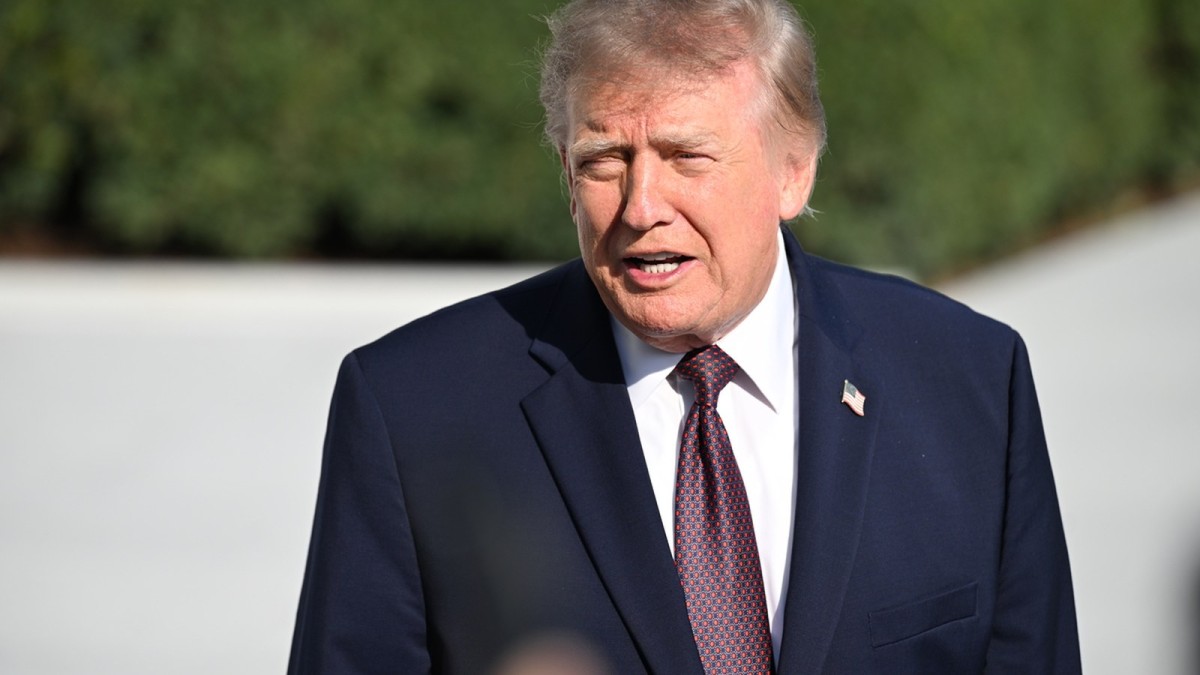
President Donald Trump’s recent remarks that Iran has “virtually given up” its nuclear ambitions reverberate far beyond diplomatic rhetoric. While the statement may suggest a de‑escalation in a conflict that has already entered its eighth month, the human cost of the broader confrontation remains stark. Families in the region continue to bear the brunt of sanctions, military posturing and the lingering threat of renewed strikes. The claim also raises critical questions about the credibility of U.S. policy, the role of international law, and the lived realities of ordinary Iranians who navigate an economy crippled by sanctions and a security environment increasingly fraught with uncertainty.
Trump’s Narrative on Iran’s Nuclear Intentions
In a brief exchange with reporters on the South Lawn of the White House, President Trump asserted that Iran has “virtually given up” any plans to develop a nuclear weapon. He framed this assessment as evidence of his administration’s success in a war that began eight months ago, emphasizing that the United States has achieved a core objective it has repeatedly articulated since taking office. The president also linked the perceived nuclear concession to a broader economic narrative, noting that oil prices are now lower than they were under the previous administration. By tying the two issues together, Trump suggests that his policies have simultaneously curbed a nuclear threat and eased energy costs for American consumers.
These remarks, however, are not accompanied by any new intelligence or verification from international bodies. The statement rests on the president’s own assessment rather than on publicly disclosed evidence from the International Atomic Energy Agency (IAEA) or other monitoring mechanisms. As such, the claim must be examined against the backdrop of Iran’s own declarations and the ongoing diplomatic stalemate over its nuclear programme.
Iran’s Official Position on Its Nuclear Programme
Iran’s leadership has consistently denied any intention to develop nuclear weapons. President Masoud Pezeshkian, speaking at the United Nations General Assembly in New York, reiterated that Tehran’s nuclear activities are purely civilian and bound by religious prohibition against weapons of mass destruction. He offered a concrete proposal: to dilute Iran’s enriched uranium stockpiles under international verification. This gesture signals a willingness to engage with the IAEA and other monitoring bodies, provided that the United States lifts its economic sanctions.
The Iranian stance underscores a broader diplomatic impasse. While Tehran is prepared to allow verification of its nuclear material, it insists that any substantive concession must be linked to the removal of sanctions that have devastated its economy. The demand reflects a calculation that sanctions, rather than the nuclear issue alone, are the primary lever of pressure on Iran.
The Human Toll of Sanctions and Conflict
Economic sanctions imposed by the United States have had a profound impact on the daily lives of ordinary Iranians. Restrictions on banking, trade and oil exports have led to inflation, shortages of essential medicines, and a decline in living standards. Families struggle to afford basic necessities, and the health sector faces chronic under‑funding, exacerbating the vulnerability of patients with chronic illnesses.
Beyond the economic sphere, the threat of renewed military action looms large. The February 28 strikes by Israel and the United States, which initially drove oil prices higher, serve as a stark reminder of the region’s volatility. Communities near potential targets live under the constant fear of air raids, displacement and loss of life. The psychological burden of living in a state of perpetual threat cannot be measured in statistics, yet it shapes the everyday reality of countless civilians.
International Law and the Right to Peaceful Nuclear Energy
Under the Treaty on the Non‑Proliferation of Nuclear Weapons (NPT), Iran, like any signatory, retains the right to develop peaceful nuclear technology. The treaty also obliges the International Atomic Energy Agency to verify that nuclear programmes remain non‑military. Iran’s offer to dilute its enriched uranium under international verification aligns with these obligations, suggesting a pathway toward compliance that does not require abandoning its civilian nuclear ambitions.
However, the United States’ insistence on a complete cessation of enrichment activities—coupled with the imposition of unilateral sanctions—raises questions about the balance between security concerns and the legal rights of a sovereign state. International law emphasizes that sanctions must be proportionate and not cause undue humanitarian suffering, a principle that appears increasingly strained in the Iranian context.
Political Calculus Behind Trump’s Statements
President Trump’s remarks about declining oil prices and Iran’s alleged nuclear retreat serve multiple political purposes. Domestically, they reinforce a narrative of economic stewardship, suggesting that his administration has succeeded in lowering energy costs for American consumers. Internationally, the statements aim to project strength and portray Iran as a compliant actor, potentially weakening Tehran’s bargaining position in any future negotiations.
Yet the timing of the comments—made just before a rally in Ohio—suggests a strategic alignment with electoral messaging. By presenting a foreign policy victory, the administration seeks to bolster its standing among voters who prioritize national security and economic stability. This political framing, however, may obscure the nuanced realities on the ground, where diplomatic progress remains elusive and humanitarian concerns persist.
Prospects for Diplomatic Resolution
The path toward a sustainable resolution hinges on mutual confidence‑building measures. Iran’s willingness to accept international verification of its uranium stockpiles offers a tangible step that could be incorporated into a broader framework, provided that the United States demonstrates a reciprocal willingness to ease sanctions in a calibrated manner. Such a phased approach could address security concerns while mitigating the humanitarian impact of economic restrictions.
Nevertheless, the entrenched mistrust between Washington and Tehran, amplified by recent military actions, makes incremental progress challenging. Any breakthrough will require robust engagement from multilateral actors, including the United Nations and the European Union, to guarantee that verification mechanisms are transparent and that sanctions are calibrated to avoid collective punishment of civilian populations.
The Way Forward for Affected Communities
Amid the diplomatic chessboard, the most urgent priority remains the alleviation of human suffering. International humanitarian organisations have repeatedly called for the easing of sanctions that impede the delivery of food, medicine and essential goods. Ensuring that humanitarian corridors remain open, even as diplomatic negotiations continue, is a moral imperative under international humanitarian law.
For the families living under the shadow of sanctions and the threat of renewed conflict, the promise of a peaceful resolution is more than a political slogan—it is a matter of survival. As the United States and Iran navigate this fraught landscape, the international community must keep the human cost at the centre of any policy calculus, ensuring that the pursuit of security does not eclipse the fundamental rights and dignity of those most affected.
This article was produced with AI-assisted research and editorial support. Reporting is based on the source material cited below. Sources: Middle East Monitor; middleeastmonitor.com; Global1.News (05 October 2026).
By Fatima Al-Rashid, Staff Writer
What's Your Reaction?
 Like
0
Like
0
 Dislike
0
Dislike
0
 Love
0
Love
0
 Funny
0
Funny
0
 Wow
0
Wow
0
 Sad
0
Sad
0
 Angry
0
Angry
0
Gulf/MENA Correspondent at Global1.News. Based in Doha, covering Gulf politics, energy markets, diplomacy, and development across the Middle East and North Africa. Tracks the economic transformation of the Gulf states.









Comments (0)