
China Completes Taipingling Phase One as Hualong One Unit 2 Enters Service
China's Taipingling Unit 2, powered by the domestically designed Hualong One reactor, entered commercial operation on August 3, completing Phase 1 of the Greater Bay Area's first Hualong One nuclear project and advancing Beijing's 110 GW nuclear capacity target for 2030.
China's Taipingling Unit 2, using the domestically designed Hualong One third-generation reactor, began commercial operation on Monday August 3, 2026, completing Phase 1 of the project. This step strengthens clean energy supply for the Greater Bay Area while sharpening competition in the Asia-Pacific nuclear sector, where Japan's reactor restarts since 2015 provide a contrasting pace of development.
China Completes Taipingling Phase One as Hualong One Unit 2 Enters Service
Tokyo, Japan - August 4, 2026 - The commissioning of the No.2 unit marks the completion and full operation of the first-phase project of the Taipingling nuclear power plant, the first nuclear project in the Guangdong-Hong Kong-Macao Greater Bay Area to deploy Hualong One technology. The No.1 unit of this project became operational in April this year. Located in Huidong County in the city of Huizhou, the project plans to have six Hualong One units in total. The two units in the first phase were approved in April 2019, with construction of the No.2 unit starting in October 2020.
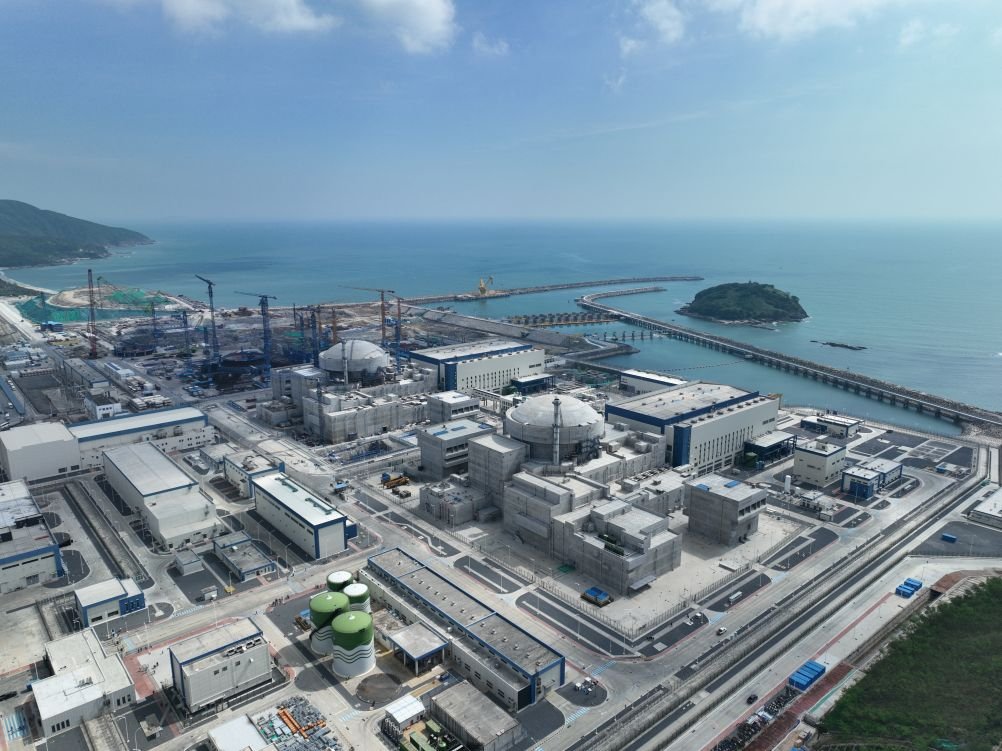
Hualong One Unit 2 Begins Commercial Operation in Guangdong
The No.2 unit at Taipingling entered commercial operation on August 3, 2026, according to Xinhua reporting from Shenzhen. This event completed the first phase of the project and brought both initial units into service. China General Nuclear Power Corporation confirmed the milestone. The No.1 unit had already started operation in April 2026. Construction of the first-phase units received approval in April 2019. Work on the No.2 unit began in October 2020. The Taipingling site in Huidong County, Huizhou, is designed for six Hualong One reactors across three phases. Zhang Guoqiang, chairman of CGN Huizhou Nuclear Power Co., Ltd., noted the units meet the highest global safety standards. This achievement reflects steady progress in China's nuclear construction schedule. The project demonstrates the ability to move from approval through construction to operation within defined timelines. Analysts observe that such execution supports broader national targets for low-carbon generation. The Hualong One design, a Generation III pressurized water reactor, underpins these developments at the site.
A Clean-Energy Milestone for the Greater Bay Area
The two units now operating at Taipingling are expected to generate over 18 billion kilowatt-hours annually. This output can supply power for nearly 2 million people while cutting carbon dioxide emissions by 16.63 million tonnes per year, according to Zhang Guoqiang. When the full six-unit project reaches completion, annual generation is projected to exceed 55 billion kilowatt-hours. That level would reduce standard coal consumption by around 16.65 million tonnes and carbon dioxide emissions by about 50.82 million tonnes per year, per CGTN data from April 2026. The Hualong One reactor meets the highest global safety standards and marks a milestone in innovative nuclear development. These figures illustrate the scale of contribution to regional electricity needs in the Greater Bay Area. The project aligns with efforts to expand clean power sources in a high-demand economic zone. Local authorities view the addition as a reliable baseload option that supports industrial and residential consumption. The emissions reductions provide measurable progress toward national climate objectives without relying on intermittent sources.
Nuclear at the Heart of China's 15th Five-Year Plan
China aims to establish a clean, low-carbon, secure and efficient new energy system by 2030, according to a five-year plan issued by the National Development and Reform Commission and the National Energy Administration. The plan calls for proactive yet safety-prioritized nuclear development, targeting roughly 110 gigawatts of installed nuclear capacity by 2030. By the end of 2025, China had 112 nuclear power units in operation, under construction, or approved. During the 15th Five-Year Plan period from 2026 to 2030, the number of commercially operational units is expected to exceed 100. This framework positions nuclear power as a central element of the energy transition. The Taipingling project fits within this structured expansion. Policy documents emphasize orderly deployment alongside renewable growth. The targets reflect assessments of electricity demand growth and the need for stable, low-emission generation. Implementation will depend on continued construction efficiency and regulatory oversight. The plan provides a clear roadmap that guides investment decisions across state-owned nuclear operators.
Hualong One Goes Global: From Fuqing to Karachi
Hualong One was jointly developed by CGN and CNNC. The export version is promoted as HPR1000. The first unit using the technology, Fuqing Unit 5, began commercial operation in January 2021 and generates about 10 billion kWh per year, according to World Nuclear News. Karachi units 2 and 3 in Pakistan represent the first exports of CNNC's 1100 MWe Hualong One design. The second Pakistani unit, K-3, passed final acceptance. These projects demonstrate the technology's international reach beyond domestic sites. The design competes with offerings from Japanese, South Korean, and Western vendors in emerging markets. Success in Pakistan provides reference cases for potential buyers in Southeast Asia and the Middle East. The Fuqing experience established operational performance data that supports marketing efforts. International deployment adds to China's nuclear supply chain visibility. Each completed export unit contributes to global recognition of the Hualong One as a viable Generation III option.
China's serial construction of Hualong One units at multiple sites, combined with completed exports to Pakistan, strengthens the technology's standing in international markets. The operational data from Fuqing and the acceptance of Karachi units provide concrete references that emerging economies in Southeast Asia and the Middle East can evaluate against offerings from Japanese, South Korean, and Western suppliers. This track record enhances visibility for China's nuclear supply chain and supports recognition of the design as a competitive Generation III choice for buyers seeking proven performance and established delivery timelines.
Japan's Nuclear Crossroads: Restarts, Replacements and the 2040 Horizon
Japan's government approved a plan to build up to five new nuclear reactors by the 2040s, yet this drive faces a worker shortage, as reported by Nikkei Asia on July 31, 2026. A series of reactor restarts since 2015 has returned nuclear power to Japan's electricity mix, though the pace remains slower than original government schedules. Japan's Green Transformation policy retains nuclear alongside renewables as part of the energy portfolio. The contrast with China's serial Hualong One construction highlights differences in workforce availability and project execution speed. Japanese utilities must address skilled labor constraints while pursuing replacements at sites such as Takahama. Policy support exists, but practical delivery depends on resolving supply chain and personnel issues. The 2040 horizon sets a long-term target that requires steady progress on both restarts and new builds. Industry observers note that delays could affect Japan's ability to meet decarbonization commitments. The situation underscores the importance of workforce development programs within corporate Japan.
Asia-Pacific and Global Ripple Effects
The Greater Bay Area continues to experience rising electricity demand driven by manufacturing, technology, and urban growth. Taipingling's contribution supports regional energy security while advancing dual carbon goals. China's nuclear supply chain momentum, evidenced by multiple Hualong One units, positions domestic vendors strongly against Japanese, South Korean, and Western competitors. Export successes in Pakistan illustrate expanding influence in the Asia-Pacific market. Energy security considerations for neighboring countries include diversification away from imported fuels. Japan's slower new-build timeline may limit its vendor participation in regional projects. South Korean designs also seek market share, creating a competitive landscape. The overall effect is an intensified race for contracts and technology leadership. Regional utilities weigh safety records, financing terms, and construction timelines when selecting suppliers. These dynamics influence long-term electricity pricing and emissions trajectories across the Asia-Pacific.
The Taipingling milestone underscores how China's expanding nuclear capacity bolsters energy security across the Asia-Pacific by offering a stable baseload alternative that reduces reliance on imported fuels for neighboring economies. Momentum in domestic supply chains from repeated Hualong One deployments positions local vendors to compete more effectively for regional contracts, while Pakistan export successes signal growing influence that could shape technology choices in high-demand markets. Utilities in the region must weigh these developments alongside slower Japanese timelines when planning diversification and long-term supply arrangements.
What to Watch For
Four additional units remain planned at Taipingling after the first phase. Observers will track whether China's 110 gigawatt target by 2030 maintains its current construction pace. Japan's new-build program progress will depend on resolving labor shortages and securing regulatory approvals. The Hualong One export pipeline may see further announcements in Southeast Asia or the Middle East. For readers in Japan and the broader Asia-Pacific, the Taipingling milestone highlights the gap between stated policy ambitions and on-the-ground delivery rates. Continued monitoring of workforce trends in Japan and supply chain performance in China will shape the regional nuclear outlook through the end of the decade.
Asia-Pacific observers should monitor the construction of four remaining units at Taipingling to assess whether China's nuclear expansion sustains the pace needed for its 2030 capacity target. Progress on Japan's approved new reactors will hinge on addressing labor shortages and obtaining approvals, with potential delays affecting decarbonization efforts. Announcements regarding additional Hualong One exports to Southeast Asia or the Middle East will indicate the technology's continued market penetration, while trends in Japanese workforce availability and Chinese supply chain performance will clarify delivery gaps between policy goals and actual project outcomes through the decade.
By Kenji Tanaka, Staff Writer
This article was produced with AI-assisted research and editorial support. Reporting is based on sources cited in the article.
What's Your Reaction?
 Like
0
Like
0
 Dislike
0
Dislike
0
 Love
0
Love
0
 Funny
0
Funny
0
 Wow
0
Wow
0
 Sad
0
Sad
0
 Angry
0
Angry
0

Japan Correspondent at Global1.News. Tokyo-based voice covering Japanese politics, technology, economy, and culture. Tracks the intersection of tradition and innovation in one of the world's most dynamic societies.















Comments (0)