
The Haitian government needs real, sustained international support
The United Nations High Commissioner for Human Rights, Volker Türk, addressed the 63rd session of the Human Rights Council with a stark warning about the evolving threat posed by criminal gangs in Haiti.
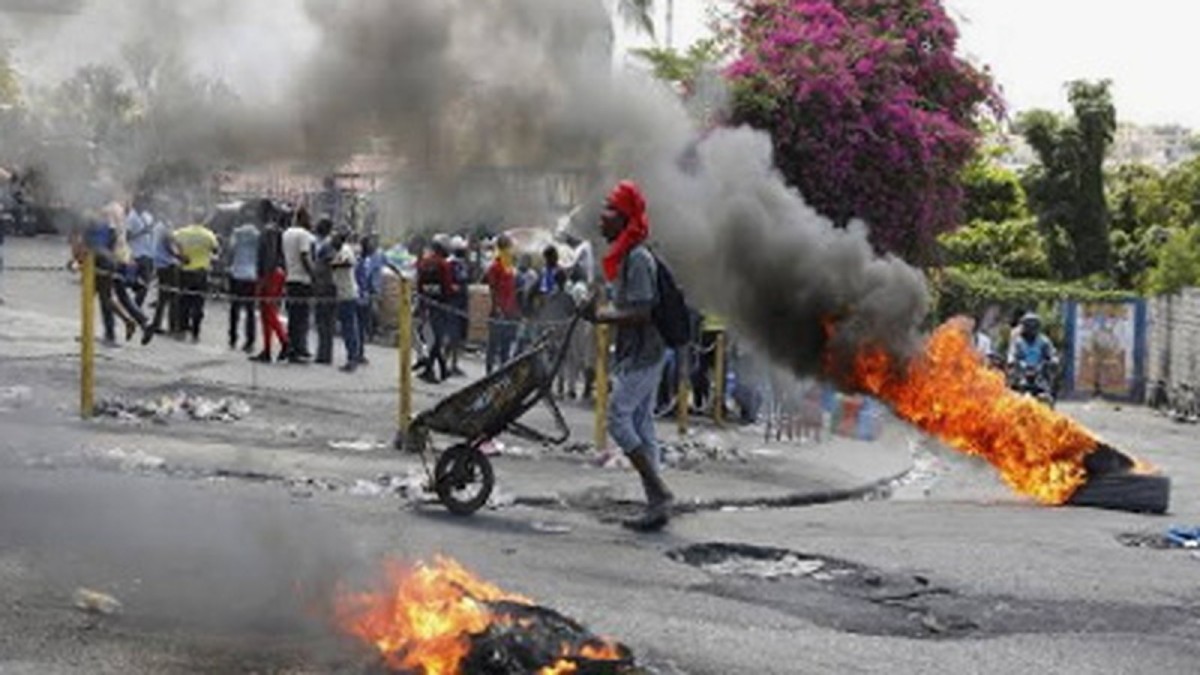
The United Nations High Commissioner for Human Rights, Volker Türk, addressed the 63rd session of the Human Rights Council with a stark warning about the evolving threat posed by criminal gangs in Haiti. While security forces have managed to contain some activity in parts of Port‑au‑Prince, the gangs are not standing still. They are “adapting and expanding, re‑emerging in new areas and constantly re‑arming”, he said, underscoring a pattern that threatens not only the Haitian capital but also the wider Caribbean region.
Gangs on the move: new territories, new tactics
Türk highlighted recent attacks in the towns of Kenscoff and Gressier as clear evidence that gang networks are deliberately seeking fresh ground. The assaults are not random; they form part of a broader strategy to seize key transport routes and establish footholds in previously quieter districts. By moving into the Sud‑Est department, the gangs are extending their reach beyond the capital’s periphery, creating a patchwork of insecurity that can disrupt trade and humanitarian aid flows.
For Caribbean neighbours, the spread of gang‑controlled corridors raises concerns about cross‑border smuggling and the potential for violence to spill over into other islands. The pattern mirrors earlier trends seen in parts of the region where organised crime has exploited weak state presence to carve out de‑facto zones of control.
Human cost: lives lost and communities under siege
The human toll of this escalation was starkly illustrated on Monday in Gros‑Morne’s third communal section, where a shooting spree left at least eleven people dead and several others wounded. The interim mayor, Hubert Cénéac, linked the carnage to a clash between the Kokorat San Ras gang and a Sri Lankan contingent of the Gang Suppression Force (GSF) in the nearby Savane Longue communal section. This confrontation underscores how external security interventions can sometimes ignite further bloodshed, leaving civilians caught in the crossfire.
Families in the affected areas now face the grim reality of losing loved ones, while the broader Haitian populace continues to be “trapped between gang violence and heavy‑handed responses”, as Türk poignantly put it. The trauma reverberates through communities already strained by economic hardship and limited access to basic services.
International response: the need for sustained support
Türk’s appeal to the international community was unequivocal: Haiti requires “real, sustained international support”. Short‑term deployments and ad‑hoc aid have proven insufficient in the face of a threat that is both fluid and increasingly sophisticated. The presence of a Sri Lankan contingent within the GSF illustrates the reliance on foreign forces, yet the recent clash suggests that without a coordinated, long‑term strategy, such interventions may exacerbate tensions.
For regional bodies like CARICOM, the message is clear. Any assistance must be calibrated to strengthen Haitian institutions, support community‑based security initiatives, and address the root causes that drive young people into gang life. Without a holistic approach, the cycle of violence is likely to persist.
Implications for regional security and trade
The seizure of transport routes in the Sud‑Est department threatens the flow of goods between Haiti and its neighbours. Ports and roadways that once facilitated the movement of agricultural produce and manufactured items could become contested zones, raising the risk of supply chain disruptions. For Trinidad and Tobago, where the cost of living is already pressured by global price swings, any interruption in regional trade could translate into higher prices for everyday essentials.
Moreover, the spread of armed groups poses a security challenge for maritime patrols and border agencies across the Caribbean. Smuggling networks often exploit similar routes, and the destabilisation of Haitian territory could provide new corridors for illicit trafficking, from weapons to narcotics.
Community resilience amid the turmoil
Despite the grim headlines, Haitian communities continue to demonstrate resilience. Local leaders, such as Mayor Cénéac, are vocal about the impact of gang violence on their constituents, urging both national and international actors to listen. Grassroots organisations are stepping up to provide food, shelter, and medical care to those affected by the recent attacks, embodying the spirit of solidarity that many Caribbean societies cherish.
In the broader Caribbean context, similar community‑driven responses have been seen in the aftermath of natural disasters, where neighbours rally to support one another. This cultural ethos of “one love” could be harnessed to build a regional support network for Haiti, blending humanitarian aid with capacity‑building programmes.
Looking ahead: what sustained support might look like
Türk’s call for “real, sustained” assistance implies a shift from reactive measures to a longer‑term partnership. Such support could encompass training for Haitian police forces, investment in youth education and employment programmes, and the establishment of a regional monitoring mechanism to track gang movements and illicit activities.
Importantly, any plan must be anchored in respect for Haitian sovereignty and inclusive of civil society voices. The experiences of Caribbean nations that have navigated post‑colonial development challenges suggest that development aid works best when it aligns with local priorities and cultural realities.
Conclusion: a regional responsibility
The recent surge in gang activity across Haiti’s heartland and beyond is not an isolated crisis. It reverberates through the Caribbean, touching on trade, security, and shared humanitarian values. As Volker Türk reminded the Human Rights Council, the Haitian people are “often trapped between gang violence and heavy‑handed responses”. The onus now lies on the international community, and particularly on our Caribbean neighbours, to move beyond short‑term fixes and commit to a sustained, collaborative effort that addresses both the immediate security threats and the underlying socio‑economic drivers.
This article was produced with AI-assisted research and editorial support. Reporting is based on the source material cited below. Sources: CBC Barbados; cbc.bb; Global1.News (04 October 2026).
By Sharon Sahatoo, Staff Writer
What's Your Reaction?
 Like
0
Like
0
 Dislike
0
Dislike
0
 Love
0
Love
0
 Funny
0
Funny
0
 Wow
0
Wow
0
 Sad
0
Sad
0
 Angry
0
Angry
0

Caribbean Correspondent at Global1.News. Based in Port of Spain, Trinidad, covering Caribbean politics, economy, energy, climate, and culture. Amplifying the voices and stories of the Caribbean region.











Comments (0)