
LightEdge eyes data center project outside Des Moines, Iowa
LightEdge’s latest move to buy ten acres in Boone, Iowa, is a textbook case of a mid‑size colocation player trying to stretch its footprint without the hand‑outs that big hyperscalers love to flaunt.
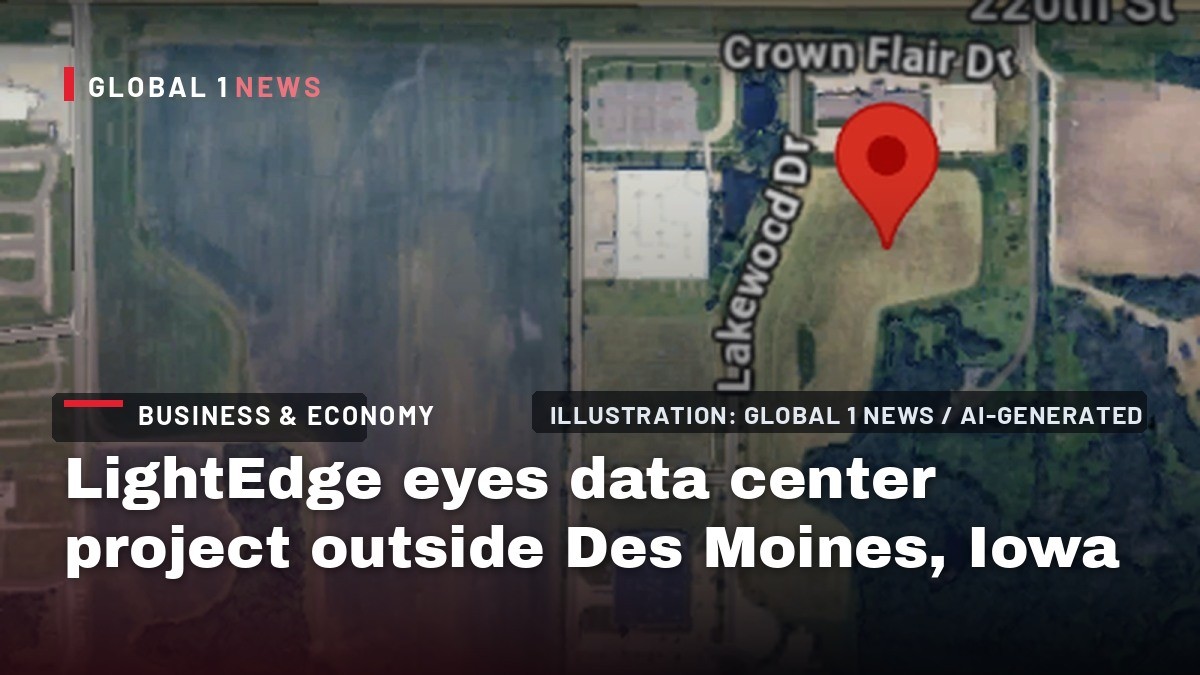
LightEdge’s latest move to buy ten acres in Boone, Iowa, is a textbook case of a mid‑size colocation player trying to stretch its footprint without the hand‑outs that big hyperscalers love to flaunt. The Boone County Economic Growth Corporation (BCEGC) just signed a Letter of Intent for the land, and the city’s planning commission has already given its nod. What’s striking isn’t the acreage or the location – it’s the restraint. LightEdge isn’t asking for tax breaks, isn’t promising a 46 MW megastructure tomorrow, and is instead betting on a slow‑burn, demand‑driven scale‑up. For independent hosting founders, that’s a playbook worth dissecting.
Why Boone, Not Silicon Valley
Boone sits about 48 miles northwest of Des Moines, a modest town that already hosts industrial infrastructure built over two decades ago. LightEdge’s plan to tap that existing base is a reminder that the cheapest power and land still live in the heartland, not in coastal tech hubs. The company’s own website notes that utility provider Alliant can eventually deliver up to 46 MW, but LightEdge is clear it will start with a “much smaller power load” and grow “over many years or even decades.” That incremental approach cuts upfront cap‑ex risk and lets the firm match capacity to actual customer demand.
For a founder, the lesson is simple: look for sites where the utility grid, road access, and zoning are already in place. You avoid the endless lobbying and incentive‑chasing that can drain cash and stall timelines. Boone’s industrial legacy means you can plug into power, fiber, and road networks without reinventing the wheel.
Scaling Power the Right Way
LightEdge’s public statement that Alliant could eventually supply 46 MW is a classic “future‑proof” line. Yet the company admits it doesn’t know if, when, or how that ceiling will be reached. This is a pragmatic admission – they won’t over‑promise capacity they can’t fill. In practice, many colocation firms overshoot power contracts, paying for megawatts they never sell, a trap that eats profit margins.
From a risk perspective, committing to a modest initial load and scaling as customers sign on preserves cash flow. It also sidesteps the “over‑build” syndrome that haunts hyperscalers when demand slumps. Independent operators should negotiate flexible power contracts, tying megawatt commitments to signed tenancy agreements rather than speculative forecasts.
Closed‑Loop Cooling: Cost vs. Sustainability
LightEdge will use a closed‑loop cooling system to curb water use – a nod to sustainability that also makes sense financially. Traditional evaporative cooling can be cheap in humid climates but drives up water bills and regulatory scrutiny. A closed‑loop system recirculates coolant, reducing consumption and the risk of fines or community pushback.
For smaller operators, the upfront cost of a closed‑loop system can be higher than a simple evaporative setup, but the long‑term savings and community goodwill often outweigh the initial outlay. In a place like Boone, where water resources are not a headline issue, the move signals a forward‑thinking stance that can be leveraged in sales pitches to environmentally conscious tenants.
Growth Through Acquisition: The Kansas City Play
LightEdge’s recent acquisition of a 3 MW data center in Kansas City, Missouri, shows a pattern: buy ready‑made capacity, fill it, and move on. The deal was described as “fully pre‑leased,” meaning the firm didn’t have to hunt for tenants after the purchase. That’s a low‑risk expansion model – you acquire a site with a pipeline already in place, then integrate it into your broader network.
Independent hosting firms can emulate this by targeting under‑utilized facilities with existing contracts. The key is due diligence: verify lease terms, power contracts, and any hidden liabilities. A pre‑leased asset can accelerate revenue growth without the long sales cycles that plague greenfield builds.
The Economics of Not Asking for Incentives
LightEdge’s decision to forego tax incentives is noteworthy. Many municipalities dangle subsidies to attract data center developers, but those deals often come with strings attached – performance clauses, reporting burdens, and community obligations that can erode profitability. By not seeking incentives, LightEdge avoids those constraints and positions itself as a straightforward partner to the city.
For a founder, the takeaway is to weigh the true cost of incentives against the administrative overhead they generate. A clean deal with a city that already has the needed infrastructure can be more valuable than a heavily subsidized but heavily regulated project.
Risk Management in a Decades‑Long Build‑Out
LightEdge admits the timeline for reaching the 46 MW ceiling could stretch “over many years or even decades.” That long horizon introduces several risk vectors: power market volatility, technology shifts, and evolving regulatory landscapes. By committing to a phased build, the company can adjust its roadmap as those variables change.
Founders should embed flexibility into every contract – power, fiber, and land leases that allow renegotiation or early termination. Building modularly, with separate power and cooling loops for each phase, also mitigates the impact of a single point of failure. In practice, this means designing the data hall layout so you can add racks, power feeds, and cooling units without tearing down existing infrastructure.
Actionable Takeaways for Independent Operators
First, scout for sites with mature industrial infrastructure like Boone. Second, negotiate power contracts that scale with tenancy, not with speculative megawatt targets. Third, consider closed‑loop cooling as a cost‑effective sustainability play, especially where water usage can become a community issue. Fourth, look for acquisition targets that are already pre‑leased to shortcut the sales cycle. Fifth, weigh the real cost of tax incentives against the operational freedom of a clean deal. Finally, design your build‑out to be modular and adaptable, allowing you to pivot as market conditions shift.
In a world where hyperscalers throw down massive price tags and VC‑backed hype promises instant scale, LightEdge’s measured, community‑aligned approach is a reminder that steady, demand‑driven growth still wins the day for independent hosting providers. It’s a model built on real‑world economics, not on lofty “best practice” buzzwords that crumble when you hit production.
— Allan Ali, Founder
This article was produced with AI-assisted research and editorial support. Reporting is based on the source material cited below. Sources: Data Center Dynamics; datacenterdynamics.com; Global1.News (16 October 2026).
By Allan Ali, Global1.News
What's Your Reaction?
 Like
0
Like
0
 Dislike
0
Dislike
0
 Love
0
Love
0
 Funny
0
Funny
0
 Wow
0
Wow
0
 Sad
0
Sad
0
 Angry
0
Angry
0

Publisher of Global1.News. Automation architect, systems builder, and the guy making sure the truth gets published.











Comments (0)