
Maduro pleads not guilty to new torture-related charges in New York
In a stark courtroom in Brooklyn, former Venezuelan president Nicolás Maduro and his wife, Cilia Flores, entered pleas of not guilty to a fresh set of U.S.
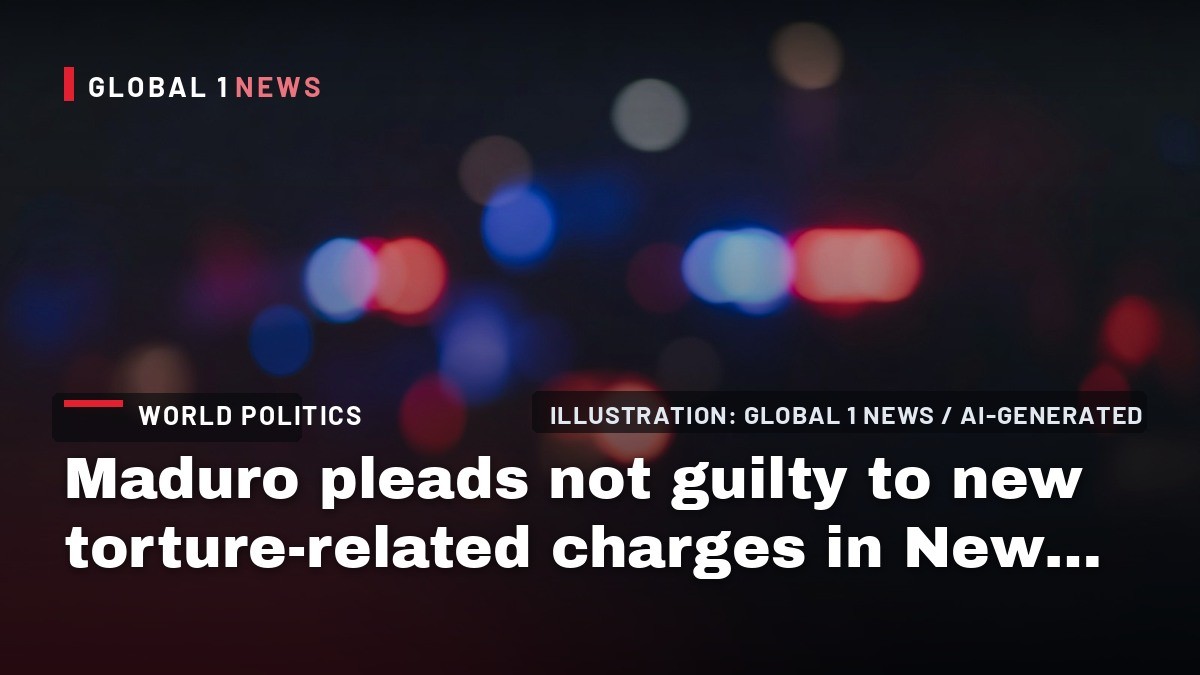
In a stark courtroom in Brooklyn, former Venezuelan president Nicolás Maduro and his wife, Cilia Flores, entered pleas of not guilty to a fresh set of U.S. charges that accuse them of conspiring to commit torture. The indictment, added just last week, expands a legal battle that began with accusations of narco‑terrorism, drug trafficking and weapons violations. As the couple remains confined at the Metropolitan Detention Center, their defense leans on the claim of sovereign immunity, while prosecutors paint a picture of a “violent system of repression” that allegedly saw thousands of Venezuelans killed, harassed and tortured. The case, now slated for trial in June 2027, has become a flashpoint for debates over U.S. intervention, the reach of international law, and the human cost of Venezuela’s prolonged crisis.
From narco‑terrorism to torture: the evolving indictment
The U.S. government’s legal offensive against Maduro has unfolded in stages. Initially, prosecutors framed the former leader as a narco‑terrorist, alleging involvement in cocaine trafficking and partnerships with cartels designated as terrorist groups. Those early charges also linked him to weapons‑related offenses, setting the tone for a narrative that portrayed his regime as a hub for organized crime.
Last week, however, prosecutors broadened the scope dramatically, adding a charge of conspiracy to commit torture. The indictment claims Maduro and Flores “created and maintained a violent system of repression,” a phrase that suggests a coordinated, state‑level apparatus for inflicting cruelty. It lists methods ranging from electric shock and asphyxiation to forced nudity, prolonged isolation and psychological torment. By alleging that U.S. citizens were among those tortured, the indictment also seeks to personalize the grievance for an American audience, intensifying the political stakes of the case.
The courtroom drama: pleas, translators, and the weight of symbolism
When the couple appeared before Judge Alvin Hellerstein, they were dressed in beige jail uniforms and looked visibly thinner than when they were first taken into custody in January. Their physical condition, noted by observers, underscores the harsh reality of detention far from home. Through translators, Maduro declared, “I reject this document entirely,” rejecting the indictment as “false accusations and false testimony.” Flores echoed the sentiment, insisting on her complete innocence.
Judge Hellerstein promptly entered a formal not‑guilty plea on their behalf, a procedural step that nevertheless highlights the gravity of the charges. The courtroom exchange, though brief, was laden with symbolism: a former head of state, once the face of a nation, now standing before a U.S. federal judge, pleading for a legal shield that he argues is guaranteed by sovereign immunity.
Sovereign immunity versus the rule of law
Maduro’s defense hinges on the principle of sovereign immunity, arguing that as the leader of a sovereign nation he cannot be tried by a foreign court. His lawyers contend that the U.S. raid that captured him and his wife in January was illegal, framing the entire proceeding as an overreach of American power. This argument taps into a broader regional skepticism toward foreign intervention, a sentiment that has deep roots in Latin America’s history of external meddling.
Yet the U.S. government maintains that the charges arise from crimes that transcend borders—namely, torture and drug trafficking. By asserting jurisdiction, prosecutors are testing the limits of international law and the willingness of U.S. courts to hold foreign leaders accountable for alleged human rights abuses. The outcome could set a precedent for future cases involving heads of state and the doctrine of immunity.
The human toll behind the indictment
While the legal language focuses on conspiracies and statutes, the indictment’s description of torture methods hints at a grim reality for victims. The alleged practices—electric shock, forced nudity, starvation, and psychological torment—paint a picture of systematic cruelty. Though the document does not name individual victims, it references “thousands of Venezuelans” who suffered under the purported system, suggesting a scale that could rival the worst episodes of the country’s recent history.
Human rights advocates have long warned that torture remains endemic in Venezuela, a claim echoed by United Nations reports that allege ongoing abuse of detainees. The indictment’s inclusion of U.S. citizens among the tortured further amplifies the narrative that the alleged repression was indiscriminate, targeting anyone deemed a threat to the regime.
Health concerns and the conditions of detention
Cilia Flores, who has a history of health problems, petitioned the court for release on bond, citing heart issues and other ailments. The request was denied, and she remains at the Metropolitan Detention Center, a facility that has drawn criticism for its harsh conditions. The fact that both Maduro and Flores have lost weight during their confinement underscores the physical strain of their detention, a factor that could become relevant in future legal arguments about humane treatment.
The denial of bond also reflects the U.S. judiciary’s assessment of flight risk and the seriousness of the charges. By keeping the couple in custody, authorities signal that they view the allegations as substantial and that they intend to pursue the case to its conclusion, despite diplomatic sensitivities.
Political ramifications for Venezuela and the region
The trial, scheduled for June 2027, will unfold against a backdrop of political uncertainty in Venezuela. With Maduro’s regime already weakened by economic collapse, mass migration and international sanctions, the prospect of a former president facing a U.S. criminal trial adds another layer of instability. Opposition groups may view the indictment as a vindication of their claims about state terror, while loyalists could rally around the narrative of foreign aggression.
Beyond Venezuela’s borders, the case reverberates throughout Latin America. Many governments watch closely, weighing the implications of a precedent where a former head of state can be tried abroad for alleged human rights violations. The outcome may influence how regional leaders respond to U.S. pressure on issues ranging from drug trafficking to democratic backsliding.
Looking ahead: legal battles and the quest for accountability
As the legal process moves forward, several key questions remain unanswered. Will the court accept the sovereign immunity argument, or will it proceed to a full trial on the torture charges? How will the prosecution substantiate the claim that Maduro personally authorized the alleged methods, especially against U.S. citizens? And what impact will the trial have on the broader struggle for justice for victims of Venezuela’s alleged repression?
For now, the courtroom in Brooklyn stands as a microcosm of a larger conflict: a former president defending his freedom against a foreign power that accuses him of crimes against humanity. The case will test the limits of international law, the resolve of human‑rights advocates, and the enduring resilience of a people who have endured years of hardship. As the trial date approaches, the world will watch how this legal drama unfolds, and what it ultimately means for the future of accountability in Latin America.
This article was produced with AI-assisted research and editorial support. Reporting is based on the source material cited below. Sources: BBC News Latin America; bbc.co.uk; Global1.News (16 October 2026).
By Elena Vasquez, Staff Writer
What's Your Reaction?
 Like
0
Like
0
 Dislike
0
Dislike
0
 Love
0
Love
0
 Funny
0
Funny
0
 Wow
0
Wow
0
 Sad
0
Sad
0
 Angry
0
Angry
0
Latin America Correspondent at Global1.News. Based in Mexico City, covering politics, economics, energy, and culture across the region. Brings an on-the-ground perspective to stories spanning from the Rio Grande to Patagonia.









Comments (0)