
Meta launches an open-weight AI model that runs on Macs
Meta just dropped what it calls the “most capable” open‑weight AI model in the United States, and it’s built to run on Macs. Meta pitches this as a cost‑efficiency win and a transparency boost.
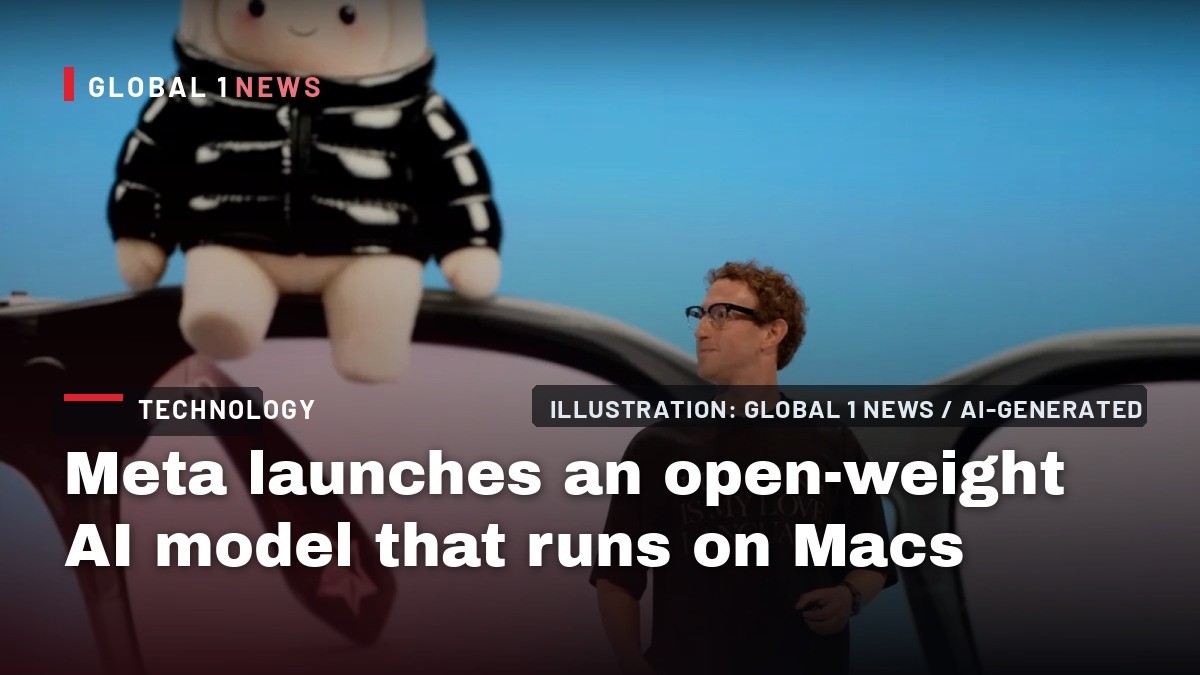
Meta just dropped what it calls the “most capable” open‑weight AI model in the United States, and it’s built to run on Macs. Dubbed Muse Spark Open, the model packs 816 billion parameters and a one‑million‑token context window, promising performance that, by Meta’s own benchmarks, tops other popular open‑weight offerings. As a founder who runs a real hosting infrastructure, I’m less impressed by the hype and more interested in the hard‑nosed implications for independent providers and the cost of actually running such a beast.
What “open‑weight” really means for us
Open‑weight models, unlike closed‑source alternatives, let anyone download the weights and run the model on their own hardware. Meta pitches this as a cost‑efficiency win and a transparency boost. In theory, you can avoid the per‑token fees that hyperscalers charge for their proprietary APIs. In practice, the savings only materialise if you have the hardware to host the model without turning your data centre into a money‑burning furnace.
For a small‑to‑mid‑size hosting outfit, the promise of “significantly more cost‑efficient” is tempting. But the model’s own requirements—at least a terabyte of RAM—mean you need top‑tier servers, typically the kind you only see in hyperscale clusters. The reality is that the capital outlay to buy, power, and cool a rack of M5‑Ultra‑equipped Mac Studios dwarfs any marginal API fee savings.
Hardware reality: the Mac Studio requirement
Meta says Muse Spark Open runs best on the Mac Studio with Apple’s M5 Ultra chip. That’s a high‑end desktop, not a commodity server. The M5 Ultra packs massive unified memory, but you still need a full terabyte of RAM to even load the model. For a hosting provider, that translates into a single workstation that can’t be easily virtualised or shared across tenants.
From my own shop floor, trying to squeeze a 1 TB RAM machine into a rack is a logistical nightmare. You end up with a single point of failure, limited scalability, and a support nightmare when the model crashes under load. It’s a classic case of “best on paper, terrible in production.”
Performance claims vs. production workloads
Meta’s press release touts “superior performance” and highlights use cases like coding fixes for a Mastodon client and video editing in DaVinci Resolve. Those demos are impressive in a controlled environment, but they don’t reflect the multi‑tenant, bursty traffic patterns that independent hosting providers face daily.
When you throw a real‑world workload—multiple developers hitting the model for code generation, editors slicing footage, and perhaps a handful of AI‑driven agents—into the mix, you’ll quickly hit memory bandwidth limits. The model’s 1 million token context window is a double‑edged sword: great for deep reasoning, but it also means the model hoards memory, making it hard to share resources across users.
Cost‑benefit analysis for independent providers
If you’re running a boutique hosting business, the capital expense of a Mac Studio‑class machine is a hard line in the sand. Even if you amortise the cost over three years, you still need to factor in power, cooling, and the specialised support staff to keep the silicon humming.
Contrast that with the per‑token pricing you’d pay to a hyperscaler for a comparable closed model. While the per‑token cost can add up, it’s a variable expense that scales with usage, not a fixed capex hit. For most of my clients, the predictable OPEX of a cloud API beats the unpredictable CAPEX of a terabyte‑RAM workstation.
Strategic implications for the AI ecosystem
Meta’s move signals a shift: big players are trying to offload compute to the edge by giving developers the ability to run massive models locally. The idea is to reduce reliance on their own cloud services and sidestep regulatory scrutiny. For us, it means the playing field is getting more fragmented.
But fragmentation brings risk. When you hand a 816‑billion‑parameter model to a developer who only has a modest workstation, you’re inviting a wave of poorly optimised deployments that can crash servers, waste electricity, and expose data to insecure environments. The “transparency” benefit is only as good as the security hygiene of the host.
What this means for founders and product teams
First, don’t chase the hype of “open‑weight = cheap.” Do the math on hardware, power, and support before you promise customers a locally‑run AI solution. Second, if you need the model’s capabilities—multimodal reasoning, coding assistance, video editing help—consider a hybrid approach: run the heavy lifting on a cloud GPU farm and expose a thin API layer to your product.
Third, keep an eye on the emerging tooling around model quantisation and off‑loading. If you can shave the memory footprint without sacrificing too much accuracy, you might make the model viable on a less exotic server. Until then, treat Muse Spark Open as a specialised tool for a niche set of power users, not a general‑purpose service you can slap onto any SaaS offering.
Actionable steps for hosting founders
1. Audit your existing hardware inventory. If you don’t already have Apple silicon with terabyte‑scale RAM, the model is out of reach without a major capex injection.
2. Run a pilot on a single Mac Studio. Measure real‑world latency, power draw, and failure rates under realistic multi‑tenant loads. Use those numbers to decide whether the performance boost justifies the expense.
3. Build a fallback plan. If the model crashes or runs out of memory, you need an alternative service—either a smaller open‑weight model you can host on standard x86 hardware or a cloud‑based API.
4. Educate your dev teams on the security implications of running a massive model locally. The open‑weight nature means anyone can download the weights, but that also means they can ship a tampered version if you don’t control the supply chain.
5. Keep an eye on the market. If Meta or another big player releases a lighter, more efficient variant, be ready to pivot. The AI landscape moves fast, and today’s “most capable” model can become tomorrow’s legacy burden.
In short, Muse Spark Open is a technical marvel, but it’s not a turnkey solution for independent hosting providers. Treat it as a high‑end specialist tool, not a replacement for the cloud services you already rely on. The bottom line: don’t let hype dictate your infrastructure strategy.
— Allan Ali, Founder
This article was produced with AI-assisted research and editorial support. Reporting is based on the source material cited below. Sources: TechCrunch; techcrunch.com; Global1.News (17 October 2026).
By Allan Ali, Global1.News
What's Your Reaction?
 Like
0
Like
0
 Dislike
0
Dislike
0
 Love
0
Love
0
 Funny
0
Funny
0
 Wow
0
Wow
0
 Sad
0
Sad
0
 Angry
0
Angry
0

Publisher of Global1.News. Automation architect, systems builder, and the guy making sure the truth gets published.










Comments (0)