
Alberta Passes One Million Ballots Before the Vote Even Starts
Alberta's referendum passed one million ballots cast before voting day, Elections Alberta says, with advance polls closing Saturday and a record turnout expected for Monday's vote on whether to pursue separation.
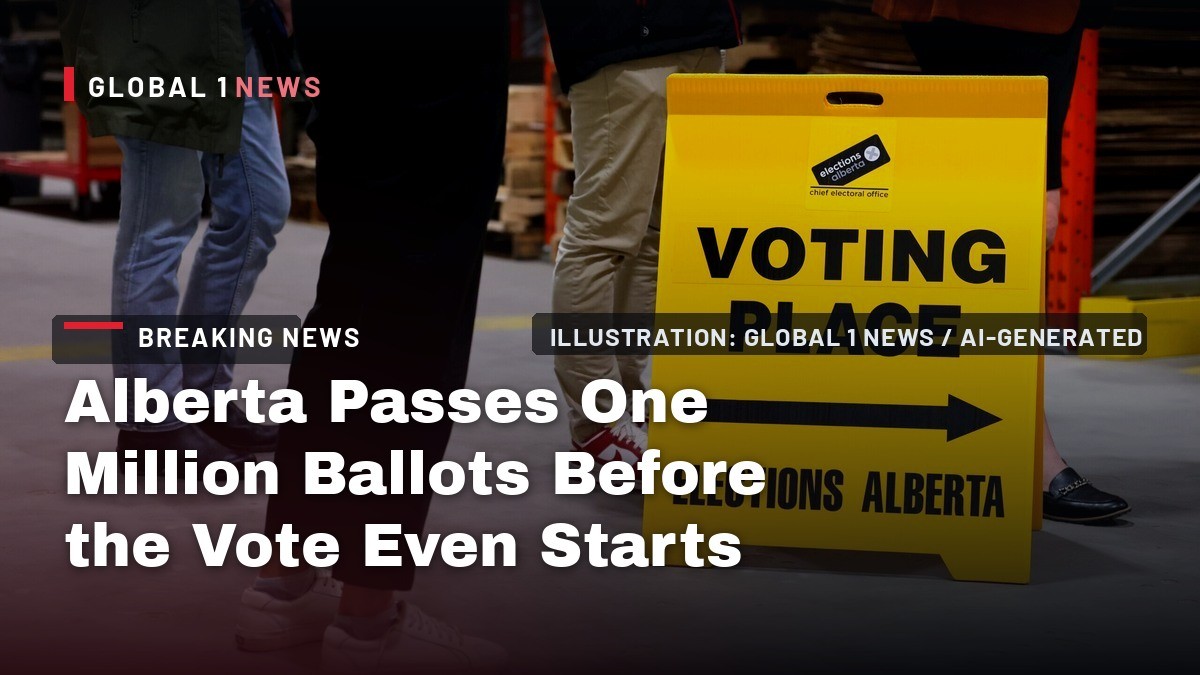
Alberta's referendum has passed one million ballots cast before voting day. Advance polls close Saturday night, and Elections Alberta is preparing for turnout the province has not seen in a generation.
Alberta Passes One Million Ballots Before the Vote Even Starts
Edmonton, Alberta — More than one million ballots have already been cast in Alberta's referendum, Elections Alberta said, and advance polls are still open. Referendum day is Monday, 19 October.
The Million-Ballot Mark
Ballots cast in Alberta's referendum surpassed one million as of 10:30 p.m. local time on Thursday, 15 October, according to Elections Alberta. The figure covers the advance polls and the special ballots that had been received and processed.
The agency is preparing for record turnout of 80 to 85 per cent of Alberta's nearly three million electors. The Angus Reid Institute says that would far outpace the 55 per cent average turnout of the past five provincial elections.
For comparison, in the 2023 provincial election there were 757,453 ballots cast in the advance polls out of 1,764,915 total valid ballots counted across Alberta, according to CBC News. The current advance period runs from Tuesday, 13 October, to Saturday, 17 October.
What the Advance Numbers Show
Advance poll daily totals were 174,532 on Tuesday, 13 October, 186,742 on Wednesday and 168,230 on Thursday, according to CityNews Edmonton and the Edmonton Journal. CTV News renders the same three days as 174,500, 186,700 and 168,200, "for a total of 529,400 votes over three days of advance polls."
Special ballots received and processed stood at 454,000 as of Wednesday's count, the Edmonton Journal reported on 15 October, which brought the running total of votes cast to 815,274 on Thursday's figures. CBC News reported on Wednesday that 418,000 completed special ballot packages had been received and processed, and that roughly 658,000 mail-in ballots were requested last month.
More than 300 advance polling stations are operating across the province, and more than 1,400 polling stations will be open on Monday from 9 a.m. to 8 p.m.
Ten Questions, One About Leaving
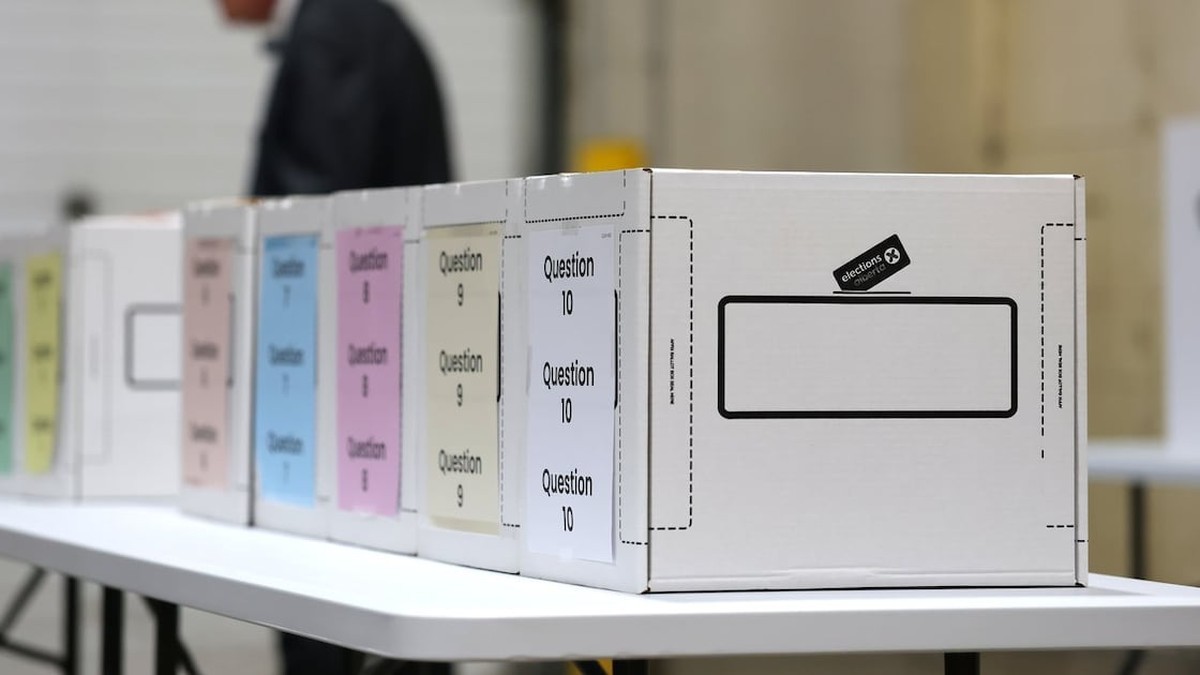
There are ten referendum questions, each on a separate numbered and colour-coded ballot. Vote-by-mail ballots are all white. Voters may choose which questions, if any, they wish to vote on.
Question 10, the choice question and the last in the stack, asks whether Alberta should remain a province of Canada or whether the Government of Alberta should commence the legal process required under the Canadian Constitution to hold a binding provincial referendum on whether or not Alberta should separate. Option 1 is to remain. Option 2 is to commence that process.
Questions 1 to 9 are yes-or-no. Five cover immigration, access to provincially funded programs and services, residency requirements for social supports, fees for some non-permanent residents using health care and education, and proof of citizenship to vote. Four are constitutional: abolishing the unelected federal Senate, letting provinces appoint superior court judges, opting out of federal programs without losing funding, and giving provincial laws priority over federal law in shared areas.
One point the coverage does not settle. Elections Alberta's own page records the orders covering the separation question and the five immigration questions as stating the results "are not to be binding," while a CityNews report describes the four constitutional questions as those "whose results would be binding."
Carney's Closing Argument
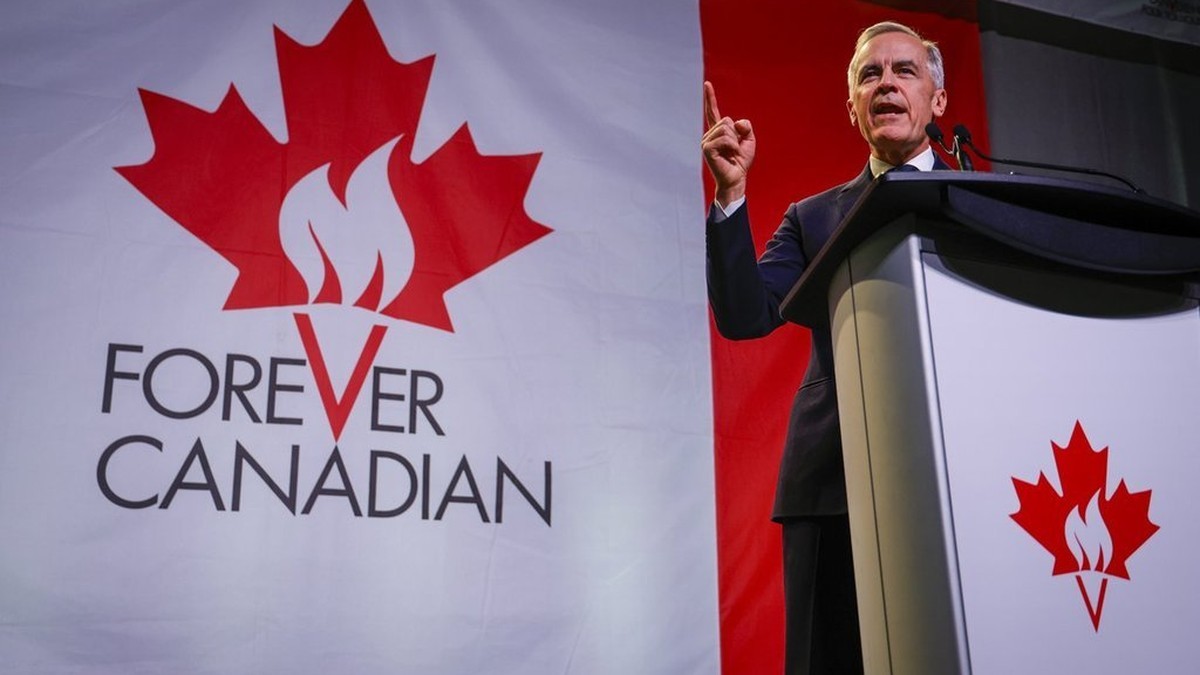
Prime Minister Mark Carney spoke at a Forever Canadian rally at Calgary's BMO Centre on Thursday night. The Prime Minister's Office estimated at least 5,000 people attended. Many in the crowd wore red and white and hoisted hockey sticks with Canadian flags.
"The stakes are high," Carney said. He said the world has become more dangerous and divided, and that some outside Canada's borders are working to "break us so they can own us." He told the crowd: "At this pivotal moment, Albertans have a choice: to build a stronger Alberta and an even greater Canada to leave for our children or we can burden them with years of deep division and great uncertainty."
Carney called a vote against Canada a dangerous bluff that could lead to years of lost opportunities. "Don't let anyone tell you this is already decided," he said. He urged Albertans to reject all nine other questions as well. He was due to rally again in Edmonton on Friday and to meet business leaders with Premier Danielle Smith in Red Deer. Federal Conservative Leader Pierre Poilievre was scheduled to speak on Canadian unity in Calgary on Friday.
The Other Campaign
The Let Alberta Decide campaign, launched in Calgary in June, has organised rallies, convoys and advertising, and is urging supporters to bring other voters to the polls through an initiative it calls "Bring Your Ten."
Kathy Flett, co-founder of the Alberta Women's Independence Network, told a pro-independence event in Calgary on 13 October: "I cannot stress enough how important it is to get out there and vote on this, because I don't know when the next opportunity might be if we don't get it."
Fellow organiser Tanya Clemens asked supporters to tell ten people they know about the issues and to ask each to invite three more. "People get busy, people get apathetic, and sometimes all it takes is a phone call or a quick text message to help someone to remember to cast their ballot," she said.
Edward Gao, 33, who is helping organise the campaign, said support was particularly strong in parts of rural Alberta. "Our voters are more motivated," he said.
Smith Urges Albertans to Stay
Premier Danielle Smith cast her own ballot for Option 1, to remain in Canada, at an advance poll on Wednesday. She said the best way to "send Ottawa a message" about the province's grievances is to give her government "a strong mandate on the other nine questions."
Smith's government committed $4 million to an advertising campaign pushing voters to support the nine questions and a "strong and sovereign Alberta within a united Canada." The Prime Minister's Office said it is spending about $250,000 on its own ad campaign.
Asked whether a second referendum could be called even if Albertans vote against beginning the legal process of separation, Smith told CBC's The National: "Not as long as I'm premier." She added: "That's, to me, what option one means. If you vote to remain in Canada, you are rejecting option two, which is to start the legal process to hold a binding referendum."
CTV News live coverage on Friday was headlined with Smith urging Albertans to "remain in Canada" while Carney said, "let's move forward together."
What the Polls Say
The Angus Reid Institute, in an online survey conducted from 13 to 15 October among a randomized sample of 1,010 Canadian adults resident in Alberta, found 66 per cent back Option 1 and 34 per cent support holding a future binding separation referendum.
Among Option 2 supporters, the motivation is less often separation itself, at 37 per cent, and more often sending a message to Ottawa, at 60 per cent. Seventy-six per cent now call the referendum very important to the province's future, up from 67 per cent in August, and four in five say their mind was already made up before the campaign began.
A Léger poll conducted from 2 to 4 October found 70 per cent backed staying in Canada, 22 per cent supported a binding referendum on separation and 7 per cent were undecided.
A Canada Pulse Insights survey for CityNews, released on Friday, found 67 per cent of Calgarians and 64 per cent of Edmontonians support requiring documents such as a passport or birth certificate to vote, and 59 per cent in both cities back more provincial control over immigration. The four constitutional questions are far more closely divided, but a majority of "very definite" voters oppose each of them, which the firm says could tilt results toward the "No" side if committed turnout stays high.
How the Ballots Will Be Counted
Ballots are counted by hand. Results are reported in ballot order, which means Question 10 is counted first at each voting location and station. Results are published on Elections Alberta's results website as they are received from returning officers.
The Referendum (General) Regulation requires the unofficial count to be completed within 12 hours after the close of voting for one or two questions, 24 hours for three or four, 36 hours for five or six, and 48 hours for seven or more. Canada's National Observer reports that Elections Alberta has until 21 October to release the vote counts from paper ballots.
Scrutineers are permitted for each official party and for each proponent of a question arising from a successful citizen initiative petition. More than 46,000 people had been hired by Wednesday, and the agency says it has hired 47,000 workers for the referendum. More than 70,000 people applied to work as election officers.
The Foreign-Influence Question
More than one-third of Albertans say foreign interference had a major effect on the campaign, the Angus Reid Institute found, amid reports of meetings between separatist leaders and officials in the Trump administration and of Russian-linked disinformation networks amplifying separatist narratives online.
The Globe and Mail reported on 3 October that Republican political operatives were in Alberta this year to assist the separatist campaign, and that separatist figures offered access to fresh water and royalties on crude oil at meetings with the State Department. Premier Danielle Smith called the idea "absurd" and "ridiculous," telling reporters it is "a decision that Albertans would make." CBC News has said it has not independently confirmed the details of the Globe report.
More than $1.8 million has been spent by third-party advertisers during the campaign, one-third of it by a pro-separatist organisation. Elections Alberta said its service centre was being overwhelmed by calls about Forever Canadian rallies this week and that the calls were delaying its response to electors overall.
What Comes After Monday
NDP Leader Naheed Nenshi said there would be no more referendums should he be elected premier. He called Smith's similar commitment a "con," arguing that a defeat for the separation question would leave the government without a legal path to another referendum before the next election.
Smith has not committed to a timeline for a binding referendum should Option 2 win. UCP party president Rob Smith told The Globe and Mail in May that he believed the majority of UCP members would vote in favour of separation, then said last month that the party was remaining "as neutral as possible" on the question.
UCP MLA Jason Stephan, the member for Red Deer-South, confirmed at a September town hall that he would select Option 2. "Option 2 puts Ottawa on notice. That is the right way," he wrote in a social media post.
Angus Reid also found that 62 per cent of Albertans agree there will never be an end to the separatist movement in the province, and that 64 per cent of Option 2 voters would support or consider supporting an independence party at the next provincial election in 2027.
The Bottom Line
No result exists yet, and ballots are not counted before the close of voting. Advance voting ends Saturday night and referendum day is Monday. Elections Alberta states on its own page that it "may not interpret the questions provided by the Government of Alberta," and that questions about what each one means should go to the government or an MLA.
Both campaigns say turnout will decide it. Former premier Jason Kenney, who co-chairs the Alberta and Canada: Stronger Together organisation with former premier Rachel Notley, told an Edmonton Chamber of Commerce event on 13 October: "Spend a few minutes in the next week reaching out to people like that. That will be the difference maker."
If you are voting in Alberta, the ten questions are published on the Elections Alberta website, and the agency is asking voters to read them before arriving, because the lines have been long.
By Jessica Ali, Staff Writer
This article was produced with AI-assisted research and editorial support. Sources: Elections Alberta, CTV News, CBC News, CityNews Edmonton and Calgary, Edmonton Journal, Global News, Canada's National Observer, The Epoch Times, Angus Reid Institute, Léger and The Globe and Mail.
What's Your Reaction?
 Like
0
Like
0
 Dislike
0
Dislike
0
 Love
0
Love
0
 Funny
0
Funny
0
 Wow
0
Wow
0
 Sad
0
Sad
0
 Angry
0
Angry
0

Editor-in-Chief at Global1.News. Atlanta-based journalist who cuts through the BS and tells it like it is. Lead anchor, host, and the voice you hear when the spin stops and the truth starts.












Comments (0)