
Philippines Rebuts Chinese Warning as Regional Tensions Escalate
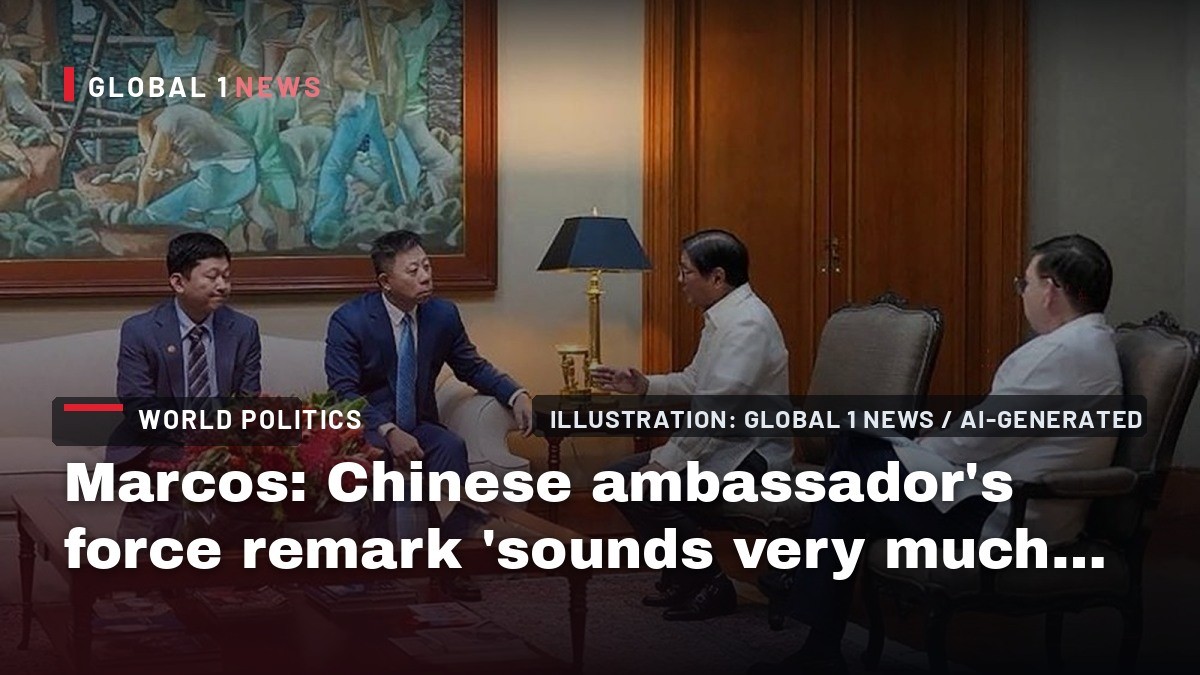
In the latest episode of East Asian diplomatic friction, Manila responded sharply to a comment by the Chinese ambassador that was interpreted as a warning of potential confrontation.
In the latest episode of East Asian diplomatic friction, Manila responded sharply to a comment by the Chinese ambassador that was interpreted as a warning of potential confrontation. The Philippine foreign ministry characterised the ambassador's remarks as “a thinly veiled threat,” while Beijing dismissed Manila’s reaction as an over‑interpretation of a routine diplomatic statement. The exchange, captured in the recent CNA broadcast on 16 October 2026, underscores a growing pattern of assertive posturing by both sides in the South China Sea, a region already fraught with overlapping claims and frequent naval encounters. This article examines the nuances of the Philippine rebuttal, situates it within broader regional security dynamics, and considers the implications for Japan’s own maritime surveillance strategy, which was also highlighted in the same broadcast.
Philippine Reaction to the Chinese Ambassador’s Remarks
The Philippine government’s response was swift and unequivocal. In a press briefing, officials described the Chinese ambassador’s statement as “a thinly veiled threat,” suggesting that Beijing was signalling a willingness to use force if Manila persisted in its claims over contested waters. The language used by Manila indicates a heightened sensitivity to any perceived escalation, reflecting the Philippines’ recent efforts to strengthen its defensive posture through increased procurement of naval assets and deeper security cooperation with the United States.
Beijing, for its part, characterised Manila’s interpretation as an over‑reaction, stating that the ambassador’s comments were merely a “standard diplomatic expression of concern.” The Chinese side emphasised that dialogue remains the preferred avenue for resolving disputes, a narrative consistent with its broader diplomatic messaging across the region. The divergent readings of the same statement illustrate the fragile trust that underpins bilateral relations and highlight how diplomatic language can be weaponised in the public sphere.
Analysts note that the timing of the ambassador’s remarks coincides with a series of recent incidents near the disputed Spratly and Scarborough shoals, where Chinese and Philippine vessels have conducted parallel patrols. While the video report does not detail those incidents, the backdrop of ongoing maritime activity adds weight to Manila’s perception of threat. The Philippine response, therefore, can be seen as both a defensive posture and a signal to domestic audiences that the government remains vigilant in protecting national sovereignty.
Singapore’s Haze Response and Regional Environmental Cooperation
In a separate segment, the CNA broadcast turned to the worsening haze situation caused by Indonesia’s forest fires. Smoke from the blazes has drifted across the region, prompting Singapore’s government to outline a comprehensive response plan. Authorities announced the distribution of masks to vulnerable populations and warned that air quality could reach hazardous levels if the situation deteriorates further.
Singapore’s contingency measures also include the possibility of temporary school closures, a step that underscores the seriousness with which the city‑state is treating the health risks posed by the haze. The government’s proactive stance reflects its broader commitment to regional environmental cooperation, particularly through mechanisms such as the ASEAN Agreement on Transboundary Haze Pollution, which seeks to hold polluting parties accountable.
The haze episode illustrates how environmental challenges can intersect with security concerns. Poor air quality not only threatens public health but can also strain emergency services and disrupt economic activity. For Japan, which monitors regional environmental trends as part of its broader risk assessment framework, the haze underscores the need for robust disaster‑response coordination with ASEAN partners, especially given the potential for climate‑related incidents to exacerbate existing geopolitical tensions.
Japan’s Commitment to Enhanced Maritime Surveillance
Later in the broadcast, Japan announced a plan to ramp up maritime surveillance around the Ryukyu Islands, particularly Okinawa, following the recent approach of a Chinese aircraft carrier. The Japanese Ministry of Defense indicated that additional assets, including patrol aircraft and maritime patrol vessels, will be deployed to monitor the area more closely.
This decision reflects a strategic shift in Japan’s defense posture, moving from a primarily deterrent stance to a more active monitoring role in the East China Sea. By increasing surveillance capabilities, Tokyo aims to obtain real‑time data on foreign naval movements, thereby reducing the risk of accidental encounters and enhancing its ability to respond swiftly to any incursion.
The move also aligns with Japan’s broader security policy, which has increasingly integrated maritime domain awareness with its alliance commitments to the United States. Strengthening surveillance around Okinawa, a key US‑Japan joint base, serves both national and alliance interests, ensuring that any potential threats are identified early and communicated through established channels.
South Korea’s Dismissal of North Korean Missile Skepticism
In a brief segment on the Korean Peninsula, Seoul dismissed Pyongyang’s scepticism regarding its hypersonic missile program. The North Korean government had expressed doubts about the reliability of its own weapons, a statement that was quickly rebuffed by South Korean officials who characterised the remarks as “political posturing.”
South Korea’s dismissal signals confidence in its own defensive capabilities and a refusal to be swayed by North Korean self‑criticism, which is often viewed as a tactic to lower expectations and reduce external pressure. The exchange highlights the ongoing information warfare that accompanies the physical arms race on the peninsula.
For Japan, the Korean situation is closely watched, as any shift in North Korean missile development directly impacts regional security calculations. Japan’s own surveillance upgrades, as noted earlier, are partly motivated by the need to track not only Chinese naval activity but also the trajectories of potential missile launches from the Korean Peninsula.
Taiwan’s Prospective AI Chip Export Controls
The broadcast also reported that Taiwan is preparing to implement stricter export controls on AI chips. While the video did not provide specific regulatory details, the move appears to be a response to mounting pressure from the United States and other allies to limit the flow of advanced semiconductor technology to China.
By tightening export rules, Taiwan aims to align its high‑tech industry with broader geopolitical objectives, ensuring that its critical chip manufacturing capacity is not leveraged to enhance Chinese military AI capabilities. This policy direction reflects a growing trend among technology‑dependent economies to weaponise export controls as a tool of strategic influence.
Japan, a major consumer of advanced semiconductors and a close partner in supply‑chain resilience initiatives, will likely monitor Taiwan’s policy closely. Any disruption to chip flows could have downstream effects on Japanese manufacturers of automotive electronics, robotics, and other high‑tech sectors. Consequently, Tokyo may consider coordinated policy measures with Washington and Taipei to mitigate supply‑chain risks while supporting broader security objectives.
China’s Outreach to the European Union Amid Regional Tensions
In the final segment of the CNA report, Beijing expressed a willingness to deepen dialogue with the European Union. The Chinese foreign ministry’s statement came at a time when Europe is reassessing its trade and technology relationships with China, particularly in light of concerns over market access and strategic competition.
China’s overture can be interpreted as an attempt to balance its diplomatic focus between the Asia‑Pacific and Europe, seeking to secure economic partnerships even as it faces heightened scrutiny in the West. By emphasizing dialogue, Beijing may be aiming to defuse potential trade frictions and maintain a foothold in the European market for its industrial and technology sectors.
For Japan, the EU’s stance on China is of strategic interest. As a fellow major economy, Japan often aligns its trade policies with European partners, especially concerning technology standards and supply‑chain security. Beijing’s outreach therefore adds another layer of complexity to Japan’s own diplomatic calculus, as Tokyo must navigate a multi‑regional environment where economic and security considerations are increasingly intertwined.
By Kenji Tanaka, Staff Writer
This article was produced with AI-assisted research and editorial support. Reporting is based on the source material cited below. Sources: CNA video report (16 October 2026); CNA; Global1.News
What's Your Reaction?
 Like
0
Like
0
 Dislike
0
Dislike
0
 Love
0
Love
0
 Funny
0
Funny
0
 Wow
0
Wow
0
 Sad
0
Sad
0
 Angry
0
Angry
0

Japan Correspondent at Global1.News. Tokyo-based voice covering Japanese politics, technology, economy, and culture. Tracks the intersection of tradition and innovation in one of the world's most dynamic societies.













Comments (0)