
Maldives Opposition Eyes Sweeping Constitutional Overhaul
The Maldivian Democratic Party (MDP) emerged from its fifth National Congress this week with a bold constitutional agenda that could reshape the archipelago’s political architecture.
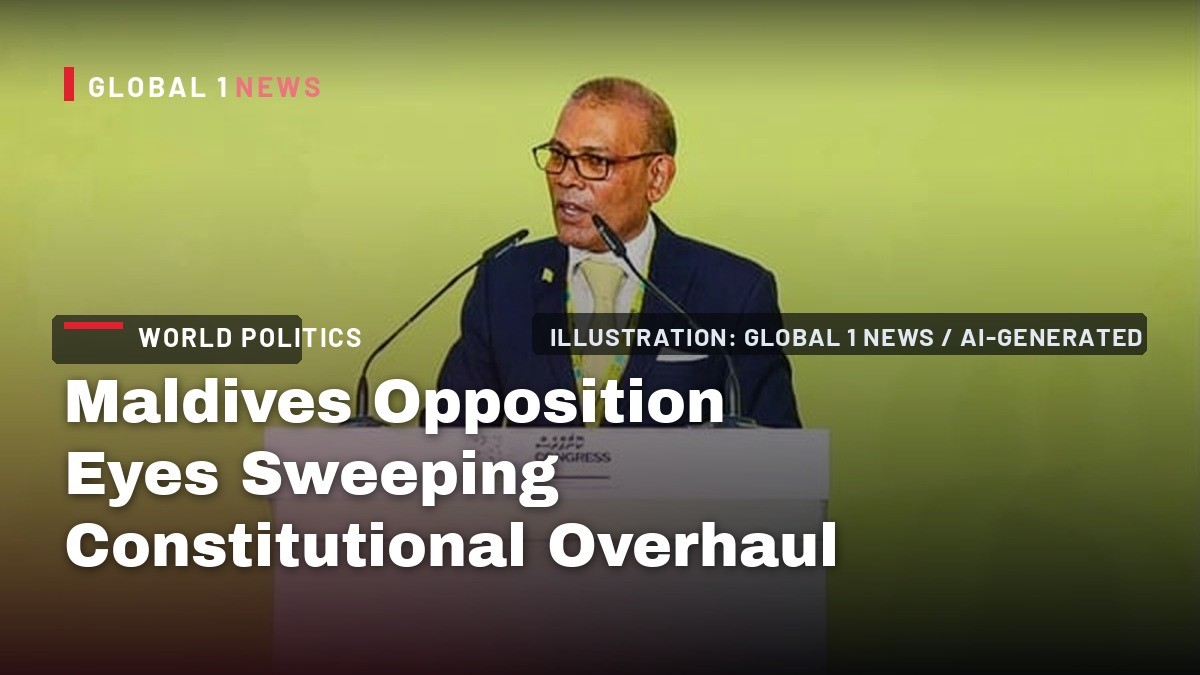
The Maldivian Democratic Party (MDP) emerged from its fifth National Congress this week with a bold constitutional agenda that could reshape the archipelago’s political architecture. Endorsed by 520 of the 563 delegates present, the “Bodu Badhalu” (Big Change) program proposes a fundamental split of executive power, a reconfiguration of the legislature and new mechanisms for citizen oversight. While the plan reflects long‑standing ambitions of former president Mohamed Nasheed, it also signals a dramatic reversal in the party’s internal dynamics, with Nasheed now back at the helm after a period of estrangement. The following analysis unpacks the key provisions of the proposal, the political calculations behind it, and the prospects for implementation in a Maldives still navigating the legacy of its 2008 constitution.
From Party Reform to Constitutional Overhaul
The congress first turned inward, abolishing the posts of party president and vice‑president and consolidating authority under the chairperson, a role currently held by former president Mohamed Nasheed. This structural change was not merely symbolic; it cleared the procedural path for the sweeping constitutional agenda that would dominate the remainder of the meeting. The Bodu Badhalu program, formally submitted by former Economic Development Minister Fayyaz Ismail, was endorsed by an overwhelming majority of delegates, indicating a unified front within the MDP for the reforms.
The proposal frames the 2008 constitution as insufficiently protective of fundamental rights and overly permissive of executive dominance, especially when the president enjoys a parliamentary majority. By targeting the “excessive authority” of the president, the MDP seeks to address what it perceives as systemic vulnerabilities that could threaten democratic accountability.
The Dual‑Executive Model: Head of State and Head of Government
At the heart of Bodu Badhalu is the division of the executive into two distinct offices. The head of government would be directly elected by voters in a national election, yet remain removable by parliament, creating a hybrid of presidential legitimacy and parliamentary accountability. Conversely, the head of state would be appointed by a special assembly composed of parliamentarians and elected local councilors, a mechanism designed to blend national and local representation.
This arrangement departs from the classic Westminster model that Nasheed has championed for years. While the former president has long advocated for a parliamentary system, the dual‑executive structure offers him a potential pathway back to high office without directly contesting the presidency in the 2028 election. Nasheed has indicated interest in serving as head of state, with Fayyaz positioned as a prospective head of government, though the precise titles and powers of these roles remain undefined.
Legislative Reforms: Fixed Seats, Preferential Voting and Gender Quotas
The Bodu Badhalu program also targets the legislature, proposing a fixed limit on the number of parliamentary seats—a departure from the current practice of expanding seats in line with population growth. By stabilising the size of the legislature, the MDP aims to enhance predictability and reduce the politicisation of seat allocation.
Additional reforms include the introduction of preferential voting, a system that could encourage broader candidate appeal and mitigate the dominance of party elites. The proposal also calls for reserved seats for women, reflecting a commitment to gender parity, and entertains the possibility of a bicameral parliament, though details on the composition and powers of a second chamber are not specified.
Citizen‑Centred Checks: Recall, Referendum and Judicial Oversight
Beyond restructuring institutions, Bodu Badhalu seeks to empower citizens directly. The program would grant voters the power to recall elected officials, a tool that could serve as a deterrent against misconduct. Moreover, the removal of Supreme Court judges would require approval through a public referendum, linking judicial accountability to popular consent.
These measures aim to fortify safeguards against executive overreach, a central grievance of the MDP. By embedding recall and referendum mechanisms, the party hopes to create a more participatory democratic framework that can respond swiftly to abuses of power.
Reforming Independent Bodies to Reduce Political Interference
The proposal further addresses the perceived politicisation of independent constitutional bodies, such as the Election Commission and anti‑corruption agencies. While the text does not detail specific changes, it calls for reforms to appointment processes and oversight structures, suggesting a desire to insulate these entities from partisan control.
Strengthening the independence of such bodies aligns with broader democratic norms and could enhance the credibility of future elections, a crucial factor given the Maldives’ history of contested polls and allegations of electoral manipulation.
Political Calculus: Nasheed’s Return and Fayyaz’s Ambitions
The resurgence of Nasheed within the MDP is a central narrative behind Bodu Badhalu. After being sidelined as a pariah and briefly leaving to form The Democrats, Nasheed rejoined the MDP in 2025, aided by former Solih loyalists, notably Fayyaz. The resignation of Fayyaz as chairperson created a vacancy that Nasheed seized, consolidating his influence over the party’s agenda.
Fayyaz, who previously opposed Nasheed’s constitutional reforms, now backs the proposal, positioning it as a vehicle to secure Nasheed’s support for his own presidential bid in 2028. This alliance appears mutually beneficial: Nasheed gains a plausible route back to executive power without contesting the presidency, while Fayyaz secures a powerful ally who can mobilise the party base behind his candidacy.
Implementation Prospects and Regional Implications
Even with strong internal backing, the Bodu Badhalu program faces significant hurdles. Constitutional amendments in the Maldives require a super‑majority in parliament and, for certain changes, a national referendum. The current parliamentary composition, shaped by the 2023 elections, includes a strong opposition bloc that may resist reforms perceived to dilute presidential authority.
Furthermore, the proposal’s novelty—particularly the dual‑executive model—has no direct precedent in Maldivian governance, raising questions about the practical delineation of powers and potential institutional friction. International observers, including regional bodies such as the South Asian Association for Regional Cooperation (SAARC), will likely monitor the Maldives’ constitutional trajectory, given its strategic location and growing role in maritime security.
In sum, the MDP’s Bodu Badhalu agenda represents a bold attempt to recalibrate the balance of power in the Maldives, intertwining long‑standing reformist aspirations with the personal ambitions of Nasheed and Fayyaz. Whether the proposal can navigate the procedural rigours of constitutional change and garner sufficient parliamentary and public support remains uncertain. Nonetheless, its endorsement marks a decisive shift in Maldivian politics, signalling that the debate over the nation’s governance structure is far from settled.
This article was produced with AI-assisted research and editorial support. Reporting is based on the source material cited below. Sources: The Diplomat; thediplomat.com; Global1.News (16 October 2026).
By Kenji Tanaka, Staff Writer
What's Your Reaction?
 Like
0
Like
0
 Dislike
0
Dislike
0
 Love
0
Love
0
 Funny
0
Funny
0
 Wow
0
Wow
0
 Sad
0
Sad
0
 Angry
0
Angry
0

Japan Correspondent at Global1.News. Tokyo-based voice covering Japanese politics, technology, economy, and culture. Tracks the intersection of tradition and innovation in one of the world's most dynamic societies.















Comments (0)