
Machado Calls Trump's Venezuela Oil Partner Corrupt and Says She Was Left Out of the Talks
María Corina Machado accused Alejandro Betancourt, the Trump administration's new oil partner in Venezuela, of "obscene corruption" and said the United States left her out of the US-backed talks in Caracas, a claim the State Department disputes.
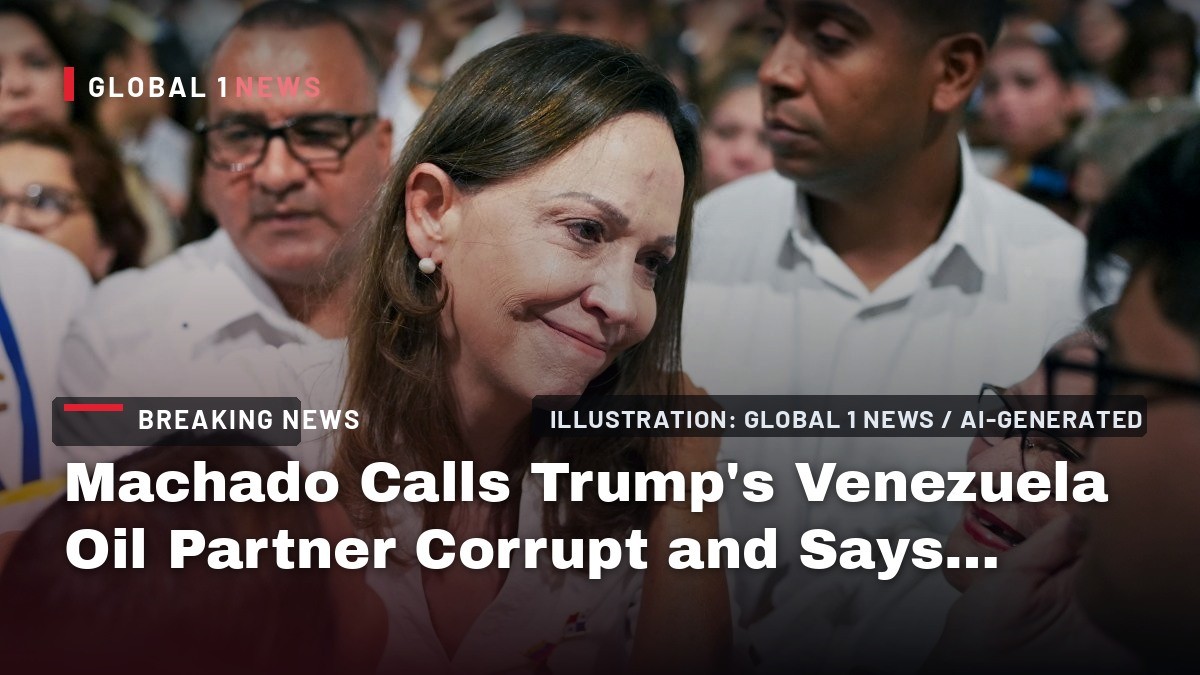
Venezuela's exiled opposition leader María Corina Machado has accused Alejandro Betancourt, the Trump administration's new oil partner in Venezuela, of "obscene corruption," calling him one of the main culprits behind the country's electricity crisis.
The interview, published by The New York Times on Thursday, was the first time the 2025 Nobel Peace Prize laureate had publicly weighed in on Betancourt, whose firm North American Blue Energy Partners holds 100-year concessions to 17 oil fields.
Machado also said the United States had left her out of the US-backed talks now under way in Caracas, a claim the State Department disputes.
Machado Calls Trump's Venezuela Oil Partner Corrupt and Says She Was Left Out of the Talks
Panama City, Panama — María Corina Machado, speaking from Panama, said the man Washington chose to hold a fifth of her country's oil reserves is a symbol of the corruption she says has wrecked it.
A Break With Washington, in Her Own Words
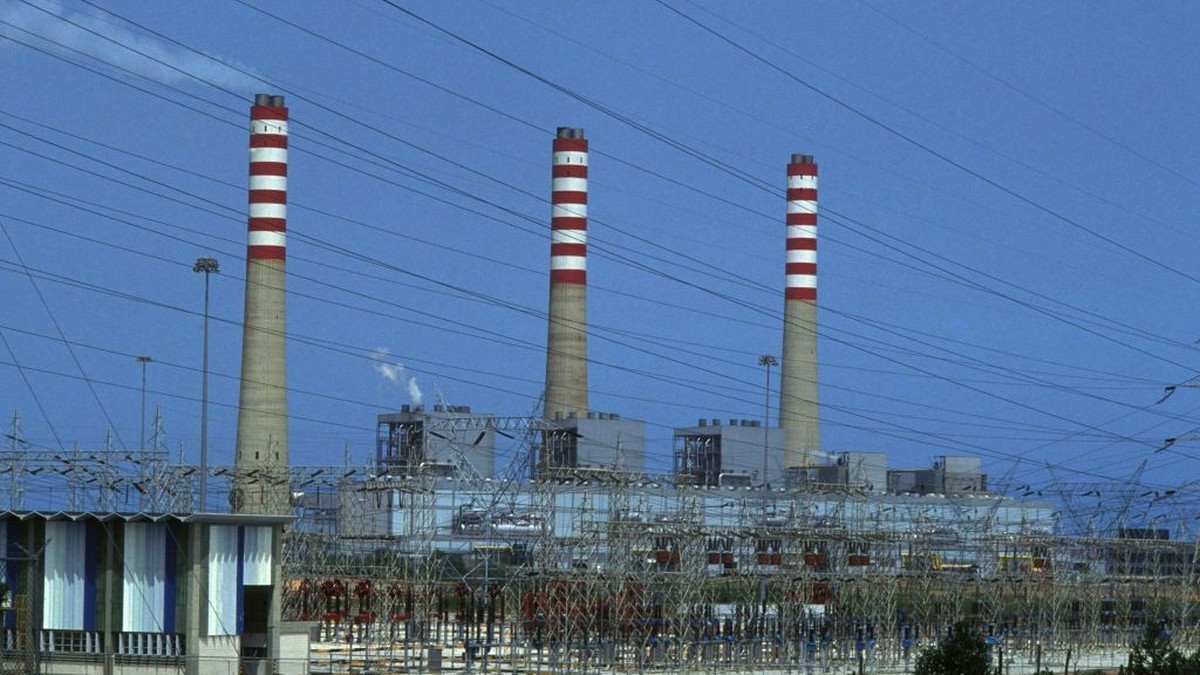
Interviewed in Panama, where she is temporarily staying, Machado accused Alejandro Betancourt of "obscene corruption" and said he would not be a viable business associate if she took power. She identified him as "one of the main culprits" for "what our people are suffering right now" regarding Venezuela's electricity crisis. She said independent audits, inside and outside Venezuela, have shown the businessman amassed his fortune through no-bid power-plant contracts that overcharged the state.
On the agreements being signed, she drew a careful line: "I want to be very clear now: if these contracts that are being signed, these agreements that are being signed, comply with Venezuelan law, they will be respected." Partnerships struck outside the bounds of the law, or with actors tainted by financial irregularities, would lack institutional legitimacy, she said.
The Two Accounts of Her Exclusion
Machado said the United States had not included her in the negotiations now taking place in Caracas between Venezuela's interim government and a different opposition faction. The State Department disputes that account.
A State Department spokeswoman said Machado's party had been invited to the talks and that "Maria Corina has every right to enter her country whenever she wants to return." Both accounts are now on the record, and the disagreement is itself the story: the administration's chosen negotiating partner in Caracas is not the opposition figure it once promoted as Venezuela's democratic future.
Secretary of State Marco Rubio has publicly urged all opposition sectors into the room. After meeting Dinorah Figuera on 9 October he said: "We ask all members of the opposition, and all members of society, to participate in and support this process." He called it "the best opportunity Venezuela has had in a long time to restore democracy," adding: "Our hope is not simply that Venezuela hold an election, but also that it have a lasting democracy." Machado has not said whether she would accept an invitation.
The Talks She Is Not In
A third round of US-backed talks between Venezuela's interim government and opposition representatives began on Wednesday. A senior US State Department official, speaking on condition of anonymity, said the latest negotiations would focus on "the political process, on elections, on involvement of different political parties, and other things like that."
The round is led by Dinorah Figuera for the opposition-held National Assembly elected in 2015, and by Jorge Rodríguez, president of the current National Assembly and Delcy Rodríguez's brother. The State Department said the third round will focus on the court and on guarantees for parties and candidates, with later rounds to cover reform of the National Electoral Council and the return of all political leaders. Machado and former presidential candidate Edmundo González stayed away in August, saying of the mechanism: "It is not our place to explain its scope or decisions. Those behind it must inform the country of its objectives, methodology, and timeline."
Who Alejandro Betancourt Is
Leopoldo Alejandro Betancourt López is a 46-year-old Venezuelan born in Caracas. His estimated net worth is around $2.6bn, and he holds a degree from Suffolk University in Boston. He founded the engineering firm Derwick Associates with a cousin; during the electricity crisis of the late 2000s under President Hugo Chávez it received 12 government contracts awarded without bidding, worth $5bn in total, and built 11 new power plants.
He and other young entrepreneurs trading with the government were nicknamed "bolichicos." In April 2024 he co-founded North American Blue Energy Partners and took full control a year later. NABEP is headquartered in Bridgetown, Barbados, and is Venezuela's second-largest operator behind Chevron. He also leads the O'Hara administration, a Spain-based investment group, and is president and one of the main shareholders of Hawkers, the sunglasses e-commerce company. His business network spans some 50 companies in 16 countries, according to Transparency Venezuela. His lawyer, Jon Sale, rejects the "bolichicos" label: "It's a term coined by the media, used to describe a group of young people whose only commonality is their success."
The Audits Behind the Accusation
Transparencia Venezuela accused Derwick of inflating prices during the drought period, and a 2018 report by Transparency Venezuela estimated that 11 of the projects awarded to Derwick should have cost $2.1bn — which, if accurate, would mean the government overpaid by 138%. In 2021 the Organized Crime and Corruption Reporting Project said Betancourt was involved in corruption and money-laundering networks linked to the Venezuelan state.
Over the past decade he has faced money-laundering investigations in the United States, Spain, Switzerland and Andorra. In 2025 he was detained twice by British police in London, and Spanish authorities raided a palatial estate he owned in the province of Toledo. Both actions were reportedly linked to a Swiss money-laundering investigation. In 2013 the former US ambassador to Venezuela, Otto Reich, sued Betancourt and two associates in a US court, alleging they paid "large sums to [Venezuelan] public officials in exchange for awarding them contracts." The case was dismissed five years later. He has denied wrongdoing and has faced no formal criminal charges or convictions. His lawyer has called the overbilling allegations politically motivated smears.
The Oil Deal at the Center of It
Trump announced the agreement on Friday 28 August: the US taking partial control of a fifth of Venezuela's vast oil reserves, with Washington acquiring majority control over more than 65 billion barrels of proven reserves through a partnership with private business. The White House released further detail the following Monday.
Under the deal, Venezuelan interim authorities granted NABEP "100-year concessions for 17 oil fields with proven reserves of approximately 65 billion barrels." Many of those fields were previously owned by Russian or Chinese firms. The Pentagon's Office of Strategic Capital takes a 35% ownership stake in the corporate parent, the State Department gets a guaranteed right to buy 20% of the output at cost, and NABEP has agreed to invest up to $100 billion in new oil infrastructure. The White House called the arrangement "at zero cost" to the United States. Democrat Jack Reed, of the Senate Armed Services Committee, called it "a blatant abuse of power and taxpayer dollars." How the partnership came about matters here: Axios reported that in the first minutes after the operation that seized Maduro, Betancourt spoke with Delcy Rodríguez and persuaded her to speak to Rubio. His lawyer corroborated the account: "He acted as an intermediary."
Nine Months of Distance
Nicolás Maduro and his wife Cilia Flores were seized in a US military operation on 3 January — more than nine months ago. Delcy Rodríguez, a former Maduro vice president, became interim president, and Washington has described a three-phase roadmap: economic stabilization, foreign investment, then negotiations leading to elections. Machado left Venezuela in hiding in December 2025 to accept her Nobel Prize in Oslo and has not been back. She leads Vente Venezuela, a liberal, pro-market party.
The distance has been building since before Maduro fell. CNN reported in May, citing a Qatari source, that in Qatar-mediated talks beforehand neither side discussed a role for Machado in a post-Maduro transition. Trump said at the time that he did not think she had the "support" needed to lead one. She later gave him her Nobel medal at the White House; press secretary Karoline Leavitt said his position had "not changed." On 5 October he declined to endorse her return, calling her "an excellent woman" and adding, "everything will be fine."
What the Polling Actually Shows
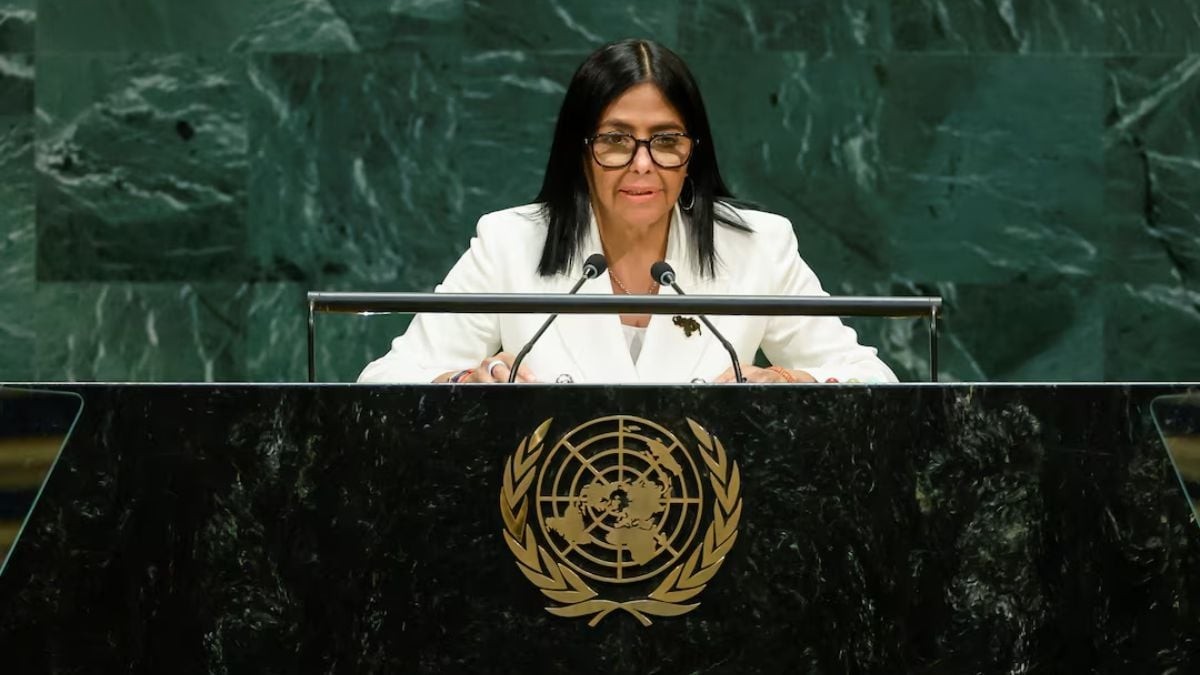
A Bloomberg News poll found 52 percent of respondents would support Machado in a presidential election, against 19 percent for Delcy Rodríguez. On Saturday, speaking to reporters in Panama City, Machado said the interim government is preventing her return: "Until now it has not been possible. Evidently the Delcy Rodríguez regime does not want me to be present. They fear my return."
She went further: "They fear my return because they know there is a whole country that is united, ready to move forward in a civic and firm way to complete our task, which is a transition to democracy." She made the case for returning in a New York Post column titled "Why I Must Return to Venezuela and the People Must Vote," describing blackouts of up to 16 hours outside the capital and estimating that $200 billion in private investment could lift national output above five million barrels a day. Machado has proposed holding presidential elections in July 2027, per the Financial Times, while insisting on democratic guarantees and conditions for her return. Prediction market Polymarket gave her a 35.5% chance of entering Venezuela by 31 December.
The Questions Nobody Has Answered
No presidential election date has been set. The interim government has released hundreds of prisoners under an amnesty but has not committed publicly to a schedule. A US State Department progress report published on 9 October said more than 1,000 political prisoners had been freed since January, 177 more releases had been announced since the talks began in August, more than 70 blocked news websites had been restored, and 32 new Supreme Court justices are due to be chosen before December.
What Washington's posture toward Machado's return actually is remains unclear. Interim President Delcy Rodríguez has defended Betancourt, saying he has no pending cases in Venezuela or the US: "Often a person is judged in the media before in the courts." And the numbers used to justify the oil deal are not settled: Al Jazeera puts Venezuela's national output at about a million barrels a day, Reuters put it at 1.25 million, and estimates of NABEP's own production range from 180,000 to 200,000 barrels a day, against Chevron's more than 200,000.
Saturday, and After
Vente Venezuela has called an international protest for Saturday to demand an election date. "This mobilisation seeks to give Venezuelans back their voice," said Luis Tarbay, the party's international coordinator. Machado has vowed to return "sooner than you would expect," in The New York Times's wording; earlier renderings of the same promise have been given as "sooner than expected" and, in Spanish, "antes de lo que imaginan."
She closed the interview with a sweeping line: "Venezuela will be free. We will bring our children back home, build democratic institutions that will last for generations, have open markets that will offer unparalleled conditions for international investment, and turn our country into a source of stability for the entire region."
Whether any of it moves depends on a negotiating room she is not sitting in, and on an oil agreement signed by a man she has just publicly called corrupt.
By Jessica Ali, Staff Writer
This article was produced with AI-assisted research and editorial support. Sources: The New York Times; EFE; El País; Efecto Cocuyo; El Estímulo; AFP; BBC News Mundo; Al Jazeera; The Associated Press; Reuters; CNN.
What's Your Reaction?
 Like
0
Like
0
 Dislike
0
Dislike
0
 Love
0
Love
0
 Funny
0
Funny
0
 Wow
0
Wow
0
 Sad
0
Sad
0
 Angry
0
Angry
0

Editor-in-Chief at Global1.News. Atlanta-based journalist who cuts through the BS and tells it like it is. Lead anchor, host, and the voice you hear when the spin stops and the truth starts.










Comments (0)