
Waymo’s robotaxis are headed to Canada
Waymo’s latest push into Toronto isn’t just another headline about autonomous cars; it’s a litmus test for any tech‑heavy operation that thinks scaling can be done on hype alone.
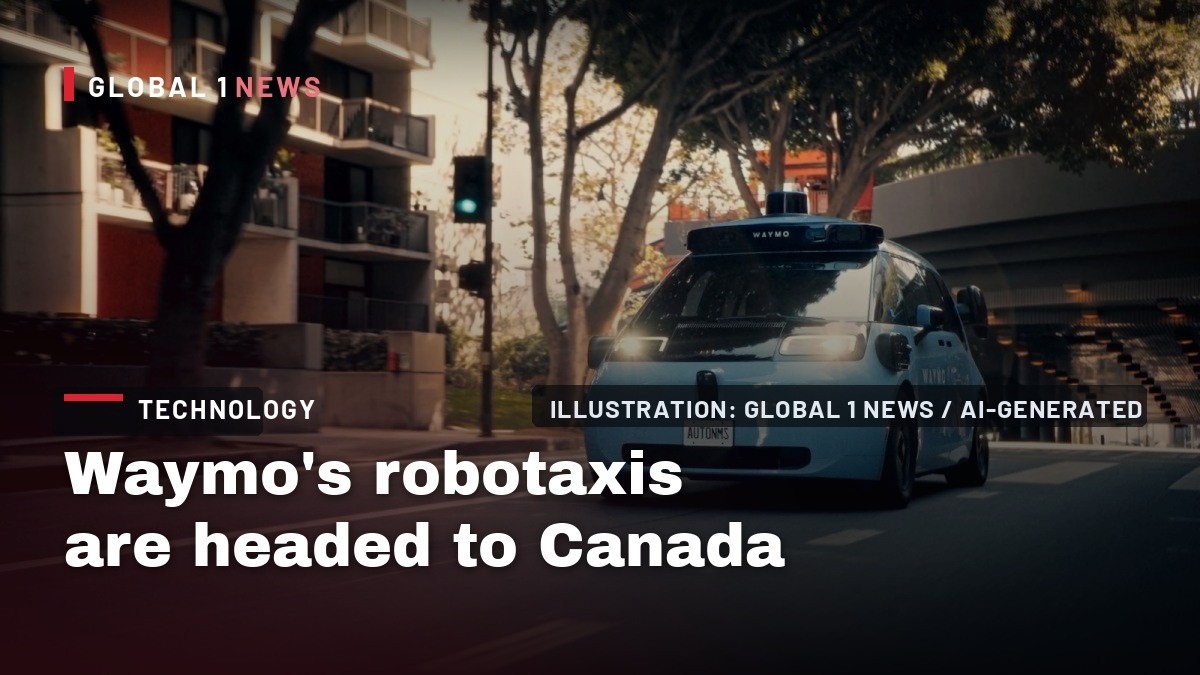
Waymo’s latest push into Toronto isn’t just another headline about autonomous cars; it’s a litmus test for any tech‑heavy operation that thinks scaling can be done on hype alone. Alphabet’s self‑driving unit has just secured the green light to join Ontario’s automated‑vehicle pilot, and the plan is textbook Waymo: start with manual mapping, run a handful of test rides with a safety driver, then pull that driver out and finally open the doors to the public. As a founder who’s been wiring up data centers and managing fleets of servers for a decade, I see the same playbook repeated across the industry—only the stakes are higher when you’re trying to convince regulators and commuters that a car can navigate a wintry Toronto street without a human hand on the wheel.
From Mapping to Public Rides – The Same Old Playbook
Waymo’s blog post makes it clear that the first leg of the Toronto rollout is a manual‑driven mapping sprint. They’ll be driving around the city to create high‑definition maps of the street network, a step that mirrors what they did in Austin, Atlanta, London and Tokyo. The mapping phase is critical because the AV stack leans heavily on precise, centimeter‑level data to make split‑second decisions. In my own world, a mis‑configured network map can bring a whole data centre offline; for Waymo, a bad map can mean a collision.
After the maps are in place, the next stage is testing with a human safety operator on board. This is the “validation driving” phase that Waymo mentions when it talks about partnering with Toronto‑based Element Fleet Management. The operator’s job is to intervene if the vehicle’s perception or planning modules stumble. The eventual goal is to pull the operator out of the seat entirely, then invite the public to hop in. The incremental approach is sensible, but it also reveals a dependency on human oversight that can become a bottleneck when you try to scale from a handful of test cars to a fleet of hundreds.
Rapid Expansion – From Three Cities to Fifteen
Two years ago Waymo was running in only three commercial markets, and now they claim a presence in fifteen U.S. cities, plus testing in London and Tokyo. That’s a massive jump in a short window, and it’s driven by an aggressive “accelerated expansion strategy.” The company is now partnering with third‑party firms to manage local fleets, a move that offloads some of the operational heavy lifting. In Toronto’s case, Element Fleet Management will handle fleet maintenance, validation driving, customer service and operations.
From a risk perspective, handing over fleet management to a local partner can be a double‑edged sword. On one hand you get local expertise and a ready workforce; on the other, you hand over control of a critical component of the service. For independent hosting providers, the lesson is clear: you can outsource data centre operations, but you must retain the ability to audit and intervene when things go sideways. The same applies to AV fleets—if your partner can’t keep the cars on the road, your brand suffers.
Weather as the Ultimate Stress Test
Toronto is the northernmost and likely most wintry city Waymo has tackled so far. Co‑CEO Tekedra Mawakana flagged the climate as a key test of the technology’s “operational savviness.” Snow, ice, and reduced visibility are not just inconveniences; they strain sensor suites, degrade GPS accuracy, and force rapid decision‑making under uncertainty. In my own infrastructure work, a sudden power outage or a cooling failure can cascade into massive downtime if you haven’t built redundancy and rapid response into the system.
The same principle applies here: if Waymo’s sensors can’t see a snow‑covered lane marking, the vehicle must either slow down dramatically or hand control back to a human. That hand‑off is exactly what the safety operator is there for, but it also highlights the fragility of a system that relies on perfect data. Independent operators need to ask themselves whether they can afford to wait for a technology that still wrestles with basic weather conditions before it becomes a reliable revenue generator.
Partnering with Element Fleet Management – A Closer Look
Element Fleet Management is a Toronto‑based firm that will support Waymo’s local operations. The partnership is framed as a job creator, promising “hundreds of jobs” in fleet maintenance, validation driving, customer service and operations. While the headline sounds good for the local economy, the underlying risk is the quality and consistency of those jobs. Validation drivers need to be highly trained to spot edge‑case failures that an autonomous system might miss.
From a founder’s perspective, any third‑party that handles a core service must be vetted rigorously. In my own data‑centre contracts, we demand service‑level agreements that specify response times, escalation paths and audit rights. If Element can’t meet those standards, Waymo’s service quality will suffer, and the public perception of autonomous vehicles will take a hit. Independent hosting providers can learn from this: when you outsource, lock down the metrics that matter, or you’ll be left holding the bag when something goes wrong.
The Business‑Risk Lens – What This Means for Founders
Waymo’s expansion strategy is a textbook case of scaling on hype. The company rides on Alphabet’s deep pockets and brand cachet, but the underlying technology is still in a validation phase. For founders in the hosting or any capital‑intensive sector, the risk is similar: you can’t rely on a big partner’s reputation to mask operational gaps. You need to own the critical path—whether that’s network latency, power redundancy, or in Waymo’s case, sensor reliability in adverse weather.
The fact that Waymo is still a few steps away from public rides in Toronto underscores a broader point: many “commercial” services are still in the pilot stage. The jump from a controlled test to a fully open service often reveals hidden costs—maintenance, regulatory compliance, and customer support. If you’re building a business that depends on emerging tech, factor those hidden costs into your runway calculations now, not after you’ve burned through your seed capital.
Actionable Advice for Independent Operators
First, treat any partnership as a joint‑venture, not a hand‑off. Draft contracts that give you audit rights and clear performance metrics. Second, build redundancy into your core processes. Waymo’s reliance on a human safety operator is a form of redundancy; you should have similar fallback mechanisms for your own services—whether that’s a secondary data centre or a manual override for automated processes.
Third, keep an eye on the regulatory environment. Ontario’s pilot program is a gatekeeper, and any shift in policy could stall or accelerate deployment. Stay engaged with local regulators, just as you would with local utility providers. Finally, be realistic about the timeline from test to revenue. Waymo’s roadmap from mapping to public rides spans months, if not years, and the same lag applies to any new tech rollout. Align your cash flow projections accordingly.
Bottom Line – Hype Meets Reality on Toronto Streets
Waymo’s move into Toronto is a bold statement of intent, but it also lays bare the challenges of scaling autonomous fleets in real‑world conditions. The company’s phased approach—mapping, safety‑operator testing, partner‑managed fleets—mirrors the incremental steps many tech founders must take when moving from proof‑of‑concept to production. The wintry climate adds a layer of operational risk that will test the robustness of Waymo’s sensor stack and fleet management processes.
For independent hosting providers and founders, the takeaway is simple: never let hype dictate your operational standards. Insist on measurable performance, retain control over critical processes, and build redundancy into every layer of your stack. If you can do that, you’ll be ready when the next wave of “smart” services—whether robotaxis or AI‑driven platforms—tries to roll onto your doorstep.
— Allan Ali, Founder
This article was produced with AI-assisted research and editorial support. Reporting is based on the source material cited below. Sources: TechCrunch; techcrunch.com; Global1.News (16 October 2026).
By Allan Ali, Global1.News
What's Your Reaction?
 Like
0
Like
0
 Dislike
0
Dislike
0
 Love
0
Love
0
 Funny
0
Funny
0
 Wow
0
Wow
0
 Sad
0
Sad
0
 Angry
0
Angry
0

Publisher of Global1.News. Automation architect, systems builder, and the guy making sure the truth gets published.














Comments (0)